The slick, glossy sheen on those caramelized onions clinging to a beer-bathed bratwurst—that’s the whole point. I didn’t set out to make the perfect one-pan dinner that night; I set out to fix a craving that had been gnawing at me for weeks. It was mid-February, gray and damp outside, and I was standing in my kitchen staring at a package of brats I’d impulse-bought at the German butcher shop two towns over. I wanted that specific mouthfeel—the snap of the casing giving way to juicy meat, the silky, slightly sour strands of sauerkraut, all of it swimming in a broth that smelled like a Munich beer hall.
Honestly, I’ve had my share of sad, boiled brats that tasted more like hot dogs than anything remotely German. You know the kind—pale, rubbery, floating in a sad puddle of water. That wasn’t going to happen tonight. I grabbed a bottle of dark German lager from the fridge (the good stuff, not the light stuff), a jar of tangy sauerkraut from the back of the pantry, and decided I was going to treat this like a proper braise, not a boil. I wanted those brats to drink up all that malty goodness and come out the other side plump and flavorful.
This recipe for Savory German Beer Brats with Sauerkraut became my go-to for those nights when you need something hearty that feels like a hug in a bowl. It’s not fussy, it doesn’t require a million ingredients, and it fills your whole house with that intoxicating smell of beer and caraway. The first time I made it, I stood over the pan with a fork, stealing bites before I even plated it. That’s the test, right? When you can’t wait. This is that recipe—the one that sticks.
Why You’ll Love This Recipe
I’ve tested this one more times than I can count, tweaking the simmer time and the beer-to-broth ratio until it was just right. This isn’t just another weeknight dinner; it’s a technique I picked up from watching a German chef at a food festival, where he insisted that the key was low and slow. Here’s why you’re going to love it:
- One-Pan Wonder: Everything happens in a single skillet or Dutch oven. Less cleanup, more time to actually enjoy your meal. It’s the kind of recipe that makes you feel like a kitchen genius without the mountain of dishes.
- Bold, Authentic Flavor: The beer does more than just add moisture—it tenderizes the meat and infuses it with a rich, malty depth that water or broth alone can’t touch. Paired with the tangy sauerkraut, it’s a flavor combination that’s been perfected over centuries.
- Simple, Everyday Ingredients: No need to hunt down exotic spices or specialty items. Brats, sauerkraut, an onion, some beer, and a few pantry staples—that’s it. You probably have most of this on hand already.
- Perfect for Game Day or Cozy Nights: This dish is a chameleon. It’s hearty enough for a Super Bowl spread with crusty rolls and mustard, yet comforting enough for a quiet Tuesday dinner when you need something warm and satisfying.
- Always a Crowd-Pleaser: I’ve served this to picky eaters, beer snobs, and even folks who swore they didn’t like sauerkraut. Every single person went back for seconds. The key is the cooking method—it mellows out the sauerkraut’s sharpness and makes it almost creamy.
What makes this version different from the rest? It’s the double-sear technique. You brown the brats hard, then let them simmer gently in the beer and kraut mixture. This gives you that perfect snap on the outside while keeping the inside ridiculously juicy. It’s comfort food reimagined—faster than a traditional braise, but with the same soul-soothing satisfaction. Honestly, it’s the kind of meal that makes you close your eyes after the first bite.
What Ingredients You Will Need
This recipe relies on a handful of quality ingredients that work together to create something truly special. Each component plays a role, from the brats themselves to the humble onion that sweetens the whole pot. Here’s what you’ll need:
- 4 fresh bratwurst sausages (about 1 to 1.5 lbs total): Look for high-quality, uncooked brats from a butcher or a reputable brand like Johnsonville or a local German market. Avoid pre-cooked or smoked sausages here—you want that fresh snap. If you can’t find brats, good-quality Italian sausage works in a pinch.
- 1 tablespoon olive oil or neutral oil: For browning the brats. You want an oil with a high smoke point so you get a good sear without burning.
- 1 large yellow onion, thinly sliced: The onion is the unsung hero here. As it cooks down in the beer, it becomes meltingly soft and sweet, adding body to the sauce. A sweet onion like Vidalia works great too.
- 3 cloves garlic, minced: Adds a subtle savory backbone. Don’t skip it—even though it’s a small amount, it makes a difference.
- 1 (14-ounce) can or jar of sauerkraut, drained but not rinsed: I prefer the refrigerated bagged sauerkraut found near the deli section—it has a brighter, fresher flavor than the canned stuff. Brands like Bubbies or Cleveland Kraut are excellent. Do not rinse it; you want that tangy juice for flavor.
- 1 (12-ounce) bottle of German beer: This is crucial. Use a lager, bock, or Märzen—something malty and not too hoppy. Avoid IPAs or light beers, which can turn bitter. My go-to is a dark German lager like Warsteiner Dunkel or Spaten Oktoberfest. The beer adds richness and a subtle sweetness.
- 1/2 cup low-sodium chicken broth: This helps create the braising liquid without making it too boozy. You can use beef broth for a deeper flavor.
- 1 tablespoon brown sugar: Just a touch to balance the acidity of the sauerkraut and the bitterness of the beer. It rounds everything out beautifully.
- 1 teaspoon caraway seeds: Optional, but highly recommended. That classic rye-bread flavor pairs perfectly with brats and kraut. Crush them slightly with your fingers before adding to release the oils.
- 1/2 teaspoon black pepper: Freshly ground, please. It adds a gentle warmth.
- Salt to taste: Be careful here—the brats and sauerkraut are already salty. Taste before adding any extra salt.
- Fresh parsley, chopped, for garnish: Adds a pop of color and freshness at the end. Optional but pretty.
For serving, you might want some hearty rolls or crusty bread to soak up all that delicious juice. Spicy brown mustard is a classic pairing, and some folks love a dollop of sour cream on top.
Equipment Needed
You don’t need a kitchen full of fancy gadgets for this one, which is part of the beauty. Here’s what you’ll need:
- A large, deep skillet or Dutch oven: A 12-inch skillet with high sides or a 5- to 6-quart Dutch oven works perfectly. You need enough room to fit all four brats in a single layer with the onions and kraut. I use my trusty enameled cast iron Le Creuset—it holds heat beautifully and goes from stovetop to table.
- Tongs: For turning the brats without piercing the casings. A fork will pop those precious juices out!
- A sharp chef’s knife and cutting board: For slicing the onion and mincing the garlic.
- A wooden spoon or silicone spatula: For stirring the onions and scraping up any browned bits from the bottom of the pan.
- A measuring cup and spoons: For the broth, sugar, and spices.
If you don’t have a Dutch oven, a large non-stick skillet with a lid will work just fine. The lid is important to trap the steam and keep the brats moist. If your skillet doesn’t have a lid, use a piece of aluminum foil tightly crimped around the edges.
Preparation Method
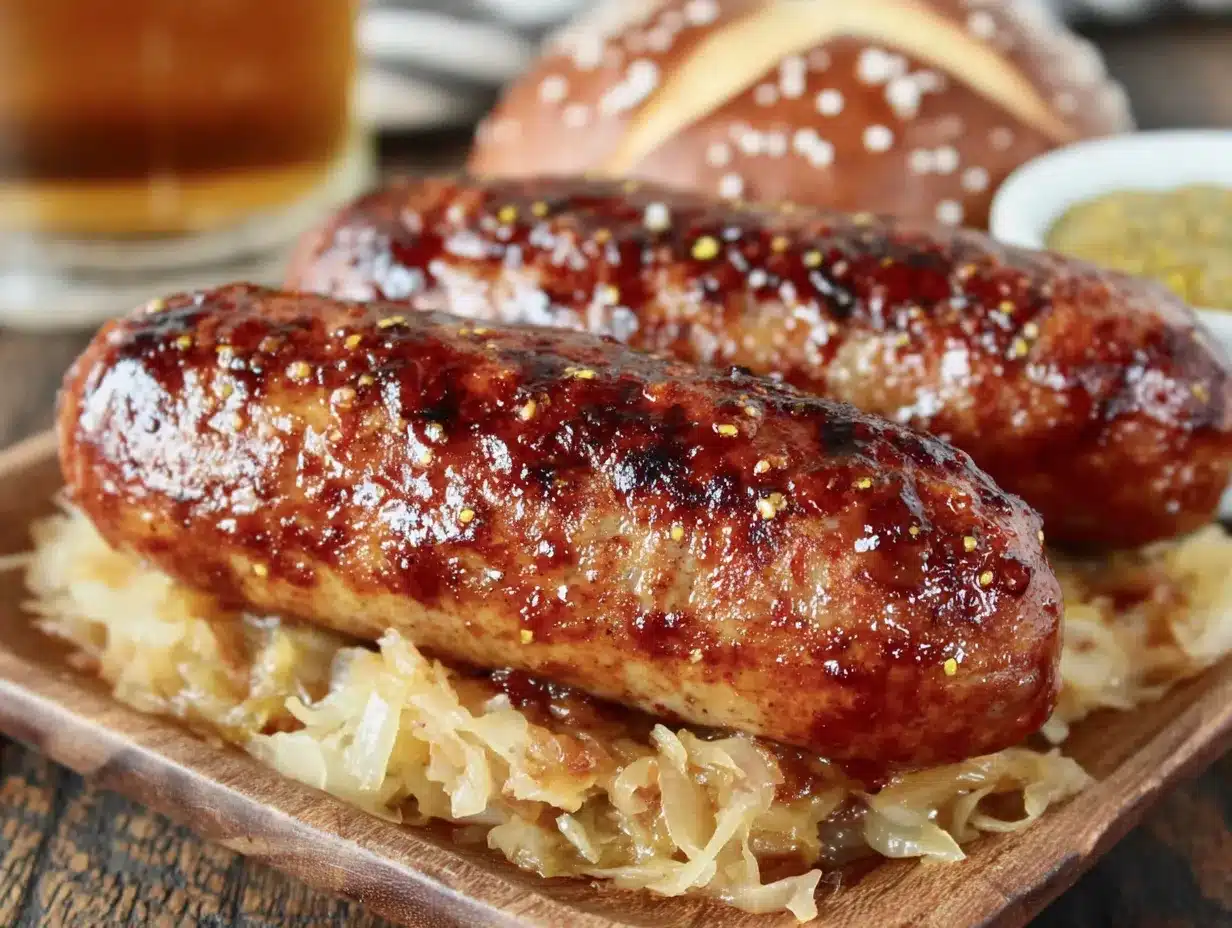
This recipe moves quickly once you start, so I like to have everything prepped and ready to go. Trust me, it makes the process so much smoother. Let’s get to it.
- Prep the ingredients: Thinly slice your onion and mince your garlic. Drain the sauerkraut in a colander, but don’t rinse it. Open your beer and let it sit for a minute—it’s okay if it’s flat. Have your broth measured and ready.
- Brown the brats (the crucial step): Heat the olive oil in your large skillet or Dutch oven over medium-high heat. Once it’s shimmering, carefully add the bratwursts. Let them sear without moving them for about 3-4 minutes, until they’re deeply browned. Use your tongs to turn them and brown all sides, about 2 minutes per side. This should take about 8-10 minutes total. Don’t rush this—the browning is where the flavor lives. Remove the brats to a plate and set aside. They won’t be cooked through yet, and that’s fine.
- Sweat the onions: Reduce the heat to medium. Add the sliced onions to the pan with all that lovely brown fond (the stuck-on bits). Stir them around, scraping up the fond with your wooden spoon. Cook for about 5-6 minutes, until the onions are soft and starting to turn golden. If they look dry, add a splash of the beer. Add the minced garlic and cook for another 30 seconds until fragrant.
- Build the braising liquid: Pour in the beer and the chicken broth. Use your spoon to scrape up any last bits from the bottom of the pan. Stir in the brown sugar, caraway seeds (if using), and black pepper. Bring the liquid to a gentle simmer.
- Add the sauerkraut: Stir in the drained sauerkraut, making sure it’s evenly distributed in the liquid.
- Return the brats: Nestle the browned brats back into the pan, pushing them down so they’re mostly submerged in the liquid. They should be sitting in a cozy bed of onions and kraut.
- Simmer, don’t boil: Reduce the heat to low, cover the pan with a lid, and let it simmer gently for 20-25 minutes. The liquid should be at a lazy bubble—not a rolling boil. After 20 minutes, check one brat with an instant-read thermometer; it should read 160°F (71°C) for safety. If not, give it another 5 minutes.
- Finish and serve: Once the brats are cooked through, you have a choice. For a thicker, more concentrated sauce, remove the lid and let it simmer for another 5 minutes. Taste the liquid and adjust for salt. Serve the brats with a generous pile of the sauerkraut and onions on top. Garnish with fresh parsley and serve with your favorite mustard and crusty bread.
One sensory cue: when it’s done, the kitchen should smell deeply savory, with that sweet maltiness from the beer and the tang of the kraut mingling together. The sauerkraut will have softened and turned a slightly darker, more golden color.
Cooking Tips & Techniques
I’ve made this recipe at least two dozen times, and I’ve learned a few things the hard way. Here are my best tips to ensure perfect results every time.
Don’t skip the sear. I know it’s tempting to just dump everything in the pot and walk away, but that initial browning is non-negotiable. It creates a crust that locks in juices and adds a layer of deep, roasted flavor that you simply can’t get any other way. I once tried to save time by skipping this step, and the brats came out pale and tasted one-dimensional. Never again.
Watch the heat. When you add the beer and broth, make sure the heat is on low once you cover the pan. If you boil the brats, the casings can burst, and the meat will become tough and dry. You want a gentle simmer—just a few lazy bubbles breaking the surface. If you see a vigorous boil, turn the heat down immediately.
Don’t pierce the brats. This is a cardinal rule. When you’re browning them, use tongs, not a fork. Piercing the casing lets all those flavorful juices escape into the pan, leaving you with a dry, sad sausage. The snap is in the casing, and you want to keep it intact.
Let them rest. After you pull the brats out of the pan, let them sit for a minute or two before slicing or serving. This allows the juices to redistribute, just like a steak. If you cut into them immediately, you’ll lose all that goodness on the cutting board.
Make it ahead. This dish actually tastes even better the next day. The flavors meld together and deepen overnight. I often make a double batch on Sunday and reheat it for a quick weeknight dinner. Just store the brats and kraut together in the fridge, and reheat gently in a covered pan over low heat, adding a splash of broth or beer if it’s too thick.
Variations & Adaptations
One of the best things about this recipe is how flexible it is. I’ve played around with different ingredients and methods, and here are some of my favorite twists.
- Dietary Adaptations: For a gluten-free version, simply use a gluten-free beer (there are some great options out there now) and double-check that your brats are gluten-free. Many are, but always read the label. For a lower-carb option, skip the brown sugar and serve the brats over a bed of sautéed cabbage or cauliflower rice instead of a bun.
- Flavor Twists: Try swapping the German lager for a dark stout or porter for a richer, more robust flavor. The bitterness of a stout pairs beautifully with the tangy kraut. You can also add a sliced apple (like a Granny Smith) along with the onions for a touch of sweetness that cuts through the richness. Another fun variation: add a tablespoon of whole-grain mustard to the braising liquid for extra tang and texture.
- Different Cooking Methods: This recipe works beautifully in a slow cooker. After browning the brats and onions on the stovetop, transfer everything to the slow cooker with the remaining ingredients and cook on low for 4-6 hours. It’s perfect for a busy day. You can also finish it in the oven—after browning, cover the Dutch oven and bake at 350°F for about 30 minutes.
- Spice It Up: If you like heat, add a pinch of red pepper flakes along with the garlic, or serve the finished dish with a drizzle of spicy sriracha mustard. I once added a teaspoon of smoked paprika, and it gave the whole dish a lovely, subtle smokiness that reminded me of a campfire.
I’ve also made this with turkey brats for a lighter version, and it works surprisingly well. Just be careful not to overcook them, as turkey sausage dries out faster than pork.
Serving & Storage Suggestions
This dish is incredibly versatile when it comes to serving. Here’s how I like to enjoy it.
Serving: I serve the brats hot, right out of the pan, with a generous heap of the sauerkraut and caramelized onions spooned over the top. A dollop of spicy brown mustard or a smear of horseradish cream is a must. For the full experience, tuck a brat into a toasted, sturdy roll (like a pretzel bun or a hoagie roll) and pile on the kraut. It’s also wonderful served alongside some roasted vegetables or a simple green salad with a tangy vinaigrette to cut through the richness. If you’re feeling indulgent, a side of crispy potato wedges or German potato salad is perfect.
Storage: Leftovers keep beautifully in an airtight container in the refrigerator for up to 4 days. The flavors actually continue to develop, making the second-day version even more delicious. To reheat, place the brats and kraut in a covered skillet over low heat, adding a splash of beer or broth to loosen the sauce. You can also reheat them in the microwave, but the stovetop method is better for preserving the texture of the brats.
Freezing: This dish freezes surprisingly well. Let it cool completely, then transfer the brats and kraut to a freezer-safe container or zip-top bag. It will keep for up to 3 months. Thaw overnight in the refrigerator and reheat gently on the stovetop. The texture of the brats might soften slightly, but the flavor will still be fantastic.
Flavor Development: If you can, make this a day ahead. The brats absorb more of the beer and kraut flavor as they sit, and the whole dish becomes more cohesive. It’s one of those rare recipes that actually improves with time.
Nutritional Information & Benefits
While this is definitely a comfort food dish, it does have some surprising nutritional perks. Here’s a rough estimate per serving (one brat with about 1/2 cup of sauerkraut and onions):
- Calories: Approximately 450-550
- Protein: 25-30 grams
- Fat: 30-35 grams
- Carbohydrates: 15-20 grams
- Fiber: 3-5 grams
- Sodium: 1200-1500 mg (varies greatly by brand)
Health Benefits: Sauerkraut is a powerhouse of nutrition. It’s packed with probiotics (good bacteria for your gut), vitamins C and K, and fiber. The fermentation process also makes the nutrients more bioavailable. The onions provide antioxidants and prebiotics that feed your gut bacteria. And while brats are high in fat and sodium, they’re also a good source of high-quality protein and B vitamins.
Dietary Considerations: This recipe can be made gluten-free and low-carb with minor adjustments. It’s naturally dairy-free (unless you add cheese or sour cream). However, it is high in sodium, so if you’re watching your salt intake, look for low-sodium brats and sauerkraut, and skip the added salt entirely.
I like to think of this as a “sometimes food”—it’s not an everyday meal, but when you eat it, you’re getting real, whole ingredients that nourish you in their own way. Balance is everything.
Conclusion
This Savory German Beer Brats with Sauerkraut recipe has become a staple in my kitchen for all the right reasons. It’s honest food—the kind that doesn’t pretend to be something it’s not. It’s hearty, deeply flavorful, and surprisingly simple to pull together. Whether you’re feeding a crowd on game day or just want a cozy dinner that feels like a warm hug, this dish delivers every single time.
I love that it’s flexible enough to adapt to whatever you have in the fridge, yet classic enough to feel like a special treat. The first time I made it for my family, my husband looked up after his first bite and said, “This is the best thing you’ve made all month.” That’s the kind of reaction that keeps me coming back to this recipe.
Now I want to hear from you! Have you tried making beer brats at home? What’s your favorite type of beer to cook with? Drop a comment below and let me know how yours turned out—or share your own twist on this classic. And if you loved this recipe, don’t forget to pin it for later and share it with a friend who needs a little comfort food in their life. Happy cooking!
Frequently Asked Questions
Can I use a different type of sausage for this recipe?
Absolutely! While bratwurst is traditional, you can use other fresh sausages like Italian sausage (sweet or hot), knockwurst, or even chicken or turkey sausage. Just keep in mind that leaner sausages may dry out more quickly, so watch your simmer time.
What if I don’t drink beer? Can I use something else?
Yes, you can substitute the beer with an equal amount of low-sodium beef broth or chicken broth. For a non-alcoholic option, use a non-alcoholic beer or a combination of broth and a splash of apple cider vinegar for that tangy kick.
How do I know when the brats are fully cooked?
The safest way is to use an instant-read thermometer. Insert it into the thickest part of the sausage; it should read 160°F (71°C) for pork brats. If you don’t have a thermometer, slice one open—the meat should be opaque all the way through with no pinkness, and the juices should run clear.
Can I make this in a slow cooker?
Yes, it works great! Follow the recipe through step 3 (browning the brats and onions), then transfer everything to a slow cooker. Add the remaining ingredients and cook on low for 4-6 hours or on high for 2-3 hours. The brats will be very tender.
My sauerkraut is too sour for my taste. How can I mellow it out?
If you find sauerkraut too sharp, you can rinse it briefly under cold water before draining it. This will remove some of the brine and mellow the flavor. You can also increase the brown sugar slightly to balance the acidity. Cooking it for longer also helps it become milder and sweeter.
Pin This Recipe!

Savory German Beer Brats with Sauerkraut: Easy One-Pan Dinner
This one-pan recipe delivers juicy, beer-braised bratwurst with tangy sauerkraut and caramelized onions. It’s a hearty, comforting meal that’s perfect for game day or a cozy weeknight dinner.
- Prep Time: 15 minutes
- Cook Time: 30 minutes
- Total Time: 45 minutes
- Yield: 4 servings 1x
- Category: Main Course
- Cuisine: German
Ingredients
- 4 fresh bratwurst sausages (about 1 to 1.5 lbs total)
- 1 tablespoon olive oil or neutral oil
- 1 large yellow onion, thinly sliced
- 3 cloves garlic, minced
- 1 (14-ounce) can or jar of sauerkraut, drained but not rinsed
- 1 (12-ounce) bottle of German beer (lager, bock, or Märzen)
- 1/2 cup low-sodium chicken broth
- 1 tablespoon brown sugar
- 1 teaspoon caraway seeds (optional)
- 1/2 teaspoon black pepper, freshly ground
- Salt to taste
- Fresh parsley, chopped, for garnish
Instructions
- Prep the ingredients: Thinly slice your onion and mince your garlic. Drain the sauerkraut in a colander, but don’t rinse it. Open your beer and let it sit for a minute. Have your broth measured and ready.
- Brown the brats: Heat the olive oil in a large skillet or Dutch oven over medium-high heat. Once shimmering, add the bratwursts. Sear without moving for 3-4 minutes until deeply browned. Use tongs to turn and brown all sides, about 2 minutes per side (8-10 minutes total). Remove brats to a plate and set aside.
- Sweat the onions: Reduce heat to medium. Add sliced onions to the pan, scraping up the browned bits. Cook for 5-6 minutes until soft and golden. Add minced garlic and cook for 30 seconds until fragrant.
- Build the braising liquid: Pour in the beer and chicken broth. Scrape up any remaining bits from the bottom. Stir in brown sugar, caraway seeds (if using), and black pepper. Bring to a gentle simmer.
- Add the sauerkraut: Stir in the drained sauerkraut, distributing evenly.
- Return the brats: Nestle the browned brats back into the pan, pushing them down so they’re mostly submerged.
- Simmer: Reduce heat to low, cover, and simmer gently for 20-25 minutes. The liquid should be at a lazy bubble. Check internal temperature with an instant-read thermometer; it should read 160°F (71°C).
- Finish and serve: For a thicker sauce, remove lid and simmer for another 5 minutes. Taste and adjust salt. Serve brats with sauerkraut and onions on top. Garnish with fresh parsley and serve with mustard and crusty bread.
Notes
Don’t skip the sear—it’s crucial for flavor. Use a dark German lager for best results. Avoid piercing the brats with a fork. Let the brats rest for a minute before serving. This dish tastes even better the next day.
Nutrition
- Serving Size: 1 brat with about 1/
- Calories: 500
- Sugar: 8
- Sodium: 1350
- Fat: 32
- Saturated Fat: 10
- Carbohydrates: 18
- Fiber: 4
- Protein: 28
Keywords: beer brats, sauerkraut, one-pan dinner, German recipe, bratwurst, easy dinner, comfort food