My neighbor, Mrs. Gable, wasn’t trying to impress anyone that Tuesday afternoon. I’d stopped by to borrow a turkey roaster—mine had mysteriously vanished during last year’s move—and the smell hit me before I even made it past her screen door. It wasn’t the turkey. It was something deeper, earthier, with sage and rosemary weaving through the air like a warm blanket. She was standing at her stove, casually stirring a massive skillet, wearing an apron that said “I Cook So I Don’t Kill Anyone.” I mean, honestly, how could you not fall in love with that?
“It’s just stuffing,” she said when I asked, waving her spatula like it was no big deal. But let me tell you—there is no “just” about this stuffing. She was browning sausage with this quiet confidence, tossing in handfuls of fresh herbs from her backyard garden, and occasionally sipping tea like she had all the time in the world. Meanwhile, I was practically drooling on her linoleum floor. Maybe you’ve been there—that moment when you realize a dish you’ve made a hundred times could be so much better, and it took watching someone else do it casually to figure that out.
Mrs. Gable didn’t have a recipe written down. She just “knew” how much of everything to add. Of course, I pestered her until she walked me through it, and I’ve been making this Cozy Sausage and Herb Thanksgiving Stuffing ever since. It’s the kind of dish that makes you close your eyes after the first bite, and honestly, it’s become the star of my Thanksgiving table. The turkey gets carved, sure, but everyone fights over the stuffing. Every. Single. Time.
Why You’ll Love This Recipe
I’ve tested this stuffing more times than I care to admit—through dry Thanksgivings, soggy ones, and one particularly memorable disaster involving stale bread that tasted like cardboard. This version? It’s bulletproof. Here’s why it works:
- Quick & Easy : Comes together in under an hour, perfect for busy holiday mornings or last-minute dinner plans.
- Simple Ingredients : No fancy grocery trips needed; you likely already have most of these in your pantry.
- Perfect for Thanksgiving : Great for the main event, but honestly, I make it for random Sunday dinners too.
- Crowd-Pleaser : Always gets rave reviews from kids and adults alike. Even my picky uncle asks for seconds.
- Unbelievably Delicious : The texture and flavor combo is next-level comfort food.
What makes this recipe different from the rest? It’s the sausage, honestly. Most stuffing recipes rely on butter and herbs alone, but adding savory sausage brings this deep, meaty richness that transforms the whole dish. Plus, I’ve nailed the herb balance—fresh sage, rosemary, and thyme work together without overwhelming each other. It’s comfort food reimagined: faster, richer, but with the same soul-soothing satisfaction you crave on a cold November evening.
This is the kind of stuffing that makes you forget you even wanted turkey. Perfect for impressing guests without stress, or turning a simple meal into something memorable. And let’s face it—after the year you’ve had, you deserve a dish that feels like a hug.
What Ingredients You Will Need
This recipe uses simple, wholesome ingredients to deliver bold flavor and satisfying texture without the fuss. Most are pantry staples, but a few fresh items make all the difference.
- 1 loaf (about 1 pound) day-old French bread or sourdough, cut into 1-inch cubes (stale bread works best—it holds its shape and soaks up flavor without turning mushy)
- 1 pound bulk pork sausage (I recommend Jimmy Dean or a local butcher’s breakfast sausage for best flavor; avoid spicy varieties unless you want a kick)
- 4 tablespoons unsalted butter, plus more for greasing the dish (adds richness and helps the top get golden and crispy)
- 1 large yellow onion, diced (about 1 ½ cups)
- 3 celery stalks, diced (about 1 cup)
- 3 cloves garlic, minced (fresh only—skip the jarred stuff here)
- 2 tablespoons fresh sage leaves, chopped (or 2 teaspoons dried sage—but fresh really shines)
- 1 tablespoon fresh rosemary leaves, finely chopped (or 1 teaspoon dried rosemary)
- 1 tablespoon fresh thyme leaves (or 1 teaspoon dried thyme)
- 1 ½ cups low-sodium chicken broth (homemade is great, but store-bought works perfectly)
- 2 large eggs, lightly beaten (helps bind everything together)
- ½ teaspoon salt (adjust based on your sausage’s saltiness)
- ½ teaspoon black pepper
- ¼ cup fresh parsley, chopped (for garnish—optional but pretty)
Ingredient Selection Tips: Look for bread that’s a day or two old—fresh bread will turn gummy. If you only have fresh bread, toast the cubes in a 300°F oven for 10 minutes before using. For the sausage, avoid links with casings; bulk sausage is easier to crumble. And honestly, fresh herbs are non-negotiable here. Dried herbs work in a pinch, but fresh sage and rosemary give that cozy, aromatic punch that makes this stuffing unforgettable.
Substitution Guidance: Use gluten-free bread for a gluten-free option—just toast it well so it doesn’t fall apart. Swap pork sausage with turkey sausage for a lighter version, or use plant-based sausage for a vegetarian twist. For a dairy-free option, use olive oil instead of butter and a dairy-free milk alternative in place of chicken broth (though the flavor will change slightly).
Equipment Needed
You don’t need a fancy kitchen to pull this off. Here’s what you’ll need:
- Large skillet (12-inch works best for browning sausage and veggies without crowding)
- Large mixing bowl (for combining everything—a good old-fashioned metal or glass bowl does the trick)
- 9×13-inch baking dish (glass or ceramic works great; metal also works but may brown faster)
- Wooden spoon or spatula (for stirring—I prefer wooden because it doesn’t scratch your pans)
- Chef’s knife and cutting board (for dicing onion, celery, and herbs)
- Measuring cups and spoons (because eyeballing broth doesn’t end well)
- Whisk (for beating the eggs)
- Aluminum foil (for covering the dish during baking to prevent over-browning)
Personal Experience: I’ve made this stuffing in everything from a fancy Le Creuset dish to a beat-up aluminum pan from my college days. Honestly, the baking dish matters less than you think—just make sure it’s deep enough to hold everything without overflowing. And if you don’t have a large skillet, use a pot instead. It’s not rocket science, people. Budget tip: check thrift stores for baking dishes; I found my favorite one for $3.
Preparation Method
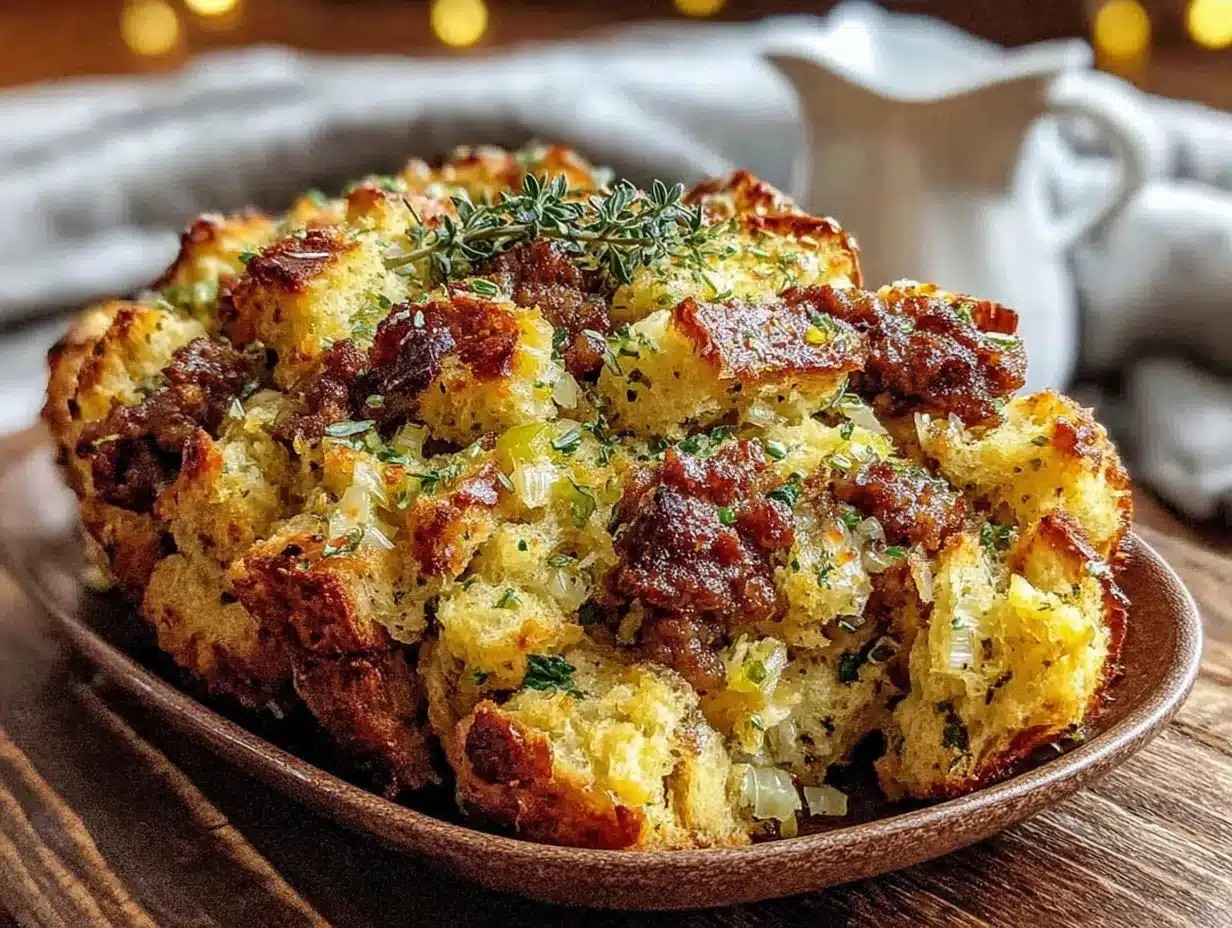
Let’s get cooking! This stuffing comes together in about 45 minutes, but the results taste like you spent all day.
- Preheat your oven to 350°F (175°C). Grease your 9×13-inch baking dish with butter or non-stick spray. Set it aside.
- Prepare the bread cubes. If your bread isn’t stale, spread the cubes on a baking sheet and toast in the oven for 8-10 minutes until lightly golden. Let them cool while you work on the other ingredients. This step is crucial—fresh bread turns into mush, and nobody wants that.
- Brown the sausage. Heat your large skillet over medium-high heat. Add the sausage and cook, breaking it apart with your wooden spoon, until it’s browned and cooked through—about 6-8 minutes. You want little crispy bits, not a uniform paste. Use a slotted spoon to transfer the sausage to a plate, leaving about 2 tablespoons of drippings in the skillet. Pro tip: Don’t drain all the fat—that’s flavor gold.
- Sauté the aromatics. Reduce heat to medium. Add the butter to the skillet with the sausage drippings. Once melted, add the diced onion and celery. Cook, stirring occasionally, until softened and translucent—about 5-7 minutes. Add the minced garlic and cook for another minute until fragrant. Your kitchen will start smelling incredible right about now.
- Add the herbs. Stir in the chopped sage, rosemary, and thyme. Cook for 1 minute, stirring constantly, until the herbs release their oils and become fragrant. Don’t skip this step—raw herbs taste grassy, but cooked herbs taste like Thanksgiving.
- Combine the base. In your large mixing bowl, combine the toasted bread cubes, cooked sausage, and the onion-herb mixture. Toss gently with your hands or a spatula until everything is evenly distributed. Warning: Your hands might get messy, but that’s part of the fun.
- Make the custard. In a separate small bowl, whisk together the chicken broth, beaten eggs, salt, and pepper. Pour this mixture evenly over the bread mixture. Toss gently again, making sure every bread cube gets a little moisture. Let it sit for 5 minutes so the bread can absorb the liquid—this is the secret to perfectly moist stuffing.
- Transfer to the baking dish. Spoon the stuffing mixture into your greased 9×13-inch dish. Spread it evenly, but don’t press it down—you want some texture and air pockets for crispiness.
- Bake covered. Cover the dish with aluminum foil and bake for 25 minutes. This steams the stuffing and keeps it moist.
- Bake uncovered. Remove the foil and bake for another 15-20 minutes, until the top is golden brown and slightly crispy. The edges should be a little crunchy—that’s the best part.
- Rest and serve. Let the stuffing sit for 5 minutes before serving. This allows it to set and makes it easier to scoop. Garnish with fresh parsley if you’re feeling fancy.
Sensory cues: When it’s done, the top should be golden and crisp, the edges slightly caramelized. You’ll smell sage and rosemary with a hint of savory sausage. The texture should be tender but not mushy—each bite should have a little chew from the bread and a little crunch from the edges. If you’re unsure, stick a fork in the center; it should come out clean and the stuffing should hold its shape without falling apart.
Cooking Tips & Techniques
I’ve learned a few things the hard way so you don’t have to. Here are my best tips for stuffing success:
Don’t overmix. I know it’s tempting to keep stirring, but overmixing turns your stuffing into paste. Gently toss until just combined—you want distinct chunks of bread and sausage, not a uniform blob. Trust me, I learned this after a particularly sad Thanksgiving where my stuffing looked like porridge.
Watch your liquid ratio. The amount of broth you need depends on how stale your bread is. Drier bread needs more liquid; fresher bread needs less. Start with 1 ½ cups and add an extra ¼ cup if the mixture looks dry before baking. If it looks soupy, add a few more bread cubes. You’re aiming for a mixture that’s moist but not swimming.
Toast your bread properly. This is non-negotiable. Stale bread is ideal because it absorbs liquid without falling apart. If you’re using fresh bread, toast it until it’s dry and slightly golden. I once skipped this step because I was in a rush, and the result was a soggy, bread-pudding-like disaster. Never again.
Season in layers. Season the sausage as it cooks, season the vegetables as they sauté, and season the broth mixture. This builds depth of flavor. If you only season at the end, your stuffing will taste flat. I learned this from a chef friend, and it changed everything.
Let it rest. I know you’re hungry, but letting the stuffing rest for 5-10 minutes after baking allows it to set and makes serving easier. Plus, the flavors meld together during that time. Use those minutes to pour yourself a glass of wine—you’ve earned it.
Variations & Adaptations
This recipe is wonderfully flexible. Here are some ways to make it your own:
Vegetarian Version: Skip the sausage and add 2 cups of sautéed mushrooms (cremini or shiitake work great) and 1 cup of roasted chestnuts or pecans. The mushrooms provide that umami depth, and the nuts add crunch. I’ve made this for my vegetarian sister, and she swears it’s better than the original. (I won’t tell her I disagree.)
Gluten-Free Adaptation: Use a good-quality gluten-free bread—something sturdy like Udi’s or Schar works best. Toast it well before using, as gluten-free bread tends to be more delicate. You might need to reduce the broth slightly since gluten-free bread absorbs liquid differently. I tested this with my gluten-intolerant friend, and it held up beautifully.
Herb Variations: Not a fan of sage? Swap it for tarragon or marjoram. Want more warmth? Add ½ teaspoon of dried rubbed sage and ¼ teaspoon of nutmeg. I once made a version with fresh dill and lemon zest for a spring-inspired twist—it was surprisingly good, though not very Thanksgiving-y.
Extra Crunchy Top: For those who love crispy edges, bake the stuffing uncovered for the entire 35-40 minutes. Just keep an eye on it so it doesn’t burn. You can also sprinkle panko breadcrumbs mixed with melted butter on top during the last 10 minutes of baking. My husband requests this every year.
Make It Ahead: Assemble the stuffing (without baking) up to 24 hours in advance. Cover and refrigerate. When ready to bake, add 10-15 minutes to the covered baking time since it’s starting from cold. This is a lifesaver for busy Thanksgiving mornings.
Serving & Storage Suggestions
Serving: Serve this stuffing warm, straight from the baking dish. It’s the star of the Thanksgiving table, but it also pairs beautifully with roasted chicken, pork chops, or even a simple green salad for a lighter meal. I like to present it in a nice ceramic dish with a sprinkle of fresh parsley on top—it looks rustic and inviting.
Complementary Dishes: This stuffing loves company. Serve it alongside classic roasted turkey, creamy mashed potatoes, cranberry sauce, and roasted Brussels sprouts. For drinks, a crisp white wine like Sauvignon Blanc or a light red like Pinot Noir works wonders. And honestly, a glass of cold apple cider is perfect too.
Storage: Leftover stuffing keeps well in the refrigerator for up to 4 days. Store it in an airtight container to prevent it from drying out. The flavors actually deepen overnight—I sometimes think it tastes even better the next day.
Reheating: For best results, reheat stuffing in a 350°F oven for 10-15 minutes, covered with foil to prevent drying. You can also microwave individual portions for 1-2 minutes, but the top won’t be as crispy. If you’re reheating a large batch, add a splash of chicken broth before baking to restore moisture.
Freezing: This stuffing freezes beautifully. Let it cool completely, then transfer to a freezer-safe container or zip-top bag. Freeze for up to 3 months. Thaw overnight in the refrigerator and reheat as directed. I always make a double batch and freeze one for a cozy winter dinner.
Nutritional Information & Benefits
Here’s the rough nutritional breakdown per serving (based on 8 servings):
- Calories: 320
- Protein: 14g
- Fat: 16g
- Carbohydrates: 30g
- Fiber: 3g
- Sugar: 4g
- Sodium: 680mg
Health Benefits: This stuffing isn’t just delicious—it has some surprising health perks. Sausage provides protein and B vitamins for energy. Celery and onions are rich in antioxidants and fiber, which support digestive health. Fresh herbs like sage and rosemary contain anti-inflammatory compounds that may boost brain function. And bread provides complex carbohydrates for sustained energy—perfect for powering through a long day of cooking and celebrating.
Dietary Considerations: This recipe can be adapted for gluten-free and vegetarian diets (see variations above). It contains dairy (butter) and eggs, but both can be substituted. The sodium content is moderate, so if you’re watching your salt intake, use low-sodium broth and reduce the added salt. I personally love that this stuffing feels indulgent but isn’t loaded with processed ingredients—it’s real food made with love.
Conclusion
This Cozy Sausage and Herb Thanksgiving Stuffing has become my go-to for every holiday gathering, and honestly, it’s the dish people ask for by name. It’s warm, comforting, and packed with flavor—everything you want from a side dish that often steals the show. The best part? It’s forgiving. You can tweak it, adapt it, and make it your own without losing that soul-soothing quality that makes it special.
I’d love for you to try this recipe and make it your own. Maybe add extra herbs, swap the sausage for mushrooms, or double the batch because leftovers are the real prize. Whatever you do, don’t forget to save some for yourself—trust me, it disappears fast. If you make it, let me know in the comments below. Did you add a secret ingredient? Did your family fight over the crispy edges? I want to hear all about it.
Here’s to cozy kitchens, full bellies, and the simple joy of a really good stuffing. Happy cooking, friends!
Frequently Asked Questions
Can I make this stuffing ahead of time?
Absolutely! Assemble the stuffing (without baking) up to 24 hours in advance. Cover and refrigerate. When ready to bake, add 10-15 minutes to the covered baking time since it’s starting from cold. This is a huge time-saver on Thanksgiving morning.
Can I use dried herbs instead of fresh?
Yes, but the flavor won’t be as vibrant. Use 1 teaspoon of dried herbs for every tablespoon of fresh. So for this recipe, you’d use about 2 teaspoons dried sage, 1 teaspoon dried rosemary, and 1 teaspoon dried thyme. Just remember that dried herbs are more concentrated, so don’t overdo it.
How do I prevent soggy stuffing?
The key is using stale or toasted bread. Fresh bread absorbs too much liquid and turns mushy. Also, don’t oversoak the bread—you want it moist, not swimming. Let the mixture sit for 5 minutes after adding the broth, then check the texture. If it looks too wet, add a few more bread cubes.
Can I cook this stuffing inside the turkey?
I don’t recommend it. Cooking stuffing inside the turkey can lead to food safety issues because the stuffing needs to reach 165°F, and it often doesn’t cook evenly. Plus, it can make the turkey dry. Baking it separately in a dish gives you better control and a crispier top.
What’s the best bread to use for stuffing?
Day-old French bread or sourdough is ideal. They have a sturdy crumb that holds up well to liquid without falling apart. Avoid soft sandwich bread—it turns into paste. If you only have fresh bread, toast the cubes in a 300°F oven for 10 minutes before using. I’ve also used brioche for a richer version, and it was divine.
Pin This Recipe!
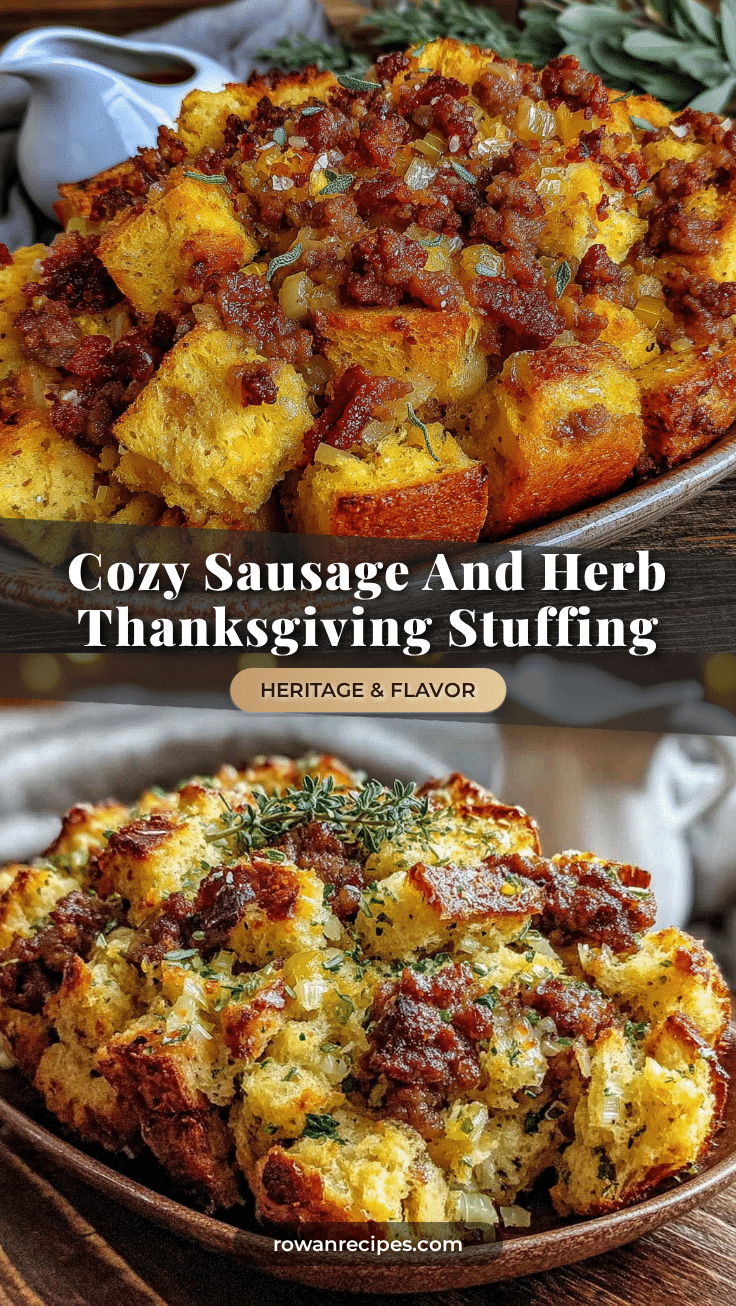
Cozy Sausage and Herb Thanksgiving Stuffing

This easy stuffing recipe features savory sausage, fresh herbs, and toasted bread for a comforting, crowd-pleasing side dish that comes together in under an hour.
- Prep Time: 15 minutes
- Cook Time: 45 minutes
- Total Time: 1 hour
- Yield: 8 servings 1x
- Category: Side Dish
- Cuisine: American
Ingredients
- 1 loaf (about 1 pound) day-old French bread or sourdough, cut into 1-inch cubes
- 1 pound bulk pork sausage
- 4 tablespoons unsalted butter, plus more for greasing the dish
- 1 large yellow onion, diced (about 1 ½ cups)
- 3 celery stalks, diced (about 1 cup)
- 3 cloves garlic, minced
- 2 tablespoons fresh sage leaves, chopped (or 2 teaspoons dried sage)
- 1 tablespoon fresh rosemary leaves, finely chopped (or 1 teaspoon dried rosemary)
- 1 tablespoon fresh thyme leaves (or 1 teaspoon dried thyme)
- 1 ½ cups low-sodium chicken broth
- 2 large eggs, lightly beaten
- ½ teaspoon salt
- ½ teaspoon black pepper
- ¼ cup fresh parsley, chopped (for garnish, optional)
Instructions
- Preheat your oven to 350°F (175°C). Grease a 9×13-inch baking dish with butter or non-stick spray.
- If your bread isn’t stale, spread the cubes on a baking sheet and toast in the oven for 8-10 minutes until lightly golden. Let cool.
- Heat a large skillet over medium-high heat. Add the sausage and cook, breaking it apart, until browned and cooked through (6-8 minutes). Transfer sausage to a plate, leaving about 2 tablespoons of drippings in the skillet.
- Reduce heat to medium. Add the butter to the skillet with the drippings. Once melted, add the diced onion and celery. Cook until softened and translucent (5-7 minutes). Add the minced garlic and cook for 1 minute until fragrant.
- Stir in the chopped sage, rosemary, and thyme. Cook for 1 minute, stirring constantly, until fragrant.
- In a large mixing bowl, combine the toasted bread cubes, cooked sausage, and the onion-herb mixture. Toss gently until evenly distributed.
- In a separate small bowl, whisk together the chicken broth, beaten eggs, salt, and pepper. Pour this mixture evenly over the bread mixture. Toss gently and let sit for 5 minutes.
- Spoon the stuffing mixture into the greased baking dish. Spread evenly without pressing down.
- Cover the dish with aluminum foil and bake for 25 minutes.
- Remove the foil and bake for another 15-20 minutes, until the top is golden brown and slightly crispy.
- Let the stuffing rest for 5 minutes before serving. Garnish with fresh parsley if desired.
Notes
Use day-old bread for best texture. If using fresh bread, toast cubes before using. For a vegetarian version, substitute sausage with sautéed mushrooms and roasted chestnuts or pecans. For gluten-free, use sturdy gluten-free bread and reduce broth slightly. Assemble up to 24 hours ahead and refrigerate; add 10-15 minutes to covered baking time.
Nutrition
- Serving Size: 1 serving
- Calories: 320
- Sugar: 4
- Sodium: 680
- Fat: 16
- Saturated Fat: 6
- Carbohydrates: 30
- Fiber: 3
- Protein: 14
Keywords: stuffing, Thanksgiving, sausage, herb, easy, side dish, holiday