This was supposed to be a different recipe entirely. I had this vision of a silky, from-scratch potato gratin—the kind with thin, uniform slices layered in cream, the one that takes an hour of careful knife work and constant stirring. It was the Tuesday before Thanksgiving, the kids were home from school, and I was already running behind. I grabbed the bag of russets, my mandoline, and about a gallon of heavy cream. Then my three-year-old decided the living room needed an indoor picnic, my oldest announced he needed a costume for the school play the next morning, and the baby started crying because the dog ate his cracker. I mean, you know how it goes. In the chaos, I grabbed the wrong bag of potatoes—the ones I had already boiled and roughly mashed for a quick dinner side the night before. I dumped them into the baking dish, poured the cream over them anyway (because waste not, right?), threw some cheese on top, and shoved it in the oven. What came out was nothing like a gratin. It was better. It was creamy, it was forgiving, it had those crispy, cheesy edges that everyone fights over. My husband asked for the recipe. The kids ate two helpings. And I sat there, exhausted and a little disbelieving, realizing I had accidentally stumbled onto the kind of side dish that saves holidays. That’s how this Kid-Approved Make-Ahead Mashed Potato Casserole was born—not from a perfect plan, but from a very messy, very real Tuesday.
Why You’ll Love This Recipe
Let me tell you, I have made a lot of potato dishes in my time. Some were triumphs, some were gluey messes that went straight to the compost. This one? It’s the one I keep coming back to, and it’s the one my readers keep asking for. It’s not just another mashed potato recipe—it’s the one that solves the biggest holiday cooking problem: timing. You can make it two days ahead, keep it in the fridge, and just pop it in the oven when the turkey comes out. Honestly, that alone makes it worth its weight in gold.
- Make-Ahead Magic: Assemble it up to 48 hours in advance. No last-minute mashing while your gravy gets cold.
- Kid-Approved: The texture is smooth, not lumpy, and the cheesy, buttery top is pure comfort. Even my pickiest eater clears his plate.
- Simple Ingredients: You probably have most of these in your kitchen right now. No fancy truffle oil or obscure cheeses.
- Budget-Friendly: Potatoes, cream cheese, and butter. That’s the backbone. It feeds a crowd without breaking the bank.
- Holds Beautifully: This casserole stays creamy even after reheating. No drying out, no wateriness. It’s practically foolproof.
What makes this recipe different from the dozens of other mashed potato casseroles out there? It’s the cream cheese. That little addition gives the potatoes a tangy richness and a velvety texture that keeps them from turning gluey. Plus, the topping of melted butter and paprika creates a golden, slightly crisp crust that contrasts perfectly with the creamy interior. It’s the kind of side dish that makes people close their eyes after the first bite—and then ask for the recipe before the meal is over.
What Ingredients You Will Need
This recipe relies on simple, wholesome ingredients that deliver big flavor without a lot of fuss. Most of these are pantry and fridge staples, which is exactly what you want when you’re feeding a family on a budget.
- 5 pounds russet potatoes, peeled and quartered – Russets are the gold standard for mashed potatoes. They have a high starch content that makes them fluffy and absorbent. (If you only have Yukon Golds, they work too, but the texture will be slightly more waxy.)
- 8 ounces cream cheese, softened – This is the secret weapon. It adds tang, richness, and helps the casserole stay creamy even after it’s been refrigerated and reheated. I prefer full-fat Philadelphia for the best texture, but Neufchâtel (low-fat) works in a pinch.
- 1/2 cup unsalted butter, plus 2 tablespoons for the topping – Salted butter is fine, just reduce the added salt slightly. Butter is non-negotiable here—it’s what makes this casserole taste so indulgent.
- 1 cup sour cream – Adds a little tang and extra creaminess. You can substitute plain Greek yogurt, but the flavor will be more tangy and less rich.
- 1/2 cup whole milk, warmed – Warm milk incorporates more easily into hot potatoes and keeps them from getting gluey. You can use 2% or even oat milk in a pinch.
- 1 teaspoon garlic powder – Adds a subtle savory note without being overpowering. Fresh garlic can make the casserole bitter after a day in the fridge, so stick with powder.
- 1 teaspoon onion powder – Complements the garlic and adds depth.
- 1 1/2 teaspoons salt, plus more for the water – Don’t skimp on salting the boiling water. It seasons the potatoes from the inside out.
- 1/2 teaspoon black pepper – Freshly ground is best, but pre-ground works.
- 1 cup shredded cheddar cheese (optional, for topping) – I add this about 10 minutes before the casserole is done. It creates a gooey, golden crust that kids love. Sharp cheddar gives the most flavor.
- 1 teaspoon paprika (smoked or sweet) – Sprinkled on top with the butter for color and a hint of smoky flavor.
Equipment Needed
You don’t need a lot of fancy equipment for this recipe, which is part of its charm. Here’s what you’ll need:
- Large stockpot – At least 6 quarts. You need enough water to cover the potatoes.
- Potato masher or ricer – I prefer a ricer for the smoothest texture, but a good old-fashioned masher works perfectly. I’ve used both, and honestly, the masher gives a slightly more rustic texture that I actually prefer for this casserole.
- 9×13-inch baking dish – This is the standard size for feeding a crowd. You can use a slightly smaller dish for a thicker casserole, just adjust the baking time.
- Mixing bowls – One large bowl for mashing, one small bowl for melting butter.
- Measuring cups and spoons – Accuracy matters, especially with the salt.
- Aluminum foil – For covering the casserole while it bakes and for storing it in the fridge.
- Chef’s knife and cutting board – For peeling and quartering the potatoes.
Preparation Method
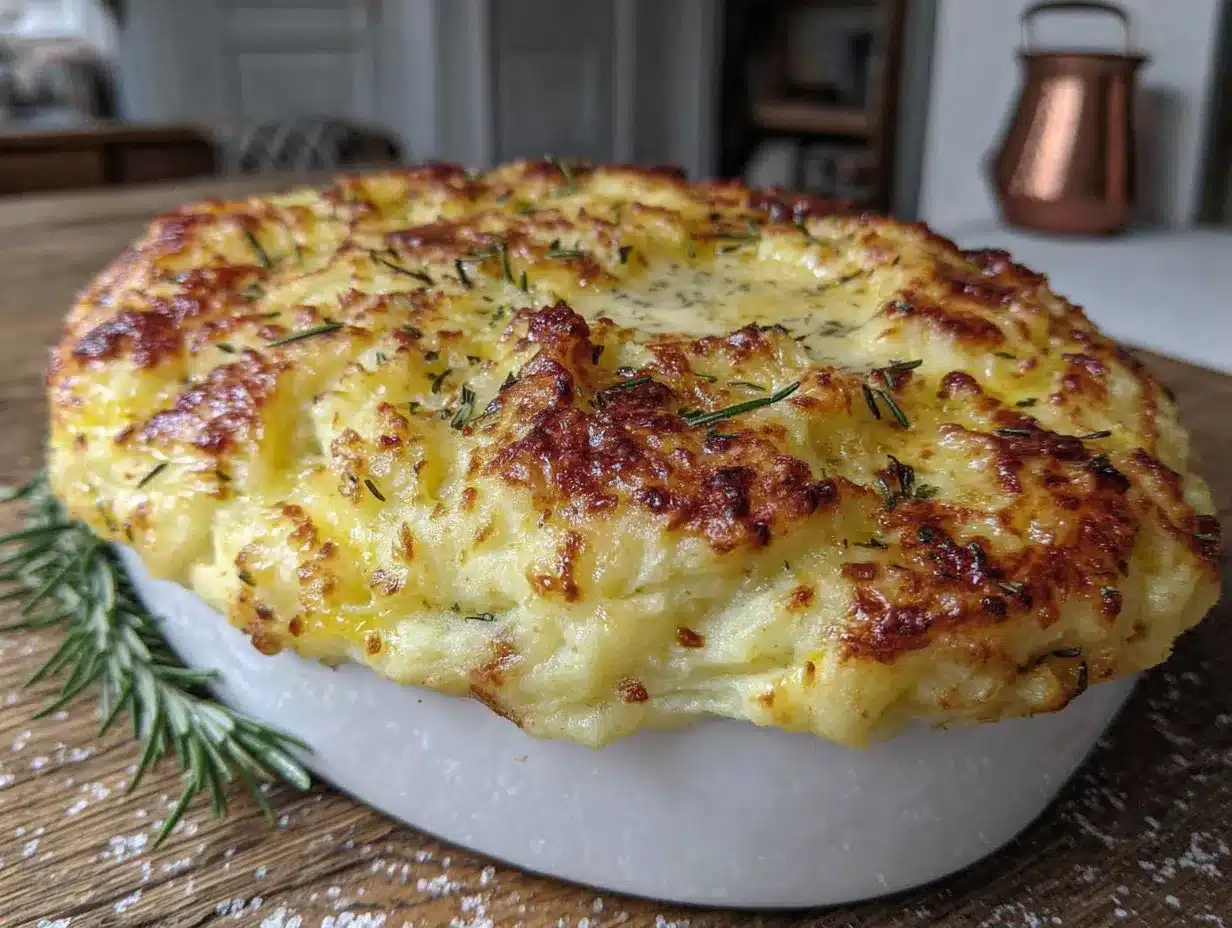
This recipe comes together in stages, but don’t let the steps intimidate you. Each one is simple, and the payoff is huge. Let’s walk through it together.
- Boil the potatoes: Place the peeled and quartered potatoes in your large stockpot. Cover them with cold water by about an inch. Add a generous tablespoon of salt to the water. Bring to a boil over high heat, then reduce to a simmer. Cook for 15-20 minutes, until a knife slides through a potato chunk with no resistance. You want them tender but not falling apart—overcooked potatoes get waterlogged.
- Drain and steam: Drain the potatoes in a colander. This is a crucial step: let them sit in the colander for a full 2-3 minutes. Let the steam escape. This dries them out slightly, which means they’ll absorb the butter and cream better. I learned this the hard way after years of watery mashed potatoes.
- Mash the potatoes: Return the hot, dry potatoes to the pot or transfer them to a large mixing bowl. Add the softened cream cheese and the 1/2 cup of butter. Mash everything together until the butter and cream cheese are melted and incorporated. Some small lumps are fine—this is a casserole, not a puree.
- Add the wet ingredients: Pour in the sour cream and the warm milk. Add the garlic powder, onion powder, salt, and pepper. Stir until everything is combined. Taste it. Adjust the salt if needed. This is your moment to make sure it’s perfect.
- Assemble the casserole: Grease your 9×13-inch baking dish with a little butter or non-stick spray. Spread the mashed potato mixture evenly into the dish. Use a spatula to smooth the top.
- Add the topping: Melt the remaining 2 tablespoons of butter. Drizzle it evenly over the top of the casserole. Sprinkle the paprika over the melted butter. If you’re using the cheddar cheese, wait to add it until the last 10 minutes of baking.
- Bake immediately, or refrigerate: If you’re baking right away, preheat your oven to 350°F (175°C). Bake uncovered for 30-35 minutes, until the edges are bubbly and the top is golden. If you’re making it ahead, cover the dish tightly with foil and refrigerate for up to 2 days.
- Reheat from chilled: When you’re ready to bake, take the casserole out of the fridge and let it sit on the counter for 20 minutes while the oven preheats. Bake covered with foil at 350°F for 40 minutes. Remove the foil, add the cheese if using, and bake for another 10-15 minutes, until hot and bubbly.
Cooking Tips & Techniques
I’ve made this casserole more times than I can count, and I’ve made just about every mistake in the book. Here are the lessons I’ve learned so you don’t have to.
- Don’t over-mash: Overworking the potatoes activates the starch and turns them into glue. Mash just until the butter and cream cheese are incorporated. A few lumps are your friend.
- Warm the milk: Cold milk will shock the hot potatoes and make them stiff. Warm it gently in the microwave or on the stovetop. It makes a real difference in the final texture.
- Season the water: This is the most important step for flavor. If you don’t salt the boiling water, you’ll end up with bland potatoes no matter how much salt you add later. The water should taste like the sea.
- Let it rest: If you’re making this ahead, the flavors actually improve after a day in the fridge. The garlic and onion powders meld together, and the cream cheese really sinks in. It’s one of those rare dishes that’s better on day two.
- Watch the topping: If you’re adding cheese, don’t put it on too early. It can burn before the casserole is heated through. Add it in the last 10 minutes and keep an eye on it.
- Double the recipe for a crowd: This recipe feeds about 10-12 people as a side dish. If you’re feeding a bigger group, double everything and use a larger baking dish or two 9×13 pans. Just increase the baking time by about 10 minutes.
Variations & Adaptations
One of the best things about this casserole is how adaptable it is. You can tweak it to fit your family’s tastes or what you have on hand.
- Garlic Lovers: Add 4-5 cloves of roasted garlic when you mash the potatoes. It adds a sweet, mellow garlic flavor that’s amazing. Just wrap a head of garlic in foil and roast it at 400°F for 40 minutes, then squeeze out the soft cloves.
- Loaded Baked Potato Style: Stir in 1/2 cup of cooked, crumbled bacon and 1/2 cup of chopped green onions. Top with extra cheddar and a dollop of sour cream. This is my husband’s favorite version.
- Herb Infusion: Add 2 tablespoons of fresh chopped chives or parsley when you add the sour cream. You can also stir in 1 teaspoon of dried thyme or rosemary for a more savory profile.
- Dairy-Free Adaptation: Use vegan cream cheese and sour cream, substitute the butter with a plant-based butter, and use unsweetened oat milk. The texture will be slightly less rich, but it’s still very good. I’ve tested this for a friend with a dairy allergy, and it worked beautifully.
- Lower-Carb Option: Swap half the potatoes for steamed cauliflower. Mash them together. It’s not the same as the original, but it’s a lighter version that still satisfies the craving.
Serving & Storage Suggestions
This casserole is a workhorse. It fits into almost any meal, from a casual weeknight dinner to a full holiday spread.
- Serving Temperature: Serve it hot, straight from the oven. The contrast between the creamy interior and the slightly crusty top is best when it’s fresh.
- Presentation: Garnish with a sprinkle of fresh chives or parsley for a pop of color. If you’re serving it for a holiday, a little extra paprika on top makes it look festive.
- Complementary Dishes: This casserole is a natural partner for roast chicken, turkey, meatloaf, or a simple pan-seared pork chop. It also works beautifully alongside a green vegetable like roasted asparagus or steamed green beans.
- Storage: Leftovers can be stored in an airtight container in the refrigerator for up to 4 days. The casserole will firm up as it chills, but it will reheat beautifully.
- Reheating: The best way to reheat individual portions is in the microwave, covered, for 1-2 minutes. For a larger portion, reheat in a 350°F oven, covered with foil, for 15-20 minutes. Add a splash of milk if it seems dry.
- Freezing: You can freeze the unbaked casserole for up to 3 months. Assemble it in a freezer-safe dish, cover tightly with foil, and freeze. Thaw overnight in the refrigerator before baking. Add about 10 minutes to the baking time.
Nutritional Information & Benefits
Let’s be real—this is a comfort food dish. It’s rich and indulgent, and that’s exactly what it’s supposed to be. But there are a few bright spots worth mentioning.
- Estimated per serving (1/12 of recipe): Calories: 320, Fat: 18g, Saturated Fat: 11g, Carbohydrates: 34g, Fiber: 3g, Protein: 7g, Sodium: 480mg.
- Potatoes: They get a bad rap, but they’re actually a good source of vitamin C, potassium, and fiber (especially if you leave the skins on). Just don’t tell the kids that’s why you’re serving them.
- Calcium: The dairy in this recipe provides a decent amount of calcium, which is important for growing kids and bone health.
- Dietary Considerations: This recipe is vegetarian. It can be made dairy-free with the substitutions listed above. It is not gluten-free as written, but it is naturally gluten-free if you check your ingredients (some sour creams contain modified food starch).
- Potential Allergens: Dairy. This is a dairy-heavy recipe. If you have a dairy allergy, the vegan substitutions work, but the texture will be different.
Conclusion
Look, I know there are a thousand mashed potato recipes out there. But this one? It’s the one that got me through three Thanksgivings, two Easters, and countless Tuesday night dinners when I just needed something the whole family would eat without complaint. It’s the one that taught me that sometimes the best recipes come from the biggest messes. It’s forgiving, it’s delicious, and it’s designed to make your life easier. I hope you try it, and I hope you make it your own. Add extra cheese, throw in some bacon, skip the paprika—it’s your kitchen. But if you do make it, come back and tell me how it went. I love hearing about your kitchen victories, even the accidental ones. Leave a comment below, share a photo, or tag me on social media. Until then, happy cooking, and remember: sometimes the best dishes are the ones you never planned to make.
Frequently Asked Questions
Can I use Yukon Gold potatoes instead of russets?
Yes, you can. Yukon Golds have a naturally buttery flavor and a slightly waxy texture. They’ll make a creamier casserole, but it won’t be quite as fluffy as one made with russets. If you use Yukon Golds, you might want to add an extra tablespoon of butter to compensate for the lower starch content.
Do I have to peel the potatoes?
For this recipe, I recommend peeling them. The skins can become tough and chewy in a casserole, especially after it’s been refrigerated and reheated. If you really want to leave the skins on, scrub the potatoes well and use a ricer to break down the skins as much as possible.
Can I make this casserole in a slow cooker?
I don’t recommend it. This casserole needs the dry heat of an oven to develop that golden, slightly crisp top. A slow cooker will keep it warm, but it will steam the top, leaving it soft and pale. If you’re short on oven space, you can make the mashed potatoes in advance and bake the casserole in a toaster oven or air fryer.
How far ahead can I make this casserole?
You can assemble the casserole up to 2 days in advance. Keep it tightly covered in the refrigerator. If you’re planning to freeze it, you can freeze the unbaked casserole for up to 3 months. Just thaw it in the fridge overnight before baking.
My casserole came out watery. What went wrong?
This usually happens when the potatoes are overcooked or under-drained. Make sure you drain them well and let them steam in the colander for a few minutes. Also, don’t add too much milk—start with 1/2 cup and add more only if the mixture seems too stiff. If your casserole is already watery, you can try baking it uncovered for an extra 10 minutes to let some of the moisture evaporate.
Pin This Recipe!
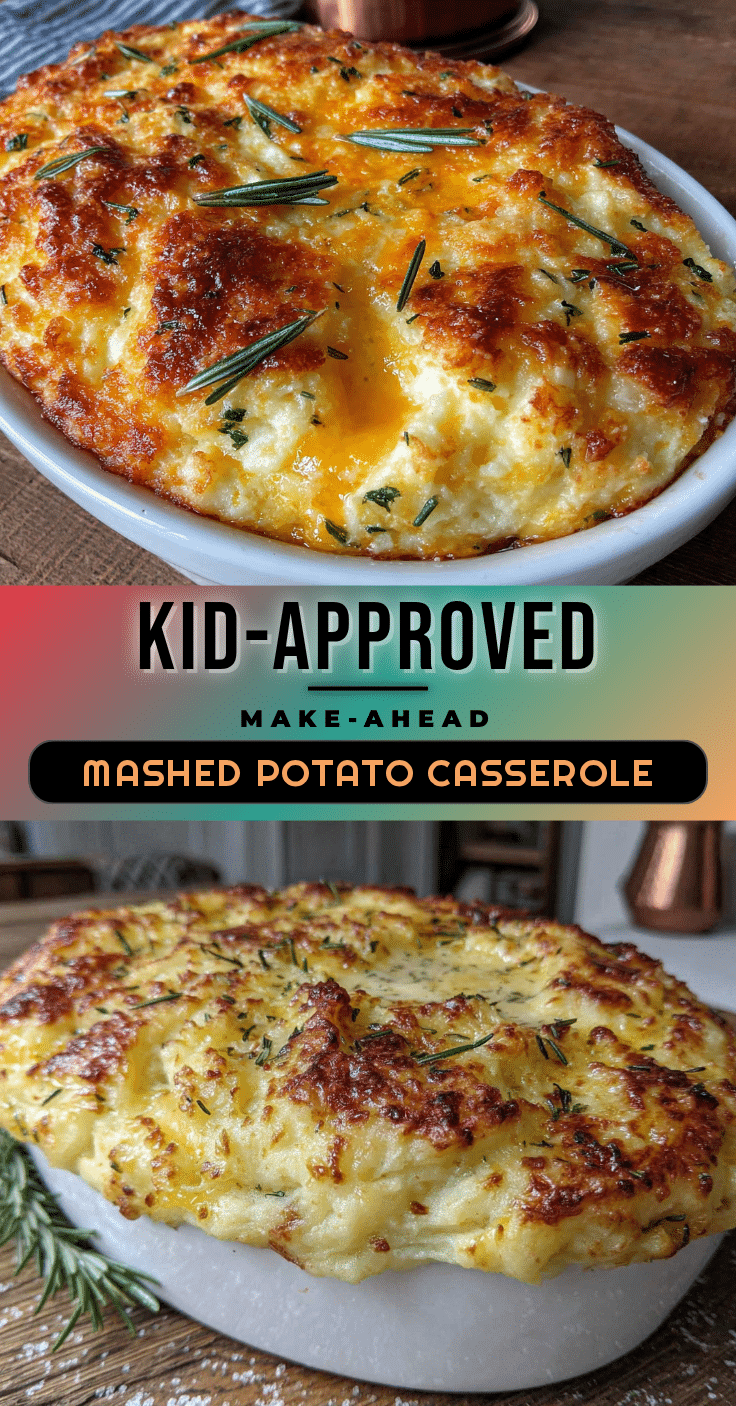
Kid-Approved Make-Ahead Mashed Potato Casserole: Easy Holiday Side

A creamy, cheesy mashed potato casserole that can be made up to 2 days ahead. Perfect for holidays or busy weeknights, this forgiving recipe features a golden, buttery top and a velvety interior thanks to a secret ingredient: cream cheese.
- Prep Time: 20 minutes
- Cook Time: 35 minutes
- Total Time: 55 minutes
- Yield: 12 servings 1x
- Category: Side Dish
- Cuisine: American
Ingredients
- 5 pounds russet potatoes, peeled and quartered
- 8 ounces cream cheese, softened
- 1/2 cup unsalted butter, plus 2 tablespoons for the topping
- 1 cup sour cream
- 1/2 cup whole milk, warmed
- 1 teaspoon garlic powder
- 1 teaspoon onion powder
- 1 1/2 teaspoons salt, plus more for the water
- 1/2 teaspoon black pepper
- 1 cup shredded cheddar cheese (optional, for topping)
- 1 teaspoon paprika (smoked or sweet)
Instructions
- Place the peeled and quartered potatoes in a large stockpot. Cover with cold water by about an inch. Add a generous tablespoon of salt to the water. Bring to a boil over high heat, then reduce to a simmer. Cook for 15-20 minutes, until a knife slides through a potato chunk with no resistance.
- Drain the potatoes in a colander and let them sit for 2-3 minutes to allow steam to escape and dry them out slightly.
- Return the hot, dry potatoes to the pot or transfer to a large mixing bowl. Add the softened cream cheese and 1/2 cup of butter. Mash together until the butter and cream cheese are melted and incorporated. Some small lumps are fine.
- Pour in the sour cream and warm milk. Add the garlic powder, onion powder, salt, and pepper. Stir until everything is combined. Taste and adjust salt if needed.
- Grease a 9×13-inch baking dish with butter or non-stick spray. Spread the mashed potato mixture evenly into the dish and smooth the top with a spatula.
- Melt the remaining 2 tablespoons of butter and drizzle evenly over the top. Sprinkle the paprika over the melted butter. If using cheddar cheese, wait to add it until the last 10 minutes of baking.
- If baking immediately, preheat oven to 350°F (175°C). Bake uncovered for 30-35 minutes, until edges are bubbly and top is golden. If making ahead, cover tightly with foil and refrigerate for up to 2 days.
- To reheat from chilled: Let the casserole sit on the counter for 20 minutes while the oven preheats. Bake covered with foil at 350°F for 40 minutes. Remove foil, add cheese if using, and bake for another 10-15 minutes until hot and bubbly.
Notes
Don’t over-mash the potatoes to avoid gluey texture. Warm the milk before adding to prevent shocking the potatoes. Season the boiling water generously for best flavor. The casserole improves after a day in the fridge. If adding cheese, add it in the last 10 minutes of baking to prevent burning. For a crowd, double the recipe and use a larger dish or two 9×13 pans, increasing baking time by 10 minutes.
Nutrition
- Serving Size: 1/12 of recipe
- Calories: 320
- Sugar: 2
- Sodium: 480
- Fat: 18
- Saturated Fat: 11
- Carbohydrates: 34
- Fiber: 3
- Protein: 7
Keywords: mashed potato casserole, make-ahead, holiday side dish, kid-friendly, creamy potatoes, easy side dish, Thanksgiving, Christmas, comfort food