Thursday night, 6:47 PM. The kitchen light hums overhead, and I am standing in front of the open fridge for the third time in ten minutes. The salmon I bought on Monday is staring back at me, and so is the bunch of asparagus that is starting to look a little apologetic. I am tired. Not the dramatic kind of tired—just the ordinary, low-hum, end-of-week tired where the idea of washing more than one pan feels like a personal betrayal. And honestly? That is exactly when this sheet pan lemon garlic salmon and asparagus became my go-to. Not because it is fancy. Not because it is impressive. But because it asks almost nothing of me and still gives me something that makes me close my eyes after the first bite. The oven does the work. I just stand there and slice a lemon. That feels fair.
There is something about a meal that comes together on a single sheet pan that feels like a small act of mercy on a busy night. No flipping. No stirring. No standing over a hot stove watching things sputter. You just arrange everything, slide it in, and let the heat do its quiet magic. The salmon stays tender and flaky, the asparagus gets those lovely charred edges, and the whole thing smells like a restaurant kitchen—but without the fuss or the bill at the end. This lemon garlic salmon and asparagus recipe is the kind of dinner I turn to when I want to eat well but cannot muster the energy for a production. It is honest food, made simply, and it never lets me down.
Why You Will Love This Recipe
Let me tell you why this particular sheet pan dinner has earned a permanent spot in my weekly rotation. I have tested it more times than I care to admit—sometimes with different thicknesses of salmon, sometimes with asparagus that was a little too skinny, once when I forgot the garlic entirely (do not do that). Every version taught me something, and this final version is the one that works every single time.
- Quick & Easy: From fridge to table in under 25 minutes. Seriously. The oven preheats while you chop, and dinner is ready before you finish scrolling through your phone.
- Simple Ingredients: You probably have garlic, lemons, and olive oil right now. The salmon and asparagus are the only things you might need to grab, and they are easy to find anywhere.
- Perfect for Busy Weeknights: This is the meal you make when you have zero energy but still want something that feels like a real dinner. Not sad cereal. Not takeout. Real food.
- Crowd-Pleaser: I have served this to picky eaters, seafood skeptics, and vegetable-avoiders. The lemon garlic flavor is so bright and approachable that everyone finds something to love.
- Unbelievably Delicious: The salmon comes out perfectly tender with crispy edges, and the asparagus roasts until it is just tender with those caramelized spots. The lemon slices soften and release their juice into everything. It is simple, but it is also genuinely fantastic.
What makes this recipe different from all the other sheet pan salmon recipes out there? It is the balance. Not too much garlic, not too little lemon. The salmon cooks at the exact right temperature so it stays moist instead of drying out. And the asparagus is timed perfectly—not mushy, not raw, but just right. I have messed up enough sheet pan dinners to know exactly what works, and this is it.
What Ingredients You Will Need
This recipe uses simple, fresh ingredients that work together beautifully without any complicated steps or hard-to-find items. Most of these are probably already in your kitchen.
- Salmon fillets (4 fillets, about 6 ounces each): Look for fillets that are similar in thickness so they cook evenly. I prefer center-cut fillets because they are the most consistent. Skin-on or skin-off both work—I usually leave the skin on because it gets crispy and delicious, plus it helps keep the fish moist. If you can, buy wild-caught salmon for better flavor, but farm-raised works perfectly fine too.
- Asparagus (1 bunch, about 1 pound): Look for spears that are medium thickness—not too skinny (they will burn) and not too thick (they take too long). Snap off the woody ends by holding each spear near the bottom and bending until it breaks naturally. That is the easiest way to find where the tough part ends.
- Lemons (2 large): One for juicing, one for slicing and roasting. The roasted lemon slices soften and caramelize, and you can squeeze them over the finished dish for an extra burst of brightness. I recommend using organic lemons if you can, since you are eating the peel.
- Garlic (4 cloves, minced): Fresh garlic makes a huge difference here. Do not use jarred minced garlic—it has a different flavor and tends to burn more easily. Take the extra minute to mince fresh cloves. Your taste buds will thank you.
- Olive oil (3 tablespoons): Use a good-quality extra virgin olive oil for the best flavor. It helps everything roast evenly and adds richness to the dish.
- Salt (1 teaspoon): I use kosher salt because it is easier to control and distributes more evenly. If you are using table salt, reduce to about ¾ teaspoon.
- Black pepper (½ teaspoon): Freshly ground is always better. It has more flavor and aroma than pre-ground pepper.
- Dried oregano (½ teaspoon): This adds a subtle herbiness that pairs beautifully with lemon and garlic. You can use fresh oregano if you have it—just use 1½ teaspoons.
- Red pepper flakes (¼ teaspoon, optional): I add these for a tiny kick of heat. It is not spicy, just warm. Leave it out if you prefer things mild.
- Fresh parsley (2 tablespoons, chopped, for garnish): Optional but nice for color and freshness. Flat-leaf parsley is best, but curly works too.
Equipment Needed
You do not need much for this recipe, which is honestly one of the best things about it. Here is what you will need:
- Sheet pan (half-sheet size, 18×13 inches): This is the standard size that fits in most ovens. A rimmed baking sheet is important so juices do not run off. If you do not have one, any large baking dish with sides will work.
- Parchment paper or aluminum foil: Lining the pan makes cleanup even easier. I prefer parchment paper because nothing sticks to it, but foil works fine too. If using foil, spray it lightly with cooking spray.
- Chef’s knife and cutting board: For mincing garlic, slicing lemons, and trimming asparagus. Nothing fancy needed.
- Small bowl for the marinade: Any small bowl works. I use a measuring cup sometimes to save dishes.
- Whisk or fork: For mixing the marinade ingredients together.
- Fish spatula or tongs: For serving. A thin, flexible spatula works best for lifting the salmon without breaking it.
I have made this recipe with a cheap baking sheet from the grocery store and it turned out great. Do not overthink the equipment. If you have a pan and an oven, you are good to go.
Preparation Method
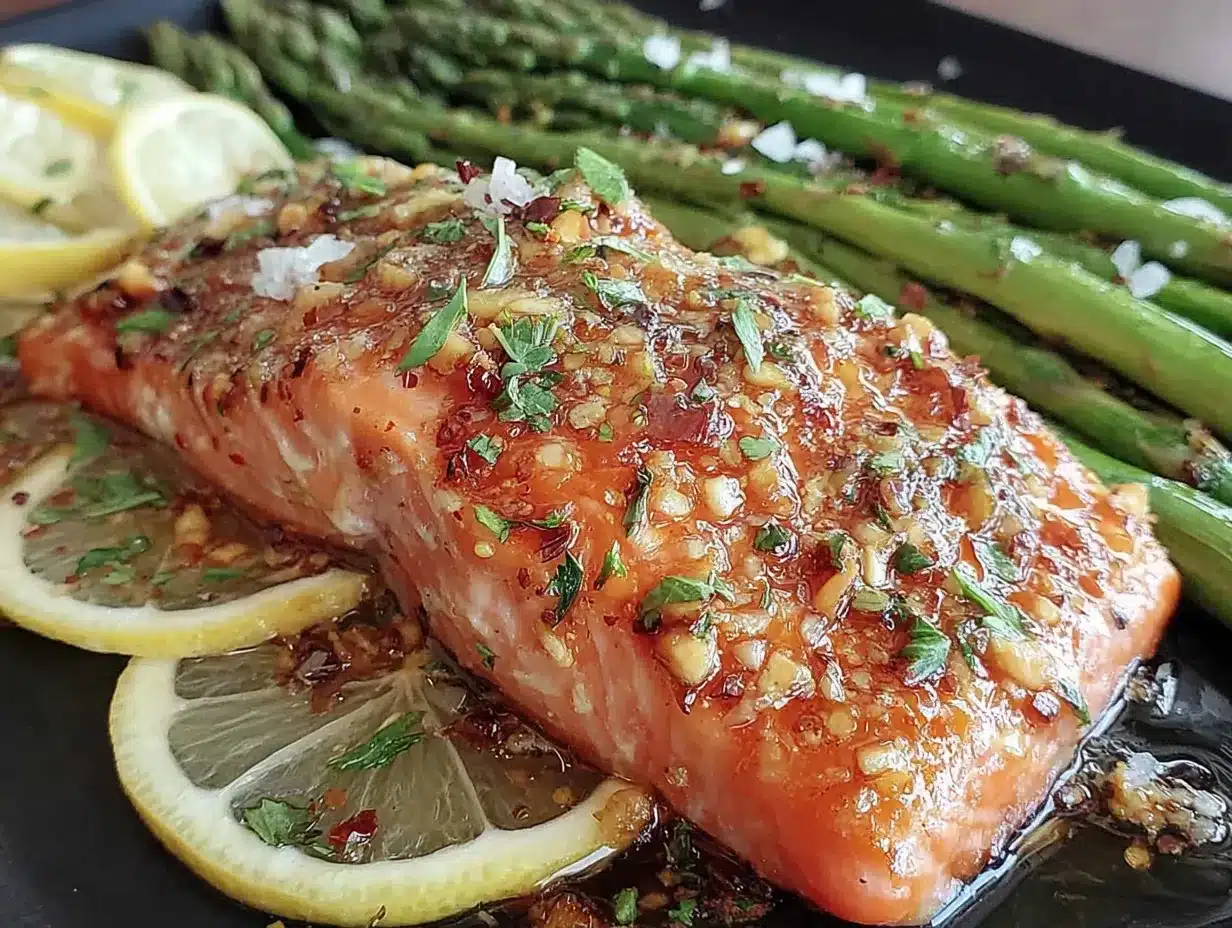
This comes together so fast that you will barely believe it. Here is exactly how to do it:
- Preheat your oven to 400°F (200°C). Give it a full 15 minutes to come to temperature. A properly preheated oven is key for getting those caramelized edges on the asparagus and keeping the salmon tender.
- Line your sheet pan with parchment paper. This step is optional but highly recommended. It makes cleanup almost nonexistent. If you use foil, crinkle it slightly first so the salmon does not stick.
- Prepare the asparagus. Rinse the asparagus and snap off the woody ends. I do this by holding each spear near the bottom and bending—it breaks right where the tough part ends. Pat the asparagus dry with a clean towel. Place the asparagus on one side of the sheet pan.
- Prepare the salmon. Pat the salmon fillets dry with paper towels. This helps them brown instead of steam. Place the fillets on the other side of the sheet pan, skin-side down if they have skin. Leave a little space between each fillet so they roast instead of steam.
- Make the lemon garlic mixture. In a small bowl, whisk together the olive oil, minced garlic, juice of one lemon, salt, pepper, oregano, and red pepper flakes (if using). It should smell bright and fragrant.
- Drizzle and coat. Pour about two-thirds of the mixture over the salmon, using a brush or spoon to coat each fillet evenly. Drizzle the remaining mixture over the asparagus and toss gently with your hands or tongs to coat. Spread everything back into an even layer.
- Add the lemon slices. Slice the remaining lemon into thin rounds, about ¼-inch thick. Place a few slices on top of each salmon fillet and scatter the rest over the asparagus. The lemon slices will soften and caramelize as they roast.
- Roast for 12-15 minutes. The exact time depends on the thickness of your salmon. For 1-inch thick fillets, 12 minutes is usually perfect. The salmon should be opaque and flake easily with a fork. The asparagus should be tender with lightly browned edges. If you like your asparagus more well-done, give it a 2-minute head start before adding the salmon.
- Rest for 2 minutes. Remove the pan from the oven and let it sit for a couple of minutes. This allows the juices to redistribute and makes the salmon even more tender.
- Garnish and serve. Sprinkle with fresh parsley and squeeze a roasted lemon slice over everything if you want extra brightness. Serve immediately.
Cooking Tips & Techniques
I have learned a few things the hard way so you do not have to. Here are my best tips for perfect sheet pan salmon and asparagus every time:
Pat the salmon dry. This is the number one thing that makes a difference. Wet salmon steams instead of roasts, and steamed salmon is sad salmon. Take the extra 30 seconds to blot it dry with paper towels before adding the marinade. You will get those beautiful golden edges that make everything look and taste better.
Watch the garlic. Garlic burns easily at high temperatures, and burnt garlic tastes bitter. If you are worried about it, you can add the garlic halfway through cooking instead of at the beginning. I usually add it at the start because I love the roasted garlic flavor, but I keep an eye on it. If your garlic starts looking too dark, the salmon is probably done anyway.
Space things out. Crowding the pan is a common mistake. If the salmon and asparagus are touching too much, they will steam instead of roast. Give everything a little breathing room. If you have more than four fillets, use two pans or cook in batches.
Check for doneness early. Salmon continues cooking after it comes out of the oven, so pull it when it is just barely opaque in the center. The internal temperature should be 125°F (52°C) for medium, or 135°F (57°C) for well-done. I prefer medium because it stays juicy and tender.
Use thick asparagus. Thin asparagus spears cook too quickly and can turn to mush. Medium-to-thick spears hold up better and get those nice caramelized edges without becoming limp. If all you have is thin asparagus, check it at the 8-minute mark.
If you love sheet pan dinners as much as I do, you should also try my easy crispy sheet pan honey mustard chicken—it uses the same hands-off approach with a completely different flavor profile.
Variations & Adaptations
This recipe is incredibly flexible. Here are some ways to change it up:
Make it dairy-free: This recipe is already dairy-free, so you are good to go. Just double-check that your salmon is not pre-seasoned with butter.
Swap the vegetables: Asparagus is wonderful, but broccoli, green beans, zucchini, or bell peppers all work beautifully. Just adjust the cooking time based on the vegetable. Broccoli needs about 15 minutes, while zucchini only needs 10. If you are swapping, keep the pieces similar in size so they cook evenly.
Try a different protein: This lemon garlic marinade works great on chicken thighs, white fish like cod or halibut, or even firm tofu. Chicken thighs will need about 20-25 minutes at the same temperature. For tofu, press it dry, slice into steaks, and roast for 20 minutes.
Add more herbs: Fresh dill, thyme, or rosemary are all fantastic with lemon and garlic. Sprinkle them over the salmon before roasting. Dill is especially good if you are serving this with a side of rice or quinoa.
Make it spicy: Increase the red pepper flakes to ½ teaspoon or add a drizzle of sriracha to the marinade. The heat pairs beautifully with the bright lemon flavor.
Go low-carb: This recipe is already low-carb and keto-friendly. Serve it as-is or with a side of cauliflower rice. For another low-carb option that is equally satisfying, check out my crispy low-carb chicken parmesan.
Serving & Storage Suggestions
This dish is best served warm, straight from the oven. The contrast between the tender salmon and the slightly crisp asparagus is at its peak right after cooking. But here is how to handle leftovers and make the most of them.
Serving temperature: Serve immediately while everything is hot. The lemon slices on top of the salmon are edible—they become soft and sweet as they roast. Squeeze them over the fish for an extra burst of juice.
What to serve with it: This meal is pretty complete on its own, but if you want to stretch it, serve it with rice, quinoa, couscous, or a simple green salad. Crusty bread is also great for soaking up any leftover lemon garlic oil on the pan. For a heartier meal, pair it with easy one-pot lemon chicken and rice for a double-dose of citrus flavor.
Storing leftovers: Store leftover salmon and asparagus in an airtight container in the refrigerator for up to 3 days. The asparagus will soften as it sits, but the flavor stays good. I do not recommend freezing this dish—the texture of both the salmon and asparagus changes too much.
Reheating: The best way to reheat is in a 300°F (150°C) oven for about 5-7 minutes. This warms everything gently without drying out the salmon. You can also use a microwave, but be careful—30-second intervals work best to avoid overcooking. The salmon will never be as good as fresh, but it is still a solid lunch the next day.
Cold leftovers: Leftover salmon is fantastic flaked over a salad the next day. Just break it into pieces and toss it with greens, cherry tomatoes, and a simple vinaigrette. The asparagus can be chopped and added too. It is a whole new meal with zero effort.
Nutritional Information & Benefits
This meal is as good for you as it tastes. Here is a rough estimate per serving (one salmon fillet plus about a quarter of the asparagus):
- Calories: 380-420
- Protein: 35-40g
- Fat: 22-26g (mostly healthy omega-3s from the salmon)
- Carbohydrates: 8-10g
- Fiber: 3-4g
- Sugar: 3-4g (natural from lemon and asparagus)
Health highlights: Salmon is packed with omega-3 fatty acids, which are great for heart and brain health. Asparagus is loaded with fiber, folate, and vitamins A, C, and K. Garlic and lemon both have anti-inflammatory properties. This is a nutrient-dense meal that leaves you feeling satisfied without being heavy.
Dietary considerations: This recipe is naturally gluten-free, dairy-free, low-carb, and keto-friendly. It is also Whole30-compliant if you skip the red pepper flakes (technically they are allowed, but some purists avoid them). It contains fish, so it is not suitable for seafood allergies.
Conclusion
This sheet pan lemon garlic salmon and asparagus is the kind of recipe that quietly becomes a staple. It is not flashy. It does not require a million ingredients or special techniques. But when you are tired and hungry and the last thing you want to do is spend an hour in the kitchen, it shows up and delivers. The salmon stays tender, the asparagus gets those lovely caramelized edges, and the lemon garlic flavor ties everything together in a way that feels both simple and special.
I love this recipe because it reminds me that cooking does not have to be complicated to be good. Sometimes the best meals are the ones that let the ingredients speak for themselves. And on those nights when I barely have the energy to preheat the oven, this dinner still makes me feel like I have my act together. That is a pretty powerful thing.
If you make this recipe, I would love to hear how it turned out. Leave a comment below and let me know if you tried any variations or if this became a regular in your dinner rotation. And if you are looking for another easy weeknight winner, do not miss my easy crispy sheet pan Italian sausage and peppers—it is just as simple and completely different in flavor. Happy cooking!
Frequently Asked Questions
Can I use frozen salmon for this recipe?
Yes, but you need to thaw it completely first. Place the frozen fillets in the refrigerator overnight, or submerge them in cold water for about 30 minutes. Pat the thawed salmon very dry before adding the marinade—frozen salmon holds more moisture, so drying it well is extra important to avoid steaming.
How do I know when the salmon is fully cooked?
The easiest way is to check with a fork. Gently press into the thickest part of the fillet—if it flakes easily and is opaque all the way through, it is done. For precise results, use an instant-read thermometer. Salmon is perfectly cooked at 125°F (52°C) for medium or 135°F (57°C) for well-done.
Can I prepare this ahead of time?
You can prep the ingredients ahead, but do not assemble until you are ready to cook. The asparagus will get soggy and the salmon will become mushy if they sit in the marinade for too long. I recommend chopping the asparagus, mincing the garlic, and mixing the marinade up to a day ahead. Store everything separately in the fridge, then assemble and roast when you are ready.
What if I do not have parchment paper?
No problem. You can use aluminum foil instead—just spray it lightly with cooking spray so the salmon does not stick. You can also roast everything directly on a greased sheet pan. The clean up will be slightly more involved, but the results are the same.
Can I double this recipe for a crowd?
Absolutely. Just use two sheet pans instead of one to avoid overcrowding. Place one pan on the top rack and one on the bottom rack, and swap their positions halfway through cooking. You may need to add 2-3 minutes to the cooking time since the oven will have more to heat. For a complete meal that feeds a crowd, consider serving this alongside my creamy garlic butter Tuscan shrimp pasta for an impressive seafood feast.
Pin This Recipe!
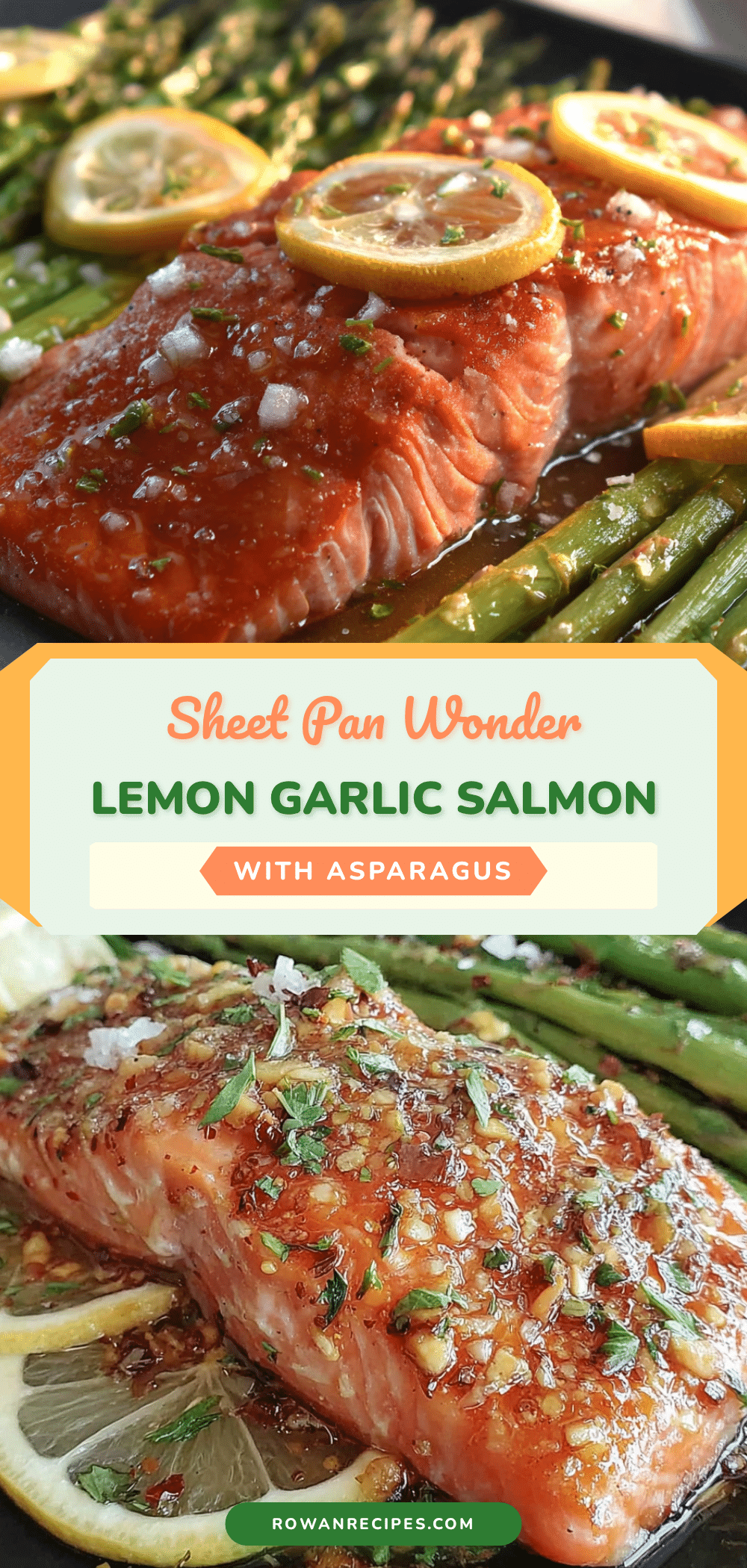
Easy Sheet Pan Lemon Garlic Salmon & Asparagus
A quick and easy sheet pan dinner featuring tender salmon and perfectly roasted asparagus with bright lemon garlic flavor. Ready in under 25 minutes with minimal cleanup, this recipe is perfect for busy weeknights.
- Prep Time: 10 minutes
- Cook Time: 15 minutes
- Total Time: 25 minutes
- Yield: 4 servings 1x
- Category: Main Course
- Cuisine: American
Ingredients
- 4 salmon fillets (about 6 ounces each)
- 1 bunch asparagus (about 1 pound)
- 2 large lemons
- 4 cloves garlic, minced
- 3 tablespoons olive oil
- 1 teaspoon kosher salt
- ½ teaspoon black pepper, freshly ground
- ½ teaspoon dried oregano
- ¼ teaspoon red pepper flakes (optional)
- 2 tablespoons fresh parsley, chopped (for garnish)
Instructions
- Preheat your oven to 400°F (200°C).
- Line your sheet pan with parchment paper.
- Prepare the asparagus: rinse, snap off woody ends, pat dry, and place on one side of the sheet pan.
- Prepare the salmon: pat fillets dry with paper towels and place on the other side of the sheet pan, skin-side down if they have skin.
- Make the lemon garlic mixture: in a small bowl, whisk together olive oil, minced garlic, juice of one lemon, salt, pepper, oregano, and red pepper flakes (if using).
- Drizzle and coat: pour about two-thirds of the mixture over the salmon, coating evenly. Drizzle remaining mixture over asparagus and toss gently to coat. Spread everything into an even layer.
- Add the lemon slices: slice the remaining lemon into thin rounds (about ¼-inch thick). Place a few slices on each salmon fillet and scatter the rest over the asparagus.
- Roast for 12-15 minutes, until salmon is opaque and flakes easily, and asparagus is tender with lightly browned edges.
- Rest for 2 minutes: remove pan from oven and let sit for a couple of minutes.
- Garnish and serve: sprinkle with fresh parsley and squeeze a roasted lemon slice over everything if desired. Serve immediately.
Notes
Pat salmon dry for best browning. Watch garlic to prevent burning. Space ingredients out on pan to avoid steaming. Check doneness early; salmon continues cooking after removal. Use medium-to-thick asparagus spears for best results.
Nutrition
- Serving Size: 1 salmon fillet plus
- Calories: 400
- Sugar: 3.5
- Sodium: 600
- Fat: 24
- Saturated Fat: 4
- Carbohydrates: 9
- Fiber: 3.5
- Protein: 37
Keywords: sheet pan salmon, lemon garlic salmon, asparagus, easy weeknight dinner, healthy dinner, low-carb, keto, gluten-free, dairy-free