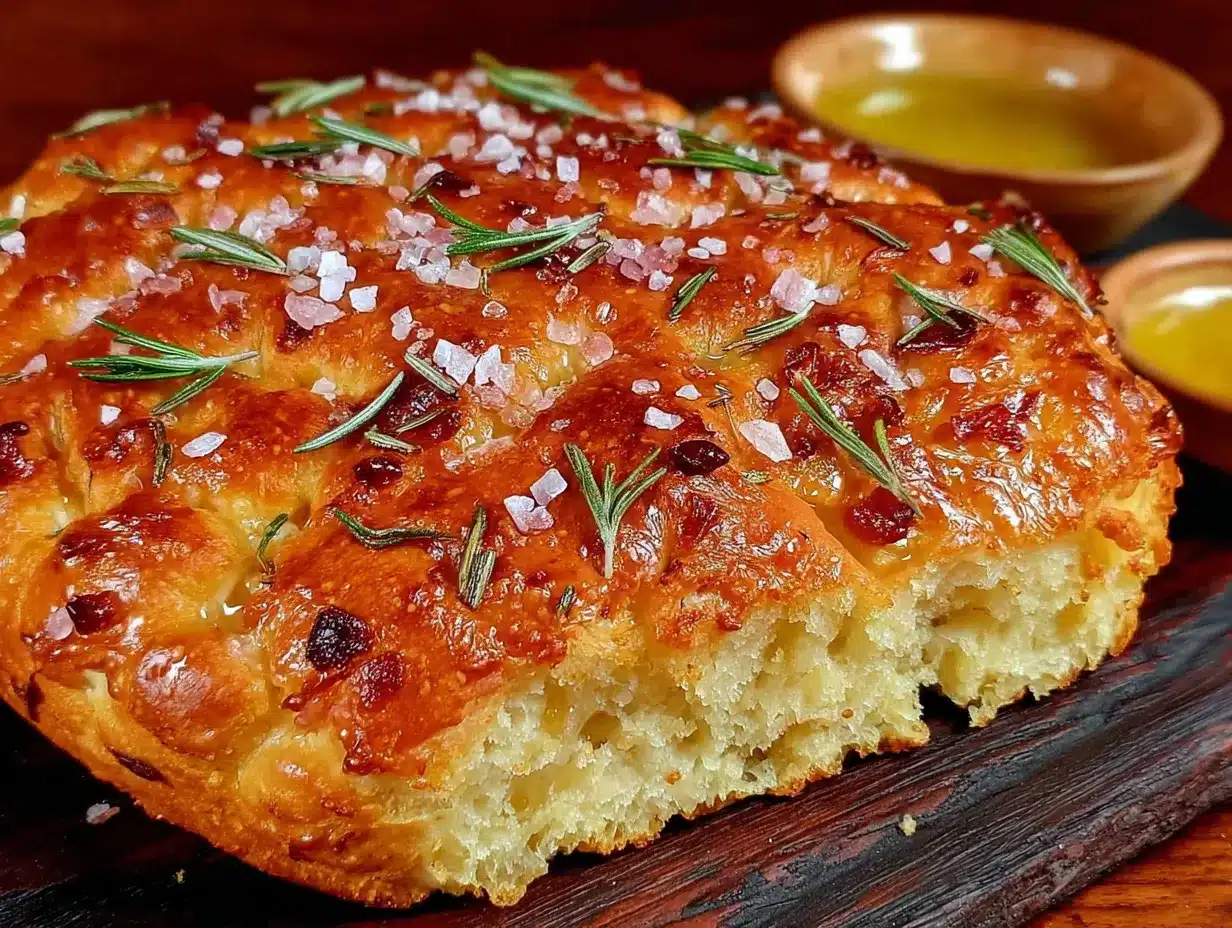
Pulling a sheet pan of bubbling, golden-brown focaccia out of the oven, the whole kitchen smells like a garlic lover’s dream and a rosemary bush had a party – and I hadn’t even planned on baking bread that day. I was supposed to be using that active sourdough starter discard for pancakes, but then I saw the leftover roasted garlic from last night’s dinner sitting on the counter, and a switch just flipped. This wasn’t going to be just any flatbread; it was going to be the best garlic rosemary sourdough focaccia, and it was happening right now, no matter what my original to-do list said.
The dough came together in a sticky, shaggy mess, which is honestly the best sign for a good focaccia. I drizzled a generous amount of olive oil into the pan, let it pool, and then plopped the dough right in. Waiting for it to rise felt like forever, but that’s the thing about sourdough – it’s on its own schedule. I spent the time picking fresh rosemary from the scraggly plant on my porch (the one I always forget to water) and smashing garlic cloves with the side of my knife. By the time the dough was ready for its signature dimples, I was ready to eat the entire thing raw.
The first time I made this, I was honestly skeptical. Could sourdough discard really create that light, airy crumb with those satisfying, craggy bubbles on top? The answer was a resounding yes, especially when you’re not afraid to use your hands. Poking those deep dimples into the dough, watching the olive oil and garlic settle into the pockets, and then the final flourish of flaky sea salt – it’s a sensory experience that makes you feel like a professional baker, even if you’re just a person in sweatpants. This bread is the kind of thing you make when you want to impress someone, but more importantly, when you want to impress yourself.
It’s the bread that turns a simple soup into a meal, a bowl of pasta into a feast, or a hunk of cheese into a five-star appetizer. Trust me on this one. You’re going to want this in your regular rotation.
Why You’ll Love This Recipe
I have tested this recipe more times than I care to admit, tweaking hydration levels and fermentation times to get it just right. This isn’t just another focaccia recipe; it’s the one that finally made me feel like I could consistently bake a bakery-quality loaf at home. Here is why it will be your new go-to:
- Uses Sourdough Discard: This is the perfect way to use up that unfed starter you feel guilty about throwing away. No more waste, just incredible flavor.
- Incredibly Flavorful: The combination of tangy sourdough, fragrant roasted garlic, and woodsy rosemary is a flavor profile that’s hard to beat. It’s complex and deeply satisfying.
- Foolproof Texture: The high hydration dough creates that signature airy crumb and crispy, almost-fried bottom crust that makes focaccia so addictive.
- Simple Ingredients: You likely have everything you need in your pantry right now. No specialty flours or hard-to-find ingredients required.
- Perfect for Any Occasion: Serve it as an appetizer with olive oil for dipping, alongside a bowl of cozy stuffed pepper soup, or use it for the best sandwich bread you’ve ever had.
- Make-Ahead Friendly: The dough can do a slow, cold fermentation in the fridge, making it a fantastic recipe for planning ahead.
This is the kind of bread that makes you close your eyes after the first bite. It’s comfort food in its purest form – warm, salty, herby, and utterly irresistible.
What Ingredients You Will Need
This recipe relies on a handful of high-quality ingredients to deliver its bold flavor and signature texture. The magic is in the simplicity, so using good stuff here really matters.
- Bread Flour (3 cups / 360g): The higher protein content in bread flour is key for developing the strong gluten network needed for all those beautiful air pockets. All-purpose flour works in a pinch, but the texture won’t be quite as chewy and structured.
- Sourdough Discard (1 cup / 240g): This is your flavor powerhouse. Use unfed, room-temperature discard straight from the fridge. It adds that signature tang and helps with the fermentation.
- Warm Water (1 cup / 240ml): The water should be lukewarm (around 80-90°F), not hot, to help activate the yeast without killing it.
- Olive Oil (¼ cup + more for drizzling): Don’t skimp here. A good quality extra-virgin olive oil is non-negotiable for flavor and that crispy, golden-brown bottom crust.
- Active Dry Yeast (1 teaspoon): This gives the dough a little extra lift, ensuring a light and airy crumb even with the sourdough discard. You can omit it for a slower, pure-sourdough rise, but it will take much longer.
- Salt (1 ½ teaspoons): Fine sea salt for the dough, and a generous sprinkle of flaky sea salt (like Maldon) right before baking.
- Garlic (6-8 cloves): Fresh garlic is a must. We’ll be using it two ways: some cloves thinly sliced and pressed into the dough, and some roasted for a sweeter, mellower flavor. I love using roasted garlic for a deeper, caramelized taste.
- Fresh Rosemary (2-3 sprigs): Fresh rosemary is far superior to dried here. The oils are more fragrant and the texture is better. Strip the leaves from the woody stems and roughly chop them.
Ingredient Tips:
- For the best texture, weigh your flour and water with a kitchen scale. It makes a huge difference in baking.
- If you don’t have bread flour, you can use all-purpose, but the focaccia will be slightly less chewy.
- My go-to brand for bread flour is King Arthur, but any high-protein brand works well.
Equipment Needed
You don’t need a fancy bakery setup to make this bread, but a few key tools make the process much smoother.
- 10×15-inch Sheet Pan or 9×13-inch Baking Dish: A standard half-sheet pan is perfect for a thinner, crispier focaccia. A 9×13-inch dish will give you a thicker, softer bread.
- Large Mixing Bowl: A good-sized bowl is essential for mixing and letting the dough rise.
- Plastic Bowl Scraper or Spatula: This is a game-changer for handling sticky, high-hydration dough without getting it all over your hands.
- Kitchen Scale: For the most accurate and consistent results, especially with the flour and water.
- Digital Thermometer: Optional but helpful for checking your water temperature and the internal temperature of the baked focaccia (it should be around 200°F).
Honestly, you can even get away with just a bowl and your hands. The most important tool is patience!
Preparation Method
Let’s get to the fun part. This process is more about feel and time than strict precision, so relax and enjoy it.
- Bloom the Yeast (5 minutes): In your large mixing bowl, combine the warm water and active dry yeast. Let it sit for 5 minutes until it becomes foamy. This proves the yeast is alive and active. If it doesn’t foam, your water may have been too hot or your yeast is old.
- Mix the Dough (5 minutes): Add the sourdough discard, olive oil, and fine sea salt to the yeast mixture. Stir to combine. Then, add the bread flour. Use your bowl scraper or a sturdy spatula to mix until a shaggy, sticky dough forms. There should be no dry bits of flour left. The dough will be very wet – this is normal and good!
- Bulk Fermentation (2-3 hours at room temp): Cover the bowl with a damp kitchen towel or plastic wrap. Let it rise in a warm, draft-free spot for 2-3 hours. It should roughly double in size and look bubbly. During the first hour, perform a set of “stretch and folds” every 20-30 minutes. To do this, wet your hand, grab one side of the dough, stretch it up, and fold it over the top. Rotate the bowl and repeat 3-4 times. This builds strength without kneading.
- Prepare the Pan (5 minutes): Generously coat your sheet pan or baking dish with 2-3 tablespoons of olive oil. Make sure the bottom and sides are well coated. This is crucial for that crispy, golden crust.
- Transfer and Rest (30 minutes): Use your oiled hands or a bowl scraper to gently coax the risen dough into the oiled pan. Don’t deflate it! Just plop it in. Let it rest, uncovered, for 30 minutes. This allows the gluten to relax.
- Dimple and Top (10 minutes): After the rest, drizzle the top of the dough with another tablespoon of olive oil. Now, using your fingertips (not your nails!), press deep dimples all over the surface of the dough, pushing all the way to the bottom of the pan. Don’t be shy! Tuck the thinly sliced garlic cloves and most of the chopped rosemary into the dimples. If you’re using roasted garlic, you can smash the cloves and dot them over the top.
- Final Rise (1-2 hours): Cover the pan loosely with plastic wrap or a clean towel. Let it rise again for 1-2 hours, or until the dough is puffy and jiggly. The time will depend on the temperature of your kitchen.
- Preheat and Bake (25-30 minutes): About 30 minutes before you’re ready to bake, preheat your oven to 425°F (220°C). Just before baking, sprinkle the top generously with flaky sea salt and the remaining fresh rosemary. Bake for 25-30 minutes, or until the top is deep golden brown and the bottom sounds hollow when tapped.
- Cool (10 minutes): Let the focaccia cool in the pan on a wire rack for at least 10 minutes before slicing. This allows the steam to finish cooking the interior. If you try to cut it right away, it will be gummy.
Pro-Tip: For an even crispier bottom, after baking, carefully remove the focaccia from the pan and place it directly on the oven rack for the last 2-3 minutes of baking.
Cooking Tips & Techniques
I’ve made my fair share of flat, dense focaccia. Here are the lessons I learned the hard way so you don’t have to.
- Don’t be afraid of a sticky dough. High hydration is the secret to an airy crumb. If your dough feels like a manageable, slightly sticky blob, you’re on the right track. Resist the urge to add more flour.
- Use cold water for a slower rise. If your kitchen is very warm (over 80°F), use cold water to slow down the fermentation. This gives the dough more time to develop flavor without over-proofing.
- The dimples are not optional. Poking those deep wells is what prevents the dough from puffing up into a giant balloon. It also creates the perfect pockets to hold the olive oil, garlic, and salt. Be aggressive!
- Let it cool. I know it’s tempting to tear into it immediately, but the focaccia continues to set as it cools. Cutting into it too early will result in a gummy, doughy interior. Patience, my friend.
- For a faster version: You can skip the stretch and folds. Just mix the dough, let it rise for 1.5 hours, then proceed to the pan. The texture won’t be quite as open, but it will still be delicious.
Variations & Adaptations
This recipe is a fantastic base for endless creativity. Here are a few of my favorite twists.
- Everything Bagel Focaccia: After dimpling, sprinkle the top with a generous amount of everything bagel seasoning (sesame seeds, poppy seeds, dried garlic, dried onion, and salt). It’s incredible.
- Caramelized Onion & Thyme: While the dough is rising, slowly caramelize 2 large sliced onions in butter and olive oil. Once golden and sweet, dot them over the dimpled dough along with fresh thyme leaves.
- Spicy Pepperoni & Cheese: For a more decadent version, tuck small pieces of pepperoni and cubes of low-moisture mozzarella into the dimples before the final rise. The cheese will get all bubbly and browned.
- Gluten-Free Adaptation: I’ve had success using a high-quality 1:1 gluten-free baking flour blend. The texture will be a bit more cake-like, but the flavor is still fantastic. You may need to adjust the hydration slightly.
- Herb-Infused Oil: For an extra layer of flavor, gently warm ¼ cup of olive oil with a few sprigs of rosemary and a smashed garlic clove. Let it cool, then use this infused oil in the pan and for the top.
Serving & Storage Suggestions
This focaccia is a star in its own right, but it also plays well with others.
- Serving Temperature: It’s best served warm, straight from the oven, or at room temperature. The texture is most enjoyable when it’s not cold from the fridge.
- Presentation: Cut it into squares or long strips and serve it on a wooden board. A small bowl of high-quality balsamic vinegar and olive oil for dipping is a classic and welcome addition.
- What to Serve With It: It’s the perfect side for any Italian meal, like a simple pasta or a sheet pan Italian sausage and peppers. It also makes an incredible base for a sandwich, especially with some crispy low-carb chicken parmesan tucked inside.
- Storage: Store leftover focaccia in an airtight container at room temperature for up to 2 days. Do not refrigerate it, as the fridge will dry it out and make it stale.
- Reheating: The best way to revive focaccia is to pop it in a 350°F oven for 5-7 minutes. You can also reheat it in a dry skillet over medium heat for a minute or two per side. The microwave will make it rubbery, so avoid it if you can.
- Freezing: This focaccia freezes beautifully. Wrap it tightly in plastic wrap, then in foil, and freeze for up to 3 months. Thaw at room temperature and reheat as directed.
Nutritional Information & Benefits
While this is a treat, it’s made with wholesome ingredients. Here’s a general estimate per serving (1/8 of the recipe).
- Calories: ~280
- Fat: 12g
- Carbohydrates: 35g
- Protein: 7g
- Fiber: 1g
Health Highlights: The sourdough fermentation process can make the bread easier to digest for some people. The olive oil provides healthy monounsaturated fats, and garlic and rosemary are packed with antioxidants. It’s a delicious way to enjoy a little bit of everything good.
Dietary Considerations: This recipe is vegetarian. For a vegan version, ensure your sugar (if you use any) is vegan. It contains gluten and is not suitable for a strict low-carb diet.
Conclusion
This best garlic rosemary sourdough focaccia is more than just a bread recipe; it’s a little bit of kitchen magic that’s surprisingly easy to pull off. It turns simple pantry staples into something that feels special, and the aroma alone is worth the effort. I love how forgiving it is, how it rewards a gentle touch and a little bit of patience. It’s the kind of recipe that makes you feel like a real baker, even on a Tuesday night.
I really hope you give this a try. Don’t be afraid to make it your own – add your favorite toppings, use different herbs, or just enjoy it plain with a pat of butter. When you make it, I’d love to hear how it turned out! Leave a comment below and let me know what you think, or tag me in your photos on social media. Happy baking, friends!
Frequently Asked Questions
Can I use all-purpose flour instead of bread flour?
Yes, you can. The focaccia will still be delicious, but it will be slightly less chewy and have a less open crumb. Bread flour’s higher protein content creates a stronger gluten network.
My dough is very sticky. Is that okay?
Yes, absolutely! A high-hydration dough is key for an airy focaccia. It should be sticky and shaggy. Resist the urge to add more flour, and use a wet bowl scraper or oiled hands to handle it.
Can I make this without the active dry yeast?
Yes, you can. Omit the commercial yeast and let the sourdough discard do all the work. The bulk fermentation will take much longer, potentially 8-12 hours at room temperature, depending on the strength of your starter.
How do I store leftover focaccia?
Store it in an airtight container at room temperature for up to 2 days. Do not refrigerate it, as it will dry out. For longer storage, wrap it tightly and freeze it for up to 3 months.
Why didn’t my focaccia get those big air bubbles?
Several things could be at play. Your dough might have been under-hydrated (too much flour), under-proofed (not enough rise time), or you may have deflated it too aggressively when transferring it to the pan. A wetter dough and a gentle hand are key.
Pin This Recipe!

Best Garlic Rosemary Sourdough Focaccia with Flaky Sea Salt

This sourdough focaccia is a garlic lover’s dream, with a tangy crumb, fragrant rosemary, and a crispy, golden-brown crust. It’s an easy, foolproof recipe that turns simple pantry staples into a bakery-quality loaf.
- Prep Time: 20 minutes
- Cook Time: 25-30 minutes
- Total Time: 3 hours 45 minutes (including rising time)
- Yield: 8 servings 1x
- Category: Bread
- Cuisine: Italian
Ingredients
- 3 cups (360g) bread flour
- 1 cup (240g) sourdough discard (unfed, room temperature)
- 1 cup (240ml) warm water (80-90°F)
- 1/4 cup olive oil, plus more for drizzling
- 1 teaspoon active dry yeast
- 1 1/2 teaspoons fine sea salt
- 6–8 cloves garlic, thinly sliced (some roasted if desired)
- 2–3 sprigs fresh rosemary, leaves stripped and chopped
- Flaky sea salt (e.g., Maldon), for sprinkling
Instructions
- Bloom the yeast: In a large mixing bowl, combine warm water and active dry yeast. Let sit for 5 minutes until foamy.
- Mix the dough: Add sourdough discard, olive oil, and fine sea salt to the yeast mixture. Stir to combine. Add bread flour and mix with a bowl scraper or spatula until a shaggy, sticky dough forms with no dry bits.
- Bulk fermentation: Cover the bowl with a damp towel or plastic wrap. Let rise in a warm, draft-free spot for 2-3 hours until doubled and bubbly. During the first hour, perform stretch and folds every 20-30 minutes (wet your hand, stretch one side of dough up, fold over top; rotate bowl and repeat 3-4 times).
- Prepare the pan: Generously coat a 10×15-inch sheet pan or 9×13-inch baking dish with 2-3 tablespoons olive oil, covering bottom and sides.
- Transfer and rest: Use oiled hands or a bowl scraper to gently coax the risen dough into the oiled pan without deflating. Let rest uncovered for 30 minutes.
- Dimple and top: Drizzle top with another tablespoon olive oil. Using fingertips, press deep dimples all over the dough, pushing to the bottom of the pan. Tuck sliced garlic and most of the chopped rosemary into the dimples. If using roasted garlic, smash cloves and dot over top.
- Final rise: Cover pan loosely with plastic wrap or a towel. Let rise for 1-2 hours until puffy and jiggly.
- Preheat and bake: About 30 minutes before baking, preheat oven to 425°F (220°C). Just before baking, sprinkle top generously with flaky sea salt and remaining rosemary. Bake for 25-30 minutes until deep golden brown and bottom sounds hollow when tapped.
- Cool: Let focaccia cool in the pan on a wire rack for at least 10 minutes before slicing.
Notes
For an even crispier bottom, after baking, carefully remove focaccia from pan and place directly on oven rack for last 2-3 minutes. Use a kitchen scale for best results. Dough will be very sticky—resist adding more flour.
Nutrition
- Serving Size: 1/8 of recipe
- Calories: 280
- Sugar: 1
- Sodium: 450
- Fat: 12
- Saturated Fat: 2
- Carbohydrates: 35
- Fiber: 1
- Protein: 7
Keywords: sourdough focaccia, garlic rosemary focaccia, sourdough discard recipe, easy focaccia, homemade bread, Italian flatbread