I burned the bottom of my first three pots of minestrone before I figured out what I was doing wrong. Not just a little scorched either—I’m talking about that deeply bitter, stuck-to-the-bottom-of-the-pan kind of burned that makes the whole kitchen smell like regret. The fourth attempt? That one actually worked. And honestly, the fifth version is the one I’m sharing with you today.
It happened because I was trying to rush things. You know how it goes—you’re hungry, the kids are hungry, and that bag of fall vegetables in the crisper drawer is staring at you with judgment. So I cranked the heat, threw everything in at once, and walked away thinking I’d nailed it. Twenty minutes later, I was scraping carbon off my favorite Dutch oven.
But here’s the thing about failure in the kitchen—it teaches you stuff you’d never learn from a perfect first try. I learned that this soup needs patience. It needs the right order of operations. And it definitely needs that little trick I’m about to show you for keeping the pasta from turning into mush while still getting that rich, slow-cooked flavor.
This Cozy One-Pot Fall Vegetable Minestrone Soup became my October obsession. I made it every Sunday for six weeks straight, tweaking and adjusting until every single spoonful felt right. The sweet potatoes get buttery soft, the kale keeps just enough bite, and that broth—oh, that broth tastes like it simmered all day even though it’s ready in under an hour.
I’m not here to pretend this is some heirloom recipe passed down through generations. It’s not. It’s a soup I built from scratch because I wanted something warm and filling that didn’t require a trip to three different grocery stores. And after burning through those early attempts, I can promise you—this version works.
Why You’ll Love This Recipe
Let me tell you why this soup has earned a permanent spot in my fall rotation. I’ve tested it on picky eaters, vegetable skeptics, and even my neighbor who claims she “doesn’t do soup.” Every single one of them asked for seconds.
- One-Pot Wonder : Everything cooks in a single pot—no draining pasta separately, no sautéing vegetables in a second pan, no extra dishes to wash. Your sink will thank you.
- Pantry-Friendly Ingredients : Canned tomatoes, dried herbs, frozen vegetables, and pantry staples come together beautifully. You probably already have most of what you need.
- Perfect for Meal Prep : This soup gets better after a day in the fridge. Make it Sunday night and enjoy it all week long.
- Naturally Hearty : Between the beans, pasta, and sweet potatoes, this soup eats like a meal. No need for bread or sides unless you want them.
- Fall Flavors Done Right : The combination of sweet potato, sage, and rosemary with that tomatoey broth is pure autumn comfort.
What makes this recipe different from every other minestrone out there? It’s the layering technique. Most recipes dump everything in and hope for the best. I spent weeks figuring out the exact moment to add each ingredient so the pasta stays al dente, the vegetables keep their texture, and the broth develops that slow-simmered depth without actually simmering for hours.
This isn’t just another soup recipe. It’s the kind of meal that makes you close your eyes after the first bite and forget about whatever stressful thing happened earlier in the day. It’s comfort in a bowl, and it’s exactly what you need when the air gets crisp and the leaves start turning.
What Ingredients You Will Need
This recipe uses simple, wholesome ingredients that come together to create something genuinely special. No weird specialty items, no trips to fancy markets—just good, honest food.
For the Soup Base
- 2 tablespoons olive oil (use a good-quality extra virgin for better flavor)
- 1 medium yellow onion, diced (about 1 cup)
- 3 cloves garlic, minced
- 2 medium carrots, peeled and diced
- 2 celery stalks, diced
- 1 medium sweet potato, peeled and cubed into ½-inch pieces (about 2 cups)
- 1 teaspoon dried rosemary
- 1 teaspoon dried sage
- ½ teaspoon dried thyme
- ½ teaspoon red pepper flakes (optional, but highly recommended)
- Salt and black pepper to taste
For the Liquid and Canned Goods
- 6 cups low-sodium vegetable broth (I prefer Better Than Bouillon for the richest flavor)
- 1 can (14.5 ounces) fire-roasted diced tomatoes, undrained
- 1 can (15 ounces) cannellini beans, drained and rinsed
- 1 can (15 ounces) kidney beans, drained and rinsed
For the Pasta and Greens
- 1 cup small pasta (ditalini, elbow macaroni, or small shells work great)
- 3 cups chopped kale (stems removed, leaves roughly torn)
- 2 tablespoons tomato paste
- 1 tablespoon balsamic vinegar (adds brightness at the end)
For Serving (Optional but Lovely)
- Freshly grated Parmesan cheese
- Fresh basil or parsley, chopped
- Crusty bread for dipping
A few notes from my testing kitchen: Fire-roasted tomatoes make a real difference here. The smoky undertones complement the sweet potato and sage beautifully. If you can’t find them, regular diced tomatoes work fine—just add an extra pinch of smoked paprika to compensate.
For the beans, I’ve used chickpeas in a pinch and they worked great. White beans are traditional, but feel free to swap in whatever you have. The pasta choice matters more than you’d think—small shapes hold up better and cook evenly. I’ve tried this with rotini and it worked, but ditalini is my favorite for that classic minestrone feel.
Kale is non-negotiable in my book. It holds its shape and adds that slight bitterness that balances the sweet potato. Spinach will work if that’s what you have, but add it at the very end and expect it to wilt completely.
Equipment Needed
The beauty of a one-pot recipe is that you don’t need much. Here’s what I use:
- Large Dutch oven or heavy-bottomed pot (5 to 6 quarts)—this is your workhorse. I use my enameled cast iron Le Creuset, but any heavy pot with a tight-fitting lid works. The weight helps distribute heat evenly and prevents burning.
- Chef’s knife and cutting board—you’ll be doing some chopping, so a sharp knife makes the whole process faster and safer.
- Wooden spoon or silicone spatula—something sturdy for stirring and scraping the bottom of the pot.
- Measuring cups and spoons—accuracy matters, especially with the broth and pasta.
- Can opener—obvious, but worth mentioning if yours is finicky.
- Ladle—for serving without making a mess.
If you don’t have a Dutch oven, a large stockpot works fine. Just keep an eye on the heat and stir more frequently since thinner pots can develop hot spots. I learned this the hard way during my burning phase—thin pots require more attention.
Preparation Method
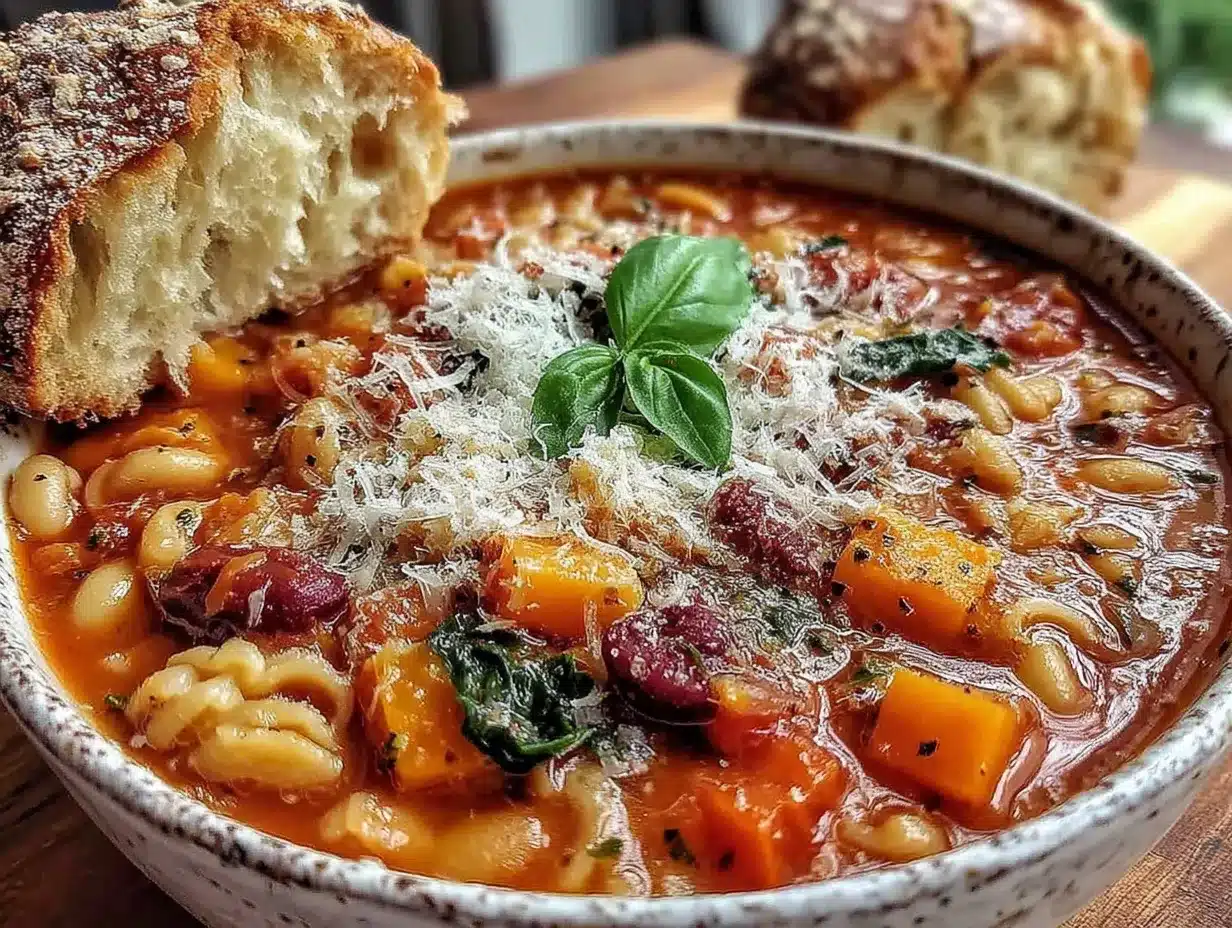
Take a deep breath. This looks like a lot of steps, but I promise it’s straightforward. Each step builds on the last one, and by the end you’ll have a pot of soup that tastes like it took hours.
Step 1: Sauté the Aromatics
Heat the olive oil in your Dutch oven over medium heat. Add the diced onion and cook for 4-5 minutes, stirring occasionally, until it turns translucent and starts to soften. Add the minced garlic and cook for 30 seconds—just until fragrant. Don’t let the garlic brown or it’ll turn bitter.
Step 2: Build the Vegetable Base
Add the carrots, celery, and sweet potato to the pot. Stir everything together and cook for 5-6 minutes, letting the vegetables soften slightly. The sweet potato will start to get a little color on the edges—that’s good. Add the dried rosemary, sage, thyme, red pepper flakes, and a generous pinch of salt and pepper. Stir and cook for 1 minute until the herbs smell amazing.
Step 3: Add Tomato Paste and Toast It
Push the vegetables to the sides of the pot and add the tomato paste to the center. Let it cook for 1-2 minutes, stirring occasionally, until it darkens to a deeper red. This step deepens the flavor and removes that raw tomato taste. Stir the paste into the vegetables afterward.
Step 4: Pour in the Liquids
Add the vegetable broth and the undrained fire-roasted tomatoes. Use your wooden spoon to scrape up any browned bits from the bottom of the pot—that’s pure flavor. Bring the soup to a gentle boil, then reduce the heat to maintain a steady simmer.
Step 5: Simmer the Vegetables
Let the soup simmer uncovered for 15 minutes. The sweet potato should be fork-tender but not falling apart. Taste the broth and adjust seasoning—this is where you add more salt if needed. The broth should taste rich and slightly savory at this point.
Step 6: Add Beans and Pasta
Stir in the drained cannellini beans, kidney beans, and the small pasta. Increase the heat slightly to bring the soup back to a gentle boil, then reduce to a simmer. Cook for 8-10 minutes, stirring occasionally to prevent the pasta from sticking to the bottom. The pasta should be al dente—firm to the bite but cooked through.
Step 7: Wilt the Greens
Add the chopped kale and stir it into the hot soup. It will wilt almost immediately. Let it cook for 2-3 minutes until the kale is tender but still has some structure. You don’t want it mushy.
Step 8: Finish with Balsamic
Remove the pot from the heat. Stir in the balsamic vinegar—this brightens everything and balances the richness. Taste one more time and adjust salt and pepper if needed.
Step 9: Rest and Serve
Let the soup sit for 5 minutes before serving. This allows the flavors to meld together. Ladle into bowls, top with Parmesan and fresh herbs, and serve with crusty bread if you’re feeling extra cozy.
A quick note about the pasta: it will continue to absorb liquid as the soup sits. If you’re planning leftovers, consider cooking the pasta separately and adding it to individual bowls before serving. This keeps the pasta from turning into mushy blobs by day three. I learned this after my second batch turned into pasta soup—still delicious, but not quite the same texture.
Cooking Tips & Techniques
I’ve made this soup at least twenty times now, and I’ve collected some hard-won wisdom along the way. Here’s what I wish someone had told me before I started.
Don’t rush the sauté step. I know it’s tempting to just dump everything in and go, but those first few minutes of cooking the onions and vegetables build the foundation of flavor. Take your time. Let the onions get soft and sweet. Let the tomato paste darken. Your patience will be rewarded.
Watch your heat. This is the lesson I learned from burning those first three pots. Medium heat is your friend. High heat will scorch the bottom before you even realize what’s happening, especially once the tomato products go in. If you see bubbles that are too aggressive, turn it down. A gentle simmer is all you need.
Season in layers. Add salt at the beginning when you sauté the vegetables, then again when you add the broth, and taste again at the end. Building salt in stages prevents that flat, one-dimensional salty taste. The same goes for herbs—some go in early, some go in late for freshness.
Save the Parmesan rind. If you have a Parmesan rind hanging out in your fridge, toss it into the soup while it simmers. It adds an umami depth that’s absolutely incredible. Just fish it out before serving. This is one of those little tricks that makes people think you spent all day cooking.
Texture check. The sweet potato should be tender but not falling apart. The pasta should have a slight bite. The kale should be wilted but not slimy. If anything is off, adjust your cooking time accordingly next time.
Variations & Adaptations
This soup is incredibly forgiving, and I’ve tried more variations than I can count. Here are my favorites:
Make It Vegan : The recipe is already vegan if you skip the Parmesan topping. Use a high-quality vegetable broth and load up on the fresh herbs for extra flavor. Nutritional yeast sprinkled on top gives a cheesy flavor without dairy.
Swap the Vegetables : Butternut squash works beautifully instead of sweet potato. Zucchini or yellow squash added in the last 10 minutes of cooking adds a different texture. In winter, try parsnips or turnips for a more earthy flavor profile.
Change the Protein : Add cooked Italian sausage (chicken or pork) for a heartier version. Brown it in the pot before sautéing the vegetables, then proceed with the recipe. Leftover shredded chicken works great too—add it with the beans.
Gluten-Free Option : Use gluten-free pasta or substitute with cooked quinoa or rice. Add the quinoa or rice at the same time as the beans and cook until tender. Brown rice takes longer, so adjust accordingly.
Spice It Up : Add a diced jalapeño with the onions for heat. Or stir in a teaspoon of smoked chipotle powder with the herbs. The smoky-spicy combination with the sweet potato is addictive.
My Personal Favorite Variation : I made a version with leftover roasted butternut squash from Thanksgiving, swapped the kale for spinach, and added a splash of coconut milk at the end. It was creamy, slightly sweet, and completely unexpected. My family still talks about it.
Serving & Storage Suggestions
This soup is best served hot, straight from the pot, with a generous sprinkle of Parmesan and a side of crusty bread for dipping. The bread soaks up that beautiful broth in a way that’s almost unfair.
For a complete meal, pair it with a simple green salad dressed with lemon vinaigrette. The acidity cuts through the richness of the soup and keeps things balanced. A glass of crisp white wine or a light red like Pinot Noir works beautifully too.
Storage Instructions
Let the soup cool completely before storing. Transfer to airtight containers and refrigerate for up to 5 days. The flavors actually improve after a day or two as they meld together.
Freezing
This soup freezes beautifully for up to 3 months. Here’s the catch: the pasta will get soft when thawed and reheated. If you’re planning to freeze, I recommend cooking the pasta separately and adding it fresh when you reheat. Freeze the soup base without the pasta, then cook fresh pasta when you’re ready to serve.
Reheating
Reheat on the stovetop over medium-low heat, adding a splash of broth or water if the soup has thickened too much. Microwave works in a pinch—just heat in 30-second intervals, stirring between each. Add a fresh sprinkle of Parmesan and herbs to bring back that just-made feeling.
The soup thickens as it sits because the pasta absorbs liquid. Don’t be alarmed—just add a little extra broth or water when reheating and it’ll loosen right up.
Nutritional Information & Benefits
This soup is packed with good-for-you ingredients that actually taste amazing. Here’s the estimated nutritional breakdown per serving (based on 6 servings):
- Calories: 285
- Protein: 12g
- Carbohydrates: 48g
- Fiber: 12g
- Fat: 6g
- Sodium: 680mg (varies based on broth and added salt)
Health Highlights
Sweet potatoes are loaded with vitamin A and fiber, which supports eye health and digestion. Kale is a superfood powerhouse with vitamins K, A, and C plus antioxidants. Beans provide plant-based protein and soluble fiber that helps keep you full and supports heart health.
This soup is naturally dairy-free and can easily be made gluten-free. It’s also low in saturated fat and packed with vegetables, making it a nutrient-dense option for fall and winter meals.
From my personal wellness perspective, this is the kind of meal that makes you feel good without feeling deprived. It’s hearty enough to satisfy comfort food cravings but light enough that you don’t feel weighed down afterward.
Conclusion
This Cozy One-Pot Fall Vegetable Minestrone Soup has become my go-to for those days when the weather turns cold and I need something warm and comforting without spending hours in the kitchen. It’s forgiving, adaptable, and genuinely delicious.
I’ve burned through my fair share of pots to get here, and I’m sharing every lesson I learned along the way. The key is patience—letting each step do its job before rushing to the next one. Trust the process, and you’ll end up with a soup that tastes like it simmered all day.
I’d love to hear how yours turns out. Did you add your own twist? Swap in a different vegetable? Find a new favorite herb combination? Drop a comment below and let me know. And if you’re looking for another cozy one-pot meal, you might enjoy this cozy stuffed pepper soup that’s equally comforting and comes together in 30 minutes.
Happy cooking, friends. Stay warm out there.
Frequently Asked Questions
Can I use frozen vegetables instead of fresh?
Absolutely. Frozen carrots, celery, and even sweet potato work well. Add them directly to the pot without thawing, and adjust the cooking time by a few minutes. Frozen kale or spinach can be added at the end just like fresh.
Why did my pasta turn mushy?
This usually happens when the soup sits too long after cooking or when you reheat it. The pasta continues to absorb liquid. To avoid this, cook the pasta separately and add it to individual bowls before serving. Store the soup base without pasta and cook fresh pasta when reheating.
Can I make this in a slow cooker or Instant Pot?
Yes! For a slow cooker, sauté the vegetables on the stovetop first, then transfer to the slow cooker with broth, tomatoes, and beans. Cook on low for 6-8 hours or high for 3-4 hours. Add the pasta and kale in the last 30 minutes. For an Instant Pot, use the sauté function for the vegetables, then pressure cook on high for 5 minutes with a quick release. Add pasta and cook on sauté until tender.
What can I substitute for sweet potato?
Butternut squash, pumpkin, or even regular potatoes work well. Each will change the flavor slightly—butternut squash is sweeter, while regular potatoes are more neutral. Carrots can also be used for a different texture.
How do I make this soup thicker?
Mash some of the beans against the side of the pot before adding the pasta. This releases their starch and naturally thickens the broth. Alternatively, blend 1 cup of the soup (carefully) and stir it back in. Both methods work without adding any extra ingredients.
Pin This Recipe!
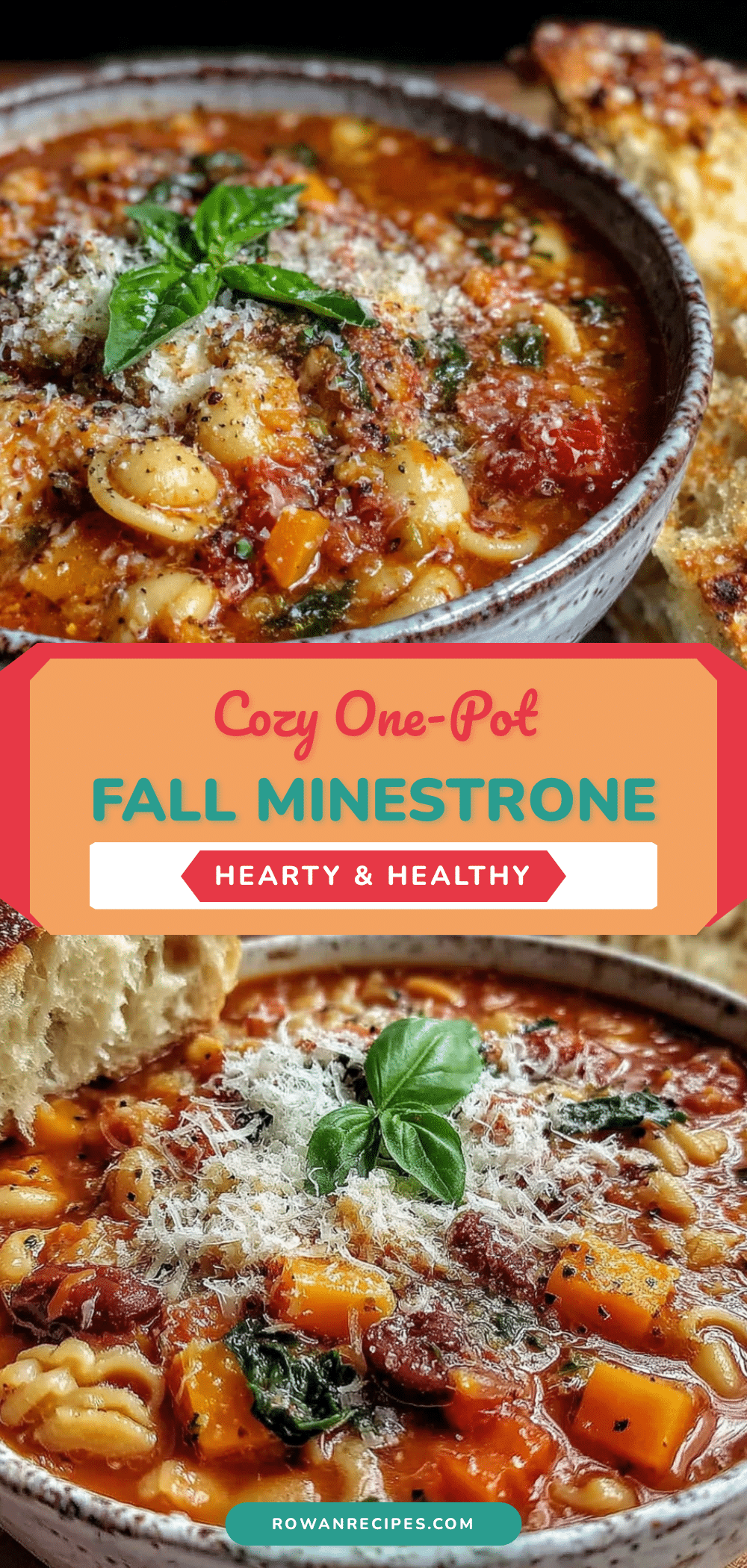
Cozy One-Pot Fall Vegetable Minestrone Soup

A hearty, one-pot minestrone soup packed with sweet potatoes, kale, beans, and pasta in a rich tomato broth. Perfect for fall, this comforting soup comes together in under an hour with simple pantry ingredients.
- Prep Time: 15 minutes
- Cook Time: 35 minutes
- Total Time: 50 minutes
- Yield: 6 servings 1x
- Category: Soup
- Cuisine: Italian
Ingredients
- 2 tablespoons olive oil
- 1 medium yellow onion, diced (about 1 cup)
- 3 cloves garlic, minced
- 2 medium carrots, peeled and diced
- 2 celery stalks, diced
- 1 medium sweet potato, peeled and cubed into ½-inch pieces (about 2 cups)
- 1 teaspoon dried rosemary
- 1 teaspoon dried sage
- ½ teaspoon dried thyme
- ½ teaspoon red pepper flakes (optional)
- Salt and black pepper to taste
- 6 cups low-sodium vegetable broth
- 1 can (14.5 ounces) fire-roasted diced tomatoes, undrained
- 1 can (15 ounces) cannellini beans, drained and rinsed
- 1 can (15 ounces) kidney beans, drained and rinsed
- 1 cup small pasta (ditalini, elbow macaroni, or small shells)
- 3 cups chopped kale (stems removed, leaves roughly torn)
- 2 tablespoons tomato paste
- 1 tablespoon balsamic vinegar
- Freshly grated Parmesan cheese (for serving, optional)
- Fresh basil or parsley, chopped (for serving, optional)
- Crusty bread (for serving, optional)
Instructions
- Heat the olive oil in a Dutch oven over medium heat. Add the diced onion and cook for 4-5 minutes, stirring occasionally, until translucent and softened. Add the minced garlic and cook for 30 seconds until fragrant.
- Add the carrots, celery, and sweet potato to the pot. Stir and cook for 5-6 minutes, letting the vegetables soften slightly. Add the dried rosemary, sage, thyme, red pepper flakes, and a generous pinch of salt and pepper. Stir and cook for 1 minute.
- Push the vegetables to the sides of the pot and add the tomato paste to the center. Let it cook for 1-2 minutes, stirring occasionally, until it darkens to a deeper red. Stir the paste into the vegetables.
- Add the vegetable broth and the undrained fire-roasted tomatoes. Use a wooden spoon to scrape up any browned bits from the bottom of the pot. Bring the soup to a gentle boil, then reduce the heat to maintain a steady simmer.
- Let the soup simmer uncovered for 15 minutes. The sweet potato should be fork-tender but not falling apart. Taste the broth and adjust seasoning.
- Stir in the drained cannellini beans, kidney beans, and the small pasta. Increase the heat slightly to bring the soup back to a gentle boil, then reduce to a simmer. Cook for 8-10 minutes, stirring occasionally, until the pasta is al dente.
- Add the chopped kale and stir it into the hot soup. Let it cook for 2-3 minutes until the kale is tender but still has some structure.
- Remove the pot from the heat. Stir in the balsamic vinegar. Taste and adjust salt and pepper if needed.
- Let the soup sit for 5 minutes before serving. Ladle into bowls, top with Parmesan and fresh herbs, and serve with crusty bread if desired.
Notes
For best texture, cook pasta separately if planning leftovers and add fresh when reheating. Fire-roasted tomatoes add smoky depth; if unavailable, use regular diced tomatoes plus a pinch of smoked paprika. A Parmesan rind simmered in the soup adds umami. The soup thickens as it sits; add extra broth or water when reheating.
Nutrition
- Serving Size: 1 serving (about 1.5
- Calories: 285
- Sugar: 10
- Sodium: 680
- Fat: 6
- Saturated Fat: 1
- Carbohydrates: 48
- Fiber: 12
- Protein: 12
Keywords: minestrone soup, fall vegetable soup, one-pot soup, vegetarian soup, hearty soup, sweet potato soup, kale soup