For a while, I just accepted that quick Korean-inspired meals wouldn’t taste quite right without spending ages hunting down obscure ingredients or fiddling with complicated sauces. I remember evenings when I was craving that perfect balance of spicy, savory, and a little sweet—something that hits just right without taking forever. Yet, every quick fix either fell flat or leaned too heavily on one-note flavors. No matter how many versions I tried, the elusive quick spicy Korean beef bowl with gochujang sauce that truly satisfied my taste buds remained out of reach.
One night, halfway through tossing together an impromptu stir-fry with whatever was in the fridge, I realized I could craft something simple but still authentically punchy. The magic came from a straightforward blend of pantry staples and that unmistakable kick of gochujang sauce—fermented Korean chili paste that offers a deep, spicy-sweet punch. The sizzle of ground beef hitting the hot pan, the warming aroma of garlic and ginger mingling with the rich sauce—it was like a quiet moment of comfort after a long day.
It didn’t feel flashy or like a food show special. Honestly, it was just a bowl that filled the gap I’d long felt—a dinner that’s fast, flavorful, and surprisingly satisfying. That’s why this quick spicy Korean beef bowl with gochujang sauce stuck around in my rotation. It’s the kind of recipe that feels both familiar and a little exciting, ready for those nights when you want something good without fuss. No frills, just dependable, tasty food that hits the spot quietly but surely.
Why You’ll Love This Recipe
This quick spicy Korean beef bowl with gochujang sauce is one of those dishes that proves simple can be sensational. After testing this recipe multiple times (and trust me, I’ve had a few “too salty” or “too bland” attempts), I found a balance that works every time.
- Quick & Easy: Comes together in under 25 minutes, perfect for busy weeknights or those spontaneous dinner cravings.
- Simple Ingredients: Uses everyday pantry staples and a jar of gochujang—you don’t need a trip to a specialty store.
- Perfect for Weeknight Dinners: When time is tight but you want a meal that tastes thoughtful and satisfying.
- Crowd-Pleaser: The spicy-sweet sauce always gets nods from the whole family, even those who aren’t usually into bold flavors.
- Unbelievably Delicious: The way the beef caramelizes with the sauce creates a rich umami punch that’s hard to beat.
What sets this recipe apart is the balance in the gochujang sauce—just enough heat without overpowering, with a touch of sweetness and acid to round it out. I like to blend in a little sesame oil and fresh garlic to give it that aromatic edge. It’s not just spicy beef; it’s Korean comfort food made approachable and fuss-free.
For those nights when you want an easy dish but with a bit of personality, this bowl is a reliable choice. Plus, it pairs beautifully with simple sides like steamed rice or a crisp cucumber salad. If you’re curious about other quick weeknight meals with a punch, I often turn to recipes like crispy sheet pan honey mustard chicken or the creamy warmth of taco pasta, which share that same no-nonsense, flavor-forward vibe.
What Ingredients You Will Need
This recipe uses simple, wholesome ingredients to deliver bold flavor and satisfying texture without the fuss. Most are pantry staples, and substitutions are straightforward if you want to tweak it.
- Ground Beef: 1 pound (450g), preferably 80/20 for a good balance of flavor and moisture.
- Gochujang Sauce: 3 tablespoons (45 ml) – the star ingredient; look for a reputable brand like Chung Jung One for authentic flavor.
- Soy Sauce: 2 tablespoons (30 ml), low sodium if you want to control saltiness.
- Sesame Oil: 1 teaspoon (5 ml), for that nutty aroma.
- Garlic: 3 cloves, minced – fresh is best for punchy flavor.
- Ginger: 1 teaspoon (5 ml), freshly grated adds a bright warmth.
- Brown Sugar: 1 tablespoon (15 ml), balances the heat with sweetness.
- Rice Vinegar: 1 tablespoon (15 ml), for a subtle tang that brightens the sauce.
- Green Onions: 2 stalks, thinly sliced, for garnish and mild onion flavor.
- Sesame Seeds: 1 tablespoon (optional), toasted for crunch and visual appeal.
- Cooked Rice: 3 cups (about 600g), to serve as the base (white, brown, or jasmine all work).
If you prefer a leaner option, ground turkey or chicken can substitute for beef, though the flavor will be milder. For a gluten-free version, swap soy sauce with tamari. I’ve also tried adding a splash of water chestnuts for crunch when I wanted a textural twist.
Equipment Needed
- Large Skillet or Frying Pan: A good non-stick or cast iron skillet helps brown the beef evenly without sticking.
- Wooden Spoon or Spatula: For stirring and breaking up the meat.
- Measuring Spoons and Cups: Accurate measurements keep the sauce balanced.
- Grater or Microplane: For fresh ginger, though finely minced ginger works too.
- Knife and Cutting Board: For prepping garlic and green onions.
- Rice Cooker or Pot: To prepare the rice base.
If you don’t have a cast iron skillet, any sturdy frying pan will do—just make sure it gets hot enough to brown the beef nicely. I’ve found a silicone spatula makes scraping the browned bits easy, which really adds flavor to the sauce. For those tight on kitchen gear, a large non-stick pan and basic prep tools are all you need to nail this recipe without fuss.
Preparation Method
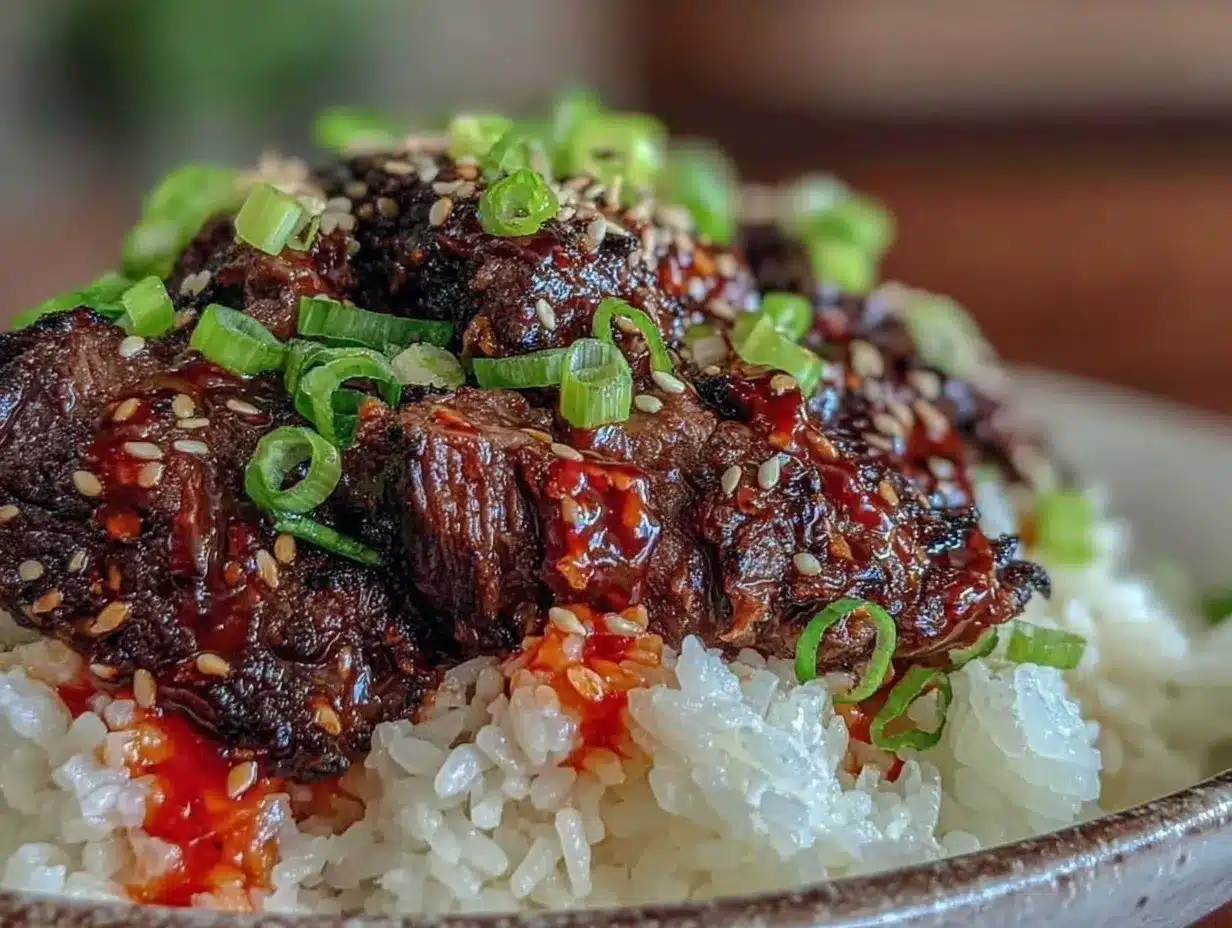
- Cook the Rice: Begin by cooking 3 cups (600g) of your preferred rice according to package instructions. This usually takes about 15-20 minutes. Fluff and keep warm.
- Prep Aromatics: While the rice cooks, mince 3 cloves of garlic and grate 1 teaspoon (5 ml) of fresh ginger. Slice 2 green onions thinly, separating whites from greens for later use.
- Brown the Beef: Heat 1 tablespoon (15 ml) of neutral oil in a large skillet over medium-high heat. Add 1 pound (450g) of ground beef, breaking it up with a wooden spoon. Cook for about 5-7 minutes until browned and mostly cooked through. You want some caramelization without drying it out.
- Add Aromatics: Push the beef to one side of the pan, add a splash of oil if needed, then toss in the garlic, ginger, and the white parts of the green onions. Sauté for 1-2 minutes until fragrant but not burnt.
- Mix the Sauce: In a small bowl, whisk together 3 tablespoons (45 ml) gochujang, 2 tablespoons (30 ml) soy sauce, 1 tablespoon (15 ml) brown sugar, 1 tablespoon (15 ml) rice vinegar, and 1 teaspoon (5 ml) sesame oil.
- Combine and Simmer: Pour the sauce over the beef mixture. Stir well to coat evenly, then reduce heat to medium-low. Let it simmer for 3-4 minutes, stirring occasionally, until the sauce thickens slightly and clings to the beef.
- Adjust Seasoning: Taste and adjust for saltiness or sweetness. If it’s too spicy, a splash of water or a pinch more sugar can mellow it out.
- Serve: Spoon the beef mixture over warm rice bowls. Garnish with sliced green onion greens and a sprinkle of toasted sesame seeds.
Beware of overcooking the beef—it should stay juicy and tender, not dry or crumbly. The smell of garlic, ginger, and that tangy-spicy sauce is a good cue that you’re on the right track. If you want to speed things up, cook the rice ahead or use leftover rice, which also adds a nice texture.
Cooking Tips & Techniques
Getting the right texture and flavor in this quick spicy Korean beef bowl with gochujang sauce really hinges on a few small details.
- Don’t overcrowd the pan: If your skillet is too small, the beef steams instead of browns. Work in batches if needed to get a nice caramelized crust.
- Fresh aromatics matter: Minced garlic and grated ginger give a brightness that jarred powders just can’t match. They should sizzle gently in the pan to release their oils without burning.
- Balance the sauce: Gochujang is spicy and sweet, but sometimes it can be a bit salty. Adding brown sugar and vinegar offsets this to a pleasant tangy-sweet heat. Taste frequently and tweak as you go.
- Sensory cues: When the sauce thickens and coats the beef with a glossy sheen, that’s your sign to plate up.
- Multitasking tips: While the beef simmers in sauce, use that time to prep quick kimchi or a cucumber salad to add freshness.
One time, I left the heat too high and ended up with burnt bits—lesson learned! Lower heat and patience pay off. Also, stirring gently preserves the texture of the beef. This recipe really benefits from simple but mindful cooking.
Variations & Adaptations
This recipe is a great base for playing around depending on your preferences or dietary needs.
- Vegetarian/Vegan: Swap ground beef for crumbled tofu or tempeh. Use tamari or coconut aminos instead of soy sauce and a vegan gochujang brand.
- Low Carb: Serve over cauliflower rice or sautéed zucchini noodles instead of traditional rice.
- Extra Veggies: Toss in shredded carrots, bell peppers, or spinach during the simmer stage for added nutrients and color.
- Heat Level: Adjust the amount of gochujang or add a dash of chili flakes if you like it hotter.
- Cooking Method: For a hands-off approach, brown the beef in a slow cooker and add the sauce near the end, then serve over rice.
Personally, I once tried mixing in some kimchi right at the end for a tangy crunch that was surprisingly good. Feel free to experiment with what you have on hand.
Serving & Storage Suggestions
This quick spicy Korean beef bowl is best served hot, straight from the pan onto a bed of fluffy rice. A sprinkle of fresh green onions and sesame seeds makes it visually appealing and adds texture.
For sides, simple steamed or sautéed greens like bok choy or snap peas complement the boldness of the beef nicely. A crisp cucumber salad or quick kimchi adds a refreshing counterpoint.
Leftovers keep well in an airtight container in the fridge for up to 3 days. Reheat gently in a skillet or microwave, adding a splash of water if the sauce has thickened too much. Flavors often deepen after a day, making the next meal just as satisfying.
If freezing, separate rice and beef portions for best texture preservation, and thaw overnight before reheating.
Nutritional Information & Benefits
This recipe is a solid source of protein thanks to the ground beef and packs a flavorful punch without excess calories. Gochujang adds some probiotics from fermentation, which is a nice bonus for gut health.
Serving over whole-grain rice boosts fiber, while garlic and ginger contribute antioxidants and anti-inflammatory properties. The dish is naturally gluten-free if you opt for tamari instead of soy sauce.
For those watching carbs, swapping rice for cauliflower rice cuts the carb count significantly without losing the essence of the bowl.
Conclusion
This quick spicy Korean beef bowl with gochujang sauce proves that you don’t need complicated steps or fancy ingredients to enjoy a meal bursting with flavor. Its simplicity and boldness make it a dependable choice for any night when you want hearty, satisfying food without the wait.
What I love most is how easy it is to adjust—whether you’re aiming for a veggie boost, a low-carb spin, or just sticking to the basics. It’s one of those dishes I come back to time and again because it just works.
If you try it out, I’d love to hear how you make it your own—maybe with a little kimchi or a side inspired by the easy one-pot lemon chicken and rice I often pair for a fresh twist. Feel free to share your tweaks or questions in the comments—this bowl is as much about sharing good food as it is about good company.
Frequently Asked Questions
Can I use ground turkey or chicken instead of beef?
Yes! Ground turkey or chicken works well as a leaner option, though the flavor will be milder. You might want to add a bit more gochujang or soy sauce to boost the seasoning.
Is gochujang sauce spicy for beginners?
Gochujang has a moderate heat level with a sweet and savory balance. If you’re new to it, start with a smaller amount and adjust to taste. It’s more approachable than some hot sauces.
Can I prepare this recipe ahead of time?
Absolutely. You can cook the beef mixture in advance and reheat when ready. Rice can also be made ahead and reheated. Just store both separately for best texture.
What can I serve with the Korean beef bowl?
Steamed or sautéed greens, cucumber salad, or quick kimchi are great sides. I also like pairing it with simple steamed rice or even low-carb cauliflower rice.
Is this recipe gluten-free?
It can be gluten-free if you use tamari or a gluten-free soy sauce instead of regular soy sauce. Gochujang is usually gluten-free, but always check your brand’s label.
Pin This Recipe!
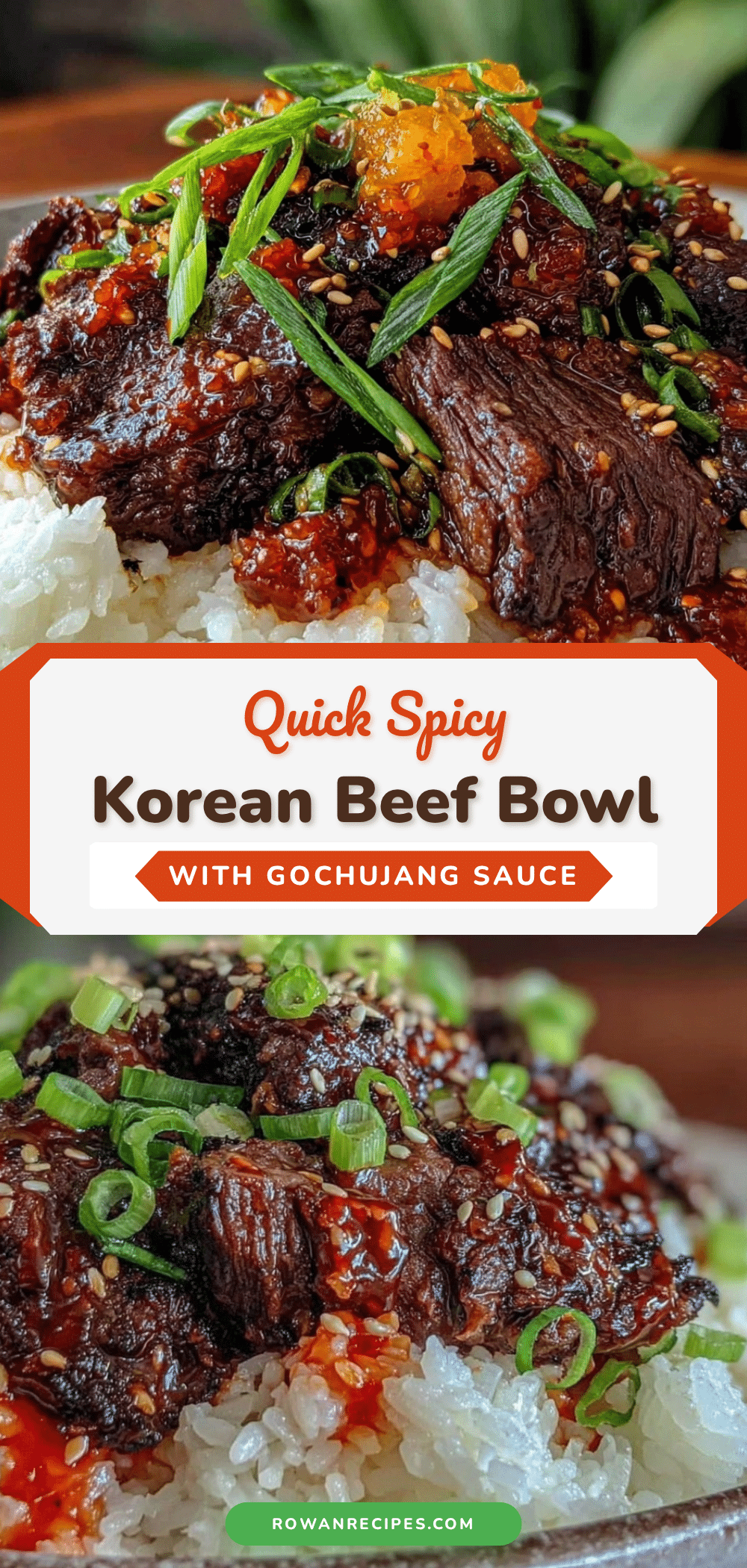
Quick Spicy Korean Beef Bowl Recipe with Easy Gochujang Sauce
A fast and flavorful Korean-inspired beef bowl featuring a spicy-sweet gochujang sauce, perfect for busy weeknights and satisfying meals without fuss.
- Prep Time: 10 minutes
- Cook Time: 15 minutes
- Total Time: 25 minutes
- Yield: 4 servings 1x
- Category: Main Course
- Cuisine: Korean
Ingredients
- 1 pound (450g) ground beef (80/20 preferred)
- 3 tablespoons (45 ml) gochujang sauce
- 2 tablespoons (30 ml) soy sauce (low sodium recommended)
- 1 teaspoon (5 ml) sesame oil
- 3 cloves garlic, minced
- 1 teaspoon (5 ml) freshly grated ginger
- 1 tablespoon (15 ml) brown sugar
- 1 tablespoon (15 ml) rice vinegar
- 2 stalks green onions, thinly sliced
- 1 tablespoon toasted sesame seeds (optional)
- 3 cups cooked rice (white, brown, or jasmine)
Instructions
- Cook 3 cups (600g) of your preferred rice according to package instructions (about 15-20 minutes). Fluff and keep warm.
- While the rice cooks, mince 3 cloves of garlic and grate 1 teaspoon (5 ml) of fresh ginger. Slice 2 green onions thinly, separating whites from greens.
- Heat 1 tablespoon (15 ml) of neutral oil in a large skillet over medium-high heat. Add 1 pound (450g) ground beef, breaking it up with a wooden spoon. Cook for 5-7 minutes until browned and mostly cooked through.
- Push the beef to one side of the pan, add a splash of oil if needed, then add garlic, ginger, and the white parts of the green onions. Sauté for 1-2 minutes until fragrant.
- In a small bowl, whisk together 3 tablespoons (45 ml) gochujang, 2 tablespoons (30 ml) soy sauce, 1 tablespoon (15 ml) brown sugar, 1 tablespoon (15 ml) rice vinegar, and 1 teaspoon (5 ml) sesame oil.
- Pour the sauce over the beef mixture. Stir well to coat evenly, reduce heat to medium-low, and simmer for 3-4 minutes until the sauce thickens slightly.
- Taste and adjust seasoning for saltiness or sweetness. Add a splash of water or more sugar if needed to mellow the heat.
- Serve the beef mixture over warm rice bowls. Garnish with sliced green onion greens and toasted sesame seeds.
Notes
Do not overcrowd the pan to ensure proper browning of beef. Use fresh garlic and ginger for best flavor. Adjust gochujang amount to control heat level. Cook rice ahead or use leftover rice to speed up preparation. For gluten-free, substitute soy sauce with tamari. Leftovers keep well refrigerated for up to 3 days; reheat gently with a splash of water.
Nutrition
- Serving Size: 1 bowl (about 1/4 of
- Calories: 450
- Sugar: 8
- Sodium: 600
- Fat: 25
- Saturated Fat: 9
- Carbohydrates: 30
- Fiber: 2
- Protein: 28
Keywords: Korean beef bowl, spicy beef bowl, gochujang sauce, quick Korean recipe, weeknight dinner, easy Korean beef, ground beef recipe