The neighborhood potluck was in six hours and I’d completely forgotten. Everyone else would be bringing their signature dishes—you know the ones, the elaborate casseroles that take all day, the desserts that look like they belong on a magazine cover. I had a butternut squash sitting on my counter, some pasta in the pantry, and honestly, a mild panic setting in. My neighbor Linda always brings that seven-layer dip that people fight over, and last year, the guy three doors down showed up with homemade sourdough that he’d apparently been “feeding” for weeks. And me? I was staring at a squash like it was going to magically turn itself into dinner.
The thing is, I’d bought that squash with good intentions a week ago. I had big plans for a roasted squash situation, maybe with some fancy grain bowl thing. But life got busy, the week got away from me, and there it sat, looking slightly judgmental on my counter. I grabbed it, some sharp cheddar I had in the fridge, and a bundle of sage that was honestly starting to look a little sad. I figured I’d throw something together, something edible, and at least I wouldn’t show up empty-handed.
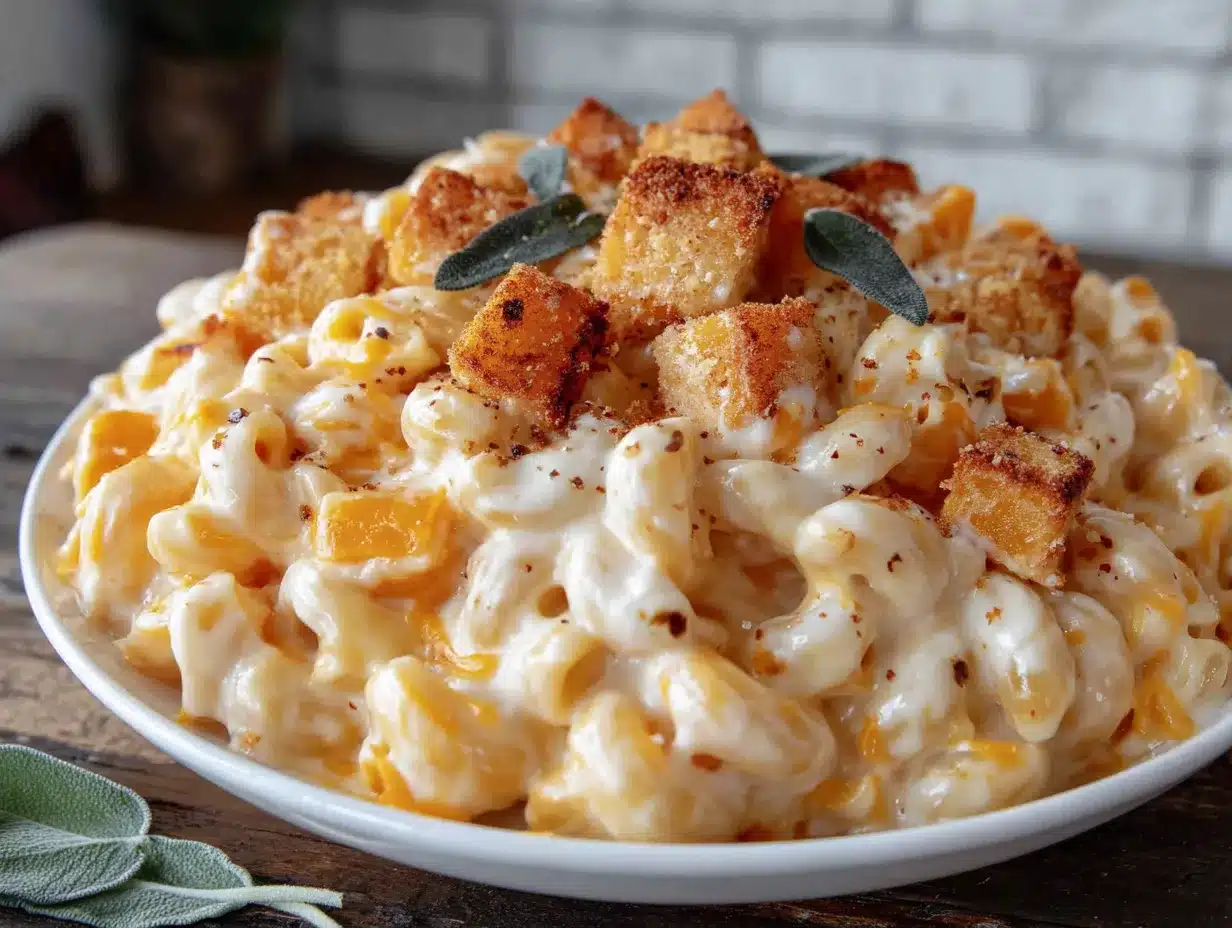
What came out of that frantic, slightly messy cooking session was, I’m not kidding, the best mac and cheese I’ve ever made. The butternut squash blended into the cheese sauce so smoothly that it added this velvety richness without screaming “I’m a vegetable.” And the crispy sage on top? That was a last-minute decision born from desperation—I needed something to make it look intentional. The whole thing came together in about forty-five minutes, and I walked into that potluck feeling like I was bringing a consolation prize. Let me tell you, the empty baking dish I brought home said otherwise. People asked for the recipe, Linda wanted to know if I’d “gone to culinary school or something,” and I just smiled, knowing full well this happy accident started with a forgotten squash and a little bit of panic.
Why You’ll Love This Recipe
This butternut squash mac and cheese with crispy sage is the kind of recipe that makes you look like you planned it all along, even when you absolutely didn’t. It hits that perfect sweet spot between cozy comfort food and something that feels just a little bit special. Honestly, I’ve made this for weeknight dinners when I needed a hug in a bowl, and I’ve served it at holiday gatherings where people went back for thirds.
- Quick & Easy : From start to finish, this comes together in about 45 minutes. The sauce comes together while the pasta cooks, so you’re not standing over the stove forever.
- Simple Ingredients : No fancy cheese counters or specialty stores needed. Butternut squash, pasta, cheddar, sage—these are things you can find anywhere, and you might already have most of them.
- Perfect for Fall Gatherings : This is made for those crisp autumn evenings when you want something warm and satisfying. It’s perfect for potlucks, Friendsgiving, or just a Tuesday night when the leaves are turning.
- Crowd-Pleaser : Kids love the creamy pasta, adults love the sophisticated sage topping, and nobody has to know there’s a whole vegetable hiding in that gorgeous orange sauce.
- Unbelievably Delicious : The combination of sweet roasted squash, sharp cheddar, and nutty fried sage is honestly next-level. It’s comfort food that feels elevated without being fussy.
What makes this different from every other mac and cheese recipe out there? It’s the way the butternut squash creates this incredibly smooth, silky sauce without any heavy cream or processed cheese. The squash adds natural sweetness that balances the sharp cheddar perfectly, and the crispy sage brings this earthy, almost nutty crunch that makes every bite interesting. This isn’t just another version of mac and cheese—it’s the version that makes you close your eyes after the first bite and forget about everything else for a minute.
What Ingredients You Will Need
This recipe uses simple, wholesome ingredients that come together to create something truly special. Most of these are pantry staples or easy fall finds, and I’ve included notes on substitutions where they work well.
For the Butternut Squash Puree
- 1 medium butternut squash (about 2-2.5 pounds), peeled, seeded, and cubed into 1-inch pieces (look for one that feels heavy for its size and has a firm, unblemished skin)
- 2 tablespoons olive oil (I prefer a good quality extra virgin here, but regular works fine)
- 1/2 teaspoon salt (kosher salt is best for even seasoning)
- 1/4 teaspoon black pepper (freshly ground if you can)
For the Pasta
- 1 pound pasta (elbow macaroni is classic, but cavatappi, shells, or rotini work great too—something with curves and crevices to hold that sauce)
- Salt for the pasta water (make it taste like the sea, seriously, this is where the seasoning starts)
For the Cheese Sauce
- 4 tablespoons unsalted butter (Kerrygold is my go-to for the richness it adds)
- 1/4 cup all-purpose flour (for thickening the roux)
- 2 cups whole milk (warm it slightly before adding for a smoother sauce—cold milk can make the sauce lumpy)
- 1 cup heavy cream (adds that luxurious texture; half-and-half works in a pinch but the sauce will be thinner)
- 2 cups sharp cheddar cheese, freshly grated (please, I’m begging you, grate it yourself—pre-shredded has anti-caking agents that ruin the smoothness)
- 1/2 cup Parmesan cheese, freshly grated (adds salty, nutty depth)
- 1/2 teaspoon garlic powder (not fresh garlic here, the powder blends more smoothly into the sauce)
- 1/4 teaspoon nutmeg, freshly grated if possible (this is the secret ingredient that makes everything sing)
- Salt and pepper to taste
For the Crispy Sage Topping
- 2 tablespoons butter
- 12-15 fresh sage leaves (look for leaves that are vibrant green and not wilted—they’ll crisp up better)
- 1/4 cup panko breadcrumbs (optional, but adds a lovely crunch; regular breadcrumbs work too)
- Flaky sea salt for finishing
If you’re looking to make this gluten-free, use your favorite gluten-free pasta and a 1:1 gluten-free flour blend for the roux. The sauce will still be beautifully creamy. For a dairy-free version, I’ve had good luck with unsweetened oat milk and vegan butter, though I can’t promise the same level of richness. The butternut squash does a lot of the heavy lifting for creaminess, so it’s more forgiving than a traditional cheese sauce.
Equipment Needed
You don’t need a ton of fancy equipment for this recipe, which is part of why I love it. Here’s what you’ll need:
- Baking sheet for roasting the squash (rimmed is best to catch any juices)
- Large pot for boiling pasta (at least 5-6 quarts)
- Medium saucepan for the cheese sauce
- Food processor or blender for pureeing the roasted squash (an immersion blender works too, but it takes a little more effort to get it completely smooth)
- Cheese grater (please grate your own cheese—I learned this the hard way after a particularly grainy sauce disaster)
- Small skillet for frying the sage (non-stick is helpful here)
- 9×13-inch baking dish for the final assembly (or a similar 3-quart casserole dish)
- Wooden spoon or silicone spatula for stirring the sauce
- Whisk for a lump-free roux
If you don’t have a food processor, you can mash the roasted squash really well with a potato masher, but the texture won’t be quite as silky. I’ve done it that way in a pinch and it still turned out delicious, just a little more rustic. An immersion blender in a tall cup works surprisingly well too.
Preparation Method
- Preheat your oven to 400°F (200°C). While it’s heating up, peel your butternut squash. I know, peeling a butternut squash can feel like a workout, but it’s worth it. Cut it in half lengthwise, scoop out the seeds (save them for roasting later if you’re ambitious), and cut the flesh into 1-inch cubes. Toss them on a baking sheet with the olive oil, salt, and pepper. Spread them in a single layer—crowding them will make them steam instead of roast. Roast for 25-30 minutes, flipping halfway through, until the squash is tender and starting to caramelize at the edges. You want them soft enough that a fork slides in easily.
- While the squash roasts, get your pasta water going. Fill your large pot with water, add a generous handful of salt (it should taste like the ocean), and bring it to a rolling boil. Cook your pasta according to package directions, but here’s the trick—cook it about 1-2 minutes less than al dente. It’ll finish cooking in the oven later, and nobody wants mushy mac and cheese. Drain the pasta, reserving about a cup of the starchy pasta water (this is liquid gold for thinning the sauce if needed).
- Once the squash is done, let it cool for a few minutes, then transfer it to your food processor or blender. Blend until completely smooth, scraping down the sides as needed. You’re looking for a texture like baby food—silky and uniform. Set this aside while you make the sauce.
- Now for the cheese sauce, which is the heart of this whole thing. In your medium saucepan, melt the 4 tablespoons of butter over medium heat. Once it’s bubbling, whisk in the flour and keep whisking for about 2 minutes. This is your roux, and cooking it a bit gets rid of that raw flour taste. It should smell slightly nutty and look like wet sand. Slowly pour in the warm milk and cream, whisking constantly to prevent lumps. I’ve definitely learned the hard way that adding cold milk to a hot roux is a recipe for a lumpy disaster—warm it in the microwave for 30 seconds first.
- Keep stirring the sauce over medium heat until it thickens enough to coat the back of a spoon, about 5-7 minutes. It should look like a thin gravy at this point. Reduce the heat to low and start adding your cheese, a handful at a time, stirring until each addition is fully melted before adding more. This gradual approach prevents the sauce from breaking or becoming grainy. Stir in the garlic powder, nutmeg, and the butternut squash puree. Taste it and adjust salt and pepper—remember, the pasta will soak up some of the seasoning.
- If the sauce seems too thick, stir in some of that reserved pasta water a tablespoon at a time. It should be slightly looser than you think is right because the pasta will absorb some as it bakes. Remove the sauce from the heat and gently fold in your cooked pasta until every piece is coated in that gorgeous orange sauce.
- Pour the whole thing into your greased 9×13-inch baking dish and spread it evenly. At this point, you could stop and just eat it as stovetop mac and cheese, and honestly, that’s a great option. But the crispy sage topping takes it to another level.
- For the topping, melt 2 tablespoons of butter in a small skillet over medium heat. Add the sage leaves and cook for about 30-60 seconds per side, until they turn dark green and start to crisp up. They’ll sizzle and smell incredible—that’s the smell of fall, I swear. Remove them to a paper towel. If you’re using panko, toss the breadcrumbs in the remaining butter in the pan and toast them for about 2 minutes until golden. Sprinkle the panko and crispy sage leaves over the top of your mac and cheese.
- Bake at 375°F (190°C) for 15-20 minutes, until the top is golden and the edges are bubbling. Let it rest for 5 minutes before serving—this lets the sauce set up a bit so it’s not too runny. Sprinkle with flaky sea salt right before you serve it. The contrast of the creamy, sweet pasta with the salty, crispy sage is honestly magic.
Cooking Tips & Techniques
Let me tell you about the first time I made this. I was rushing, as usual, and I didn’t roast the squash long enough. It was still a little firm when I blended it, and the sauce had these tiny gritty bits of undercooked squash. Not ideal. So trust me on this—roast that squash until it’s truly tender. The fork test isn’t just for show.
Another thing I learned the hard way: don’t skip the nutmeg. I know it sounds weird in mac and cheese, but it does something magical to the cheese sauce. It’s not that you taste nutmeg specifically—it just makes everything taste more like itself, if that makes sense. It rounds out the sharpness of the cheddar and complements the sweetness of the squash. Just a little pinch is all you need.
For the sage, keep a close eye on it. Sage goes from perfectly crispy to burnt in about 15 seconds. I’ve definitely had to start over because I got distracted and ended up with sad, blackened leaves. They should be dark green and brittle, not brown. And don’t salt them until after they’re fried, or they’ll absorb the salt and get soggy instead of crispy.
If you’re multitasking (and let’s be real, when aren’t we?), start your pasta water while the squash roasts, and make the sauce while the pasta cooks. Everything comes together in parallel, and you’ll have dinner on the table in about 45 minutes. The key is reading through the whole recipe first so you know what needs to happen when.
One more thing—if your sauce looks a little thin after adding the squash, don’t panic. The starch from the pasta will help thicken it as it bakes. And if it’s too thick, that reserved pasta water is your best friend. Add it a little at a time until the sauce flows like heavy cream.
Variations & Adaptations
This recipe is surprisingly flexible, and I’ve tried quite a few variations over the years. Here are some of my favorites:
Make it vegetarian-friendly: It already is, actually! But if you want to add some protein, try stirring in some roasted chickpeas or white beans along with the pasta. They add texture without overwhelming the dish.
Add some heat: A pinch of cayenne pepper or red pepper flakes in the cheese sauce adds a lovely warmth that plays well with the sweet squash. I do this when I’m making it just for myself—my family prefers it mild.
Try different cheeses: While sharp cheddar is my go-to, I’ve made this with gruyere for a nuttier flavor, smoked gouda for a deeper, almost bacon-y note, and even a mix of fontina and parmesan when I was feeling fancy. Each one gives the dish a completely different personality.
Make it a main dish: Stir in some cooked, shredded chicken or crumbled Italian sausage before baking. It turns this into a hearty one-dish meal that’s perfect for those chilly nights when you want something substantial.
Swap the squash: If butternut squash isn’t in season, roasted sweet potato or pumpkin works beautifully here. The flavor will be slightly different—sweet potato is a bit earthier, pumpkin is milder—but the creamy texture is the same. I’ve even used canned pumpkin puree in a pinch (just make sure it’s 100% pumpkin, not pumpkin pie filling).
Go dairy-free: I’ve had readers tell me they’ve made this with unsweetened oat milk, vegan butter, and dairy-free cheddar shreds. The squash helps keep it creamy, so it’s more forgiving than traditional mac and cheese. I’d recommend adding a tablespoon of nutritional yeast for that cheesy flavor.
Serving & Storage Suggestions
This mac and cheese is best served warm, straight from the oven, when the top is still a little crispy and the sauce is perfectly creamy. Let it rest for about 5 minutes after baking—I know it’s hard to wait, but it makes a difference. The sauce sets up just enough that it doesn’t slide off the pasta.
For a complete meal, I love serving this with a simple green salad dressed with lemon vinaigrette. The brightness of the salad cuts through the richness of the mac and cheese perfectly. Roasted Brussels sprouts or a crisp apple slaw are also fantastic pairings. If you’re making this for a holiday table, it goes beautifully alongside roasted turkey or ham.
For storing leftovers, let the mac and cheese cool completely, then transfer it to an airtight container. It will keep in the refrigerator for up to 4 days. The flavors actually meld and deepen overnight, so leftovers might be even better the next day—if you can resist eating it all.
To reheat, I prefer the oven: cover the dish with foil and warm it at 350°F for about 15-20 minutes. The microwave works in a pinch, but it can make the sauce a little grainy. If you’re reheating individual portions, add a splash of milk before microwaving to restore some creaminess. You can also freeze this mac and cheese for up to 3 months. Assemble it completely but don’t bake it, wrap it tightly in foil and a freezer bag, and bake it straight from frozen (add about 20 minutes to the baking time).
Nutritional Information & Benefits
Per serving (based on 8 servings), this mac and cheese provides approximately:
- Calories: 520
- Protein: 18g
- Fat: 28g
- Carbohydrates: 52g
- Fiber: 4g
- Sugar: 8g
What I love about this recipe is that it sneaks in some real nutritional benefits without sacrificing flavor. Butternut squash is packed with vitamin A (one serving gives you over 100% of your daily needs), vitamin C, and fiber. The squash also adds natural sweetness, which means you can use less cheese and still get that satisfying, creamy result. The sage isn’t just for show either—it’s been used traditionally for its antioxidant properties and adds a subtle earthiness that makes the dish feel more complex.
This recipe is naturally vegetarian and can be made gluten-free with simple substitutions. It does contain dairy and gluten in its standard form, so keep that in mind for any allergies. If you’re watching your sodium, you can reduce the salt in the cheese sauce and rely more on the salty finish from the flaky sea salt on top.
Conclusion
This butternut squash mac and cheese with crispy sage has become my go-to recipe for fall gatherings, cozy nights in, and honestly, any time I need a little comfort. It started as a happy accident born from a forgotten squash and a looming potluck deadline, but it’s earned a permanent spot in my recipe rotation. The way the sweet, velvety squash sauce coats every piece of pasta, the sharp bite of cheddar, and that salty, crunchy sage on top—it’s the kind of dish that makes you slow down and actually enjoy your meal.
I’d love for you to try this and make it your own. Maybe you’ll add some crispy bacon on top, or swap in smoked gouda, or discover that you love it with a little extra nutmeg. That’s the beauty of cooking—you take a recipe and make it yours. If you do make it, I’d love to hear how it turned out. Drop a comment below and let me know what variations you tried, or tag me in your photos. Happy cooking, friends—here’s to happy accidents and really good mac and cheese.
Frequently Asked Questions
Can I use pre-cut butternut squash from the store?
Absolutely! Pre-cut squash saves a lot of time and effort. Just make sure the pieces are roughly the same size so they roast evenly. You’ll need about 3-4 cups of cubed squash.
Why did my cheese sauce turn out grainy?
This usually happens when the cheese is added too quickly or the heat is too high. Always add cheese gradually over low heat, and make sure you’re using freshly grated cheese. Pre-shredded cheese contains anti-caking agents that prevent smooth melting.
Can I make this ahead of time?
Yes! You can assemble the entire dish (without the sage topping) up to 24 hours in advance. Cover and refrigerate, then add the sage topping and bake as directed. You may need to add 5-10 minutes to the baking time since you’re starting from cold.
What’s the best pasta shape for this recipe?
I love using cavatappi or shells because their curves and ridges hold the sauce beautifully. Elbow macaroni is classic and works perfectly too. Avoid long, thin pasta like spaghetti—it doesn’t hold the sauce as well.
Can I freeze this mac and cheese?
Definitely! Assemble the dish completely but don’t bake it. Wrap it tightly in foil and a freezer bag, and freeze for up to 3 months. To bake, thaw overnight in the refrigerator, then bake as directed, adding about 10 minutes to the cooking time.
Pin This Recipe!

Cozy Butternut Squash Mac and Cheese with Crispy Sage: Easy Fall Recipe

This butternut squash mac and cheese with crispy sage is the kind of recipe that makes you look like you planned it all along, even when you absolutely didn’t. It hits that perfect sweet spot between cozy comfort food and something that feels just a little bit special.
- Prep Time: 15 minutes
- Cook Time: 30 minutes
- Total Time: 45 minutes
- Yield: 8 servings 1x
- Category: Main Course
- Cuisine: American
Ingredients
- 1 medium butternut squash (about 2–2.5 pounds), peeled, seeded, and cubed into 1-inch pieces
- 2 tablespoons olive oil
- 1/2 teaspoon salt
- 1/4 teaspoon black pepper
- 1 pound pasta (elbow macaroni, cavatappi, shells, or rotini)
- Salt for the pasta water
- 4 tablespoons unsalted butter
- 1/4 cup all-purpose flour
- 2 cups whole milk (warmed)
- 1 cup heavy cream
- 2 cups sharp cheddar cheese, freshly grated
- 1/2 cup Parmesan cheese, freshly grated
- 1/2 teaspoon garlic powder
- 1/4 teaspoon nutmeg, freshly grated if possible
- Salt and pepper to taste
- 2 tablespoons butter
- 12–15 fresh sage leaves
- 1/4 cup panko breadcrumbs (optional)
- Flaky sea salt for finishing
Instructions
- Preheat your oven to 400°F (200°C). Peel the butternut squash, cut it in half lengthwise, scoop out the seeds, and cut the flesh into 1-inch cubes. Toss them on a baking sheet with the olive oil, salt, and pepper. Spread in a single layer and roast for 25-30 minutes, flipping halfway through, until tender and starting to caramelize.
- While the squash roasts, bring a large pot of salted water to a rolling boil. Cook the pasta according to package directions, but cook it 1-2 minutes less than al dente. Drain, reserving about 1 cup of pasta water.
- Once the squash is done, let it cool for a few minutes, then transfer to a food processor or blender. Blend until completely smooth. Set aside.
- In a medium saucepan, melt 4 tablespoons of butter over medium heat. Whisk in the flour and cook for about 2 minutes until it smells nutty. Slowly pour in the warm milk and cream, whisking constantly to prevent lumps. Cook until thickened, about 5-7 minutes.
- Reduce heat to low and gradually add the cheddar and Parmesan cheeses, stirring until each addition is melted. Stir in the garlic powder, nutmeg, and butternut squash puree. Season with salt and pepper to taste. If the sauce is too thick, add reserved pasta water a tablespoon at a time.
- Remove the sauce from the heat and gently fold in the cooked pasta until well coated.
- Pour the mixture into a greased 9×13-inch baking dish and spread evenly.
- For the topping, melt 2 tablespoons of butter in a small skillet over medium heat. Add the sage leaves and cook for 30-60 seconds per side until crisp. Remove to a paper towel. If using panko, toast the breadcrumbs in the remaining butter for about 2 minutes until golden. Sprinkle the panko and crispy sage leaves over the mac and cheese.
- Bake at 375°F (190°C) for 15-20 minutes until golden and bubbling. Let rest for 5 minutes before serving. Sprinkle with flaky sea salt.
Notes
Roast the squash until truly tender to avoid gritty bits. Don’t skip the nutmeg—it rounds out the sharpness of the cheddar. Watch the sage closely as it can burn quickly. If the sauce seems thin, don’t panic; the starch from the pasta will help thicken it as it bakes. For a gluten-free version, use gluten-free pasta and a 1:1 gluten-free flour blend. For dairy-free, use unsweetened oat milk and vegan butter.
Nutrition
- Serving Size: 1 serving
- Calories: 520
- Sugar: 8
- Sodium: 680
- Fat: 28
- Saturated Fat: 16
- Carbohydrates: 52
- Fiber: 4
- Protein: 18
Keywords: butternut squash mac and cheese, crispy sage, fall recipe, comfort food, vegetarian mac and cheese