My husband took his first bite of the corned beef, paused mid-chew, and just looked at me. Not a word, just that look. Then he went back for a second slice before he’d even touched the cabbage or potatoes. That was three days in a row he asked if we could have it again, and honestly, I was not complaining. This slow cooker version had done something I didn’t expect — it turned a once-a-year St. Patrick’s Day tradition into a regular Tuesday night dinner request.
I have made corned beef and cabbage the traditional way for years. The stovetop method worked fine, but it always felt like a project. You have to watch the pot, keep the liquid at a gentle simmer, and pray the brisket doesn’t dry out while the vegetables finish cooking. It was good, sure, but it was also a lot of effort for a meal that disappears in twenty minutes. The first time I tried it in the slow cooker, I was skeptical. Would it be as tender? Would the flavor be there without the constant simmering? The answer, as my husband’s silent reaction proved, was a resounding yes.
This easy slow cooker corned beef and cabbage recipe is the kind of meal that makes you feel like you cheated the system. You toss everything in, walk away for hours, and come back to a dinner that tastes like you spent all day tending to it. The meat shreds apart with a fork, the vegetables soak up all that salty, spiced broth, and the whole house smells incredible. It is not just a holiday meal anymore — it is the meal I turn to when I want something deeply satisfying without any of the stress.
Why You’ll Love This Recipe
This is not your grandmother’s corned beef and cabbage — well, actually, it tastes just like it, but without her having to hover over the stove all afternoon. I have tested this recipe four times to get the timing and liquid ratio exactly right, and here is what makes it stand out from every other version I have tried.
- Set It and Forget It: The slow cooker does all the heavy lifting. You spend about 15 minutes on prep, then walk away for 8 to 10 hours. It is the ultimate hands-off dinner for busy days.
- Fork-Tender Every Time: Low and slow cooking breaks down the brisket’s connective tissue until it melts in your mouth. No more chewy, dry corned beef — this comes out perfectly tender, slice after slice.
- One-Pot Convenience: Everything cooks together in one pot, which means fewer dishes and zero fuss. The vegetables absorb all the flavorful cooking liquid as they simmer alongside the meat.
- Budget-Friendly Feast: Corned beef brisket is surprisingly affordable, especially around St. Patrick’s Day when it goes on sale. This meal feeds a crowd without breaking the bank.
- Leftovers That Shine: If you have any leftovers — and that is a big if in my house — they make incredible sandwiches, hash, or soup the next day. The flavor actually gets better overnight.
I have made this for St. Patrick’s Day dinners, casual Sunday suppers, and even a small dinner party where I needed something impressive but low-effort. Every single time, people ask for the recipe. It is one of those rare dishes that feels special enough for company but easy enough for a random weeknight.
What Ingredients You Will Need
This recipe relies on simple, affordable ingredients that come together to create something truly special. Most of these are pantry staples or easy to find at any grocery store, especially around March.
- Corned beef brisket (3 to 4 pounds) — Look for a flat-cut brisket with the spice packet included. The flat cut is leaner and slices more evenly than the point cut. I prefer the brand from my local butcher, but any grocery store brand works well. If the brisket is larger than 4 pounds, just increase the cooking time by an hour or two.
- Spice packet (included with brisket) — Most corned beef comes with a small packet of pickling spices. Do not throw it away! This blend of mustard seeds, coriander, peppercorns, and bay leaves is what gives the dish its signature flavor. If your brisket did not come with one, you can buy pickling spice at the store or make your own blend.
- Yellow onions (2 medium) — Sliced into thick rings, they form a flavorful bed for the brisket and add sweetness to the cooking liquid. Use yellow or sweet onions for the best results.
- Garlic cloves (4 to 5) — Smashed but not peeled, they infuse the broth with a gentle savory note without overpowering the other flavors.
- Chicken broth or beef broth (2 cups) — This creates the braising liquid that keeps the meat moist and tender. I use low-sodium chicken broth to control the salt level, since the corned beef itself is already brined and salty.
- Water (2 cups) — Added to the broth to ensure the brisket is mostly submerged during cooking. The ratio of broth to water keeps the flavor strong without making it too salty.
- Bay leaves (2) — A classic addition to braised meats, bay leaves add a subtle herbal note that rounds out the spice blend.
- Whole black peppercorns (1 teaspoon) — If your spice packet already has peppercorns, you can skip this. Otherwise, a few extra add a gentle warmth.
- Carrots (4 to 5 medium) — Peeled and cut into 2-inch chunks. They hold up well during the long cooking time and turn sweet and tender.
- Baby potatoes (1.5 pounds) — Red or gold baby potatoes work beautifully. Leave them whole if they are small, or halve any larger ones. They soak up the cooking liquid and become incredibly creamy inside.
- Green cabbage (1 medium head) — Cut into 8 wedges through the core, so the leaves stay attached. Adding the cabbage during the last 45 minutes of cooking keeps it tender but not mushy.
- Fresh parsley (for garnish, optional) — A sprinkle of chopped parsley adds a fresh pop of color right before serving.
One note on the brisket — do not rinse it before cooking. I know some old recipes tell you to rinse the brine off, but I have found that it washes away flavor. Just pat it dry with paper towels and place it directly in the slow cooker.
Equipment Needed
You do not need much fancy equipment for this recipe, which is part of its charm. Here is what you will need:
- Slow cooker (6 to 7 quarts) — A 6-quart oval slow cooker is ideal for a 3 to 4 pound brisket with plenty of room for the vegetables. I use a Crock-Pot brand slow cooker that I have had for years, and it has never let me down. If your slow cooker is smaller, you may need to cut the brisket in half to fit.
- Sharp chef’s knife — For slicing the onions, carrots, and cabbage. A good knife makes prep work so much faster and safer.
- Cutting board — Use a large, sturdy board that can handle the brisket and all the vegetables without sliding around.
- Tongs — For placing the brisket in the slow cooker and removing it later without tearing the meat.
- Measuring cups and spoons — For measuring the broth, water, and spices accurately.
- Fork or meat thermometer — To check if the brisket is tender. It should shred easily with a fork or reach an internal temperature of 190 to 200°F.
If you do not have a slow cooker, you can adapt this recipe for a Dutch oven in the oven at 300°F for about 3 to 4 hours, but the slow cooker version is truly the easiest and most forgiving method.
Preparation Method
I have broken this down into clear steps so you can follow along without any confusion. Trust the process, and you will end up with the best corned beef and cabbage of your life.
- Prep the brisket (5 minutes) — Remove the corned beef brisket from its packaging. Pat it dry with paper towels. Do not rinse it! Reserve the spice packet that came with it. If your brisket has a thick fat cap on one side, you can trim it to about ¼ inch, but I usually leave it on for extra moisture.
- Layer the onions and garlic (5 minutes) — Slice the onions into thick rings, about ½ inch thick. Smash the garlic cloves with the flat side of your knife to release their flavor. Spread the onions and garlic evenly across the bottom of the slow cooker. This creates a natural rack that lifts the brisket slightly above the liquid, preventing it from sitting in its own fat.
- Place the brisket (1 minute) — Set the brisket on top of the onions, fat side up. The fat will render down during cooking and baste the meat as it cooks. Sprinkle the contents of the spice packet over the top of the brisket, along with the bay leaves and extra peppercorns if you are using them.
- Add the liquid (2 minutes) — Pour the chicken broth and water around the brisket, being careful not to wash the spices off the top. The liquid should come about halfway up the sides of the brisket — it does not need to cover it completely. The slow cooker will create steam that cooks the exposed top.
- Cook low and slow (8 to 10 hours on low, or 5 to 6 hours on high) — Cover the slow cooker and set it to low. Cooking on low gives you the most tender results, but high works in a pinch. I always choose low if I have the time. Do not lift the lid during the first 6 hours — every time you open it, you release heat and add 20 to 30 minutes to the cooking time.
- Add the carrots and potatoes (2 hours before serving) — After about 6 hours on low (or 3.5 hours on high), add the carrots and baby potatoes to the slow cooker. Nestle them into the liquid around the brisket. They need about 2 hours to become tender and absorb all that flavorful broth.
- Add the cabbage (45 minutes before serving) — Cut the cabbage into 8 wedges, leaving the core intact so the leaves stay together. Place the wedges in the slow cooker, pushing them down into the liquid as much as possible. Cover and cook for another 45 minutes, or until the cabbage is tender but still has a little bite.
- Rest the brisket (10 to 15 minutes) — Carefully remove the brisket from the slow cooker using tongs and transfer it to a cutting board. Tent it loosely with foil and let it rest for 10 to 15 minutes. Resting allows the juices to redistribute throughout the meat, making it even more tender. Do not skip this step!
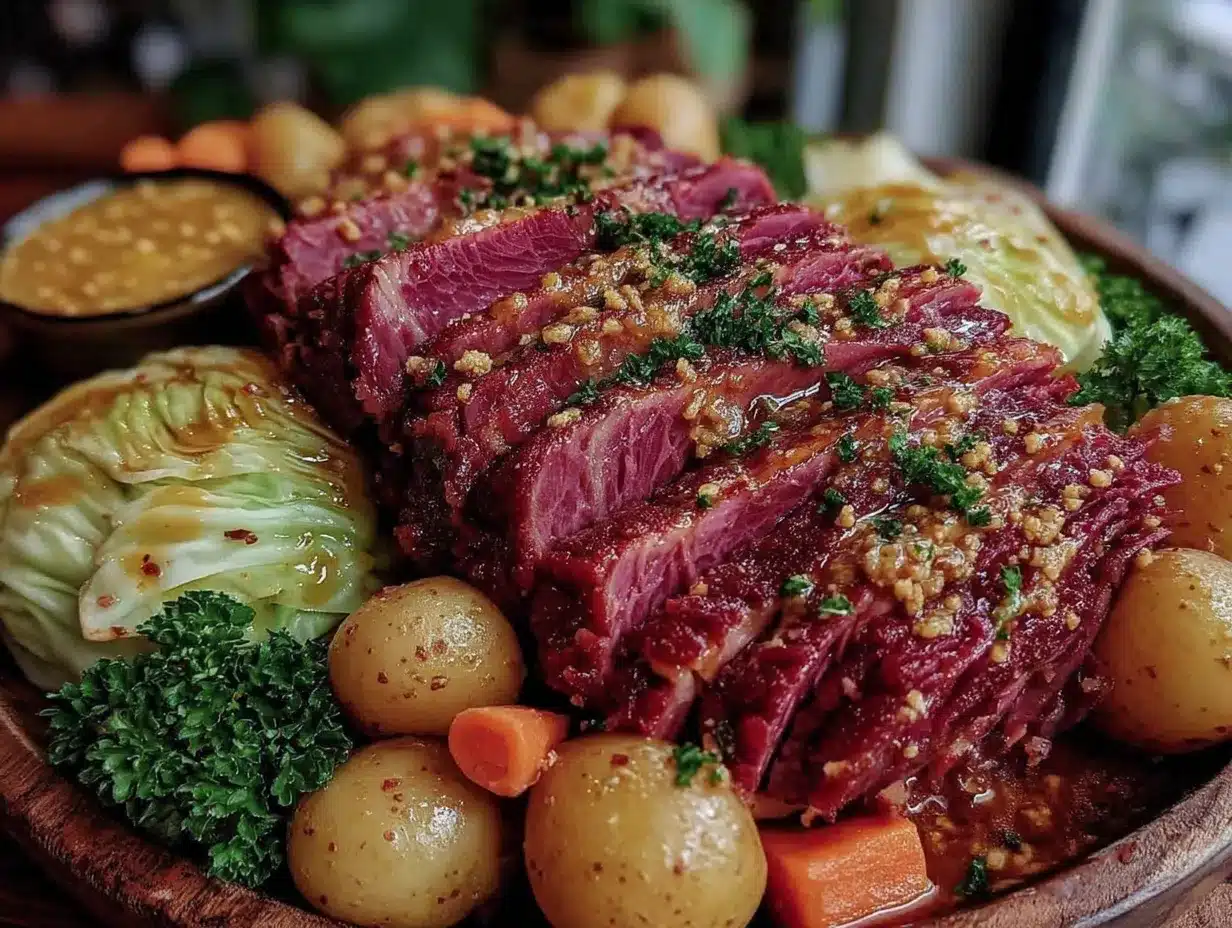
- Slice against the grain (5 minutes) — Using a sharp knife, slice the brisket against the grain into ¼-inch thick slices. Cutting against the grain shortens the muscle fibers, making each bite melt-in-your-mouth tender. If you cut with the grain, the meat will be chewy and stringy.
- Serve (5 minutes) — Arrange the sliced brisket on a platter surrounded by the carrots, potatoes, and cabbage wedges. Spoon a little of the cooking liquid over the meat for extra moisture and flavor. Garnish with fresh parsley if you like.
One thing I learned the hard way — do not add the cabbage at the beginning. The first time I made this, I threw everything in at once and ended up with cabbage that was gray, mushy, and had lost all its character. Adding it late keeps it vibrant and pleasantly tender.
Cooking Tips & Techniques
After making this recipe more times than I can count, I have picked up a few tricks that make a real difference. Here are my best tips for perfect results every time.
Slice against the grain — This is the single most important tip for tender corned beef. Look at the cooked brisket and you will see lines running through the meat — that is the grain. Slice perpendicular to those lines, not parallel to them. I messed this up my first two times and wondered why my meat was tough. Now I always take a moment to find the grain before I start slicing.
Do not lift the lid — I know it is tempting to peek, but every time you lift the slow cooker lid, you lose a significant amount of heat and add cooking time. Trust that the steam is doing its job in there. If you absolutely must check, do it quickly and only after the first 6 hours.
Skim the fat if needed — Some briskets release more fat than others. If you want a cleaner cooking liquid for serving or using in other recipes, you can skim the fat off the top with a spoon before adding the vegetables. I usually leave it because it adds flavor, but it is totally up to you.
Use a meat thermometer for precision — While the fork test works fine, a meat thermometer gives you more certainty. Corned beef is done when it reaches an internal temperature of 190 to 200°F. At this temperature, the collagen has broken down into gelatin, making the meat incredibly tender.
Make it a day ahead — This is one of those dishes that tastes even better the next day. The flavors meld together overnight, and the meat becomes even more tender. I sometimes make it a day ahead, refrigerate everything, then reheat gently on the stovetop or in the slow cooker. The cabbage will soften more upon reheating, so keep that in mind.
Variations & Adaptations
This recipe is wonderfully adaptable, and I have tried several variations over the years. Here are some of my favorites:
- Guinness Braised Corned Beef — Replace 1 cup of the chicken broth with 1 cup of Guinness stout. The beer adds a deep, malty richness that pairs beautifully with the spices. I tried this last St. Patrick’s Day and it was a hit with everyone at the table.
- Low-Carb Version — Skip the potatoes and add extra cabbage and carrots, or swap the potatoes for turnips or rutabagas. The cooking time stays the same, and you still get that hearty, satisfying meal without the extra carbs.
- Spicy Kick — Add 1 to 2 sliced jalapeños or a teaspoon of red pepper flakes along with the spices in step 2. The heat builds slowly during cooking and adds a nice warmth without overwhelming the dish. My brother-in-law loved this version.
- Honey Glazed Finish — After the brisket rests, brush it with a mixture of 2 tablespoons honey and 1 tablespoon Dijon mustard, then broil it for 2 to 3 minutes until caramelized. This adds a sweet and tangy crust that contrasts beautifully with the savory meat.
- Slow Cooker Reuben Sandwiches — Use the leftovers to make incredible Reuben sandwiches. Pile the sliced corned beef on rye bread with Swiss cheese, sauerkraut, and Thousand Island dressing, then grill until golden and melty. I have a recipe for crispy Reuben sliders that uses leftover corned beef perfectly.
I have personally tried all of these variations, and each one brings something unique to the table. The honey glazed version is my current favorite, but the Guinness braised one is a close second depending on my mood.
Serving & Storage Suggestions
This meal is a complete dinner on its own, but here are some ideas for serving and storing it.
Serving — Serve the corned beef and vegetables hot, straight from the slow cooker. I like to arrange everything on a large platter family-style so everyone can help themselves. Spoon a little of the cooking liquid over the meat to keep it moist. A side of whole-grain mustard or horseradish cream is traditional and adds a nice sharp contrast to the rich meat. For a lighter side, a simple green salad with a tangy vinaigrette works beautifully.
Storage — Store leftover corned beef and vegetables separately in airtight containers in the refrigerator. The meat will keep for 3 to 4 days, and the vegetables for about the same time. The flavors actually deepen as they sit, so leftovers are often even better than the first meal.
Freezing — Corned beef freezes well. Slice the meat and wrap it tightly in plastic wrap, then place it in a freezer-safe bag or container. It will keep for up to 3 months. The vegetables do not freeze as well — they tend to get mushy upon thawing — so I recommend freezing only the meat. Thaw overnight in the refrigerator before reheating.
Reheating — The best way to reheat corned beef is gently, to prevent it from drying out. Place the slices in a skillet with a splash of the reserved cooking liquid or beef broth, cover, and warm over low heat for 5 to 7 minutes. You can also reheat it in the microwave, but be careful not to overcook it. The vegetables can be reheated in the microwave or in a skillet with a little butter.
Leftover Ideas — Leftover corned beef is a gift. Use it in corned beef hash with diced potatoes and onions for breakfast, pile it into a slow cooker French dip sandwich for a twist on the classic, or chop it up and add it to a hearty soup with cabbage and carrots.
Nutritional Information & Benefits
While corned beef is not exactly health food, it does have some nutritional benefits when enjoyed in moderation as part of a balanced diet.
- Estimated per serving (based on 6 servings, including vegetables): Calories: 420, Protein: 32g, Fat: 22g, Carbohydrates: 28g, Fiber: 5g, Sodium: 980mg
- Protein-Rich: Corned beef is an excellent source of high-quality protein, which is essential for muscle maintenance and repair. A single serving provides about 65% of the daily recommended intake.
- Iron and B Vitamins: Beef is naturally rich in iron, zinc, and B vitamins, particularly B12, which supports energy metabolism and nervous system health. The cabbage and carrots add vitamin C, vitamin K, and fiber.
- Dietary Considerations: This recipe is naturally gluten-free and dairy-free. It is also low in sugar and carbohydrates if you skip the potatoes. For a lower-sodium version, use low-sodium broth and look for a corned beef labeled “reduced sodium.”
- Potential Allergens: None of the common allergens are present in this recipe, but always check the spice packet ingredients if you have specific sensitivities.
I personally love that this meal feels indulgent but is actually quite balanced. You get protein, vegetables, and healthy fats all in one bowl. It is comfort food that does not leave you feeling sluggish afterward.
Conclusion
This slow cooker corned beef and cabbage has become a staple in my kitchen for good reason. It is the kind of recipe that delivers every single time — tender, flavorful, and deeply satisfying without requiring hours of active work. Whether you are making it for St. Patrick’s Day, a cozy Sunday dinner, or just because you crave something warm and hearty, this dish never disappoints.
I love that this recipe leaves room for your own touch. Add more garlic, swap in different vegetables, or try the Guinness version — it is hard to go wrong. The slow cooker does the hard part, and you get to take all the credit.
If you make this recipe, I would love to hear how it turned out. Leave a comment below, share your photos, or tell me about any fun variations you tried. And if you are looking for another easy, crowd-pleasing meal, check out this creamy cheesy taco pasta that my family goes crazy over. Happy cooking, friends!
Frequently Asked Questions
Can I cook corned beef and cabbage on high instead of low?
Yes, you can cook it on high for 5 to 6 hours instead of 8 to 10 hours on low. The texture will be slightly less tender, but it still turns out delicious. Just add the cabbage during the last 45 minutes regardless of which setting you use.
Do I need to soak the corned beef before cooking to remove salt?
Not with most modern corned beef. The brining process has become less salty over the years, and soaking can actually wash away flavor. If you are particularly sensitive to salt, you can soak the brisket in cold water for 1 to 2 hours before cooking, but I have never found it necessary.
Why is my corned beef tough?
Corned beef needs low, slow cooking to break down its connective tissue. If it is tough, it likely needs more time. Cook it until a fork slides in easily, or until the internal temperature reaches 190 to 200°F. Slicing against the grain is also crucial — cutting with the grain makes even perfectly cooked meat seem tough.
Can I add other vegetables to the slow cooker?
Absolutely! Parsnips, turnips, celery root, and rutabagas all work well. Add them at the same time as the carrots and potatoes. Avoid adding delicate vegetables like zucchini or bell peppers, as they will turn to mush during the long cooking time.
How do I prevent the cabbage from turning gray?
Add the cabbage during the last 45 minutes of cooking, not at the beginning. This keeps it bright green and tender-crisp rather than gray and mushy. You can also blanch the cabbage wedges in boiling water for 2 minutes before adding them to the slow cooker to help preserve their color.
Pin This Recipe!
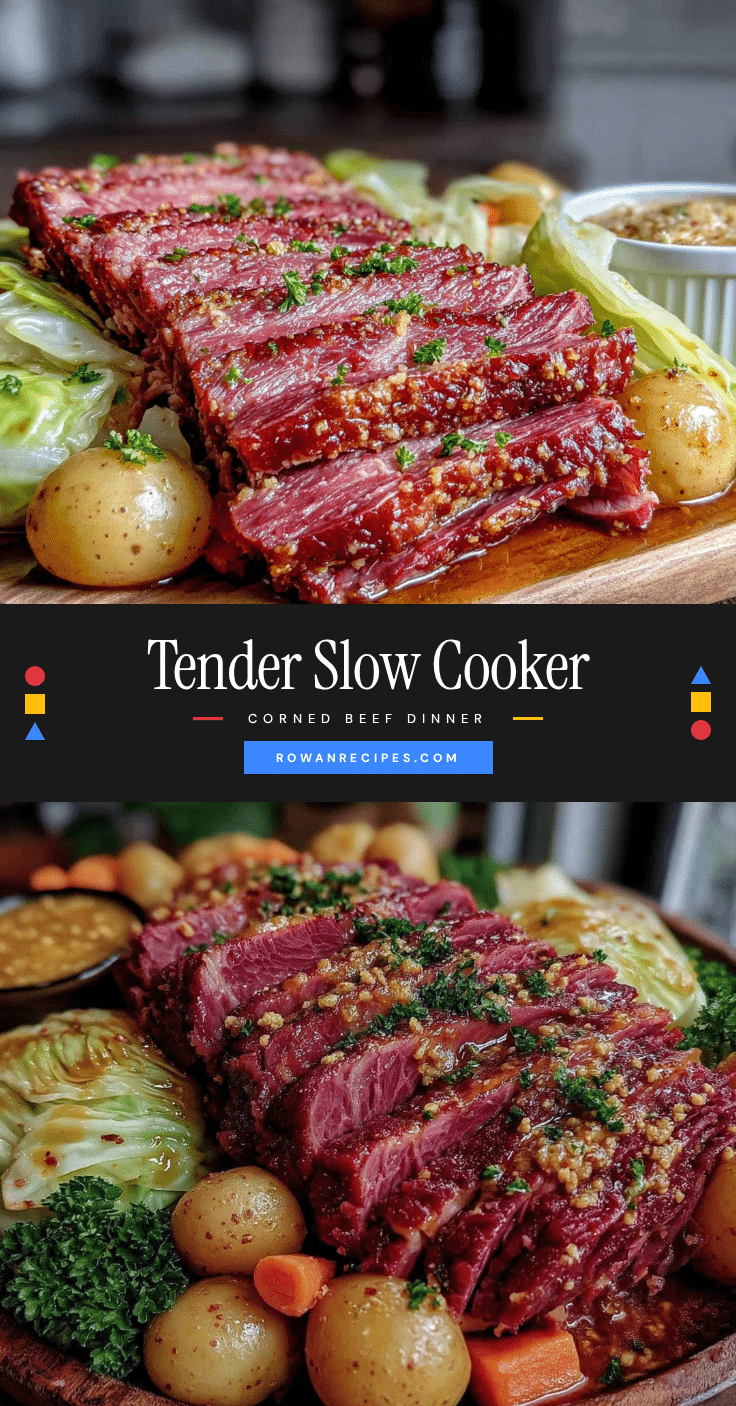
Easy Slow Cooker Corned Beef and Cabbage Recipe
This easy slow cooker corned beef and cabbage recipe is the kind of meal that makes you feel like you cheated the system. You toss everything in, walk away for hours, and come back to a dinner that tastes like you spent all day tending to it.
- Prep Time: 15 minutes
- Cook Time: 8 hours 45 minutes
- Total Time: 9 hours
- Yield: 6 servings
- Category: Main Course
- Cuisine: Irish
Ingredients
- Corned beef brisket (3 to 4 pounds)
- Spice packet (included with brisket)
- Yellow onions (2 medium, sliced into thick rings)
- Garlic cloves (4 to 5, smashed)
- Chicken broth or beef broth (2 cups, low-sodium)
- Water (2 cups)
- Bay leaves (2)
- Whole black peppercorns (1 teaspoon, optional)
- Carrots (4 to 5 medium, peeled and cut into 2-inch chunks)
- Baby potatoes (1.5 pounds, red or gold, left whole or halved)
- Green cabbage (1 medium head, cut into 8 wedges)
- Fresh parsley (for garnish, optional)
Instructions
- Prep the brisket: Remove the corned beef brisket from its packaging. Pat it dry with paper towels. Do not rinse it! Reserve the spice packet.
- Layer the onions and garlic: Slice the onions into thick rings, about ½ inch thick. Smash the garlic cloves with the flat side of your knife. Spread the onions and garlic evenly across the bottom of the slow cooker.
- Place the brisket: Set the brisket on top of the onions, fat side up. Sprinkle the contents of the spice packet over the top, along with the bay leaves and extra peppercorns if using.
- Add the liquid: Pour the chicken broth and water around the brisket, being careful not to wash the spices off the top. The liquid should come about halfway up the sides of the brisket.
- Cook low and slow: Cover the slow cooker and set it to low for 8 to 10 hours (or high for 5 to 6 hours). Do not lift the lid during the first 6 hours.
- Add the carrots and potatoes: After about 6 hours on low (or 3.5 hours on high), add the carrots and baby potatoes to the slow cooker, nestling them into the liquid around the brisket. Cook for about 2 more hours.
- Add the cabbage: Cut the cabbage into 8 wedges, leaving the core intact. Place the wedges in the slow cooker, pushing them down into the liquid. Cover and cook for another 45 minutes, until tender but still with a little bite.
- Rest the brisket: Carefully remove the brisket from the slow cooker using tongs and transfer it to a cutting board. Tent it loosely with foil and let it rest for 10 to 15 minutes.
- Slice against the grain: Using a sharp knife, slice the brisket against the grain into ¼-inch thick slices.
- Serve: Arrange the sliced brisket on a platter surrounded by the carrots, potatoes, and cabbage wedges. Spoon a little of the cooking liquid over the meat. Garnish with fresh parsley if desired.
Notes
Do not rinse the brisket before cooking. Add the cabbage during the last 45 minutes to keep it vibrant and tender. Slice against the grain for the most tender meat. For a Guinness braised version, replace 1 cup of chicken broth with 1 cup of Guinness stout.
Nutrition
- Serving Size: 1 serving (includes
- Calories: 420
- Sugar: 6
- Sodium: 980
- Fat: 22
- Saturated Fat: 8
- Carbohydrates: 28
- Fiber: 5
- Protein: 32
Keywords: slow cooker corned beef and cabbage, easy corned beef and cabbage, St. Patrick's Day recipe, one-pot meal, comfort food