Third time this week I pulled a baking sheet from the oven, and the crackle of the crust was slightly different. Quieter. More buttery. The rosemary had frizzled into little green crystals on top, and the garlic had softened into sweet, jammy pockets that smelled like my grandmother’s kitchen in a way I couldn’t quite explain. I wasn’t trying to perfect anything. I was just hungry, and the sourdough starter on my counter had that sharp, tangy smell that says “use me or lose me.” So I mixed, I folded, I waited. And then I waited some more. By the fifth batch, I stopped taking notes. My hands just knew when the dough was ready. That’s the thing about this Perfect Rosemary Garlic Sourdough Focaccia Bread—it teaches you to trust the process, not the timer.
The first loaf I made was fine. Edible. The kind of bread you serve to yourself with a little olive oil and don’t complain about. But the second one? That one had a crumb that practically sang. The third had a bottom crust so golden and crisp I almost cried. And by the fourth, I was texting friends photos of the air pockets. “Look at this,” I wrote, “I did this.” They didn’t care as much as I did, but that’s fine. I cared enough for all of us.
This isn’t a recipe you follow once and check off a list. It’s the kind you come back to on a rainy Tuesday, or when you need to prove to yourself that you can still make something beautiful from flour, water, and time. The rosemary and garlic aren’t just toppings—they’re the reason you keep reaching for one more piece. And honestly? That’s exactly how bread should feel.
Why You’ll Love This Recipe
I’ve tested this Perfect Rosemary Garlic Sourdough Focaccia Bread more times than I care to admit, and each batch taught me something new. Here’s what makes this version stand out from every other focaccia recipe you’ve seen:
- Deep, Tangy Flavor: The sourdough starter gives this focaccia a subtle, complex tang that commercial yeast just can’t replicate. It’s the kind of flavor that makes you slow down and actually taste each bite.
- That Perfect Crunch: The bottom crust gets shatteringly crisp thanks to a generous layer of olive oil in the pan, while the top stays tender and pillowy. It’s the best of both worlds.
- Simple, Real Ingredients: No fancy equipment or hard-to-find items. Just flour, water, starter, olive oil, rosemary, garlic, and salt. You probably have most of these already.
- Incredibly Forgiving: This dough is wet, slack, and almost impossible to overwork. Even if you’re new to sourdough, this recipe practically bakes itself.
- Better the Next Day: The flavor actually improves after 24 hours. Make it ahead for a party, or just enjoy leftovers that taste even better than day one.
- Crowd-Pleaser: I’ve served this at dinner parties alongside a bowl of cozy stuffed pepper soup, and people always reach for seconds. It’s the bread that disappears first.
This isn’t just another focaccia recipe you scroll past. It’s the one you’ll bookmark, print out, and make for every gathering. The rosemary and garlic aren’t just decorations—they infuse the dough from the inside out, creating pockets of flavor that make each bite slightly different. And that’s what keeps you coming back.
What Ingredients You Will Need
This Perfect Rosemary Garlic Sourdough Focaccia Bread relies on a handful of simple, quality ingredients. Each one plays a specific role in building that signature texture and flavor. Here’s what you’ll need:
For the Dough
- Bread flour, 4 cups (500g) – Higher protein content gives the focaccia its chewy, airy structure. All-purpose works in a pinch, but bread flour really delivers that professional crumb.
- Active sourdough starter, 1 cup (240g) – Make sure it’s bubbly and doubled in size. A hungry, flat starter won’t give you the rise you need. I feed mine 6-8 hours before mixing.
- Warm water, 1 ½ cups (360ml) – Around 85°F (29°C). Too hot will kill the yeast activity; too cold will slow fermentation way down.
- Extra virgin olive oil, ¼ cup (60ml) – Use a good-quality one here. It’s not just for the pan—it gets mixed into the dough for flavor and tenderness.
- Fine sea salt, 2 teaspoons (10g) – Don’t skimp. Salt controls fermentation and strengthens the gluten structure.
For the Topping
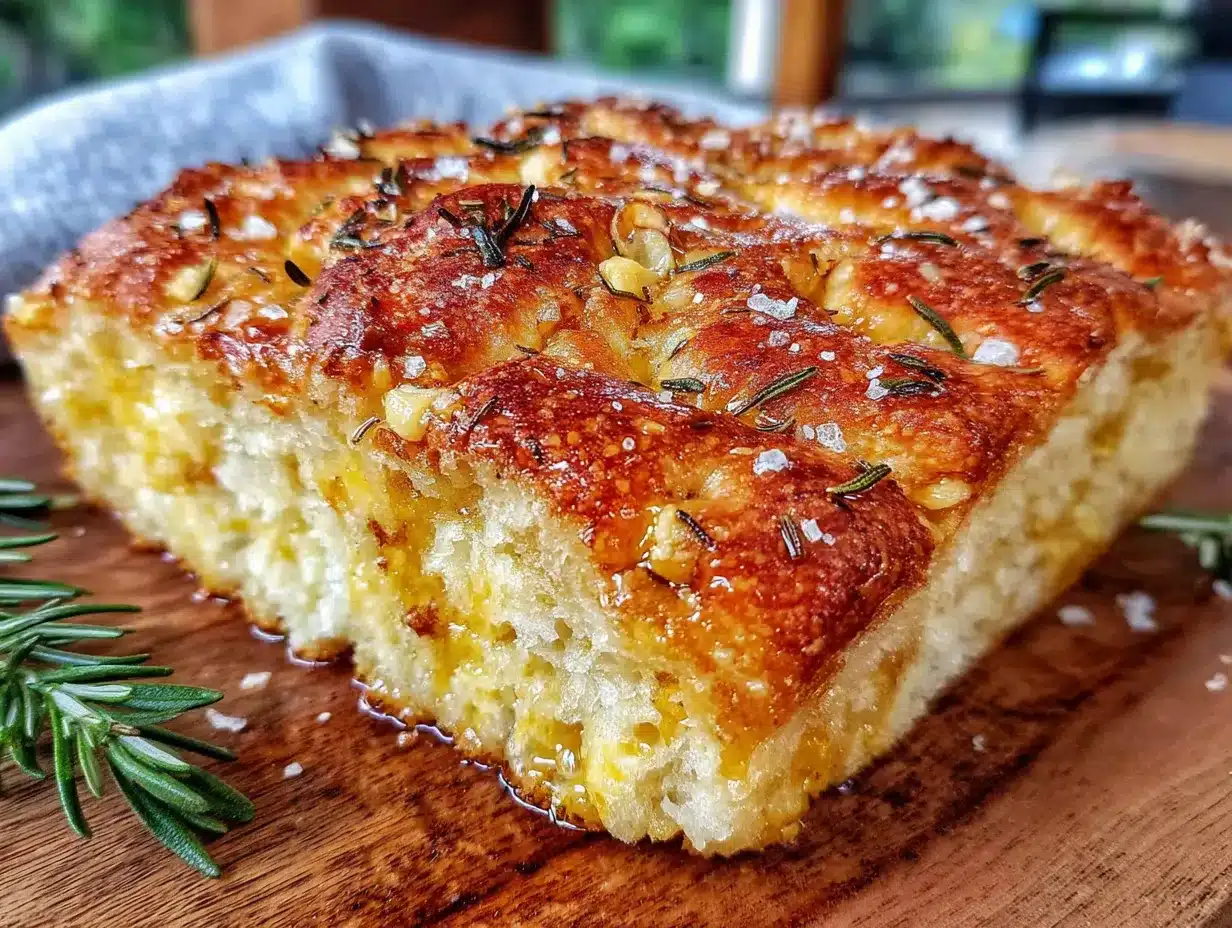
- Fresh rosemary, 3 tablespoons, finely chopped – Dried works if that’s all you have, but fresh rosemary brings a piney, aromatic punch that makes this bread unforgettable.
- Garlic cloves, 4-5, thinly sliced – Roasting them slightly in the olive oil before adding mellows the sharpness and creates sweet, buttery pockets of flavor.
- Flaky sea salt, 1 teaspoon (like Maldon) – This is non-negotiable for that final crunch. Regular table salt dissolves too quickly.
- Extra virgin olive oil, 3 tablespoons (45ml) – For drizzling over the top before baking. Don’t hold back—this creates that golden, crispy crust.
Ingredient Notes & Substitutions
If you don’t have bread flour, all-purpose flour works but will produce a slightly less chewy crumb. I’ve tested this with a 50/50 blend of whole wheat and bread flour, and it adds a lovely nutty flavor—just note the dough will be a bit denser. For a gluten-free version, I haven’t found a perfect substitute yet, but a high-quality gluten-free bread flour blend with xanthan gum might work (I’d love to hear if you try it).
Your sourdough starter should be active and bubbly. If it’s been sitting in the fridge for weeks, feed it twice before using. Trust me, I’ve made the mistake of using a sluggish starter, and the focaccia came out flat and dense. Not the end of the world, but not the cloud-like bread you’re after.
Equipment Needed
You don’t need a professional bakery setup for this Perfect Rosemary Garlic Sourdough Focaccia Bread. Here’s what you’ll actually use:
- Large mixing bowl – A wide, sturdy bowl makes mixing and folding much easier. I use a ceramic one, but glass or stainless steel works fine.
- Digital kitchen scale – Honestly, this is the best investment you can make for sourdough. Measuring by grams is way more accurate than cups, and your bread will thank you.
- Half-sheet pan (13×18 inches) – The standard size for focaccia. If you only have a 9×13, the dough will be thicker and need a few extra minutes of baking time.
- Bench scraper – Not essential, but makes handling the sticky dough so much easier. A plastic dough scraper is cheap and saves you from floury messes.
- Plastic wrap or a damp kitchen towel – For covering the dough during its long rise. A shower cap works too if you’re resourceful.
- Pastry brush – For spreading the oil and garlic mixture evenly over the dough. A silicone one is easiest to clean.
If you don’t have a bench scraper, just lightly oil your hands instead of using extra flour. The dough is wet by design, and oil works better than flour to prevent sticking without drying it out. I learned that the hard way after my first few sticky disasters.
Preparation Method
This recipe takes time, but most of it is hands-off. The active work is maybe 20 minutes total. Here’s how to make the best Perfect Rosemary Garlic Sourdough Focaccia Bread of your life:
- Mix the dough (5 minutes). In a large bowl, combine the warm water and active sourdough starter. Stir until the starter mostly dissolves—it doesn’t need to be perfect. Add the bread flour, olive oil, and fine sea salt. Mix with your hands or a wooden spoon until a shaggy, sticky dough forms. It will look rough and lumpy. That’s exactly right. Cover the bowl with plastic wrap and let it rest for 30 minutes. This is called autolyse, and it lets the flour absorb the water, making the dough easier to work with later.
- Perform stretch and folds (2 minutes each, 4 rounds). After the rest, wet your hands slightly to prevent sticking. Grab one side of the dough, stretch it up, and fold it over the center. Rotate the bowl a quarter turn and repeat. Do this 4 times total (one full rotation). Cover and rest 30 minutes. Repeat this stretch-and-fold process 3 more times, resting 30 minutes between each. By the last round, the dough will feel smoother and more elastic. You’ll notice it holding its shape a bit better—that’s the gluten developing.
- Bulk fermentation (6-8 hours at room temperature). After the final fold, cover the bowl tightly and let it sit at room temperature (around 70°F/21°C) until the dough has nearly doubled in size and looks bubbly on top. This can take anywhere from 6 to 8 hours depending on your starter’s strength and your kitchen temperature. On a cold day, it might take longer. Don’t rush it. The dough should feel airy and jiggle slightly when you shake the bowl.
- Prepare the pan and cold ferment (optional but recommended). Drizzle 2 tablespoons of olive oil into your half-sheet pan and spread it evenly. Gently tip the dough into the pan—don’t deflate it too much. Let it sit uncovered for 20 minutes, then cover and refrigerate overnight. This cold ferment deepens the sourdough flavor and makes the dough easier to handle. If you’re short on time, you can skip the fridge and proceed to the next step after a 2-hour rest at room temperature.
- Dimple the dough (5 minutes). About 2 hours before baking, take the pan out of the fridge (if you cold fermented) and let it come to room temperature. The dough will have relaxed and spread out. Drizzle the remaining 3 tablespoons of olive oil over the top. Now for the fun part: using your fingertips, press deep dimples all over the dough. Don’t be shy—go all the way down to the bottom of the pan. This creates those iconic focaccia craters that hold the oil and toppings. Sprinkle the chopped rosemary and sliced garlic evenly over the surface, pressing them gently into the dimples. Sprinkle the flaky sea salt on top.
- Final proof (1.5-2 hours). Cover the pan loosely with plastic wrap and let the dough rise until it’s puffy and nearly doubled in height. It should look pillowy and full of air. If it’s still flat, give it more time. This step is crucial for that light, airy crumb.
- Bake (25-30 minutes). Preheat your oven to 425°F (220°C) with a rack in the middle. Bake the focaccia for 25-30 minutes, rotating the pan halfway through, until the top is deep golden brown and the bottom sounds hollow when tapped. The garlic should be fragrant and slightly caramelized, and the rosemary will look crispy and dark green. If the top is browning too fast but the bottom isn’t done, tent it loosely with foil for the last 5 minutes.
- Cool and serve. Let the focaccia cool in the pan for 5 minutes, then transfer it to a wire rack. Don’t skip this—if you leave it in the pan, the bottom will steam and lose its crunch. Let it cool for at least 20 minutes before slicing. I know it’s hard to wait, but the texture really sets during this time.
Cooking Tips & Techniques
After making this Perfect Rosemary Garlic Sourdough Focaccia Bread more times than I can count, I’ve collected a few tricks that make a real difference:
Use a thermometer for your water. I used to guess, and my dough either took forever to rise or didn’t rise at all. Water that’s too hot (above 100°F/38°C) can kill the yeast in your starter. Too cold (below 70°F/21°C) and fermentation slows to a crawl. 85°F (29°C) is the sweet spot. A simple instant-read thermometer costs ten bucks and saves you from wasted ingredients.
Don’t be afraid of sticky dough. This focaccia dough is deliberately wet—that’s what creates the open, airy crumb. If you add too much flour to make it manageable, you’ll end up with a dense, bready focaccia instead of the light, springy one you’re after. Oil your hands instead of flouring them when handling the dough. It works so much better.
The dimpling matters more than you think. I used to poke the dough half-heartedly, and the focaccia came out flat and uniform. When you press your fingers all the way down to the pan, you create those deep wells that trap the olive oil and garlic. Those pockets of flavor are what make homemade focaccia so much better than store-bought. Be aggressive with it—the dough can take it.
Watch the bottom crust. One time I pulled the focaccia out when the top looked perfect, but the bottom was pale and soft. Now I always check the underside. It should be deep golden brown and sound hollow when you tap it. If it’s not there yet, give it another 3-5 minutes. The bottom is where all that olive oil crisps up, and it’s honestly my favorite part.
Variations & Adaptations
This Perfect Rosemary Garlic Sourdough Focaccia Bread is a fantastic base for experimentation. Here are some variations I’ve tried and loved:
Everything Bagel Focaccia: Skip the rosemary and garlic. Before baking, sprinkle the dimpled dough with everything bagel seasoning (sesame seeds, poppy seeds, dried garlic, dried onion, and salt). The seeds toast up beautifully in the oven and add a satisfying crunch. This version is amazing with cream cheese or as a sandwich bread.
Sun-Dried Tomato & Olive: After dimpling, press halved cherry tomatoes or chopped sun-dried tomatoes and sliced Kalamata olives into the dough. The tomatoes burst and caramelize, creating little sweet-tart pockets. This pairs wonderfully with a bowl of crispy sheet pan Italian sausage and peppers for a complete meal.
Cheesy Garlic Focaccia: Sprinkle ½ cup of grated Parmesan or crumbled feta over the top right after dimpling. The cheese melts into the crevices and forms a crispy, golden crust. Just watch the oven—cheese can burn quickly, so check it 5 minutes early.
Herb and Lemon: Replace the rosemary with a mix of fresh thyme, oregano, and lemon zest. The citrus brightens the bread and makes it perfect for summer picnics or alongside grilled meats. I’ve served this with easy 5-ingredient BBQ chicken and it was a hit.
Sweet Focaccia: This one surprised me. Omit the garlic and salt. After dimpling, drizzle with honey and sprinkle with cinnamon sugar and a few fresh rosemary leaves. The sweet-savory combination is addictive. It’s wonderful for breakfast or as a dessert with coffee.
Serving & Storage Suggestions
This Perfect Rosemary Garlic Sourdough Focaccia Bread is best served warm, but it’s still incredible at room temperature. Here’s how to make the most of it:
Serving: Slice it into squares or rectangles and serve as a side to soups, stews, or salads. It’s also fantastic as a sandwich bread—split a piece horizontally and fill it with roasted vegetables, fresh mozzarella, and pesto. For a simple appetizer, serve with a bowl of high-quality olive oil and balsamic vinegar for dipping. The bread is sturdy enough to hold up to dips but tender enough to eat on its own.
Storage: Store leftover focaccia in an airtight container at room temperature for up to 3 days. Do not refrigerate—the cold will dry it out and make the crumb stale. If you need to keep it longer, wrap it tightly in plastic wrap and then foil, and freeze for up to 3 months. To thaw, leave it at room temperature for about an hour, then reheat in a 350°F (175°C) oven for 5-7 minutes to restore the crust.
Reheating: The best way to revive day-old focaccia is to pop it in a 350°F (175°C) oven for 5 minutes. It comes out tasting almost fresh-baked. The microwave will make it soggy and sad—avoid it unless you’re in a real hurry. For a quicker method, toast slices in a toaster or under the broiler for 1-2 minutes. Watch carefully so the garlic doesn’t burn.
Flavor Development: Here’s a secret—this focaccia actually tastes better on day two. The flavors meld and deepen overnight, and the crumb becomes even more tender. I often make it a day ahead for parties and just reheat it before serving. Nobody ever guesses it’s not fresh-baked.
Nutritional Information & Benefits
While focaccia is indulgent, this version uses simple, whole ingredients that offer some nutritional perks. Here’s an approximate breakdown per serving (1/8 of the recipe):
- Calories: 280
- Total Fat: 12g
- Saturated Fat: 2g
- Carbohydrates: 36g
- Fiber: 2g
- Protein: 6g
- Sodium: 480mg
Health Benefits: The sourdough fermentation process breaks down phytic acid in the flour, making the minerals more bioavailable and easier to digest. Some people with mild gluten sensitivities find sourdough easier to tolerate for this reason. Olive oil provides heart-healthy monounsaturated fats and antioxidants. Rosemary is rich in anti-inflammatory compounds, and garlic offers immune-supporting properties. While this isn’t a health food, it’s a real-food bread made with simple, recognizable ingredients—far better than anything from a bag at the grocery store.
Dietary Considerations: This recipe is vegetarian and can be made vegan by ensuring your sourdough starter is plant-based (which it naturally is). It contains gluten and is not suitable for celiac disease. For a lower-sodium option, reduce the flaky salt topping or use a salt substitute.
Conclusion
This Perfect Rosemary Garlic Sourdough Focaccia Bread is more than just a recipe—it’s a ritual. It’s the kind of bread that makes your kitchen smell like a cozy Italian bakery, that brings people to the counter asking “what are you making?” before they even see it. The combination of tangy sourdough, fragrant rosemary, and sweet roasted garlic is honestly unbeatable. And the best part? You don’t need to be a professional baker to nail it. The dough is forgiving, the steps are simple, and the result is always impressive.
I encourage you to make this your own. Add extra garlic if you’re a garlic lover (I always do). Experiment with different herbs. Try the sweet version for breakfast. The recipe is just a starting point—your hands and your taste buds will guide you from there. And when you pull that golden, crackling focaccia out of the oven, take a moment to appreciate what you’ve made. You did that. With flour, water, and a little bit of patience.
I’d love to hear how it turns out for you. Drop a comment below and let me know what variations you tried, or tag me in your photos. Happy baking, friend!
Frequently Asked Questions
Can I use all-purpose flour instead of bread flour?
Yes, you can. All-purpose flour will produce a slightly softer, less chewy crumb, but the focaccia will still be delicious. If you want that professional, airy texture with a good chew, bread flour is the better choice due to its higher protein content.
My dough isn’t rising. What did I do wrong?
This is usually a temperature issue. If your kitchen is cold (below 68°F/20°C), fermentation slows way down. Try placing the bowl in a warm spot, like near a sunny window or on top of the refrigerator. Also, make sure your sourdough starter is active and bubbly before you begin. A sluggish starter won’t give you the rise you need.
Can I make this faster without the overnight cold ferment?
Absolutely. Skip the refrigerator step and let the dough do its final proof at room temperature for 1.5-2 hours after dimpling. The flavor won’t be as deep, but you’ll still get a lovely focaccia. The cold ferment just adds complexity and makes the dough easier to handle.
How do I know when the focaccia is fully baked?
Look for a deep golden brown top and a bottom that sounds hollow when you tap it. The internal temperature should be around 200°F (93°C) if you want to use a thermometer. The edges should be crispy and pulling away from the pan slightly. Don’t rely on color alone—check the bottom crust too.
Can I freeze this focaccia?
Yes, it freezes beautifully. Wrap it tightly in plastic wrap and then foil, or use a freezer-safe bag. It will keep for up to 3 months. To serve, thaw at room temperature and reheat in a 350°F (175°C) oven for 5-7 minutes. The crust will crisp right back up, and it will taste almost fresh-baked.
Pin This Recipe!

Perfect Rosemary Garlic Sourdough Focaccia Recipe: Best Ever
This tangy, aromatic sourdough focaccia features a shatteringly crisp bottom crust and a tender, pillowy top, infused with fragrant rosemary and sweet roasted garlic. It’s a forgiving, crowd-pleasing bread that tastes even better the next day.
- Prep Time: 20 minutes
- Cook Time: 25-30 minutes
- Total Time: 8-10 hours (includes fermentation and proofing)
- Yield: 8 servings 1x
- Category: Bread
- Cuisine: Italian
Ingredients
- 4 cups (500g) bread flour
- 1 cup (240g) active sourdough starter
- 1 ½ cups (360ml) warm water (85°F/29°C)
- ¼ cup (60ml) extra virgin olive oil (for dough)
- 2 teaspoons (10g) fine sea salt
- 3 tablespoons fresh rosemary, finely chopped
- 4–5 garlic cloves, thinly sliced
- 1 teaspoon flaky sea salt (e.g., Maldon)
- 3 tablespoons (45ml) extra virgin olive oil (for topping)
Instructions
- Mix the dough: In a large bowl, combine warm water and active sourdough starter. Stir until mostly dissolved. Add bread flour, ¼ cup olive oil, and fine sea salt. Mix with hands or a wooden spoon until a shaggy, sticky dough forms. Cover with plastic wrap and rest for 30 minutes (autolyse).
- Perform stretch and folds: Wet your hands slightly. Grab one side of the dough, stretch it up, and fold it over the center. Rotate the bowl a quarter turn and repeat. Do 4 stretches (one full rotation). Cover and rest 30 minutes. Repeat this process 3 more times, resting 30 minutes between each.
- Bulk fermentation: Cover the bowl tightly and let it sit at room temperature (around 70°F/21°C) until nearly doubled in size and bubbly on top, 6-8 hours.
- Prepare the pan and cold ferment (optional): Drizzle 2 tablespoons olive oil into a half-sheet pan (13×18 inches) and spread evenly. Gently tip the dough into the pan. Let sit uncovered for 20 minutes, then cover and refrigerate overnight (or skip fridge and proceed after a 2-hour rest at room temperature).
- Dimple the dough: About 2 hours before baking, take the pan out of the fridge (if cold fermented) and let come to room temperature. Drizzle remaining 3 tablespoons olive oil over the top. Using your fingertips, press deep dimples all over the dough, going all the way to the bottom of the pan. Sprinkle chopped rosemary and sliced garlic evenly over the surface, pressing gently into the dimples. Sprinkle flaky sea salt on top.
- Final proof: Cover the pan loosely with plastic wrap and let rise until puffy and nearly doubled in height, 1.5-2 hours.
- Bake: Preheat oven to 425°F (220°C) with a rack in the middle. Bake for 25-30 minutes, rotating the pan halfway through, until the top is deep golden brown and the bottom sounds hollow when tapped. If top browns too fast, tent loosely with foil for the last 5 minutes.
- Cool and serve: Let cool in the pan for 5 minutes, then transfer to a wire rack. Cool for at least 20 minutes before slicing.
Notes
For best flavor, cold ferment overnight. Use a thermometer for water (85°F/29°C). Don’t be afraid of sticky dough; oil your hands instead of adding extra flour. Dimple aggressively to create oil pockets. Check bottom crust for doneness. Focaccia tastes even better on day two.
Nutrition
- Serving Size: 1/8 of recipe
- Calories: 280
- Sodium: 480
- Fat: 12
- Saturated Fat: 2
- Carbohydrates: 36
- Fiber: 2
- Protein: 6
Keywords: sourdough focaccia, rosemary garlic focaccia, homemade focaccia, sourdough bread, Italian bread, focaccia recipe