That sharp, slightly sour smell of simmering sauerkraut — the kind that hits you before you even walk through the back door — still takes me straight to my aunt’s tiny kitchen in Milwaukee every single time. She wasn’t one for fancy cooking, not at all. Her stove always had a battered cast iron skillet on it, and if you showed up on a crisp Saturday afternoon in October, that skillet was full of bratwurst, bubbling away with caraway seeds and apples. I remember standing on my tiptoes to peek at the bubbles, wondering how something that smelled so tangy could possibly taste that good. She’d hand me a fork and say, “Go on, poke one. See if it’s ready.” I never knew what “ready” meant, but I’d poke anyway, just to feel like I was part of the magic.
Years later, I found myself craving that exact moment — the warmth of that kitchen, the way the steam fogged up the windows, the simplicity of a meal that felt like a hug. But life got busy, you know? I didn’t have all day to tend a pot on the stove. So I started messing around with a one-skillet version, trying to capture that same deep, savory, slightly sweet flavor without the hours of simmering. And honestly? This Easy Oktoberfest Bratwurst and Sauerkraut Skillet is the result of those experiments. It’s not fancy, and it’s not trying to be. It’s just honest, hearty food that tastes like a celebration without the stress. That’s the kind of recipe that sticks with you.
This isn’t a complicated dish. It’s the kind of meal you throw together when you want something satisfying but don’t have the energy for a project. And that’s exactly why it works.
Why You’ll Love This Recipe
Let’s be real — Oktoberfest food can feel intimidating. There’s a lot of tradition, a lot of steps, and sometimes a lot of dishes. But this skillet flips all of that on its head. It’s designed for real life, where you’re juggling a million things but still want dinner to feel special.
- Quick & Easy: This whole thing comes together in about 30 minutes. From fridge to table, you’re looking at one skillet, a cutting board, and zero fuss. Perfect for those weeknights when you need something fast but don’t want to sacrifice flavor.
- Simple Ingredients: You probably already have most of this in your kitchen. Bratwurst, sauerkraut, an apple, some onions, a little beer or broth — nothing exotic. No trips to a specialty store required.
- Perfect for Oktoberfest at Home: Whether you’re throwing a small gathering or just want to feel like you’re at a beer hall without leaving your living room, this skillet delivers that cozy, festive vibe. Pair it with a pretzel and some mustard, and you’re set.
- Crowd-Pleaser: I’ve served this to picky eaters, to folks who “don’t like sauerkraut,” and to hardcore bratwurst fans. Every single time, the skillet comes back empty. Something about the way the flavors meld together just works.
- Unbelievably Delicious: The bratwurst gets beautifully browned, the sauerkraut softens and sweetens from the apple and onion, and the whole thing gets a little caramelized edge from the skillet. It’s comfort food that feels a bit elevated, but without any pretension.
What makes this version different from the dozens of other bratwurst recipes out there? It’s the balance. Most recipes either drown the brats in sauerkraut or leave them dry. Here, you get a perfect harmony — juicy sausages, tangy kraut, and a subtle sweetness from the apple that ties it all together. It’s the kind of dish that makes you close your eyes after the first bite, just for a second. Not because it’s fancy, but because it’s exactly right.
What Ingredients You Will Need
This recipe uses simple, wholesome ingredients to deliver bold flavor and satisfying texture without the fuss. Most of these are pantry staples or easy to find at any grocery store.
- 4 fresh bratwurst sausages (about 1 lb total) — Look for high-quality brats from a butcher or a trusted brand like Johnsonville. If you can find them pre-cooked, they’ll work, but fresh ones give you a better sear and juicier texture. I prefer uncooked brats for this.
- 1 tablespoon olive oil — Just a little to help brown the sausages. You can also use avocado oil or even butter for a richer flavor.
- 1 medium yellow onion, thinly sliced — The onion softens and sweetens as it cooks, creating a nice base for the sauerkraut. You could use a sweet onion if you want even more sweetness.
- 1 medium apple, cored and thinly sliced — A crisp, slightly tart apple like Granny Smith works best. It adds a subtle sweetness that balances the tangy sauerkraut. Don’t skip this — it’s one of those small touches that makes a big difference.
- 1 ½ cups sauerkraut, drained — I recommend buying refrigerated sauerkraut from the deli section if you can find it. It has a much better texture and flavor than the canned stuff. Look for brands like Bubbies or Cleveland Kraut. If you only have canned, rinse it briefly to remove some of the brine.
- ½ cup beer (lager or pilsner works best) — This adds that classic Oktoberfest flavor and helps deglaze the pan. If you don’t drink beer, you can substitute with apple cider or low-sodium chicken broth. The flavor will be slightly different but still delicious.
- 1 teaspoon caraway seeds — These little seeds are the secret to that authentic German flavor. They have a slightly anise-like taste that pairs perfectly with sauerkraut. If you don’t have them, you can skip them, but I really recommend using them.
- ½ teaspoon black pepper — Freshly ground is always better. You can also add a pinch of red pepper flakes if you want a little heat.
- Optional: 1 tablespoon brown sugar — This is my little trick. If your sauerkraut is particularly tangy, a tiny bit of brown sugar helps balance it out. Don’t add it if you like your kraut super tangy.
- Fresh parsley for garnish (optional) — Just for a pop of color. Totally optional, but it makes the dish look prettier on the plate.
Equipment Needed
You don’t need a lot of fancy gear for this one. That’s part of the beauty of it.
- A large cast iron skillet (12-inch is ideal) — Cast iron holds heat beautifully and gives you that nice sear on the bratwurst. If you don’t have cast iron, a heavy-bottomed stainless steel skillet will work just fine. Just make sure it’s large enough to hold everything without crowding.
- A sharp chef’s knife — For slicing the onion and apple. A dull knife makes this job frustrating, so take a minute to sharpen yours if needed.
- A cutting board — Preferably one that’s large enough to hold all your prepped ingredients.
- Tongs — For flipping the bratwurst. A spatula works too, but tongs give you more control.
- A wooden spoon or silicone spatula — For stirring the sauerkraut and scraping up any browned bits from the bottom of the pan.
- A lid or a piece of foil — For covering the skillet while the bratwurst finishes cooking. If your skillet doesn’t have a lid, a sheet of aluminum foil works perfectly.
Honestly, if you have a skillet and a knife, you’re good to go. This isn’t the time to break out the sous vide machine.
Preparation Method
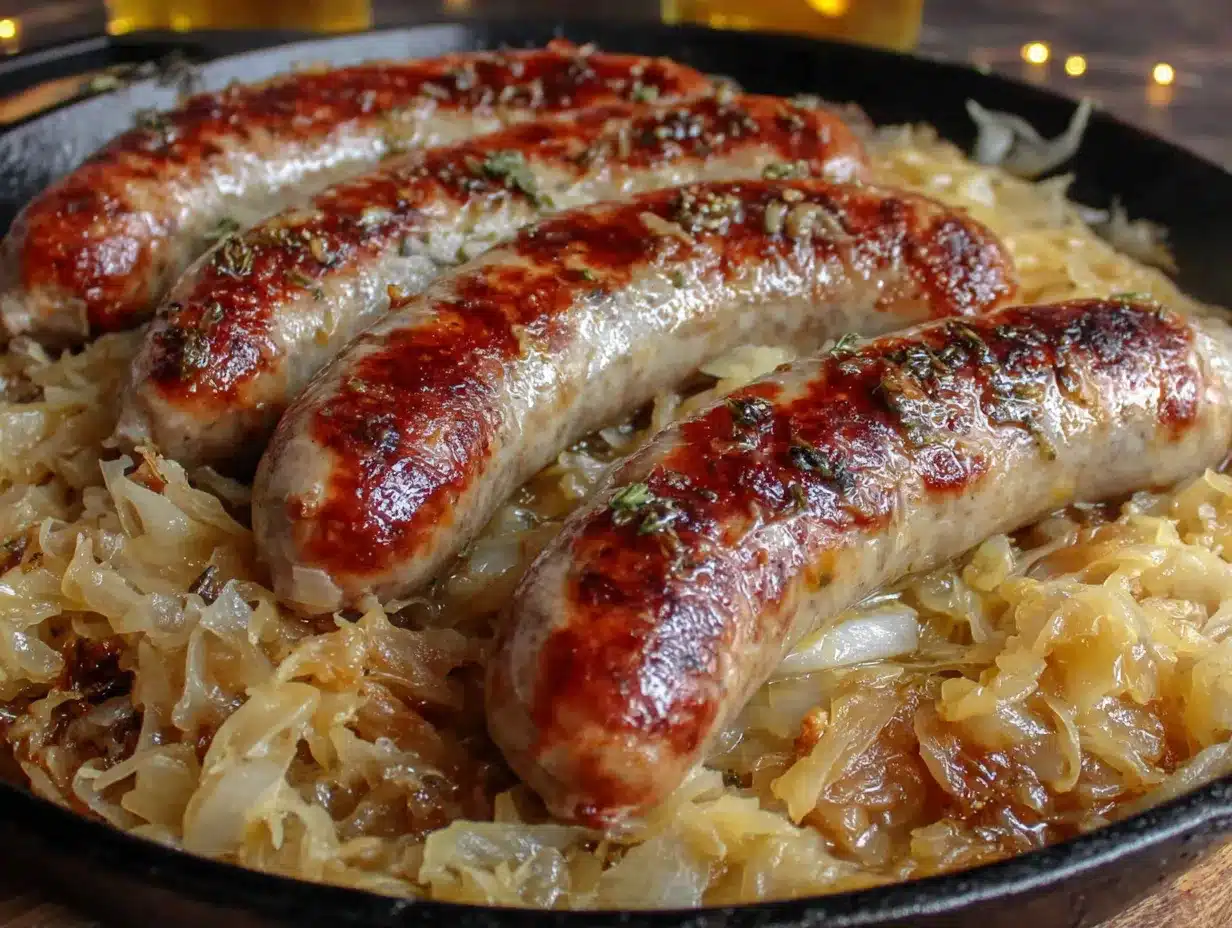
Alright, let’s get cooking. This is one of those recipes that moves fast, so I like to have everything prepped and ready before I turn on the heat. Trust me on this — it makes the whole process smoother.
- Prep your ingredients: Start by slicing your onion and apple into thin slices. You want them roughly the same thickness so they cook evenly. Drain your sauerkraut in a colander and give it a gentle squeeze to remove excess liquid. Don’t squeeze it dry — just get rid of the extra brine. Set everything aside within arm’s reach.
- Brown the bratwurst: Place your large skillet over medium-high heat and add the olive oil. Once the oil is shimmering (but not smoking), carefully add the bratwurst. Let them cook undisturbed for about 4-5 minutes, until the bottom is deeply golden brown. Use your tongs to flip them and cook for another 4-5 minutes on the other side. You’re not trying to cook them through here — just get a nice crust. Transfer the brats to a plate and set them aside. Don’t wipe out the skillet — those browned bits are flavor gold.
- Sauté the aromatics: Reduce the heat to medium and add the sliced onion to the skillet. Cook for about 3-4 minutes, stirring occasionally, until the onion starts to soften and turn translucent. The moisture from the onion will help lift some of those browned bits off the bottom of the pan. If the pan looks dry, add a tiny splash of water or beer.
- Add the apple and sauerkraut: Toss in the sliced apple and cook for another 2 minutes, just until it starts to soften. Then add the drained sauerkraut, caraway seeds, and black pepper. Stir everything together until the sauerkraut is evenly distributed. If you’re using the brown sugar, sprinkle it in now and stir to combine.
- Deglaze with beer: Pour in the beer (or your substitute) and use your wooden spoon to scrape up any browned bits from the bottom of the skillet. This is where all that flavor lives. Let the liquid come to a gentle simmer.
- Return the bratwurst: Nestle the browned bratwurst back into the skillet, pushing them down into the sauerkraut mixture. They should be partially submerged. Bring the liquid back to a simmer, then reduce the heat to low.
- Cover and cook: Cover the skillet with a lid or foil and let everything cook for 15-20 minutes. This allows the bratwurst to cook through completely while absorbing all those wonderful flavors from the sauerkraut, apple, and beer. The liquid will reduce slightly, and the sauerkraut will become wonderfully tender.
- Check for doneness: After 15 minutes, check the internal temperature of the bratwurst with an instant-read thermometer. You’re looking for 160°F (71°C). If they’re not there yet, cover and cook for another 5 minutes. Once they’re done, remove the lid and let everything sit for a minute or two.
- Serve: Transfer the bratwurst to a serving platter or individual plates, and spoon the sauerkraut mixture over the top. Garnish with fresh parsley if you’re feeling fancy. Serve immediately with your favorite mustard, some crusty bread, or a soft pretzel.
One thing I’ve learned the hard way — don’t rush the browning step. That deep, caramelized crust on the bratwurst is what makes this dish sing. If you crowd the pan or flip them too early, you’ll miss out on that flavor. Patience, my friend.
Cooking Tips & Techniques
I’ve made this skillet more times than I can count, and I’ve definitely made my share of mistakes. Here’s what I’ve learned so you don’t have to.
Don’t skip the sear. I know it’s tempting to just throw everything in the pan and let it simmer, but that initial browning is crucial. It creates a layer of flavor that you just can’t get any other way. Plus, it gives the bratwurst that beautiful color that makes the dish look so appetizing.
Watch your heat. When you’re browning the bratwurst, medium-high heat is your friend. But once you add the sauerkraut and beer, you want to lower the heat to a gentle simmer. If you boil it aggressively, the bratwurst can get tough and the sauerkraut will lose its texture. Low and slow is the move here.
Don’t overthink the beer. Any lager or pilsner will work. I’ve used everything from a cheap domestic beer to a fancy craft Oktoberfest brew, and honestly, they all taste great. The alcohol cooks off, so it’s safe for kids and non-drinkers. If you’re worried about the flavor, stick with a mild beer — nothing too hoppy or bitter.
Let it rest. I know you’re hungry, but letting the skillet sit for a couple of minutes after cooking allows the juices to redistribute. The bratwurst will be juicier, and the sauerkraut will absorb any remaining liquid. It’s a small step that makes a big difference.
One mistake I’ll never make again: I once tried to make this with pre-cooked bratwurst. I thought it would save time, but the texture was rubbery and the flavor was flat. Fresh bratwurst is absolutely worth it. The extra few minutes of cooking time are nothing compared to the difference in taste.
If you’re looking for another quick and satisfying one-skillet meal, you might also enjoy this easy sheet pan Italian sausage and peppers recipe. It has that same “throw it all in one pan” energy, just with a different flavor profile.
Variations & Adaptations
One of the best things about this recipe is how flexible it is. Here are a few ways to make it your own.
Dietary adaptations: If you’re looking for a lower-carb option, skip the beer and use chicken broth instead. The apple still adds a touch of natural sweetness without too many carbs. For a dairy-free version, this recipe is already dairy-free — just make sure your bratwurst doesn’t contain any dairy fillers.
Flavor variations: Want to switch things up? Try adding a tablespoon of whole-grain mustard to the sauerkraut mixture for an extra layer of tang. Or throw in some sliced bell peppers along with the onion for a pop of color and sweetness. I’ve also made this with smoked bratwurst, and it gives the dish a whole different vibe — smokier, richer, almost like a barbecue version.
Seasonal swaps: In the fall, use a Honeycrisp or Fuji apple for a sweeter finish. In the summer, you can swap the apple for a firm pear — it adds a similar sweetness but with a more delicate flavor. If it’s winter and you can’t find good apples, a splash of apple cider vinegar and a teaspoon of honey can mimic that sweet-tangy balance.
Cooking method variations: If you don’t have a skillet, you can make this in a Dutch oven or even a large pot. The process is the same — just make sure you give the bratwurst enough room to brown. If you’re using an electric skillet, set it to 375°F for browning and then reduce to 300°F for simmering.
Personal variation I love: I occasionally add a handful of sliced mushrooms along with the onion. They soak up all that beer and sauerkraut juice and become these little flavor bombs. It’s not traditional by any means, but it’s delicious.
For another cozy, one-pot meal that’s perfect for busy nights, check out this cozy stuffed pepper soup. It’s hearty, satisfying, and comes together just as quickly.
Serving & Storage Suggestions
This skillet is a meal in itself, but a few simple sides can turn it into a feast.
Serving temperature: Serve the bratwurst and sauerkraut hot, right out of the skillet. The bratwurst should be juicy and piping hot, and the sauerkraut should be steaming. A dollop of spicy brown mustard or a smear of whole-grain mustard on the side is non-negotiable in my house.
What to serve with it: Crusty bread or a soft pretzel is perfect for soaking up the juices. A simple German potato salad or some roasted potatoes would also be fantastic. If you want something lighter, a crisp green salad with a tangy vinaigrette balances the richness of the bratwurst. And of course, a cold beer is the ideal beverage pairing.
Storage instructions: Leftovers keep well in an airtight container in the refrigerator for up to 4 days. The flavors actually get better as they meld together overnight. I often make a double batch just for the leftovers.
Reheating methods: The best way to reheat this is in a skillet over medium-low heat. Add a splash of water or beer to help rehydrate the sauerkraut, cover, and warm through for about 5-7 minutes. You can also reheat individual portions in the microwave, but the texture of the bratwurst won’t be quite as good. If you’re in a rush, the microwave works fine — just cover the plate with a damp paper towel to keep things moist.
Freezer tips: This dish freezes surprisingly well. Let it cool completely, then transfer to a freezer-safe container. It will keep for up to 3 months. To thaw, place it in the refrigerator overnight and reheat as directed above. The sauerkraut might be slightly softer after freezing, but the flavor is still spot-on.
How flavors develop over time: Like many braised dishes, this one gets better after a day or two in the fridge. The bratwurst absorbs more of the sauerkraut and beer flavors, and everything becomes more cohesive. Don’t be surprised if you find yourself looking forward to the leftovers more than the original meal.
Nutritional Information & Benefits
This recipe is hearty and satisfying, but it also has some surprising nutritional perks.
Estimated nutritional values per serving (based on 4 servings, using one bratwurst per person):
– Calories: ~420
– Protein: 18g
– Fat: 28g
– Carbohydrates: 18g
– Fiber: 4g
– Sugar: 8g
– Sodium: 980mg
Health benefits of key ingredients: Sauerkraut is a fermented food, which means it’s packed with probiotics that support gut health. It’s also rich in vitamin C and vitamin K. Apples add fiber and antioxidants, while onions provide quercetin, a compound with anti-inflammatory properties. Bratwurst is a good source of protein and B vitamins, though it’s higher in fat and sodium, so moderation is key.
Dietary considerations: This recipe is naturally gluten-free if you use a gluten-free beer or substitute with broth. It’s also dairy-free. If you’re watching your sodium, look for low-sodium sauerkraut and use a reduced-sodium broth instead of beer.
Potential allergens: Bratwurst may contain wheat or soy as fillers, depending on the brand. Always check the label if you have sensitivities. The beer also contains gluten unless you use a gluten-free variety.
Personal wellness perspective: I love that this dish feels indulgent but has a few hidden health benefits. The probiotics in the sauerkraut make me feel like I’m doing something good for my gut, even while I’m enjoying a hearty, comforting meal. It’s all about balance, right?
Conclusion
This Easy Oktoberfest Bratwurst and Sauerkraut Skillet is one of those recipes that proves you don’t need a lot of time or fancy ingredients to make something truly special. It’s the kind of meal that brings people together, whether it’s a casual weeknight dinner or a small gathering with friends. The bratwurst gets perfectly juicy, the sauerkraut becomes tender and flavorful, and that little hint of apple and caraway ties everything together in a way that feels both familiar and exciting.
I’d love for you to try this and make it your own. Maybe you’ll add a little extra mustard, or throw in some mushrooms, or serve it with a giant soft pretzel. Whatever you do, I hope it brings a little bit of that cozy Oktoberfest feeling into your kitchen. That’s what this recipe is really about — not perfection, but warmth and connection.
If you give this a try, let me know how it goes! Leave a comment below, share your photos, or tag me on social media. I genuinely love hearing about your kitchen adventures. And if you’re craving another quick, comforting meal, don’t miss this creamy cheesy taco pasta — it’s another one-skillet wonder that’s always a hit. Happy cooking, friends!
Frequently Asked Questions
Can I use pre-cooked bratwurst for this recipe?
You can, but I really recommend using fresh bratwurst. Pre-cooked brats don’t brown as well and can turn out a bit rubbery. If you’re in a pinch, just sear them quickly and reduce the simmering time to about 10 minutes.
What if I don’t have beer? Can I use something else?
Absolutely! Apple cider is a fantastic substitute — it adds a nice sweetness that pairs perfectly with the sauerkraut. Low-sodium chicken broth also works well. The flavor will be a little different, but still delicious.
How do I store leftover bratwurst and sauerkraut?
Store leftovers in an airtight container in the refrigerator for up to 4 days. The flavors actually get better overnight. To reheat, warm it in a skillet over medium-low heat with a splash of water or beer.
Can I make this recipe in a slow cooker?
Yes, but you’ll want to brown the bratwurst in a skillet first for the best flavor. Then transfer everything to the slow cooker and cook on low for 4-6 hours. The texture will be softer, but the flavor will be great.
Is this recipe gluten-free?
It can be! Use a gluten-free beer or substitute with apple cider or broth. Also, check the label on your bratwurst to make sure it doesn’t contain any wheat-based fillers. Most high-quality bratwurst is gluten-free, but it’s always good to double-check.
Pin This Recipe!
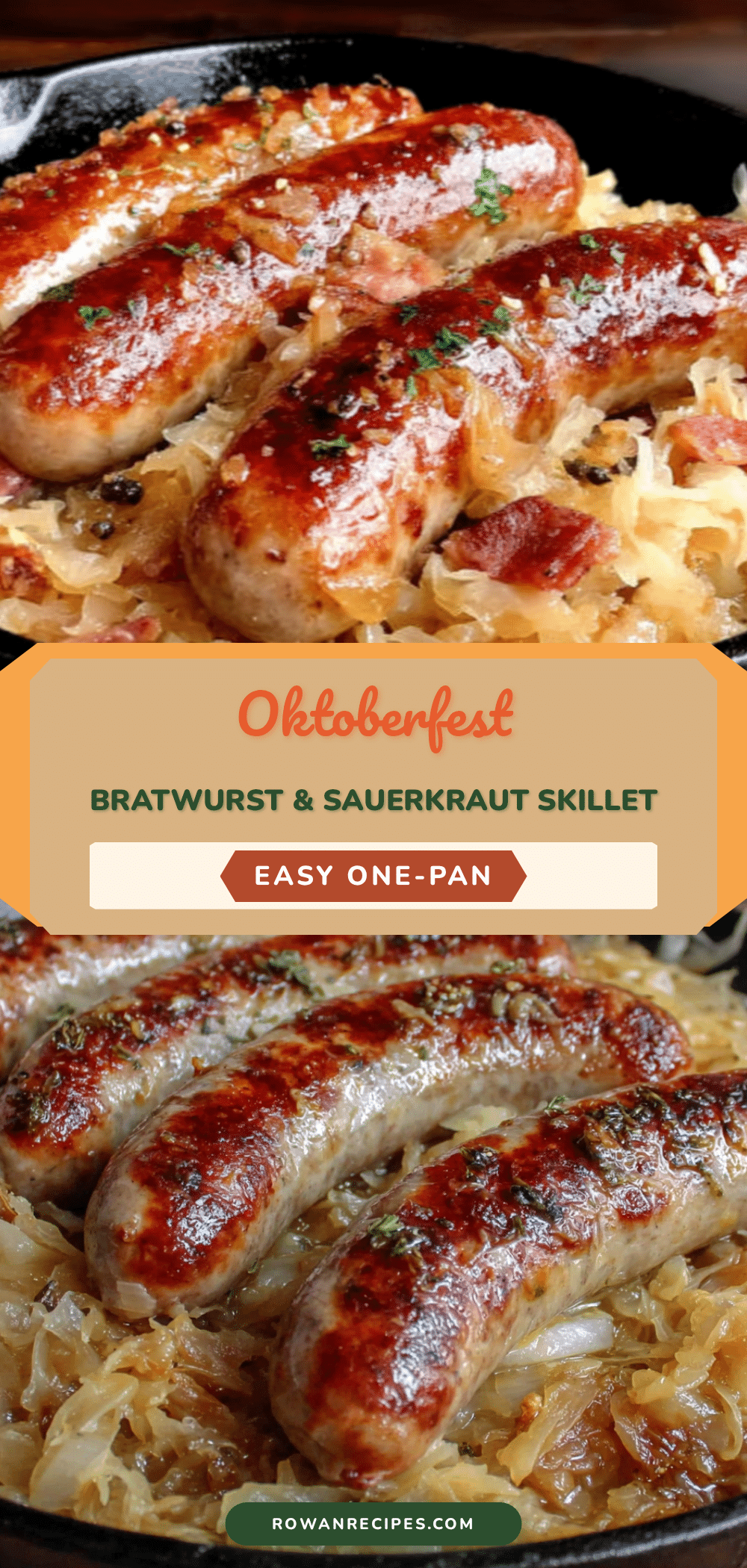
Best Easy Oktoberfest Bratwurst and Sauerkraut Skillet
A quick and hearty one-skillet meal featuring juicy bratwurst, tangy sauerkraut, sweet apples, and aromatic caraway seeds. Perfect for an Oktoberfest celebration at home or a cozy weeknight dinner.
- Prep Time: 10 minutes
- Cook Time: 30 minutes
- Total Time: 40 minutes
- Yield: 4 servings 1x
- Category: Main Course
- Cuisine: German
Ingredients
- 4 fresh bratwurst sausages (about 1 lb total)
- 1 tablespoon olive oil
- 1 medium yellow onion, thinly sliced
- 1 medium apple (Granny Smith recommended), cored and thinly sliced
- 1 ½ cups sauerkraut, drained
- ½ cup beer (lager or pilsner) or substitute with apple cider or low-sodium chicken broth
- 1 teaspoon caraway seeds
- ½ teaspoon black pepper, freshly ground
- Optional: 1 tablespoon brown sugar
- Fresh parsley for garnish (optional)
Instructions
- Prep your ingredients: Slice onion and apple into thin slices. Drain sauerkraut in a colander and gently squeeze to remove excess liquid. Set aside.
- Brown the bratwurst: Heat olive oil in a large cast iron skillet over medium-high heat. Add bratwurst and cook undisturbed for 4-5 minutes until deeply golden brown. Flip and cook another 4-5 minutes. Transfer to a plate; do not wipe skillet.
- Sauté the aromatics: Reduce heat to medium. Add sliced onion to skillet and cook 3-4 minutes until softened and translucent, stirring occasionally.
- Add apple and sauerkraut: Add sliced apple and cook 2 minutes until slightly softened. Stir in drained sauerkraut, caraway seeds, and black pepper. If using, add brown sugar and stir to combine.
- Deglaze with beer: Pour in beer (or substitute) and scrape up browned bits from skillet bottom with a wooden spoon. Bring to a gentle simmer.
- Return bratwurst: Nestle browned bratwurst back into skillet, partially submerged in sauerkraut mixture. Bring to a simmer, then reduce heat to low.
- Cover and cook: Cover skillet with lid or foil and cook 15-20 minutes until bratwurst reaches an internal temperature of 160°F (71°C).
- Check for doneness: Use an instant-read thermometer to verify bratwurst is cooked through. If needed, cover and cook another 5 minutes. Remove lid and let rest 1-2 minutes.
- Serve: Transfer bratwurst to plates, spoon sauerkraut mixture over top. Garnish with fresh parsley if desired. Serve immediately with mustard, crusty bread, or soft pretzel.
Notes
Don’t skip browning the bratwurst for best flavor. Use fresh bratwurst, not pre-cooked, for juicier texture. Let the skillet rest a few minutes after cooking for juicier sausages. Leftovers keep up to 4 days in the refrigerator and flavors improve overnight.
Nutrition
- Serving Size: 1 bratwurst with sau
- Calories: 420
- Sugar: 8
- Sodium: 980
- Fat: 28
- Saturated Fat: 10
- Carbohydrates: 18
- Fiber: 4
- Protein: 18
Keywords: bratwurst, sauerkraut, Oktoberfest, one-skillet, German recipe, easy dinner, fall recipe