“Hey, did you ever try making those marinated ramen eggs at home?” My friend’s casual text popped up just as I was staring blankly at my pantry, trying to figure out dinner. Honestly, I’d always thought those glossy, soft-boiled eggs with their golden, custardy centers were some kind of kitchen sorcery reserved for ramen shops. The idea of pulling it off at home, quickly and without any fuss, felt a little far-fetched.
But that night, after a long day where everything seemed off—burnt toast, a sauce that just refused to thicken—I figured why not give it a shot? The recipe promised “7 minutes,” which sounded like a blink compared to hours I usually spend experimenting. The smell of the soy and mirin soaking into those eggs, the gentle wobble of the yolk as I sliced through—it was like a little quiet celebration in my kitchen. No fancy equipment, no intimidating techniques, just a few simple ingredients and a recipe that fit perfectly into my hectic evening.
That first bite, with its creamy yolk and umami-packed marinade, turned the whole night around. It wasn’t just an egg—it was a mood reset, a reminder that sometimes the simplest things can carry the most comfort. That’s why this recipe for Perfect Soft-Boiled Ramen Eggs Ajitsuke Tamago in 7 Minutes stuck with me. It’s not about complexity; it’s about that moment of calm and satisfaction when you realize you can make something truly delicious at home—quickly, easily, and without stress.
Why You’ll Love This Perfect Soft-Boiled Ramen Eggs Ajitsuke Tamago Recipe
Having tested this recipe multiple times (okay, I lost count after the third week), I can tell you it’s the kind of kitchen win you want in your back pocket. Here’s why it’s become a staple in my meal rotation:
- Quick & Easy: From start to finish, these eggs are ready in about 7 minutes of active cooking time—ideal for busy nights or last-minute cravings.
- Simple Ingredients: You probably already have soy sauce, mirin, and eggs in your pantry. No special trips needed.
- Perfect for Ramen and Beyond: These eggs are the traditional topping for ramen bowls, but honestly, they’re just as good sliced over a salad, rice bowl, or even as a snack.
- Crowd-Pleaser: Family members and friends always ask if I made the ramen eggs again. They’re silky, flavorful, and just a little bit magical.
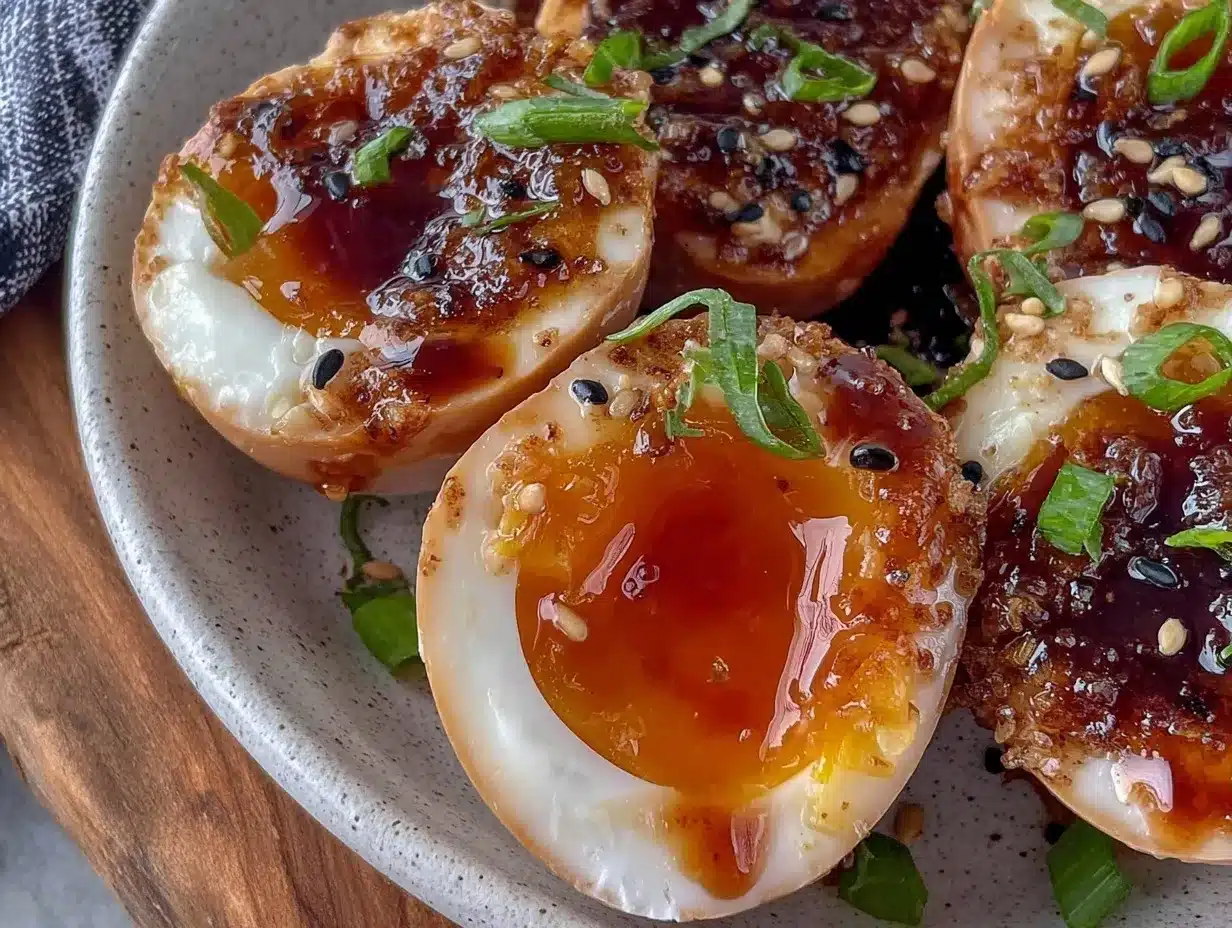
- Unbelievably Delicious: The marinade seeps through the egg white while the yolk stays perfectly soft and creamy—no rubbery edges here!
What sets this recipe apart is the timing and marinade balance. The eggs are boiled just right for a soft center, then marinated long enough to soak in flavor without turning too salty. Plus, the marinade’s simple combo of soy sauce, mirin, and a hint of sugar creates that authentic ajitsuke tamago taste without fuss. It’s the kind of recipe that feels fancy but is shockingly easy to nail.
Honestly, I love how this recipe makes adding a restaurant-quality touch to your homemade ramen or any dish feel effortless. It’s the kind of thing that makes you close your eyes after the first bite and think, “Yeah, I can do this.”
What Ingredients You Will Need
This recipe uses simple, wholesome ingredients to deliver bold flavor and that perfect soft-boiled texture without any fuss. Most are pantry staples, and you can easily swap a few to suit what you have on hand.
- Large eggs – fresh and preferably at room temperature to ensure even cooking (I like to use organic eggs when possible for richer yolks).
- Soy sauce – about 1/2 cup (120 ml); I recommend Kikkoman for its balanced saltiness.
- Mirin – 1/4 cup (60 ml); this sweet rice wine adds that subtle sweetness and gloss to the marinade.
- Sake – 2 tablespoons (30 ml); optional but adds depth. If unavailable, use water or additional mirin.
- Sugar – 1 tablespoon (12 grams); balances the saltiness.
- Water – 1/4 cup (60 ml); dilutes the marinade slightly for perfect flavor absorption.
- Optional aromatics: a small piece of ginger or a smashed garlic clove can be added to the marinade for extra fragrance.
If you want to get creative, you can substitute coconut aminos for soy sauce for a gluten-free version, or swap mirin with a mix of white wine and a pinch of sugar if you’re out of traditional Japanese ingredients. But honestly, keeping it simple is the best way to go.
Equipment Needed
- Medium saucepan or pot – for boiling the eggs.
- Slotted spoon – to gently transfer eggs from boiling water to ice bath.
- Large bowl – filled with ice water for cooling eggs quickly, which stops cooking and makes peeling easier.
- Zip-top bag or airtight container – to marinate the eggs evenly and save space in your fridge.
- Timer – precise timing is key here, so a kitchen timer or smartphone helps avoid overcooking.
If you don’t have a slotted spoon, a regular spoon works fine—just be careful when moving the eggs. And if you’re tight on space, a shallow dish covered with plastic wrap can substitute for a zip-top bag during marination. I’ve tried marinating in mason jars too, but bags usually coat the eggs better.
Preparation Method
- Bring water to a boil: Fill a medium saucepan with enough water to cover eggs by about an inch (2.5 cm). Heat to a rolling boil over medium-high heat.
- Prepare an ice bath: While waiting for the water to boil, fill a large bowl with ice and cold water. This will stop the eggs from cooking further and help with peeling.
- Add eggs carefully: Using a slotted spoon, gently lower room-temperature eggs (about 4-6 large eggs) into the boiling water to avoid cracking.
- Set timer for 7 minutes: This timing yields perfectly soft, custardy yolks. If you prefer slightly firmer yolks, add 30 seconds to a minute.
- Prepare the marinade: While eggs cook, whisk together soy sauce, mirin, sake (if using), sugar, and water in a bowl until sugar dissolves. Add optional ginger or garlic if desired.
- Shock eggs in ice bath: When timer goes off, immediately transfer eggs to ice bath using the slotted spoon. Let chill for at least 5 minutes to cool completely and ease peeling.
- Peel eggs gently: Tap eggs lightly on a hard surface and peel under running cold water to remove shells cleanly without breaking the whites.
- Marinate eggs: Place peeled eggs in the zip-top bag or container with marinade. Seal and refrigerate for 4 to 12 hours; the longer, the more intense the flavor.
- Serve: Slice eggs in half lengthwise just before serving. The yolk should be creamy, and the whites infused with that rich, savory marinade.
Pro tip: If you’re short on time, even a 2-hour marinade adds flavor, though overnight is ideal. Also, peeling is easiest if eggs are not too fresh — a few days old works best.
Cooking Tips & Techniques
Getting the perfect soft-boiled ramen eggs does take a little practice, but these tips have saved me from many kitchen headaches:
- Room temperature eggs: Taking the chill off eggs before boiling helps prevent cracking and promotes even cooking.
- Precise timing: Set your timer the moment eggs hit boiling water. Under or overcooking changes the yolk texture dramatically.
- Ice bath is non-negotiable: This stops the cooking process immediately, locking in that creamy yolk and making peeling a breeze.
- Marinate in a bag: This ensures every inch of the egg white gets soaked in flavor, unlike a shallow dish where marinade pools unevenly.
- Don’t skip the sugar: It balances the saltiness of the soy sauce and rounds out the flavor beautifully.
- Marinate at least 4 hours: I’ve learned that rushing this step leads to bland eggs. Patience here is worth it.
- Use a gentle peel: Older eggs peel easier. If you struggle, crack the shell all over and peel under running water to avoid tearing the whites.
Variations & Adaptations
One of the best things about ajitsuke tamago is how easy it is to tweak to your taste or dietary needs:
- Vegetarian/vegan twist: Skip the eggs and marinate soft tofu cubes in the same soy-mirin marinade for a creative protein addition to salads or bowls.
- Spicy kick: Add a dash of chili oil or a sprinkle of togarashi spice to the marinade for a flavorful heat boost.
- Low sodium: Use low-sodium soy sauce and reduce the salt by skipping added salt in the marinade.
- Quick marinade: If you’re really pressed for time, marinate for at least 2 hours, but overnight is best for full flavor.
- Additional flavors: Experiment by adding a splash of sesame oil or a few slices of green onion to the marinade for subtle layers of taste.
I once tried adding a small piece of star anise to the marinade—it gave a lovely subtle warmth that paired beautifully with the ramen broth.
Serving & Storage Suggestions
Serve these ramen eggs slightly chilled or at room temperature for best texture and flavor. They’re the perfect topping for any bowl of ramen, adding that silky richness that makes the dish come alive.
For a simple meal, slice and layer over steamed rice with sautéed greens or alongside a bowl of miso soup for an easy weeknight dinner. They also pair wonderfully with dishes like sheet pan Italian sausage and peppers or a warm bowl of stuffed pepper soup for a cozy, comforting meal.
Store marinated eggs in their marinade in an airtight container in the fridge for up to 3 days. The flavor deepens over time but watch out for overly salty whites if left too long. Leftover eggs can be reheated gently in hot water or eaten cold.
They’re also great as a portable snack—just peel and pack for lunch or picnics.
Nutritional Information & Benefits
One soft-boiled ramen egg provides about 70-80 calories, making it a nutrient-dense addition to your meals. Eggs are an excellent source of high-quality protein, healthy fats, and essential vitamins like B12 and D.
The marinade ingredients, mainly soy sauce and mirin, add flavor without many extra calories. Keep in mind soy sauce contains sodium, so if you’re watching salt intake, opt for low-sodium varieties.
This recipe fits nicely into gluten-free diets if you use tamari instead of soy sauce and is naturally low-carb, making it a good protein boost for many eating styles.
From a wellness perspective, adding these eggs to meals helps balance macros and adds a satisfying mouthfeel that keeps you fuller longer—plus, that umami flavor is a natural appetite soother.
Conclusion
This recipe for Perfect Soft-Boiled Ramen Eggs Ajitsuke Tamago in 7 Minutes is not just about making eggs—it’s about creating a little moment of joy and satisfaction with minimal effort. Whether you’re topping ramen or just craving a savory snack, these eggs bring a special touch to any dish.
Feel free to adjust the marinade to suit your taste—more sweet, less salty, or a little spicy—and make it your own. I love how this recipe strikes a balance between simplicity and flavor, making it a kitchen staple.
If you try it, I’d love to hear how your eggs turned out or what tweaks you made—sharing those stories is part of the fun! And if you’re looking for more easy, flavor-packed dinner ideas, you might enjoy my honey mustard chicken sheet pan recipe or the creamy garlic butter Tuscan shrimp pasta.
Here’s to simple recipes that taste extraordinary—one perfectly soft-boiled ramen egg at a time.
FAQs About Perfect Soft-Boiled Ramen Eggs Ajitsuke Tamago
How do I know when the eggs are perfectly soft-boiled?
Timing is key: 7 minutes in boiling water usually yields a creamy, slightly runny yolk. If your eggs are larger or colder from the fridge, add 30 seconds to a minute. The yolk should wobble gently but not be liquid.
Can I use fresh eggs for this recipe?
Older eggs tend to peel easier than very fresh ones. If you have fresh eggs, try peeling under running water to reduce shell sticking.
How long should I marinate the eggs?
At least 4 hours for good flavor, but overnight (8-12 hours) is ideal to get that rich umami taste infused throughout the whites.
Can I make the marinade ahead of time?
Yes! The marinade can be made several days in advance and stored in the fridge. Just give it a quick stir before adding your eggs.
What if I don’t have mirin?
You can substitute mirin with a mix of white wine and a pinch of sugar or use additional sake with a little sugar added. The goal is a mild sweetness to balance the soy sauce.
Pin This Recipe!
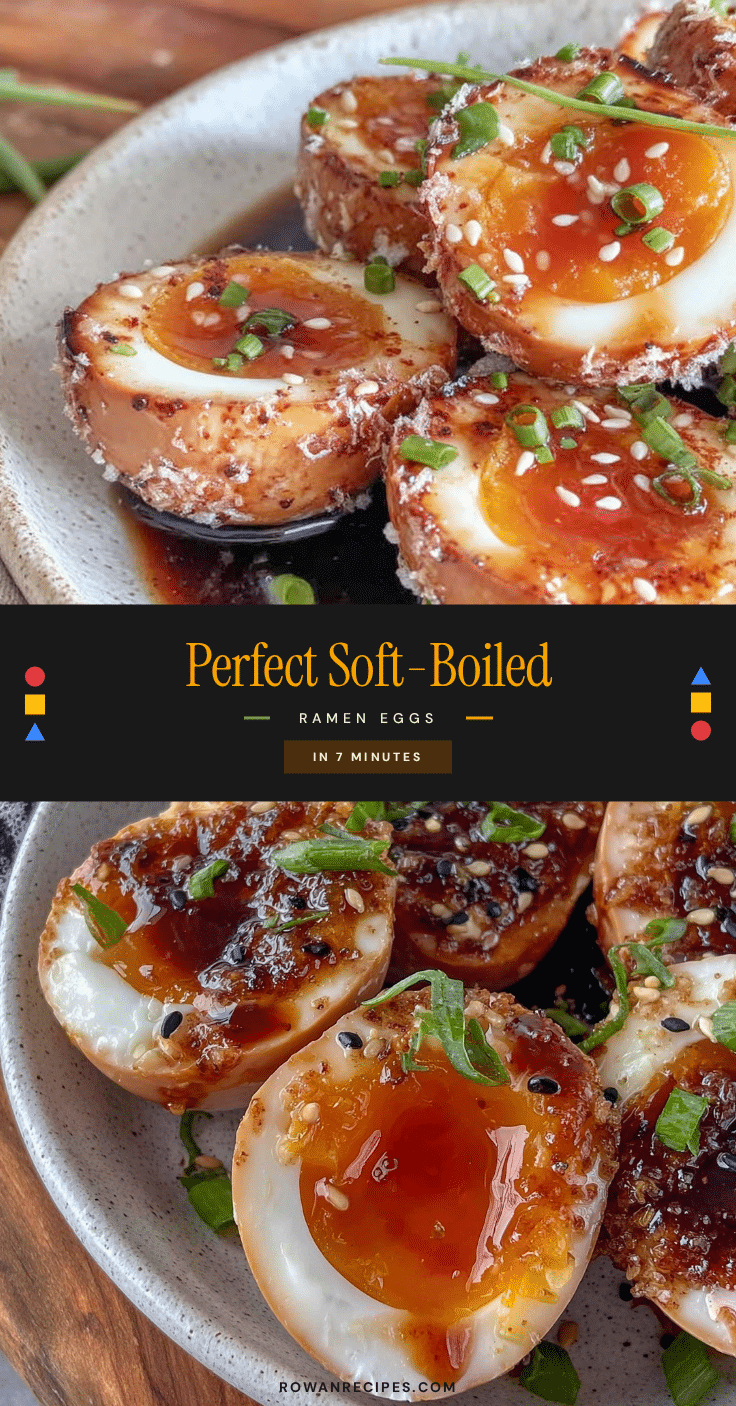
Perfect Soft-Boiled Ramen Eggs Ajitsuke Tamago Recipe in 7 Minutes Easy

This recipe shows how to make authentic, soft-boiled ramen eggs with a creamy yolk and flavorful soy-mirin marinade in just 7 minutes of cooking time. Perfect as a ramen topping or a savory snack.
- Prep Time: 10 minutes
- Cook Time: 7 minutes
- Total Time: 4 hours 17 minutes (including minimum marination time)
- Yield: 4-6 servings 1x
- Category: Appetizer, Snack, Side Dish
- Cuisine: Japanese
Ingredients
- 4–6 large eggs, preferably at room temperature
- 1/2 cup (120 ml) soy sauce (Kikkoman recommended)
- 1/4 cup (60 ml) mirin
- 2 tablespoons (30 ml) sake (optional, can substitute with water or additional mirin)
- 1 tablespoon (12 grams) sugar
- 1/4 cup (60 ml) water
- Optional aromatics: small piece of ginger or a smashed garlic clove
Instructions
- Bring water to a boil in a medium saucepan, enough to cover eggs by about 1 inch (2.5 cm).
- Prepare an ice bath by filling a large bowl with ice and cold water.
- Using a slotted spoon, gently lower room-temperature eggs into the boiling water to avoid cracking.
- Set a timer for 7 minutes for soft, custardy yolks. Add 30 seconds to 1 minute if you prefer firmer yolks.
- While eggs cook, whisk together soy sauce, mirin, sake (if using), sugar, and water until sugar dissolves. Add optional ginger or garlic if desired.
- When timer goes off, immediately transfer eggs to the ice bath to stop cooking. Chill for at least 5 minutes.
- Tap eggs lightly on a hard surface and peel under running cold water to remove shells cleanly.
- Place peeled eggs in a zip-top bag or airtight container with the marinade. Seal and refrigerate for 4 to 12 hours; longer marination intensifies flavor.
- Slice eggs in half lengthwise just before serving. The yolk should be creamy and the whites infused with marinade.
Notes
Use room temperature eggs to prevent cracking and ensure even cooking. Precise timing is key for perfect yolks. Ice bath stops cooking immediately and makes peeling easier. Marinate at least 4 hours, overnight is best for full flavor. Older eggs peel easier than very fresh ones. For gluten-free, substitute soy sauce with tamari. Optional aromatics like ginger or garlic add fragrance. For a spicy twist, add chili oil or togarashi to marinade.
Nutrition
- Serving Size: 1 soft-boiled ramen
- Calories: 75
- Sugar: 1
- Sodium: 550
- Fat: 5.3
- Saturated Fat: 1.6
- Carbohydrates: 1.2
- Protein: 6
Keywords: ramen eggs, ajitsuke tamago, soft boiled eggs, marinated eggs, Japanese recipe, quick recipe, easy ramen topping