“Honestly, I didn’t mean to fall for japchae at first. One evening, after an exhausting day juggling work and a thousand little things, I just wanted something quick yet comforting. I rummaged through my pantry and found some glass noodles tucked away behind other packets—forgotten, really. I figured, why not try something new but easy? That’s how my easy beginner japchae glass noodle stir fry with vegetables came to be.
The sizzling sound as the noodles hit the pan mixed with the sweet aroma of the soy and sesame oil combo instantly lifted my mood. I was skeptical at first, wondering if it’d turn out too bland or complicated. But honestly, this recipe was the kind of simple magic that made me want to keep tweaking it every week, sometimes even twice! It’s colorful, flavorful, and comes together faster than I thought possible for a dish with so many layers of flavor.
That quiet night, standing in my kitchen with a few veggies and noodles, I realized this japchae wasn’t just a meal — it was a reset button, a little victory in the chaos. And that’s why it stuck around in my regular rotation since then.
Why You’ll Love This Recipe
This easy beginner japchae recipe has quickly become a favorite for good reasons. After many trials and a few happy accidents, I nailed a version that’s approachable yet authentically tasty. Here’s what makes it stand out:
- Quick & Easy: Ready in about 30 minutes, it’s perfect for busy weeknights or when you want a fuss-free dinner.
- Simple Ingredients: No need to hunt down exotic items—most are pantry basics or easy to find in grocery stores.
- Perfect for Any Occasion: Whether it’s a casual family dinner or a potluck with friends, japchae’s vibrant colors and fresh flavors impress every time.
- Crowd-Pleaser: Even folks new to Korean food often ask for seconds, making it a great dish to share.
- Unbelievably Delicious: The combination of chewy glass noodles, crisp-tender veggies, and that hint of sesame oil is downright addictive.
Unlike other japchae recipes that can feel intimidating or require hard-to-find sauces, this one uses a balanced soy-sesame seasoning that’s just right—not overpowering but packed with depth. Plus, the technique focuses on layering flavors gently, so it’s beginner-friendly without sacrificing authenticity.
In fact, I often find myself comparing this to my go-to pasta dishes like the creamy garlic butter Tuscan shrimp pasta, both comforting but uniquely satisfying in their own way. Japchae brings that light, fresh vibe with a touch of umami that’s hard to resist.
What Ingredients You Will Need
This recipe uses simple, wholesome ingredients to deliver bold flavor and satisfying texture without the fuss. Almost all of these are pantry staples, and you can easily swap or skip a few based on what you have on hand.
- Glass noodles (Dangmyeon): 8 oz (about 225g) Korean sweet potato starch noodles, the star ingredient for that chewy texture.
- Vegetables:
- 1 medium carrot, julienned (adds sweetness and crunch)
- 1 small bell pepper, thinly sliced (red or yellow for color)
- 1 cup fresh spinach leaves (roughly chopped)
- 4-5 shiitake mushrooms, sliced (optional but adds earthiness)
- 1 small onion, thinly sliced (for natural sweetness)
- 2 cloves garlic, minced
- Protein (optional): ½ cup cooked beef strips or tofu cubes (for a heartier meal)
- Sauce:
- 3 tablespoons soy sauce (I prefer Kikkoman for balance)
- 1 tablespoon sesame oil (toasty flavor is key)
- 1 tablespoon sugar or honey (balances saltiness)
- 1 teaspoon rice vinegar (adds subtle tang)
- Freshly ground black pepper, to taste
- Toppings:
- 1 tablespoon toasted sesame seeds (for crunch and nuttiness)
- Optional: sliced green onions or chili flakes for a little kick
For a gluten-free option, use tamari soy sauce instead of regular soy sauce. If you want more protein, the recipe pairs wonderfully with grilled chicken or even crispy tofu. During summer, fresh snap peas or zucchini ribbons work beautifully instead of mushrooms.
Equipment Needed
To make this easy beginner japchae, you’ll need some basic kitchen tools:
- Large pot for boiling noodles
- Colander or sieve for draining
- Sharp knife and cutting board for prepping vegetables
- Large non-stick or stainless steel skillet or wok for stir-frying
- Mixing bowls for tossing sauce and veggies
- Tongs or chopsticks to mix the noodles gently without breaking
If you don’t have a wok, a large skillet works just fine and is easier to control heat-wise. I’ve tried cast iron pans, but they require careful oiling to prevent sticking. For budget-friendly options, any decent non-stick pan will do just fine and make cleanup easier.
Preparation Method
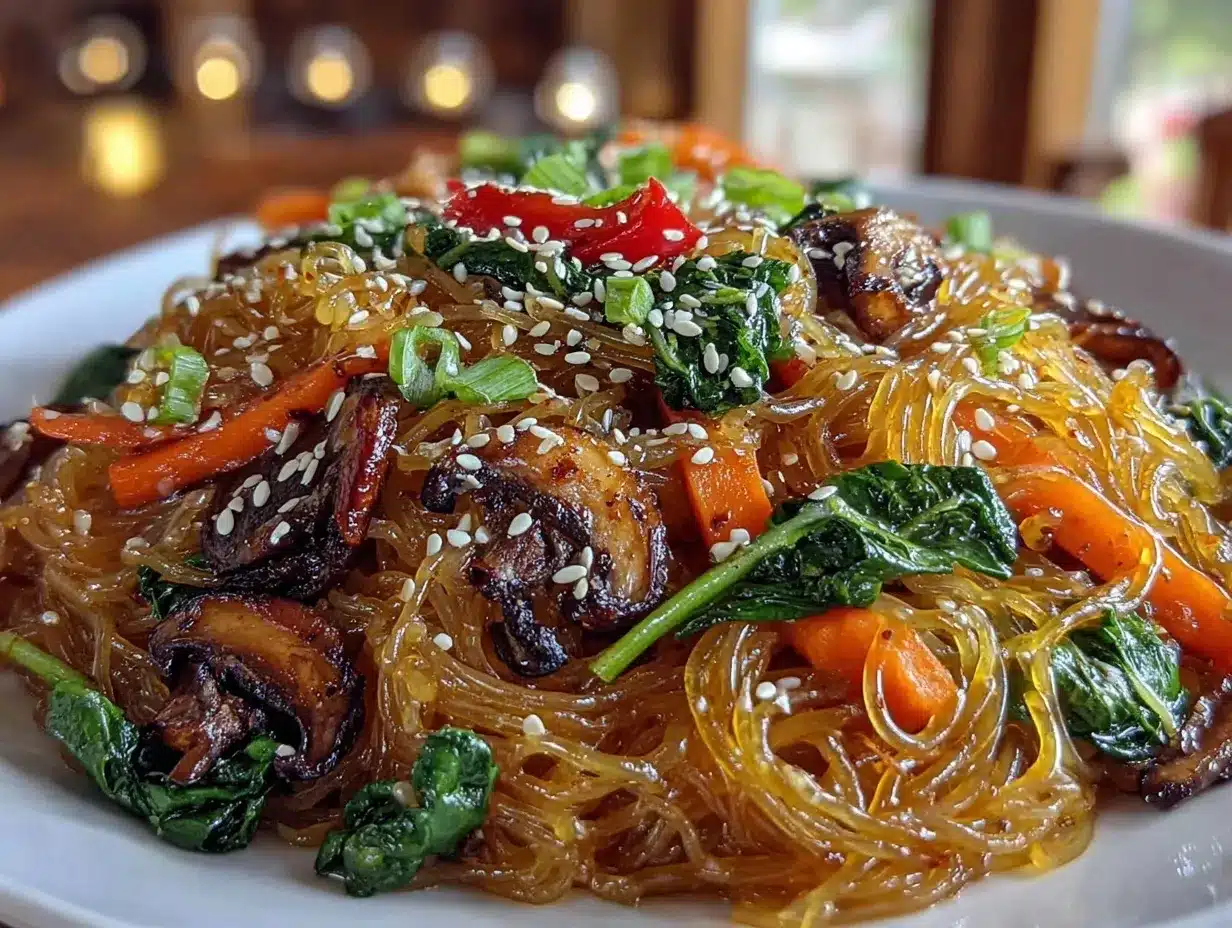
- Cook the glass noodles: Bring a large pot of water to a boil. Add the 8 oz (225g) glass noodles and cook for about 6-7 minutes, or until tender but still chewy. Stir occasionally to prevent sticking. Drain in a colander and rinse with cold water to stop cooking. Set aside. (Pro tip: don’t overcook or they’ll get mushy.)
- Prepare the vegetables: While noodles cook, julienne 1 medium carrot, thinly slice 1 small bell pepper and 1 small onion, chop spinach roughly, and slice shiitake mushrooms. Mince 2 garlic cloves. Having everything ready before stir-frying saves time and prevents overcooking.
- Make the sauce: In a small bowl, whisk together 3 tablespoons soy sauce, 1 tablespoon sesame oil, 1 tablespoon sugar or honey, 1 teaspoon rice vinegar, and black pepper to taste. Taste and adjust sweetness or saltiness as desired.
- Cook the vegetables: Heat a large skillet or wok over medium-high heat. Add a splash of oil and sauté garlic for 30 seconds until fragrant. Add onions and carrots first, cooking 2-3 minutes until slightly softened. Toss in bell peppers and mushrooms, cooking another 2 minutes until tender-crisp. Finally, add spinach and cook just until wilted.
- Combine noodles and sauce: Add the drained noodles to the pan with veggies. Pour the sauce over and toss gently using tongs or chopsticks to coat everything evenly. Stir-fry for 2-3 minutes, allowing flavors to meld and noodles to soak up the sauce. (Note: Avoid stirring too aggressively or the noodles might break.)
- Optional protein: If using cooked beef strips or tofu, add them now and mix gently to warm through.
- Finish and serve: Remove from heat and sprinkle toasted sesame seeds and sliced green onions on top. Serve warm and enjoy right away for the best texture.
Remember, japchae is forgiving, so feel free to adjust veggies and sauce amounts as you become more comfortable. I find multitasking helps—while noodles boil, prep veggies, and make the sauce to keep things moving smoothly.
Cooking Tips & Techniques
Mastering this easy beginner japchae comes down to a few simple tips that I’ve learned through trial and error:
- Don’t overcook the noodles: Glass noodles can go from perfect chewiness to mushy in a minute. Keep an eye on timing, and rinse with cold water right after draining to stop the cooking.
- Prep everything ahead: Stir-frying happens fast, so having vegetables sliced and sauce ready keeps the process smooth and stress-free.
- Use high heat for stir-frying: It helps veggies stay crisp-tender and noodles get a slight caramelization without steaming.
- Gentle tossing: When mixing noodles, use tongs or chopsticks carefully to avoid breaking them into little pieces.
- Balance your sauce: Taste before adding; sometimes a bit more sweetness or acidity really lifts the dish.
- Multitask like a pro: While noodles cook, prep veggies and mix sauce. This cuts overall time down and keeps everything fresh.
- Don’t skip sesame oil: It’s the secret ingredient that makes japchae sing with nutty aroma and flavor.
My first few attempts were a bit soggy or bland, but adjusting the noodle timing and sauce balance made all the difference. Also, using fresh veggies instead of frozen keeps the dish vibrant and crisp.
Variations & Adaptations
One of my favorite things about japchae is how easy it is to customize. Here are some variations I’ve tried or recommend:
- Vegetarian/Vegan: Skip the beef and swap honey for maple syrup or agave. Add tofu or tempeh for protein.
- Seasonal Veggies: Swap mushrooms for zucchini or summer squash in warmer months. In fall, add roasted sweet potatoes for a cozy twist.
- Spicy Kick: Add a teaspoon of gochujang (Korean chili paste) to the sauce or sprinkle red pepper flakes on top for heat.
- Low-Carb Option: Use shirataki noodles or spiralized veggies instead of glass noodles.
- Protein Swap: Try grilled chicken strips or shrimp for different flavors and textures.
Personally, I once made a version mixing in leftover grilled sausage and it turned out surprisingly well—reminded me of the bold flavors in my crispy sheet pan Italian sausage and peppers dish. It just shows how flexible japchae can be!
Serving & Storage Suggestions
Japchae tastes best served warm right after cooking when the noodles are tender and veggies are crisp. I like to plate it garnished with extra toasted sesame seeds and sliced green onions to brighten it up.
For a full meal, pairing japchae with simple sides like steamed rice or a light soup works nicely. It also complements dishes like easy lemon chicken and rice to round out a Korean-inspired dinner.
If you have leftovers, store them in an airtight container in the fridge for up to 3 days. Reheat gently in a skillet over low heat with a splash of water or sesame oil to prevent drying out. Flavors actually deepen after resting, so it’s great for next-day lunches too.
Avoid microwaving for too long or at high power, since the noodles can become tough or rubbery. Instead, reheating slowly preserves the texture much better.
Nutritional Information & Benefits
This japchae recipe offers a balanced mix of carbs, fiber, and vitamins thanks to the nutrient-rich vegetables and sweet potato glass noodles. Here’s a rough estimate per serving:
| Calories | ~320 kcal |
|---|---|
| Protein | 8-12g (depending on added protein) |
| Carbohydrates | 50g |
| Fat | 6g (mostly from sesame oil) |
| Fiber | 4g |
Sweet potato noodles provide complex carbs and are gluten-free, making this recipe suitable for many dietary needs. The sesame oil adds healthy fats and antioxidants, while vegetables contribute vitamins A, C, and iron.
If you’re watching sodium intake, opt for low-sodium soy sauce or reduce the amount slightly. Also, this dish is naturally dairy-free and can be made vegan easily.
Conclusion
So there you have it: an easy beginner japchae glass noodle stir fry with vegetables that’s approachable, colorful, and downright tasty. It’s the kind of recipe that’s perfect for anyone wanting to try Korean flavors without fuss or fancy ingredients. I love how adaptable it is, letting you tweak veggies, proteins, and spice levels to suit your mood and pantry.
Whether you’re a newbie to Korean cooking or just someone who loves quick, wholesome meals, this japchae is a keeper. Give it a try, and don’t hesitate to put your own spin on it—cooking is as much about creativity as it is about tradition.
If you’ve enjoyed dishes like creamy cheesy taco pasta or the quick crispy shrimp tacos, this japchae will fit right into your weeknight rotation with its fresh, satisfying vibe. Feel free to share your experiences or any tasty twists you come up with—I love hearing from fellow food enthusiasts!
FAQs
What are glass noodles made from?
Glass noodles, also called dangmyeon, are made from sweet potato starch. They’re chewy, translucent, and gluten-free, making them perfect for dishes like japchae.
Can I prepare japchae ahead of time?
Yes! You can make japchae a few hours before serving. Keep it covered at room temperature or refrigerate and reheat gently before eating.
What vegetables work best in japchae?
Traditional japchae uses carrots, spinach, onions, bell peppers, and mushrooms. But feel free to add snap peas, zucchini, or bean sprouts depending on what you have.
Is japchae gluten-free?
The noodles themselves are gluten-free, but soy sauce often contains gluten. Use tamari or gluten-free soy sauce to make the dish fully gluten-free.
Can I make japchae vegan?
Absolutely! Simply omit any meat and use a plant-based sweetener like maple syrup in the sauce. Tofu or tempeh make great additions for protein.
Pin This Recipe!
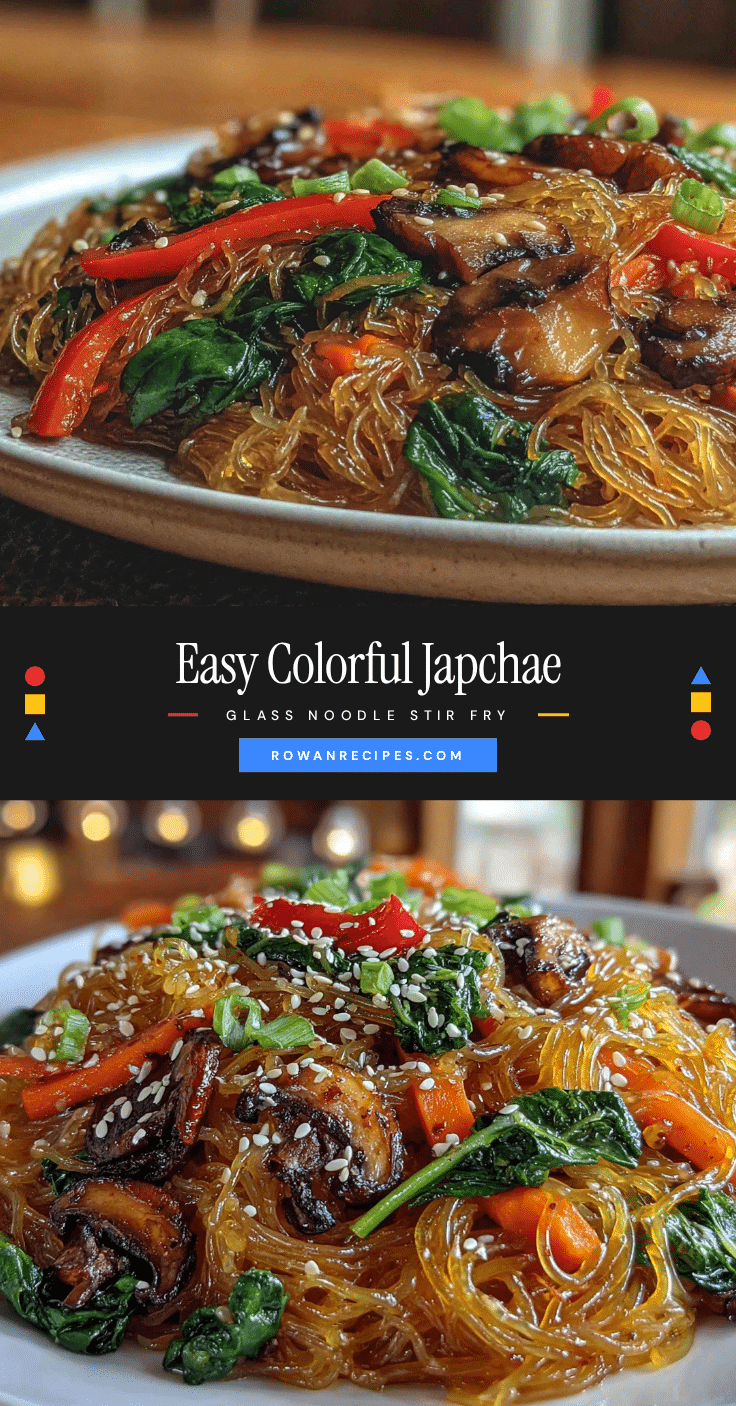
Easy Beginner Japchae Recipe 5-Step Glass Noodle Stir Fry with Vegetables
A quick and easy Korean glass noodle stir fry with vegetables, perfect for beginners and busy weeknights. This colorful and flavorful japchae recipe uses simple ingredients and comes together in about 30 minutes.
- Prep Time: 10 minutes
- Cook Time: 20 minutes
- Total Time: 30 minutes
- Yield: 4 servings 1x
- Category: Main Course
- Cuisine: Korean
Ingredients
- 8 oz (about 225g) Korean sweet potato starch glass noodles (dangmyeon)
- 1 medium carrot, julienned
- 1 small bell pepper, thinly sliced (red or yellow)
- 1 cup fresh spinach leaves, roughly chopped
- 4–5 shiitake mushrooms, sliced (optional)
- 1 small onion, thinly sliced
- 2 cloves garlic, minced
- ½ cup cooked beef strips or tofu cubes (optional)
- 3 tablespoons soy sauce (use tamari for gluten-free)
- 1 tablespoon sesame oil
- 1 tablespoon sugar or honey
- 1 teaspoon rice vinegar
- Freshly ground black pepper, to taste
- 1 tablespoon toasted sesame seeds
- Optional: sliced green onions or chili flakes
Instructions
- Bring a large pot of water to a boil. Add the glass noodles and cook for 6-7 minutes until tender but still chewy. Stir occasionally to prevent sticking. Drain and rinse with cold water to stop cooking. Set aside.
- While noodles cook, julienne the carrot, thinly slice the bell pepper and onion, roughly chop the spinach, slice the shiitake mushrooms, and mince the garlic.
- In a small bowl, whisk together soy sauce, sesame oil, sugar or honey, rice vinegar, and black pepper. Adjust sweetness or saltiness to taste.
- Heat a large skillet or wok over medium-high heat. Add a splash of oil and sauté garlic for 30 seconds until fragrant. Add onions and carrots and cook for 2-3 minutes until slightly softened. Add bell peppers and mushrooms and cook for another 2 minutes until tender-crisp. Add spinach and cook just until wilted.
- Add the drained noodles to the pan with vegetables. Pour the sauce over and toss gently using tongs or chopsticks to coat evenly. Stir-fry for 2-3 minutes to meld flavors and allow noodles to soak up the sauce. Avoid stirring too aggressively to prevent breaking noodles.
- If using cooked beef strips or tofu, add now and mix gently to warm through.
- Remove from heat and sprinkle toasted sesame seeds and sliced green onions on top. Serve warm immediately.
Notes
Do not overcook the glass noodles to avoid mushiness; rinse with cold water immediately after draining. Prep all vegetables and sauce before stir-frying to ensure smooth cooking. Use high heat for stir-frying to keep vegetables crisp-tender. Toss noodles gently to prevent breaking. Adjust sauce sweetness or acidity to taste. For gluten-free, use tamari soy sauce. For vegan, omit beef and use maple syrup or agave instead of honey.
Nutrition
- Serving Size: 1 serving (about 1 c
- Calories: 320
- Sugar: 6
- Sodium: 700
- Fat: 6
- Saturated Fat: 1
- Carbohydrates: 50
- Fiber: 4
- Protein: 10
Keywords: japchae, glass noodles, Korean recipe, stir fry, easy dinner, beginner recipe, gluten-free, vegetarian option