“You sure you don’t want to add anything else?” my friend asked, eyeing the pot suspiciously. It was one of those nights when I barely had the energy to cook – just me, a half-empty fridge, and a craving for something cozy but fuss-free. Honestly, I was skeptical about making cacio e pepe with just three ingredients. Could something so simple really satisfy? But as the pepper cracked and the Pecorino Romano melted into a creamy sauce hugging every strand of spaghetti, the skepticism faded. The dish was humble, yes, but it had this comforting, soulful pull I didn’t expect. It became my go-to quick fix when I wanted a meal that felt like a warm hug but didn’t demand hours in the kitchen.
There’s something quietly satisfying about a recipe that asks for so little but delivers so much. Every time I make this easy beginner cacio e pepe, I’m reminded that authentic Roman pasta doesn’t need a laundry list of ingredients or complicated steps. Just good pasta, sharp cheese, and bold black pepper. It’s a simple dish that invites you to slow down and appreciate the basics done right. That night, with the kitchen quiet except for the sound of pasta boiling and a fresh crack of pepper, I found comfort in the simplicity. And that’s why this recipe has stuck around in my life—it’s honest, effortless, and surprisingly indulgent in the best way.
Why You’ll Love This Recipe
This easy beginner cacio e pepe recipe is a little gem I’ve tested over and over, especially when I’m short on time but craving something authentic and delicious. Here’s why it’s become such a staple in my kitchen:
- Quick & Easy: Ready in under 20 minutes, it’s perfect for busy weeknights or when you want dinner on the table without fuss.
- Simple Ingredients: No need to hunt down fancy items—just pasta, Pecorino Romano, and freshly cracked black pepper.
- Perfect for Cozy Dinners: This recipe brings a little piece of Rome to your table, ideal for intimate meals or whenever you want comfort food with a classy twist.
- Crowd-Pleaser: Whether you’re cooking for yourself or friends, it always receives compliments—even from those who usually shy away from minimalist dishes.
- Unbelievably Delicious: The creamy texture combined with peppery heat and salty cheese strikes a balance that’s hard to beat.
What sets this version apart is the technique: I use starchy pasta water to create that silky sauce without cream or butter. Plus, the Pecorino Romano is finely grated to melt perfectly, and the black pepper is toasted just right to bring out its aroma and flavor. Honestly, it’s a simple dish that feels like a little celebration of pasta itself.
It’s the kind of recipe you can trust when you want something quick but satisfying. No overthinking, no extra steps—just pure, authentic Roman flavor. If you’re looking for a pasta dish that’s easy to master but still impresses, this is it.
What Ingredients You Will Need
This recipe uses simple, wholesome ingredients to deliver bold flavor and satisfying texture without the fuss. You probably already have most of these in your pantry, which is why it’s such a reliable go-to.
- Spaghetti: About 8 ounces (225 grams). I recommend using a quality brand like De Cecco or Barilla for the best texture that holds the sauce well.
- Pecorino Romano cheese: 1 cup finely grated (about 100 grams). Look for a firm, aged cheese with a sharp, salty bite. It’s the heart of the dish, so quality matters here.
- Freshly cracked black pepper: 2 teaspoons (adjust to taste). Use whole peppercorns cracked just before cooking to get the best aroma and flavor. I like to toast the pepper lightly in the pan for a deeper, smoky note.
- Water and salt: For boiling pasta. Use plenty of salted water to add flavor to the pasta itself.
Optional substitutions: If you need a gluten-free option, try gluten-free spaghetti. For a slightly different twist, swapping Pecorino Romano with Parmigiano-Reggiano gives a milder flavor but still works well. However, the original Roman touch comes from Pecorino’s distinct sharpness.
Equipment Needed
- Large pot: For boiling pasta. A wide pot helps pasta cook evenly without sticking.
- Large skillet or frying pan: To toast the pepper and toss the pasta with sauce. Non-stick or stainless steel works fine. I prefer stainless steel for better heat control.
- Fine grater or microplane: For grating the Pecorino Romano finely — this is key to a smooth sauce.
- Wooden spoon or tongs: For stirring and tossing the pasta without breaking it.
- Measuring spoons and cups: To get the cheese and pepper quantities right.
If you don’t have a microplane, a fine box grater will do, but be careful to grate the cheese finely to avoid clumps. For cracking peppercorns, a mortar and pestle or a pepper mill with a coarse setting works best.
Preparation Method
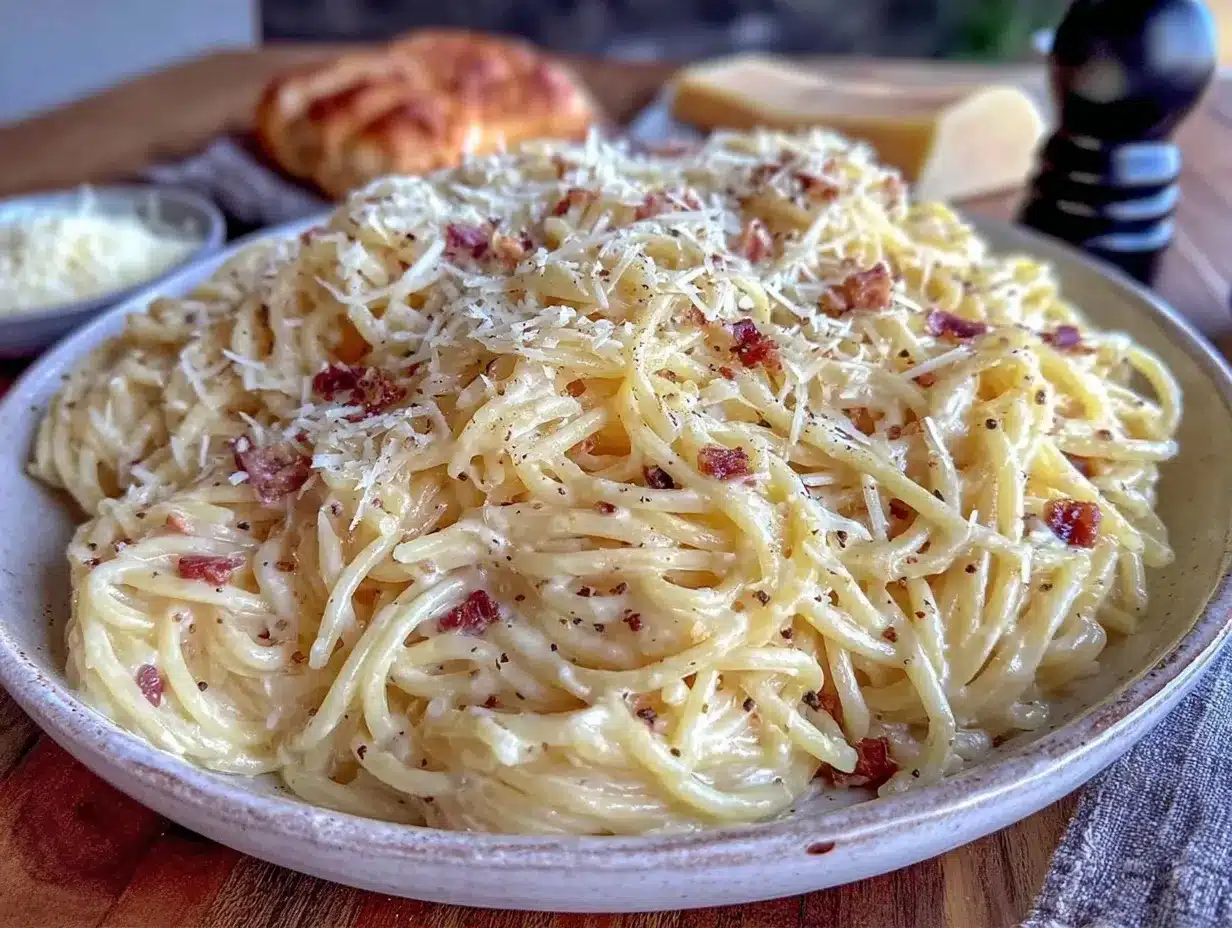
- Boil the pasta: Bring a large pot of salted water to a rolling boil. Add 8 ounces (225 grams) of spaghetti and cook until al dente—usually about 8 to 9 minutes. Reserve 1 to 1½ cups (240 to 360 ml) of pasta water before draining. The starchy water is crucial for the sauce’s creaminess.
- Toast the black pepper: While the pasta cooks, heat a large skillet over medium heat. Add 2 teaspoons of freshly cracked black pepper and toast for about 1 minute until fragrant, stirring constantly to avoid burning. This step releases oils and deepens the pepper’s flavor.
- Add reserved pasta water: Pour about ½ cup (120 ml) of the reserved hot pasta water into the skillet with the toasted pepper. Bring to a gentle simmer.
- Mix in the cheese: Gradually sprinkle in the finely grated Pecorino Romano (1 cup or 100 grams), stirring constantly with a wooden spoon or tongs to form a creamy sauce. If the sauce feels too thick, add more reserved pasta water a little at a time until you reach a smooth, silky consistency. Be patient here; the temperature and stirring technique make all the difference.
- Toss the pasta: Add the drained spaghetti to the skillet with the sauce. Toss vigorously to coat every strand evenly. The heat should be low to prevent the cheese from clumping or turning grainy. If the sauce needs loosening, add a splash more pasta water.
- Final seasoning: Taste and adjust with additional cracked pepper if desired. Serve immediately while the sauce is warm and luscious.
Pro tip: The key to success is timing and temperature control. Using hot pasta water and stirring quickly helps the cheese melt smoothly without clumping. Don’t rush the tossing step—it’s the magic moment where everything comes together.
Cooking Tips & Techniques
When making cacio e pepe, the simplicity means every detail counts. Here are some tips from my kitchen trials:
- Cheese texture matters: Finely grate your Pecorino Romano to avoid gritty sauce. I learned the hard way that coarse chunks don’t melt properly and ruin the dish’s silkiness.
- Don’t skip toasting the pepper: It transforms the flavor from sharp to aromatic and smoky. Toast it gently—burnt pepper tastes bitter.
- Reserve enough pasta water: This starchy water is your secret weapon for sauce consistency. Add it gradually to control thickness.
- Use low heat when combining cheese and water: High heat can make the cheese seize up. Stir gently but thoroughly to get that creamy texture.
- Timing is everything: Toss and serve right away. The sauce can seize as it cools, so don’t let it sit.
- Multitasking hint: Toast your pepper while the pasta cooks to save time and build flavor.
Over the years, I’ve learned to trust the process and not rush. Cacio e pepe might look simple, but it’s a dish that rewards patience and attention to detail.
Variations & Adaptations
While classic cacio e pepe is a masterpiece in its own right, sometimes I like to mix things up depending on mood and occasion:
- Vegetable boost: Add sautéed spinach or peas for a pop of color and freshness without overpowering the simple sauce.
- Spicy twist: Sprinkle a pinch of red chili flakes along with black pepper for a subtle heat kick.
- Gluten-free option: Swap spaghetti for gluten-free pasta varieties—just be mindful of cooking times as they vary.
- Cheese swap: For a creamier, less sharp sauce, try mixing in some Parmigiano-Reggiano with the Pecorino.
- Protein add-in: Serve alongside crispy sheet pan honey mustard chicken or toss in some sautéed shrimp from the creamy garlic butter Tuscan shrimp pasta for a heartier meal.
One time, I even tried mixing in a touch of browned butter before adding the cheese to deepen the flavor. It was unexpected but addictive! Feel free to experiment, but I find the traditional 3-ingredient method is unbeatable when you want pure, authentic simplicity.
Serving & Storage Suggestions
Cacio e pepe is best served hot and fresh—ideally right off the stove. The sauce is at its creamiest, and the pepper aroma is most vibrant.
- Serving temperature: Warm, not lukewarm. Serve immediately after tossing the pasta to keep the sauce silky.
- Presentation: A simple sprinkle of extra Pecorino and a few cracks of pepper on top adds a nice finishing touch.
- Pairings: This pasta pairs beautifully with a crisp green salad or roasted vegetables. For a cozy dinner, I sometimes serve it with a side of Italian sausage and peppers to round out the meal.
- Storage: Leftovers can be refrigerated in an airtight container for up to 2 days. The sauce tends to thicken, so reheat gently with a splash of water to loosen it.
- Reheating tips: Microwave on low power or warm in a skillet over low heat, stirring frequently. Adding a little olive oil or butter helps restore creaminess.
- Flavor development: This dish is best fresh—the cheese sauce can become grainy when cooled. I recommend making just enough for one meal if possible.
Nutritional Information & Benefits
This easy beginner cacio e pepe is a relatively simple dish with straightforward nutrition. Here’s an approximate breakdown per serving (makes 2 servings):
| Nutrient | Amount |
|---|---|
| Calories | 450-500 kcal |
| Protein | 18-20 g |
| Carbohydrates | 60-65 g |
| Fat | 12-15 g |
| Fiber | 2-3 g |
| Sodium | 600-700 mg (mostly from cheese) |
Pecorino Romano is a great source of calcium and protein, though higher in sodium, so keep that in mind if you’re watching salt intake. The dish is naturally gluten-free if you use gluten-free pasta. It’s low in added fat, relying on cheese for richness rather than heavy cream or butter.
From a wellness perspective, this recipe offers a satisfying balance of carbs and protein to fuel you without feeling overly heavy. Plus, freshly cracked black pepper contains antioxidants and has been linked to digestive benefits.
Conclusion
This easy beginner cacio e pepe recipe proves that sometimes the simplest dishes leave the biggest impression. With just three ingredients and a handful of kitchen tools, you can create an authentic Roman pasta that’s creamy, peppery, and downright comforting. I love this recipe because it’s approachable for cooks of all levels and never lets me down when I need a quick, delicious meal.
Whether you stick to the classic or add your own twists, this pasta invites you to savor the basics and enjoy every bite. I’d love to hear how you make it your own—drop a comment or share your favorite variations. Cooking should be fun and personal, after all!
Give it a try and see why cacio e pepe has held its place in Italian kitchens for centuries. It’s pasta magic, simple and true.
Frequently Asked Questions about Cacio e Pepe
What does “cacio e pepe” mean?
“Cacio e pepe” translates to “cheese and pepper” in Italian. It’s a traditional Roman pasta dish made with just Pecorino Romano cheese, black pepper, and pasta.
Can I use Parmesan instead of Pecorino Romano?
Yes, you can substitute Parmesan, but Pecorino Romano has a sharper, saltier flavor that gives the dish its authentic punch. Mixing both cheeses works well too.
How do I prevent the cheese from clumping?
The key is to use hot pasta water and stir constantly over low heat while mixing cheese and water to create a creamy sauce. Adding cheese gradually helps avoid clumps.
Is cacio e pepe gluten-free?
The traditional recipe uses wheat pasta, so it’s not gluten-free. However, using gluten-free spaghetti or pasta allows you to enjoy this dish without gluten.
Can I make cacio e pepe ahead of time?
It’s best enjoyed fresh. The sauce tends to thicken and lose creaminess when cooled, but you can store leftovers and gently reheat with a splash of water to loosen the sauce.
Pin This Recipe!
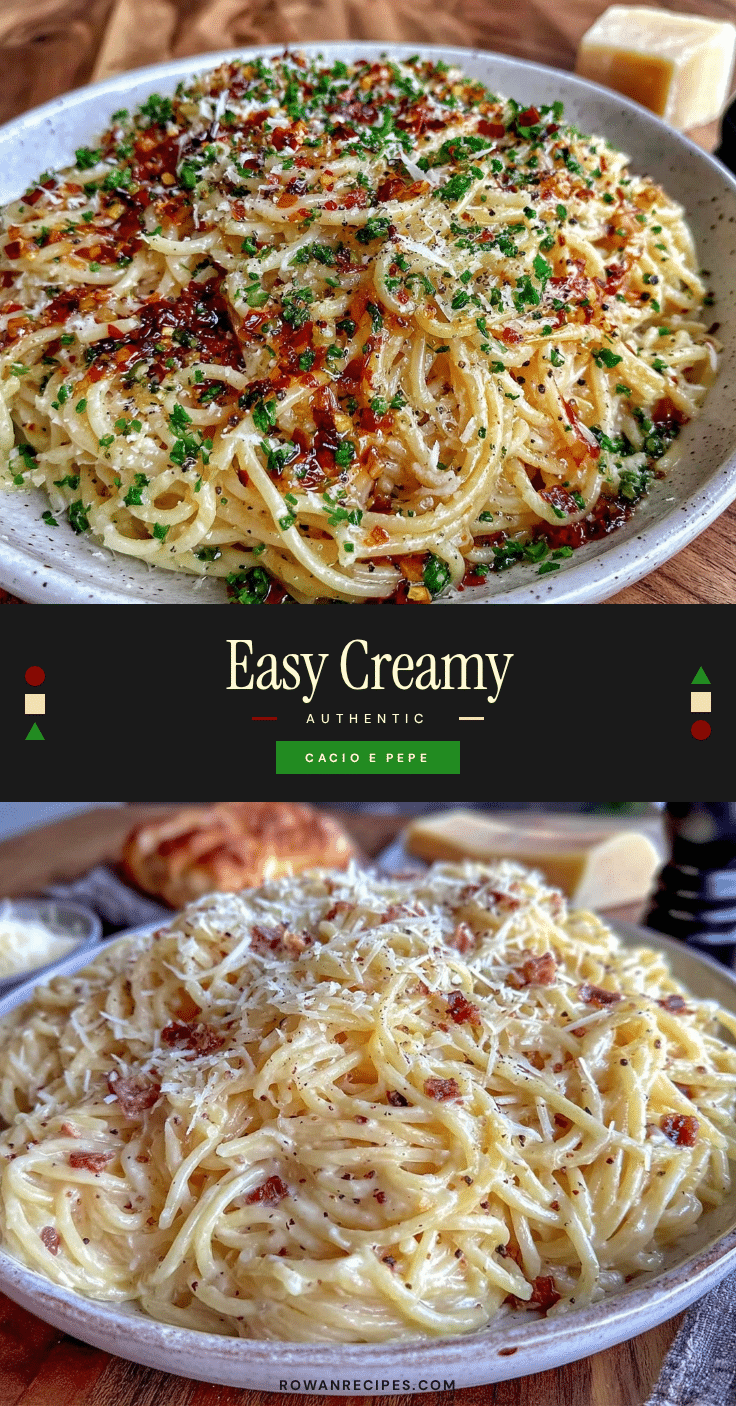
Easy Beginner Cacio e Pepe Recipe 3-Ingredient Authentic Roman Pasta

A simple and authentic Roman pasta dish made with just three ingredients: spaghetti, Pecorino Romano cheese, and freshly cracked black pepper. Ready in under 20 minutes, it’s perfect for a quick, cozy, and delicious meal.
- Prep Time: 5 minutes
- Cook Time: 15 minutes
- Total Time: 20 minutes
- Yield: 2 servings 1x
- Category: Main Course
- Cuisine: Italian
Ingredients
- 8 ounces (225 grams) spaghetti
- 1 cup finely grated Pecorino Romano cheese (about 100 grams)
- 2 teaspoons freshly cracked black pepper
- Water and salt for boiling pasta
Instructions
- Bring a large pot of salted water to a rolling boil. Add 8 ounces (225 grams) of spaghetti and cook until al dente, about 8 to 9 minutes. Reserve 1 to 1½ cups (240 to 360 ml) of pasta water before draining.
- While the pasta cooks, heat a large skillet over medium heat. Add 2 teaspoons of freshly cracked black pepper and toast for about 1 minute until fragrant, stirring constantly to avoid burning.
- Pour about ½ cup (120 ml) of the reserved hot pasta water into the skillet with the toasted pepper. Bring to a gentle simmer.
- Gradually sprinkle in the finely grated Pecorino Romano cheese, stirring constantly with a wooden spoon or tongs to form a creamy sauce. Add more reserved pasta water a little at a time if the sauce is too thick, until smooth and silky.
- Add the drained spaghetti to the skillet with the sauce. Toss vigorously to coat every strand evenly over low heat to prevent clumping. Add a splash more pasta water if needed to loosen the sauce.
- Taste and adjust with additional cracked pepper if desired. Serve immediately while warm.
Notes
Finely grate the Pecorino Romano cheese to avoid clumps and ensure a silky sauce. Toast the black pepper gently to enhance flavor without burning. Use reserved starchy pasta water to create a creamy sauce without cream or butter. Serve immediately for best texture and flavor. Leftovers can be refrigerated for up to 2 days and reheated gently with a splash of water.
Nutrition
- Serving Size: 1 serving (half the
- Calories: 475
- Sugar: 1
- Sodium: 650
- Fat: 13.5
- Saturated Fat: 7
- Carbohydrates: 62.5
- Fiber: 2.5
- Protein: 19
Keywords: cacio e pepe, Roman pasta, easy pasta recipe, 3-ingredient pasta, Pecorino Romano, black pepper pasta, authentic Italian, beginner pasta recipe