Early October, and the kitchen smells faintly of cinnamon and something sweet, almost like a whisper of fall itself. The window is cracked open just enough to let the cool air mingle with the warmth from the oven. I’m alone, standing quietly with a mug of leftover spiced apple cider beside me, waiting for the tender baked apple cider donut holes to finish their slow transformation. There’s something calming about this ritual, the way the batter comes together softly in the bowl, the gentle pop of the mini donuts baking, their edges turning golden without a hint of rush or fuss.
These little bites of comfort don’t demand attention, but they hold it gently, like the soft crunch of leaves underfoot on a quiet walk. I first stumbled on this recipe on a chilly Sunday morning when the world outside was still waking up, and I just wanted something simple, warm, and familiar. The cider brings a subtle tang that feels just right—not overpowering, but enough to remind me that fall is here, in all its crispness and quiet beauty.
Honestly, these donut holes became my go-to treat for slow afternoons spent with a book or a friend who drops by unexpectedly. They’re tender, lightly spiced, and baked instead of fried—so you get that cozy comfort without the heavy feel. I guess what keeps me coming back to this recipe is how it feels like a small, sweet pause in the day, a reminder that sometimes the best things come in tiny, tender bites. No hurry, just a quiet moment to savor something homemade and honest.
Why You’ll Love This Recipe
Making these tender baked apple cider donut holes might just become your favorite fall ritual—here’s why:
- Quick & Easy: Ready in just about 30 minutes, these donut holes are perfect for when you want a cozy snack without spending hours in the kitchen.
- Simple Ingredients: No need for fancy or hard-to-find items—most are pantry staples or easy to find in any grocery store during the fall season.
- Perfect for Fall Snacking: Whether you’re hosting a casual weekend brunch or just craving a sweet treat with your afternoon tea, these donut holes fit the bill.
- Crowd-Pleaser: They’re always a hit with kids and adults alike—soft, tender, and just sweet enough.
- Unbelievably Delicious: The combination of apple cider and warm spices creates a subtle depth of flavor that’s comforting yet fresh.
This isn’t just another baked donut hole recipe. The secret is in gently reducing fresh apple cider before mixing it into the batter, which adds a natural sweetness and moisture that keeps these bites tender without being dense. Plus, baking instead of frying means less mess and a lighter feel, but all the cozy autumn vibes are intact. Honestly, the first time I made these, I closed my eyes with the first bite—it was like fall, captured in a small, tender dough sphere.
And if you love simple fall snacks with a touch of nostalgia but don’t want to spend forever fussing in the kitchen, this recipe is made for you. It’s the kind of treat that makes a quiet afternoon feel special, and pairs wonderfully with a warm drink or a good conversation.
What Ingredients You Will Need
This recipe uses simple, wholesome ingredients to deliver bold flavor and a tender texture without any fuss. Most of these are easy to keep on hand, especially during apple season, and there’s room for small tweaks if needed.
- Apple cider: About 1 cup (240 ml), reduced to concentrate the flavor—this adds natural sweetness and moisture.
- All-purpose flour: 2 cups (240 g), for the soft structure of the donut holes.
- Baking powder: 2 teaspoons, to give a light lift.
- Baking soda: ½ teaspoon, helps with tenderness and browning.
- Ground cinnamon: 2 teaspoons, the warm spice that ties it all together.
- Ground nutmeg: ¼ teaspoon, just a whisper for depth.
- Salt: ½ teaspoon, balances the sweetness.
- Unsalted butter: 4 tablespoons (56 g), melted and slightly cooled, adds richness.
- Granulated sugar: ¾ cup (150 g), for sweetness.
- Large eggs: 2, room temperature, bind everything nicely.
- Vanilla extract: 1 teaspoon, for a subtle aromatic lift.
- Milk: ½ cup (120 ml), whole or 2% works best to keep the batter moist.
- For the coating: ½ cup (100 g) granulated sugar mixed with 1 teaspoon cinnamon.
Look for a good-quality apple cider—if you can find a local fresh-pressed one, even better. It makes a noticeable difference in flavor. For the flour, I prefer King Arthur for consistent texture, but any all-purpose brand works well here. And if you want to make this gluten-free, swapping in a 1:1 gluten-free baking flour blend is totally doable.
Equipment Needed
- Mini donut pan: Essential for shaping the donut holes perfectly. If you don’t have one, mini muffin pans can work as a substitute, though the shape will change slightly.
- Small saucepan: For reducing the apple cider to concentrate flavor.
- Mixing bowls: At least two—one for wet ingredients, one for dry.
- Whisk and spatula: For easy mixing and folding the batter without overworking it.
- Measuring cups and spoons: For accuracy, especially with leavening agents and spices.
- Cooling rack: To let the donut holes cool before coating.
If you don’t own a mini donut pan, consider investing in one—these pans are great for many bite-sized treats and usually budget-friendly. I’ve found that silicone pans release the donuts easily, but a well-greased metal pan works just fine too. When cleaning, soak the pan gently to avoid scratching nonstick surfaces, especially if you bake often.
Preparation Method
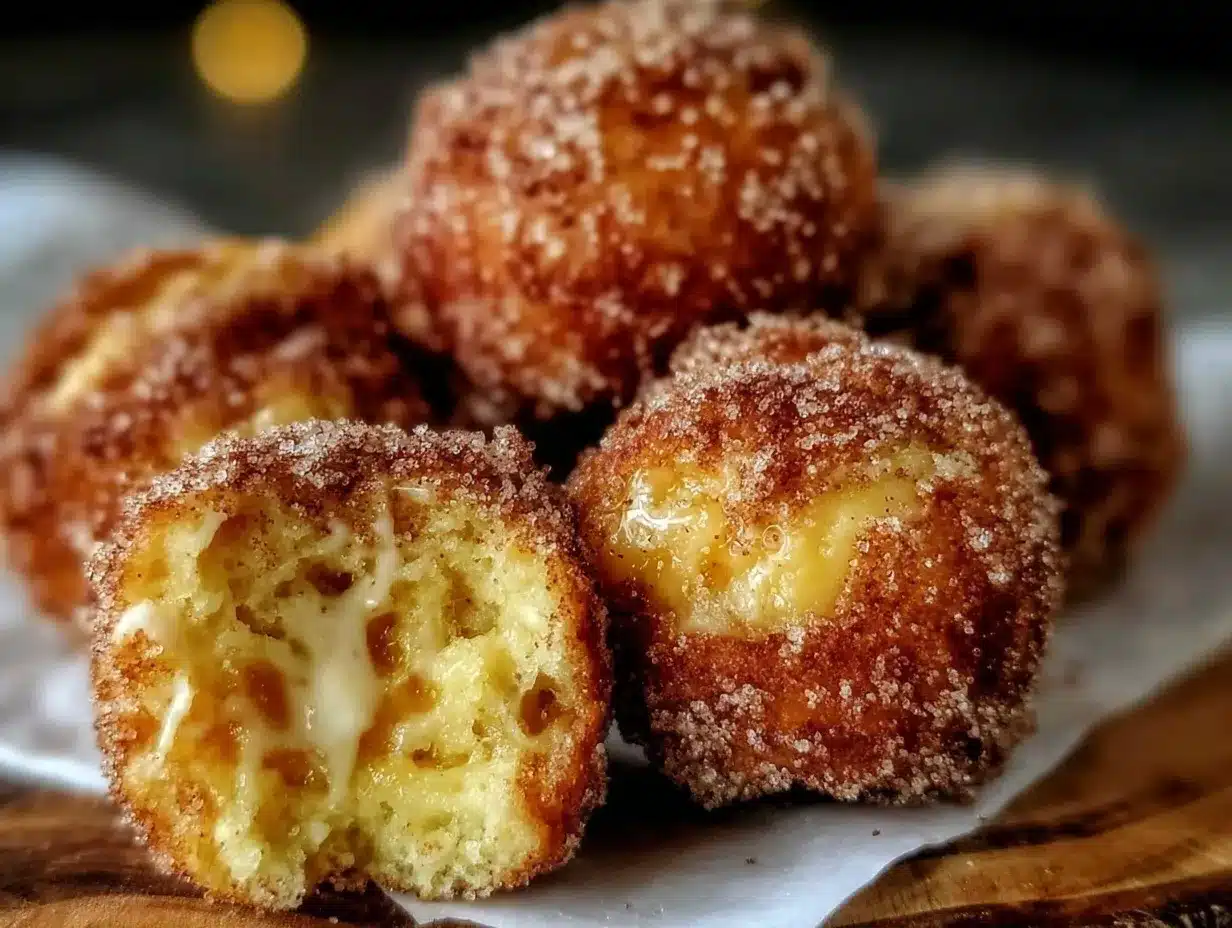
- Reduce the apple cider: Pour 1 cup (240 ml) of apple cider into a small saucepan over medium heat. Let it simmer gently until it reduces by about half, around 10-15 minutes. You’re looking for a slightly syrupy consistency, not burnt or too thick. Remove from heat and let cool completely.
- Preheat the oven: Set your oven to 350°F (175°C). Lightly grease your mini donut pan or use a baking spray with flour.
- Mix dry ingredients: In a medium bowl, whisk together 2 cups (240 g) all-purpose flour, 2 teaspoons baking powder, ½ teaspoon baking soda, 2 teaspoons cinnamon, ¼ teaspoon nutmeg, and ½ teaspoon salt. Give it a good mix to evenly distribute the spices and leavening.
- Combine wet ingredients: In a separate large bowl, whisk 4 tablespoons melted butter, ¾ cup (150 g) sugar, 2 large eggs, 1 teaspoon vanilla extract, ½ cup (120 ml) milk, and the cooled reduced apple cider until smooth and well combined.
- Bring batter together: Gently fold the dry ingredients into the wet mixture using a spatula. Mix just until combined—don’t overmix. The batter should be thick but smooth, with no large streaks of flour.
- Fill the pan: Spoon or pipe the batter into the mini donut cavities, filling about ¾ full (this helps them rise properly without spilling over). I find using a small cookie scoop or piping bag helps keep things neat.
- Bake: Place the pan in the oven and bake for 10-12 minutes. The donut holes should be lightly golden, springy to the touch, and a toothpick inserted should come out clean.
- Cool and coat: Let the donut holes cool in the pan for 3-5 minutes, then transfer to a wire rack. While still slightly warm, toss them gently in the cinnamon-sugar mixture until evenly coated.
- Serve or store: Enjoy warm for the best texture, or store cooled donut holes in an airtight container for up to 3 days. Reheat briefly in a low oven or microwave to refresh.
One quick tip: if your batter feels too thick, add a tablespoon of milk at a time until it reaches the right consistency. And don’t skip cooling the cider properly—it’s what keeps the batter from being too wet or dense. I’ve learned the hard way that rushing that step leads to donut holes that don’t hold their shape well.
Cooking Tips & Techniques
Getting tender baked donut holes just right is all about balance and gentle handling. Here are some tips I’ve picked up over time:
- Reduce cider slowly: Don’t rush the reduction over high heat; it can burn quickly and taste bitter. A gentle simmer is best for a subtle, sweet concentrate.
- Don’t overmix: Once you combine wet and dry ingredients, stop mixing as soon as you don’t see flour streaks. Overmixing activates gluten and leads to tougher baked goods (and we want tender!).
- Use room temperature eggs and milk: This helps the batter come together smoothly and bake evenly.
- Grease your pan well: Even if you have a nonstick pan, a light coating of butter or spray prevents sticking and helps the donut holes pop out cleanly.
- Watch the baking time closely: Mini donuts can go from perfect to dry in a minute or two. Start checking at 10 minutes, and use the toothpick test.
- Coat while warm: Tossing the donut holes in cinnamon sugar while they’re still a little warm helps the sugar stick better and melts slightly for a nice texture.
I once tried substituting oil for butter and ended up with donut holes that felt a bit greasy rather than tender. Butter brings that nice richness without heaviness. Also, I’ve had batches turn out dense when I forgot to reduce the cider properly—it really concentrates the flavor and moisture, so don’t skip that step!
Variations & Adaptations
There’s lots of room to make these tender baked apple cider donut holes your own. Here are a few you might want to try:
- Gluten-free option: Swap the all-purpose flour for a 1:1 gluten-free baking flour blend. The texture will still be tender, but keep an eye on baking time as it may vary slightly.
- Spice it up: Add a pinch of ground cloves or ginger to the dry mix for a deeper spice profile reminiscent of classic fall pies.
- Apple swap: Use fresh apple sauce (unsweetened) in place of half the milk to add moisture and a subtle fruity note.
- Maple cinnamon coating: Instead of cinnamon sugar, toss the warm donut holes in a mixture of powdered sugar and a drizzle of maple syrup for a sticky, sweet glaze alternative.
- Baking method: If you don’t have a mini donut pan or muffin tin, try baking the batter in a mini bundt pan or shaped silicone molds for a fun twist.
Personally, I tried adding finely chopped toasted pecans inside the batter once—gave a lovely crunch with the tender softness. Just be mindful of the size so they don’t weigh down the donut holes. For a dairy-free option, swapping butter with coconut oil and milk with almond milk works well, though the flavor shifts a bit.
Serving & Storage Suggestions
These donut holes are best enjoyed warm, fresh out of the oven or reheated briefly. Serve them piled on a pretty plate with a steaming cup of coffee, chai, or leftover spiced apple cider. They’re perfect for casual fall mornings or an afternoon pick-me-up.
They also make a sweet addition to a brunch spread, pairing nicely with eggs and bacon or alongside a creamy dish like this easy cheesy crescent roll breakfast casserole. For a cozy evening, try nibbling them with a warm bowl of soup like a stuffed pepper soup to round out the meal.
Store cooled donut holes in an airtight container at room temperature for up to 2 days or in the fridge for up to 4 days. For longer storage, freeze them in a single layer on a baking sheet, then transfer to a freezer-safe bag. Reheat gently in a warm oven (300°F/150°C for 5-7 minutes) or microwave for 15-20 seconds to refresh their tender texture.
Over time, the cinnamon sugar coating may soften slightly but the flavors tend to deepen, making them even more comforting as leftovers. A quick warm-up brings back that fresh-baked charm.
Nutritional Information & Benefits
Each batch of these tender baked apple cider donut holes offers a treat that’s a bit lighter than traditional fried donuts, thanks to baking instead of frying. Here’s a rough estimate per donut hole (makes about 24):
| Calories | 90-110 kcal |
|---|---|
| Carbohydrates | 15-18 g |
| Fat | 3-4 g |
| Protein | 1-2 g |
| Sugar | 8-10 g (includes cinnamon sugar coating) |
Apple cider provides natural antioxidants and a touch of vitamin C, while the warm spices like cinnamon may help regulate blood sugar and have anti-inflammatory benefits. Using real butter and eggs adds wholesome fats and protein that balance the treat. This recipe isn’t gluten-free by default but can be adapted easily, and it contains common allergens like eggs and dairy.
From my experience, these donut holes are a way to enjoy fall flavors with a bit less guilt and a lot of homey satisfaction.
Conclusion
These tender baked apple cider donut holes have quietly become a fall essential around here. They’re easy to make, use simple ingredients, and capture the essence of the season in every bite. Whether you’re making them for a quiet morning alone or sharing with friends, they bring a small moment of warmth and comfort that feels just right.
What I love most is how forgiving this recipe is—you can tweak the spices and even swap ingredients without losing that tender, cozy feel. So, make them your own, savor each bite slowly, and let these little donuts be a gentle reminder that sometimes the simplest pleasures are the best.
If you try them out, I’d love to hear how you make them your own or what moments you enjoy them with. Recipes like these feel even better when shared, even if just in stories.
FAQs
Can I make these donut holes without a mini donut pan?
Yes, you can use a mini muffin pan as a substitute, though the shape will be more like small muffins. Just fill the cups about ¾ full and follow the same baking times.
How do I reduce apple cider for the recipe?
Simply simmer 1 cup of apple cider in a small saucepan over medium heat until it reduces by half and becomes slightly syrupy. This usually takes 10-15 minutes. Stir occasionally to prevent burning.
Can I freeze these baked donut holes?
Absolutely! Freeze them in a single layer on a baking sheet first, then transfer to a freezer bag. Reheat in a warm oven or microwave before serving.
Are these donut holes gluten-free?
Not as written, but you can swap the all-purpose flour for a gluten-free 1:1 baking flour blend to make them gluten-free.
What’s the best way to store leftover donut holes?
Store cooled donut holes in an airtight container at room temperature for up to 2 days or in the fridge for up to 4 days. Reheat briefly before serving for the best texture.
Pin This Recipe!

Tender Baked Apple Cider Donut Holes
These tender baked apple cider donut holes are a cozy fall snack, lightly spiced and baked instead of fried for a lighter, comforting treat. The recipe features reduced apple cider for natural sweetness and moisture, creating soft, flavorful bites perfect for autumn.
- Prep Time: 15 minutes
- Cook Time: 12 minutes
- Total Time: 27 minutes
- Yield: 24 donut holes 1x
- Category: Snack
- Cuisine: American
Ingredients
- 1 cup (240 ml) apple cider, reduced to about half
- 2 cups (240 g) all-purpose flour
- 2 teaspoons baking powder
- ½ teaspoon baking soda
- 2 teaspoons ground cinnamon
- ¼ teaspoon ground nutmeg
- ½ teaspoon salt
- 4 tablespoons (56 g) unsalted butter, melted and slightly cooled
- ¾ cup (150 g) granulated sugar
- 2 large eggs, room temperature
- 1 teaspoon vanilla extract
- ½ cup (120 ml) milk (whole or 2%)
- For coating: ½ cup (100 g) granulated sugar mixed with 1 teaspoon cinnamon
Instructions
- Pour 1 cup (240 ml) of apple cider into a small saucepan over medium heat. Simmer gently until reduced by about half, about 10-15 minutes, until slightly syrupy. Remove from heat and let cool completely.
- Preheat oven to 350°F (175°C). Lightly grease a mini donut pan or spray with baking spray with flour.
- In a medium bowl, whisk together flour, baking powder, baking soda, cinnamon, nutmeg, and salt until evenly combined.
- In a large bowl, whisk melted butter, sugar, eggs, vanilla extract, milk, and cooled reduced apple cider until smooth.
- Gently fold dry ingredients into wet ingredients using a spatula until just combined. Do not overmix.
- Spoon or pipe batter into mini donut pan cavities, filling about ¾ full.
- Bake for 10-12 minutes until lightly golden and a toothpick inserted comes out clean.
- Cool donut holes in pan for 3-5 minutes, then transfer to a wire rack.
- While still warm, toss donut holes in cinnamon-sugar coating until evenly coated.
- Serve warm or store in an airtight container for up to 3 days. Reheat briefly before serving.
Notes
Reduce apple cider slowly over medium heat to avoid burning and bitterness. Do not overmix batter to keep donut holes tender. Use room temperature eggs and milk for even baking. Grease pan well to prevent sticking. Coat donut holes while warm for best sugar adhesion. If batter is too thick, add milk tablespoon by tablespoon until desired consistency.
Nutrition
- Serving Size: 1 donut hole
- Calories: 90110
- Sugar: 810
- Sodium: 150
- Fat: 34
- Saturated Fat: 2
- Carbohydrates: 1518
- Fiber: 0.5
- Protein: 12
Keywords: apple cider donut holes, baked donut holes, fall snack, cinnamon donut holes, easy homemade donuts, tender donut holes, autumn treats