Introduction
“You’ve got to try this bread.” That’s what my coworker insisted one afternoon during a midweek slump. Honestly, I was skeptical. Japanese milk bread? Was it really all that different from the regular loaves I’d been baking for years? But then she handed me a slice—soft, pillowy, and just the right hint of sweetness. It felt like biting into a cloud, but with a buttery, milky warmth that made me pause mid-chew. That moment sparked my obsession with perfecting this Soft Fluffy Japanese Milk Bread with Hokkaido Tangzhong—something I never thought I’d master, especially as a beginner baker.
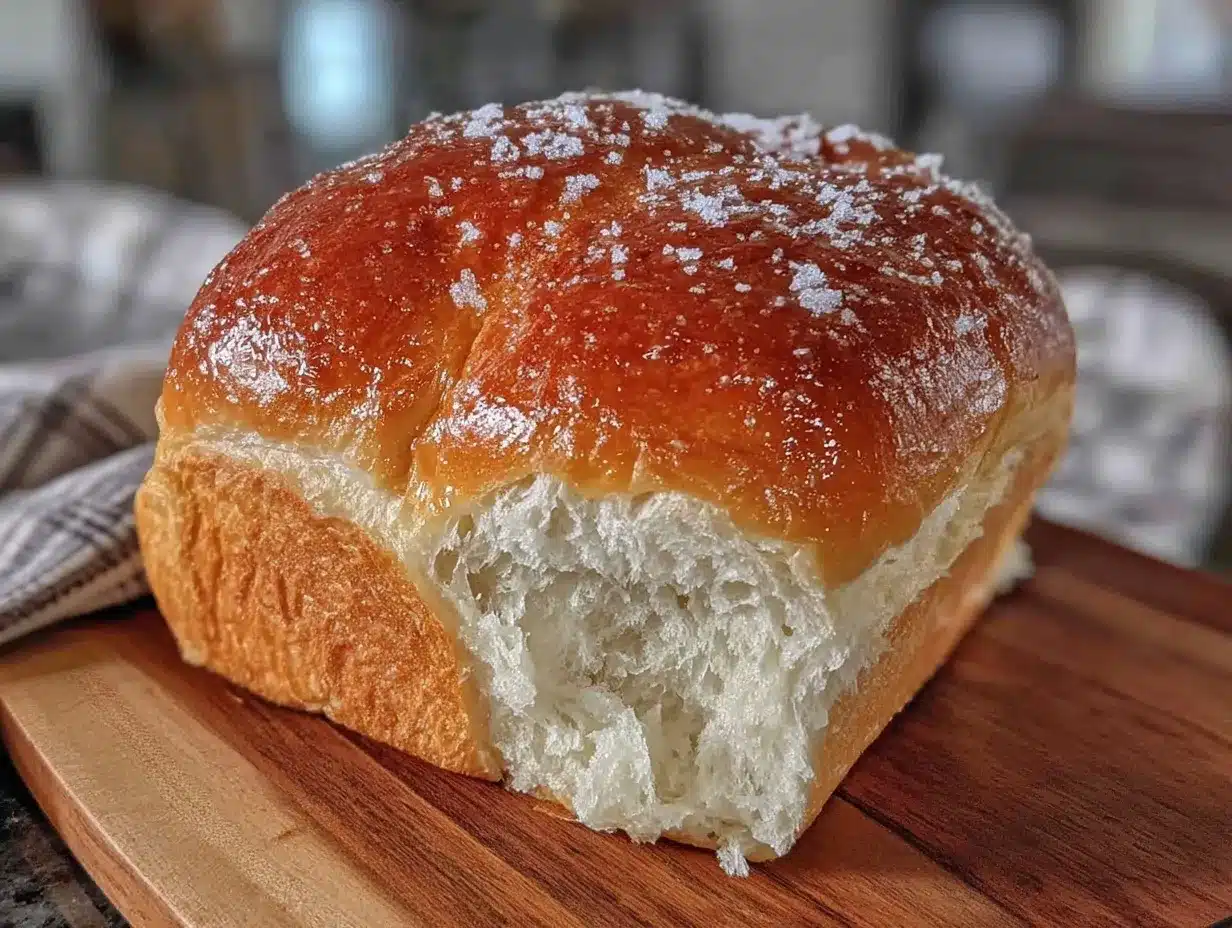
My first few attempts were less than perfect (let’s just say the dough was more “brick” than “cloud”), but this recipe finally cracked the code. The secret? That magical tangzhong, a cooked flour-water paste that keeps the bread astonishingly soft and fresh longer. Over a few weeks, I made this bread so often that my family started joking about me opening a bakery. It’s just that good—and surprisingly easy once you get the hang of it. There’s something quietly satisfying about pulling a golden loaf from the oven, its surface shining, and knowing the inside will be that perfect, fluffy texture every single time.
This bread isn’t just about taste—it’s about comfort, ritual, and a little kitchen magic that anyone can achieve. If you’ve ever hesitated to try baking bread at home, this Soft Fluffy Japanese Milk Bread recipe is your gentle invitation. It’s beginner friendly, foolproof, and honestly, a little slice of happiness wrapped in a loaf. So, let’s get to it.
Why You’ll Love This Recipe
Having tested and tweaked this Soft Fluffy Japanese Milk Bread recipe through countless batches, I can confidently say it’s a keeper. Here’s why it stands out:
- Quick & Easy: The tangzhong method means the dough stays moist and forgiving, coming together in about 3 hours from start to finish—perfect when you want fresh bread without an all-day commitment.
- Simple Ingredients: Nothing fancy here—just pantry staples like bread flour, milk, butter, sugar, and yeast. No specialty flours or weird additives needed.
- Perfect for Any Occasion: Whether it’s a comforting breakfast, a sandwich base, or an accompaniment to your favorite soup (like my cozy stuffed pepper soup), this bread fits right in.
- Crowd-Pleaser: Kids, adults, picky eaters—you name it. Everyone loves the pillowy texture and mildly sweet flavor.
- Unbelievably Delicious: The tangzhong technique locks in moisture, giving you a bread that stays soft for days without preservatives or plastic wrap tricks.
What makes this recipe different? It’s the balance—rich but not heavy, subtly sweet but not over the top, and easy enough that even someone “not really a baker” can feel confident. Plus, I’ve added tips throughout that only come from making this loaf dozens of times, so you avoid those rookie mistakes I made.
Honestly, it’s the kind of bread that makes you pause and savor each bite. It’s comfort food with a gentle twist—perfect for impressing guests or just treating yourself on an ordinary day.
What Ingredients You Will Need
This recipe uses simple, wholesome ingredients to deliver that soft, fluffy texture and subtle sweetness that Japanese milk bread is known for. Most are pantry staples, and substitutions are easy if you need them.
- Bread Flour (300g / 2 ½ cups): High-protein flour gives the bread structure and chewiness. I recommend King Arthur Bread Flour for consistency.
- Whole Milk (180ml / ¾ cup): Adds richness and moisture. Use whole milk or any creamy milk alternative like oat or soy.
- Water (60ml / ¼ cup): For the tangzhong paste—simple tap water works fine.
- Unsalted Butter (45g / 3 tbsp), softened: Gives tenderness and flavor. You can swap for dairy-free margarine if needed.
- Sugar (50g / ¼ cup): Balances the yeast and sweetens the bread just right without overpowering.
- Instant Yeast (7g / 2 ¼ tsp): Quick-rising yeast that helps the bread rise beautifully.
- Salt (1 tsp): Enhances flavor and controls yeast activity.
- Egg (1 large, room temperature): Adds richness and helps with browning.
For the Tangzhong (Water-Roux) Paste:
- Bread Flour (15g / 1 tbsp)
- Water (75ml / 5 tbsp)
If you want to switch it up, almond flour works well for a gluten-free version, but expect a denser crumb. Also, in summer, swapping whole milk for buttermilk gives a slight tang and tender crumb, which I enjoy. When I’m in a pinch, I’ve even used powdered milk rehydrated with water for the milk component—results were still impressive!
Equipment Needed
- Mixing Bowls: At least two—one for the tangzhong and one for the dough.
- Whisk and Rubber Spatula: For mixing the tangzhong and later folding the dough.
- Kitchen Scale: For precise measurements. Baking’s not forgiving with eyeballs!
- Stand Mixer with Dough Hook (optional): Makes kneading easier but hand-kneading works well too—expect a bit more arm workout.
- Loaf Pan (8×4 inch / 20×10 cm): For shaping and baking the bread.
- Plastic Wrap or Clean Kitchen Towel: To cover dough during rising.
- Oven Thermometer (optional): Ensures accurate baking temperature for that perfect crust.
For beginners, I recommend hand-kneading first to feel the dough’s texture—plus, it’s kind of therapeutic. If you’ve got a stand mixer, great! Just don’t over-knead. I’ve also found that silicone loaf pans work nicely and clean up easily compared to metal pans.
Preparation Method
- Make the Tangzhong Paste (10 minutes): In a small saucepan, whisk together 15g (1 tbsp) bread flour and 75ml (5 tbsp) water until smooth. Heat over medium-low, stirring constantly. After about 3–5 minutes, the mixture thickens to a pudding-like consistency and leaves lines when you stir. Remove from heat and let it cool to room temperature.
- Mix the Dough (10 minutes): In a large bowl or stand mixer, combine 300g (2 ½ cups) bread flour, 50g (¼ cup) sugar, 1 tsp salt, and 7g (2 ¼ tsp) instant yeast. Add the cooled tangzhong, 180ml (¾ cup) whole milk, 60ml (¼ cup) water, 1 large egg, and 45g (3 tbsp) softened butter. Mix until the dough starts coming together.
- Knead the Dough (10-15 minutes): Knead by hand on a lightly floured surface or use a stand mixer with a dough hook until the dough is smooth, elastic, and slightly tacky but not sticky. If sticky, add a teaspoon of flour at a time.
- First Rise (1 to 1.5 hours): Place dough in a lightly oiled bowl, cover with plastic wrap or a damp towel, and let it rise in a warm place until doubled in size. A good test is gently poking the dough—it should spring back slowly.
- Shape the Loaf (10 minutes): Punch down the dough to release air. Divide into three equal portions (about 180g / 6.3 oz each). Roll each into an oval, then fold the long edges toward the center and roll into a cylinder. Place the three cylinders side by side in the greased loaf pan.
- Second Rise (45 minutes): Cover again and let the dough rise until it puffs up about 1 inch above the pan edge.
- Bake (25-30 minutes): Preheat your oven to 350°F (175°C). Brush the top gently with milk or egg wash for a glossy finish. Bake for 25-30 minutes until golden brown and the loaf sounds hollow when tapped.
- Cool and Enjoy: Remove from the pan and cool on a wire rack for at least 30 minutes before slicing. This resting time helps the bread finish setting.
Quick tip: If your bread browns too fast, tent it with foil halfway through baking. Also, don’t rush slicing—it’ll seem soft, but cutting too early can squish the crumb.
Cooking Tips & Techniques
Getting that perfect Japanese milk bread texture is about attention to a few key details.
- Don’t Skip the Tangzhong: This step is what makes the bread so soft and keeps it fresh longer. It gelatinizes the starches, trapping moisture inside the loaf.
- Use Bread Flour: It has more protein, which means stronger gluten development and a better structure. All-purpose flour will work but expect a slightly softer, less chewy result.
- Temperature Matters: Yeast loves warmth but not heat. Aim for milk and water around 100°F (38°C) when mixing. Too hot and you kill the yeast; too cold and it won’t rise well.
- Kneading Technique: When kneading by hand, use the “push-fold-turn” method. It takes about 10 minutes of consistent kneading to develop the gluten.
- Rise Time: Don’t rush the proofing stages. The dough should double in size—this is crucial for a light crumb.
- Shaping with Care: Rolling the dough tight enough to trap air but loose enough to expand during baking is a bit of an art. I find letting the dough rest for a minute before rolling helps.
- Oven Calibration: If your oven runs hot, your crust might be too thick or dark. An oven thermometer can save you from guessing.
Early on, I accidentally used cold milk straight from the fridge, and my dough barely rose. Lesson learned! Now, I warm my liquids first. I also used to skip the second rise, which made the bread dense. Patience really pays off here.
Variations & Adaptations
While this recipe shines as is, there’s room to play around based on your preferences or dietary needs.
- Gluten-Free Version: Replace bread flour with a gluten-free blend and add xanthan gum. Keep in mind that texture will be different—more crumbly but still tasty.
- Flavor Twists: Add a teaspoon of vanilla extract or a tablespoon of matcha powder to the dough for subtle flavor variations. I once tried a swirl of cinnamon and sugar inside before the final rise—delicious!
- Dairy-Free Option: Swap whole milk for almond or oat milk and butter for coconut oil or vegan margarine. The tangzhong method still works great with these changes.
- Alternative Shapes: Instead of the loaf pan, shape into dinner rolls or a braid for a fun presentation.
- Cooking Method Variation: This bread can also be steamed for a softer crust, similar to Asian bao buns. Just steam on medium heat for about 20 minutes instead of baking.
For a cozy meal, I sometimes serve this bread alongside my creamy garlic butter Tuscan shrimp pasta. The bread soaks up the sauce beautifully.
Serving & Storage Suggestions
This Soft Fluffy Japanese Milk Bread is best enjoyed fresh, but it keeps well too.
- Serving Temperature: Room temperature is ideal to enjoy the full softness and flavor. Toast lightly for a crispy edge that contrasts the pillowy inside.
- Presentation: Slice thick or thin depending on your use—thick for sandwiches or toast, thinner for tea sandwiches or snacking.
- Storage: Store in an airtight container or resealable bag at room temperature for up to 3 days. For longer storage, freeze slices and toast directly from frozen.
- Reheating: Warm slices in a toaster or oven at 300°F (150°C) for 5-7 minutes to restore softness and warmth.
- Flavor Development: Unlike sourdough, this bread doesn’t develop complex flavors over time but stays mild and comforting, making it versatile.
It pairs wonderfully with savory spreads or just a pat of butter and honey. I also like to use it for French toast, which turns out extra fluffy thanks to the tender crumb.
Nutritional Information & Benefits
This bread offers a comforting, energy-boosting option with moderate calories and a good balance of carbs and fat.
- Approximate per slice (1/12 loaf): 140 calories, 25g carbohydrates, 3g fat, 4g protein.
- Milk and Butter: Provide calcium and vitamin D, important for bone health.
- Egg: Adds protein and essential nutrients like choline.
- Low Sugar: Just enough to enhance flavor without being overly sweet.
- Suitable for vegetarians; can be adapted for dairy-free or gluten-free diets as noted.
From a wellness perspective, this bread offers a satisfying alternative to dense or preservative-laden store-bought loaves. It hits that comfort spot with real ingredients.
Conclusion
Soft Fluffy Japanese Milk Bread with Hokkaido Tangzhong isn’t just a recipe—it’s a small kitchen triumph that welcomes you back with open arms every time. It’s beginner friendly, approachable, and filled with little moments of joy with each step. Whether you’re making sandwich bread, toasting for breakfast, or just tearing off a warm piece to enjoy plain, this loaf delivers softness and flavor that’s hard to beat.
Feel free to tweak the flavors or shapes to your liking. Baking bread is as much about the process as the product, and I hope this recipe becomes a trusted staple in your kitchen as it did in mine. And hey, if you’re looking for other easy homemade dinner ideas, my creamy cheesy taco pasta is a quick winner after a day of bread baking.
Happy baking—and may your kitchen always smell like fresh, fluffy bread!
Frequently Asked Questions
What is tangzhong, and why is it used in this bread?
Tangzhong is a cooked mixture of flour and water that’s cooled and added to the dough. It helps retain moisture, resulting in a softer, fluffier bread that stays fresh longer.
Can I use all-purpose flour instead of bread flour?
Yes, but bread flour is preferred for its higher protein content, which helps develop gluten for better texture. Using all-purpose may yield a softer but slightly less chewy loaf.
How do I know when the dough has risen enough?
The dough should roughly double in size. A simple test is to poke it gently with your finger—if the indentation springs back slowly but not completely, it’s ready.
Can I make this bread without a stand mixer?
Absolutely! Hand-kneading works well but may take a bit longer and requires some elbow grease. The key is to knead until the dough is smooth and elastic.
How long does this bread stay fresh?
Stored in an airtight container at room temperature, it stays soft for up to 3 days. You can freeze slices to keep it longer and toast them straight from the freezer for best results.
Pin This Recipe!
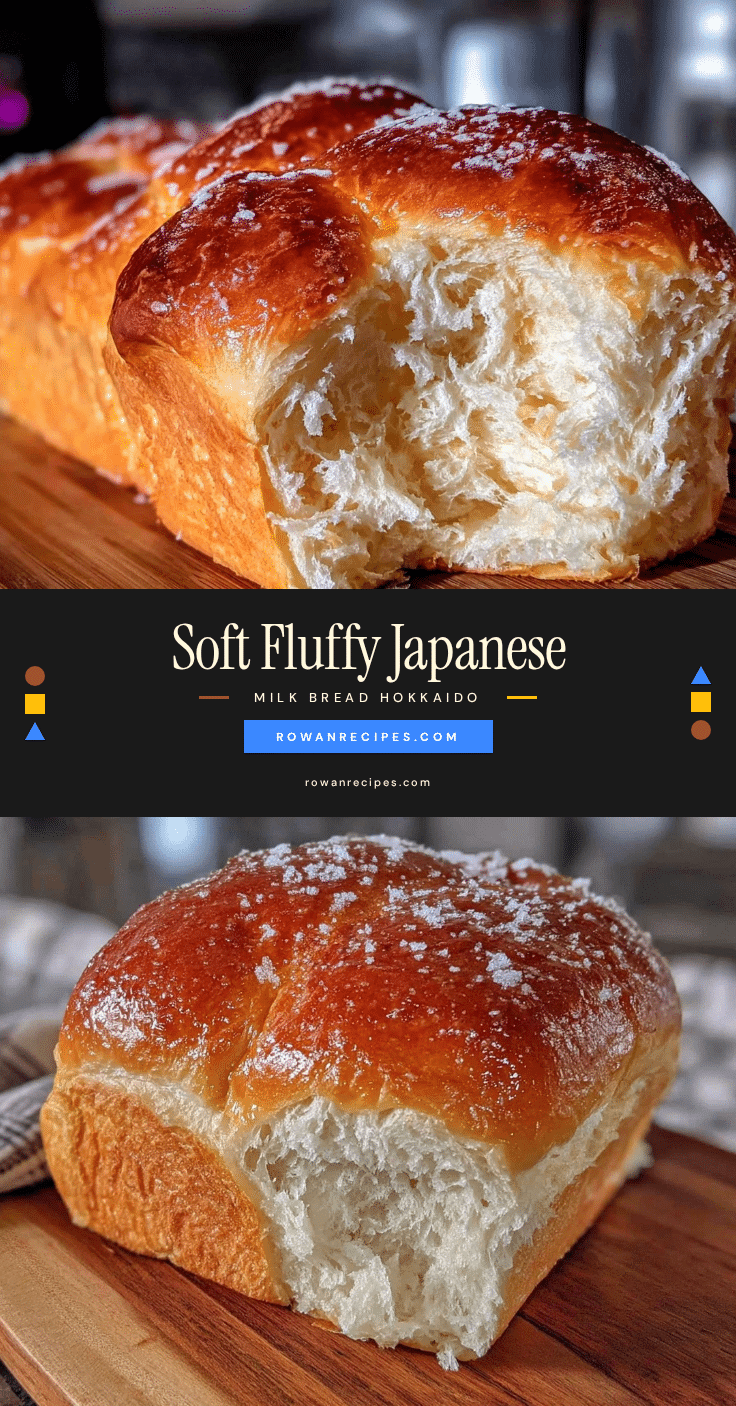
Soft Fluffy Japanese Milk Bread Recipe Easy Beginner Friendly Hokkaido Tangzhong
A beginner-friendly, soft and fluffy Japanese milk bread made using the tangzhong method for a moist, pillowy texture that stays fresh longer.
- Prep Time: 30 minutes
- Cook Time: 25-30 minutes
- Total Time: 3 hours
- Yield: 12 servings 1x
- Category: Bread
- Cuisine: Japanese
Ingredients
- 300g (2 ½ cups) bread flour
- 180ml (¾ cup) whole milk
- 60ml (¼ cup) water
- 45g (3 tbsp) unsalted butter, softened
- 50g (¼ cup) sugar
- 7g (2 ¼ tsp) instant yeast
- 1 tsp salt
- 1 large egg, room temperature
- For the Tangzhong Paste:
- 15g (1 tbsp) bread flour
- 75ml (5 tbsp) water
Instructions
- Make the Tangzhong Paste: In a small saucepan, whisk together 15g (1 tbsp) bread flour and 75ml (5 tbsp) water until smooth. Heat over medium-low, stirring constantly until thickened to a pudding-like consistency (3–5 minutes). Remove from heat and cool to room temperature.
- Mix the Dough: In a large bowl or stand mixer, combine 300g (2 ½ cups) bread flour, 50g (¼ cup) sugar, 1 tsp salt, and 7g (2 ¼ tsp) instant yeast. Add the cooled tangzhong, 180ml (¾ cup) whole milk, 60ml (¼ cup) water, 1 large egg, and 45g (3 tbsp) softened butter. Mix until dough starts coming together.
- Knead the Dough: Knead by hand on a lightly floured surface or use a stand mixer with dough hook for 10-15 minutes until smooth, elastic, and slightly tacky but not sticky. Add flour teaspoon by teaspoon if sticky.
- First Rise: Place dough in a lightly oiled bowl, cover with plastic wrap or damp towel, and let rise in a warm place for 1 to 1.5 hours until doubled in size.
- Shape the Loaf: Punch down dough, divide into three equal portions (~180g each). Roll each into an oval, fold long edges toward center, then roll into cylinders. Place side by side in greased 8×4 inch loaf pan.
- Second Rise: Cover and let dough rise for 45 minutes until puffed about 1 inch above pan edge.
- Bake: Preheat oven to 350°F (175°C). Brush top with milk or egg wash for gloss. Bake 25-30 minutes until golden brown and hollow sound when tapped.
- Cool and Enjoy: Remove from pan and cool on wire rack at least 30 minutes before slicing.
Notes
Do not skip the tangzhong step as it keeps the bread soft and fresh longer. Use bread flour for better gluten development. Warm liquids to about 100°F (38°C) to activate yeast properly. If bread browns too fast, tent with foil halfway through baking. Let bread cool completely before slicing to avoid squishing the crumb.
Nutrition
- Serving Size: 1 slice (1/12 of loa
- Calories: 140
- Fat: 3
- Carbohydrates: 25
- Protein: 4
Keywords: Japanese milk bread, soft bread, tangzhong bread, fluffy bread, beginner bread recipe, Hokkaido bread, homemade bread