“You really should try this adobo,” my coworker said, sliding a small container across the lunch table. I was skeptical—pork stewing in vinegar and soy sauce sounded a little too tangy for my taste. But the aroma alone was intoxicating, a warm mix of garlic, bay leaves, and something unmistakably cozy. One bite, and I was hooked. That first experience with Filipino pork adobo changed my whole view on comfort food.
Filipino pork adobo is one of those dishes that feels like a hug after a long day—simple, unpretentious, but deeply satisfying. It’s the kind of meal you can throw together in one pot, with minimal fuss but maximum flavor. I found myself making it over and over, sometimes for a lazy dinner, other times when friends dropped by unexpectedly. Honestly, it’s saved me on hectic evenings more times than I can count.
The magic of adobo is in its balance: the tangy vinegar, salty soy, mellow garlic, and the tender pork that soaks it all up. It’s a dish that invites you to slow down, savor, and just enjoy the moment. And the best part? It’s easy enough that you don’t have to be a seasoned cook to nail it. This Cozy Easy Filipino Pork Adobo One-Pot Comfort Food recipe has stuck around in my kitchen for good reasons—mainly because it’s reliable, heartwarming, and honestly, just plain delicious.
Why You’ll Love This Recipe
After testing countless variations, I can say this pork adobo recipe hits just the right notes. It’s the kind of dish you’ll want to keep in your weekly rotation, whether you’re cooking for yourself or a crowd.
- Quick & Easy: Ready in about an hour, including simmering time, perfect for busy weeknights or when you need comforting food fast.
- Simple Ingredients: Uses pantry staples like soy sauce, vinegar, and garlic—no special trips to the store needed.
- Perfect for Cozy Dinners: Ideal for chilly evenings or when you just want something that warms you from the inside out.
- Crowd-Pleaser: Always earns compliments, whether served with steamed rice or alongside a fresh salad.
- Unbelievably Delicious: The pork turns meltingly tender, soaking in a sauce that’s tangy, savory, and just a little sweet.
This recipe isn’t just another adobo—it’s crafted to be fuss-free without sacrificing depth of flavor. The key is marinating the pork just long enough and simmering it gently in one pot, so the flavors meld beautifully. Plus, I’ve balanced the vinegar and soy sauce so it’s punchy but not overpowering, which some versions miss. It’s comfort food that feels familiar yet fresh every time.
Once you make it, you’ll find it’s the kind of meal that invites you to sit down, relax, and maybe even close your eyes for a moment after the first bite. That’s the kind of cozy, soul-satisfying food this recipe delivers.
What Ingredients You Will Need
This Filipino pork adobo recipe uses simple, wholesome ingredients that come together to create a bold, comforting flavor without any complicated steps. Most of these are pantry staples, and substitutions are easy if you need them.
- Pork shoulder, cut into chunks (about 2 pounds / 900 grams) – I prefer pork shoulder for its perfect balance of fat and tenderness.
- Garlic, minced (6 cloves) – lots of it, because garlic is the backbone of authentic adobo flavor.
- Onion, sliced (1 medium) – optional but adds a nice sweetness.
- Soy sauce (½ cup / 120 ml) – use a good quality, naturally brewed soy sauce for best taste (I like Kikkoman).
- White vinegar (½ cup / 120 ml) – the signature tang; Filipino cane vinegar is ideal but plain white vinegar works well too.
- Water (1 cup / 240 ml) – to create the simmering liquid.
- Bay leaves (3 leaves) – essential for that earthy aroma.
- Whole black peppercorns (1 teaspoon) – adds gentle heat and complexity.
- Brown sugar (1 tablespoon) – balances the acidity with a touch of sweetness.
- Cooking oil (2 tablespoons) – for browning the pork; vegetable or canola oil works fine.
- Optional: green onions, chopped for garnish – adds fresh color and mild onion flavor.
For substitutions, you can swap pork shoulder with pork belly for a richer taste or use chicken thighs if you prefer poultry. If you’re avoiding soy, tamari is a good gluten-free alternative. For a low-sodium version, use reduced-sodium soy sauce and adjust vinegar to taste.
Equipment Needed
- Large heavy-bottomed pot or Dutch oven – this one-pot recipe depends on even heat distribution to brown the pork and simmer the sauce without burning.
- Sharp knife and cutting board – for prepping pork and aromatics efficiently.
- Measuring cups and spoons – precise measurements help balance the tangy and salty flavors.
- Wooden spoon or heatproof spatula – for stirring without scratching your cookware.
- Colander or strainer – handy if you want to rinse the pork before cooking to reduce excess blood or impurities.
If you don’t have a Dutch oven, a wide, deep skillet with a lid will do just fine. I once made this in a large cast-iron skillet and still got that perfect browning and simmer. No fancy gadgets required—just a good pan and a bit of patience.
Preparation Method
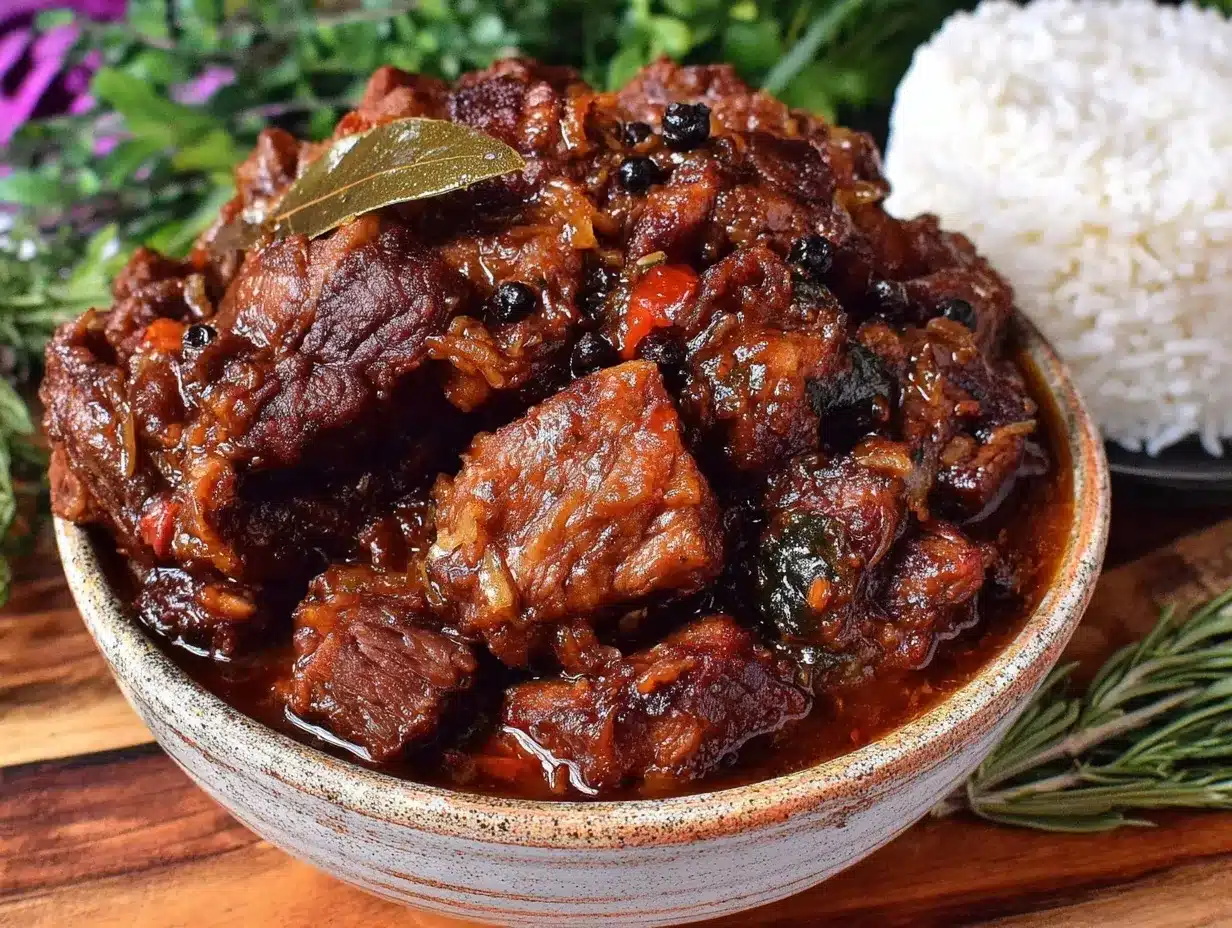
- Prepare the pork: Rinse the pork shoulder chunks under cold water and pat dry with paper towels. This helps get rid of any residue and prevents steaming instead of browning. Set aside.
- Marinate: In a large bowl, combine the pork with minced garlic, soy sauce, and half of the sliced onions. Toss well to coat. Cover and marinate for at least 30 minutes, or up to 2 hours in the fridge for deeper flavor. (If you’re short on time, even 15 minutes works.)
- Brown the pork: Heat 2 tablespoons of oil in your pot over medium-high heat. Remove pork from marinade, reserving marinade for later. Working in batches if needed, brown the pork pieces on all sides until golden brown, about 3-4 minutes per side. Browning locks in flavor and adds a rich depth to the sauce.
- Sauté aromatics: Lower heat to medium. In the same pot, add the remaining onions and sauté until translucent and fragrant, about 3 minutes.
- Add liquids and seasonings: Return the browned pork to the pot. Pour in the reserved marinade, vinegar, water, bay leaves, peppercorns, and brown sugar. Do not stir once vinegar is added (this prevents bitterness). Bring the mixture to a gentle boil.
- Simmer: Reduce heat to low, cover, and simmer for 45 minutes to 1 hour. Stir occasionally, but gently. The pork should be fork-tender, and the sauce slightly thickened and glossy. If the sauce reduces too much, add a splash of water to keep it saucy.
- Final adjustments: Taste the sauce and adjust seasoning if needed—add a bit more soy sauce for saltiness or sugar for sweetness. Remove bay leaves before serving.
- Serve: Garnish with chopped green onions if desired, and serve hot over steamed white rice. The rice soaks up the luscious adobo sauce perfectly.
Tip: For a caramelized finish, you can remove the pork once tender and let the sauce simmer uncovered on medium heat until it thickens further, stirring frequently. Then toss the pork back in to coat.
Cooking Tips & Techniques
Getting the balance of flavors right in adobo takes a bit of practice, but here are a few tips that helped me avoid common pitfalls.
- Don’t rush the marinating: Even a short soak in soy sauce and garlic improves flavor penetration, but longer is better when you have time.
- Brown pork well: This step adds a nutty, caramelized note that you don’t want to skip. Avoid overcrowding the pan—do it in batches if necessary.
- Vinegar timing: Add vinegar after browning and avoid stirring immediately to prevent a harsh, bitter taste.
- Simmer low and slow: Gentle simmering lets the pork get tender while flavors meld. High heat can toughen the meat.
- Adjust sweetness: Filipino adobo can be a little sweet; the brown sugar balances the acidity but tweak it to your taste.
- Multitasking tip: While the pork simmers, prep a simple side like sautéed greens or a fresh salad to round out the meal without extra stress.
Once, I accidentally let the sauce reduce too much and became almost syrupy—it was still delicious, but too intense. Since then, I watch the liquid level closely and add water as needed during simmering.
Variations & Adaptations
Adobo is famously versatile, and this recipe can be adjusted to suit your mood, dietary needs, or what’s in your fridge.
- Chicken Adobo: Swap pork for bone-in chicken thighs for a lighter version. Cooking time is about 35-40 minutes.
- Low-Carb Option: Skip the sugar or substitute with a keto-friendly sweetener like erythritol. Serve with cauliflower rice for a grain-free meal.
- Spicy Adobo: Add sliced fresh chili or a pinch of red pepper flakes during simmering for a gentle heat kick.
- Vegetable-Loaded: Toss in quartered potatoes, carrots, or bell peppers halfway through simmering for extra heartiness.
- Coconut Twist: Stir in ½ cup (120 ml) coconut milk near the end for a creamier, tropical note.
Personally, I’ve made a batch with chicken and potatoes on a rainy day—it felt like a whole new meal but kept that familiar adobo soul. You can also experiment by pairing this with other one-pot dishes like the lemon chicken and rice to create a comforting dinner spread.
Serving & Storage Suggestions
Filipino pork adobo tastes best hot and fresh, served over fluffy steamed rice. The sauce is perfect for spooning generously over rice, turning every bite into a flavor-packed experience.
For presentation, garnish with chopped green onions or a few slices of fresh cucumber to add a crisp contrast. A side of sautéed greens or a simple tomato salad pairs nicely to balance the richness.
Leftovers are fantastic—adobo is one of those dishes that actually tastes better the next day after the flavors have mingled. Store in an airtight container in the fridge for up to 4 days. For longer storage, it freezes well for up to 3 months.
To reheat, warm gently on the stove over low heat, adding a splash of water if the sauce has thickened too much. Microwave works too, but stir halfway through to heat evenly.
If you’re looking for easy, cozy meal ideas to pair alongside your adobo, the creamy flavors of creamy cheesy taco pasta might be a fun contrast for a casual dinner.
Nutritional Information & Benefits
Per serving (based on 6 servings): approximately 320 calories, 22g protein, 18g fat, 8g carbohydrates.
This dish offers a good amount of protein from pork shoulder and is moderate in fat, mostly from the meat itself, making it satisfying and filling. Garlic and bay leaves contribute antioxidants and anti-inflammatory properties. Vinegar may aid digestion and help regulate blood sugar levels.
While traditional soy sauce contains gluten, you can use tamari for a gluten-free version. This recipe is naturally low in carbs and can fit into various diets with minor tweaks.
From a wellness perspective, this adobo recipe balances bold flavors without heavy cream or excessive salt, making it a hearty yet fairly wholesome comfort food.
Conclusion
Cozy Easy Filipino Pork Adobo is one of those recipes that feels like a trusted friend—always there when you need a comforting meal that doesn’t complicate your evening. Its simple ingredients and one-pot method make it accessible for cooks of any skill level.
Feel free to make this recipe your own by adjusting the tanginess, adding veggies, or trying different proteins. I keep coming back to it because it hits that perfect spot between hearty and bright.
Give it a try, and you might find yourself making it as often as I do—sometimes twice in a week! Don’t forget to share your twists or questions below; I love hearing how this recipe fits into your kitchen stories. Here’s to many cozy, flavorful dinners ahead!
FAQs
What cut of pork is best for Filipino pork adobo?
Pork shoulder is ideal because it has enough fat to keep the meat tender and flavorful during slow cooking. You can also use pork belly for a richer dish or chicken thighs as a lighter alternative.
Can I make adobo without vinegar?
Vinegar is key to adobo’s signature tangy flavor, but if you’re avoiding it, you can try substituting with lemon juice or tamarind paste, though the taste will be different from traditional adobo.
How long should I marinate the pork?
At least 30 minutes is recommended, but marinating for 1-2 hours or even overnight in the fridge enhances flavor penetration for a tastier dish.
Can I prepare adobo in advance?
Absolutely! Adobo tastes even better the next day as the flavors deepen. Store leftovers in the fridge for up to 4 days or freeze for longer storage.
What can I serve with Filipino pork adobo?
Steamed white rice is traditional and perfect for soaking up the sauce. You can also serve it with sautéed greens, fresh cucumber slices, or a simple salad. For more cozy dinner ideas, try pairing it with dishes like Italian sausage and peppers.
Pin This Recipe!
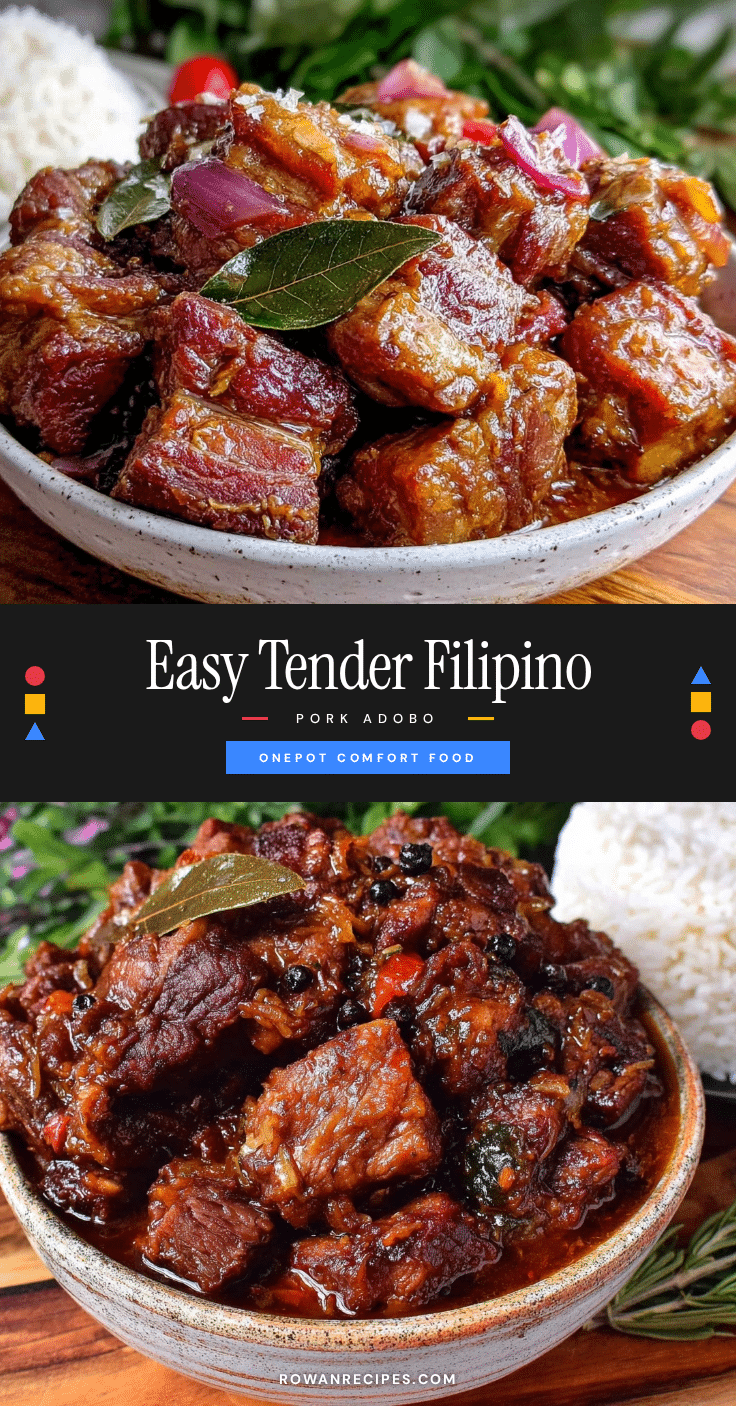
Filipino Pork Adobo

A cozy, easy one-pot Filipino pork adobo recipe that balances tangy vinegar, salty soy sauce, and tender pork for a deeply satisfying comfort food.
- Prep Time: 15 minutes
- Cook Time: 1 hour
- Total Time: 1 hour 15 minutes
- Yield: 6 servings 1x
- Category: Main Course
- Cuisine: Filipino
Ingredients
- 2 pounds pork shoulder, cut into chunks
- 6 cloves garlic, minced
- 1 medium onion, sliced (optional)
- 1/2 cup soy sauce (120 ml)
- 1/2 cup white vinegar (120 ml)
- 1 cup water (240 ml)
- 3 bay leaves
- 1 teaspoon whole black peppercorns
- 1 tablespoon brown sugar
- 2 tablespoons cooking oil (vegetable or canola)
- Optional: chopped green onions for garnish
Instructions
- Rinse the pork shoulder chunks under cold water and pat dry with paper towels. Set aside.
- In a large bowl, combine pork with minced garlic, soy sauce, and half of the sliced onions. Toss well to coat. Cover and marinate for at least 30 minutes, or up to 2 hours in the fridge. (15 minutes minimum if short on time.)
- Heat 2 tablespoons of oil in a large heavy-bottomed pot or Dutch oven over medium-high heat. Remove pork from marinade, reserving marinade for later. Brown pork pieces on all sides until golden brown, about 3-4 minutes per side, working in batches if needed.
- Lower heat to medium. In the same pot, add remaining onions and sauté until translucent and fragrant, about 3 minutes.
- Return browned pork to the pot. Pour in reserved marinade, vinegar, water, bay leaves, peppercorns, and brown sugar. Do not stir once vinegar is added. Bring mixture to a gentle boil.
- Reduce heat to low, cover, and simmer for 45 minutes to 1 hour. Stir occasionally but gently. Pork should be fork-tender and sauce slightly thickened. Add water if sauce reduces too much.
- Taste sauce and adjust seasoning if needed by adding more soy sauce or sugar. Remove bay leaves before serving.
- Garnish with chopped green onions if desired and serve hot over steamed white rice.
Notes
Do not stir immediately after adding vinegar to avoid bitterness. Brown pork well for richer flavor. Marinate at least 30 minutes for best taste. Add water during simmering if sauce reduces too much. For a caramelized finish, simmer sauce uncovered after pork is tender and then toss pork back in.
Nutrition
- Serving Size: 1 serving (approxima
- Calories: 320
- Fat: 18
- Carbohydrates: 8
- Protein: 22
Keywords: Filipino pork adobo, pork adobo recipe, easy adobo, one-pot meal, comfort food, Filipino cuisine, pork shoulder recipe