“Hey, you ever tried making Korean braised chicken in one pot?” my friend texted me just as I was peeling back the lid on a particularly uninspiring frozen dinner. That night was one of those exhausting evenings where the thought of cooking felt like climbing Everest in flip-flops. Honestly, I was skeptical. Spicy Dakdoritang? One pot? It sounded too simple for the punch of flavor I was craving.
But curiosity won. I threw together some chicken, potatoes, and a handful of pantry staples into a big pot, following a recipe that promised comfort without the fuss. As the kitchen filled with the rich, smoky aroma of gochujang and garlic, my doubts melted away—this wasn’t just another stew; it felt like a warm, spicy hug after a chaotic day.
By the time the chicken was tender and the sauce thickened just right, I realized this easy spicy Dakdoritang recipe had quietly turned that frazzled night into something memorable. The heat was just enough to wake up the senses, but not so much that it overwhelmed. It’s the kind of meal that sticks in your mind, the one you find yourself making again and again—sometimes twice a week—because it’s that good and that fuss-free.
What really sold me? The simplicity of the one-pot method meant minimal cleanup, and yet the flavors layered deeply, thanks to a slow simmer that coaxed every bit of richness from the chicken and potatoes. That balance of spicy, savory, and a hint of sweetness made me realize something: this recipe isn’t just dinner; it’s a solution for busy nights when you want bold flavor without the hassle.
So yeah, the easy spicy Dakdoritang Korean braised chicken one-pot meal became my go-to comfort dish, a quiet reminder that sometimes the best recipes come from those late-night, “what can I throw together?” moments that turn out better than expected.
Why You’ll Love This Easy Spicy Dakdoritang Recipe
After making this spicy Dakdoritang recipe multiple times, I can say it’s a reliable crowd-pleaser and a stress-buster in the kitchen. Here’s why it’s worth keeping in your recipe arsenal:
- Quick & Easy: Ready in about 45 minutes, this recipe is perfect for weeknights when you need a satisfying meal but don’t have hours to spend cooking.
- Simple Ingredients: Using common pantry staples like gochujang, soy sauce, and potatoes, you won’t need to hunt for anything exotic.
- Perfect for Cozy Dinners: The spicy, hearty flavors make it ideal for chilly nights or when you want something soothing and satisfying.
- Crowd-Pleaser: Whether you’re feeding family or friends, the balance of spice and sweetness keeps everyone coming back for more.
- Unbelievably Delicious: The one-pot braising method lets the chicken soak up the sauce, resulting in tender meat packed with flavor and a thick, rich broth.
What makes this recipe stand out? Instead of a basic stew, this version uses a carefully balanced sauce with just the right amount of heat from Korean chili paste (gochujang) and a touch of sweetness from honey and rice syrup. The addition of potatoes not only adds texture but also absorbs the sauce, making every bite a little celebration.
Plus, the one-pot approach means less mess and more time enjoying your meal. I’ve found this method works wonders compared to stovetop recipes that require constant attention. Honestly, it’s the kind of dish that makes you close your eyes with the first bite and sigh—pure comfort without the fuss.
And if you’re curious about other one-pot meals that bring ease and flavor, you might enjoy my easy one-pot lemon chicken and rice or the easy one-pot taco spaghetti. Both share that same comforting, fuss-free vibe.
What Ingredients You Will Need for Easy Spicy Dakdoritang
This recipe uses simple, wholesome ingredients to deliver bold flavor and satisfying texture without any complicated prep. Most of these are pantry staples or easy-to-find fresh produce, making it an accessible weeknight go-to.
- Chicken: 2 pounds (900 g) bone-in chicken thighs or drumsticks (skin on for extra flavor and moisture)
- Potatoes: 3 medium potatoes, peeled and cut into chunks (Yukon Gold or Russet work well; they soak up the sauce beautifully)
- Carrots: 2 medium carrots, sliced diagonally (adds subtle sweetness and texture)
- Onion: 1 medium yellow onion, roughly chopped (brings depth and natural sweetness)
- Garlic: 4 cloves, minced (for that punch of aroma and flavor)
- Ginger: 1 tablespoon fresh, minced (adds warmth and a slight zing)
- Korean Gochujang (red chili paste): 3 tablespoons (adjust to taste for desired spice level; I recommend Chung Jung One brand for authentic flavor)
- Soy Sauce: 1/4 cup (60 ml), use low-sodium if preferred to control saltiness)
- Rice Wine or Mirin: 2 tablespoons (adds a touch of sweetness and depth; you can substitute with dry sherry)
- Honey or Rice Syrup: 1 tablespoon (balances the heat with gentle sweetness)
- Water or Chicken Broth: 1 1/2 cups (360 ml) to braise and create that luscious sauce
- Green Onions: 2 stalks, sliced (for garnish and fresh bite)
- Sesame Seeds: 1 teaspoon, toasted (optional but highly recommended for a nutty finish)
- Black Pepper: to taste
For substitutions, you can swap chicken thighs with boneless skin-on chicken breasts if you prefer less fat, though the thighs give a juicier result. If you want to keep it gluten-free, make sure to use tamari instead of soy sauce. For a milder version, reduce gochujang and add a bit more honey.
Equipment Needed
- Large heavy-bottomed pot or Dutch oven: Essential for even heat distribution and slow braising. I prefer cast iron due to its heat retention, but any large pot with a tight-fitting lid works.
- Sharp chef’s knife: For chopping vegetables and trimming chicken.
- Cutting board: A sturdy surface to prep ingredients safely.
- Measuring spoons and cups: To get the seasoning balance just right.
- Wooden spoon or heatproof spatula: For stirring without scratching your pot.
If you don’t have a Dutch oven, a deep skillet with a lid will do just fine; just keep an eye on the liquid level as you braise. For budget-friendly options, nonstick pots can work but might not develop flavors as deeply.
Preparation Method for Easy Spicy Dakdoritang
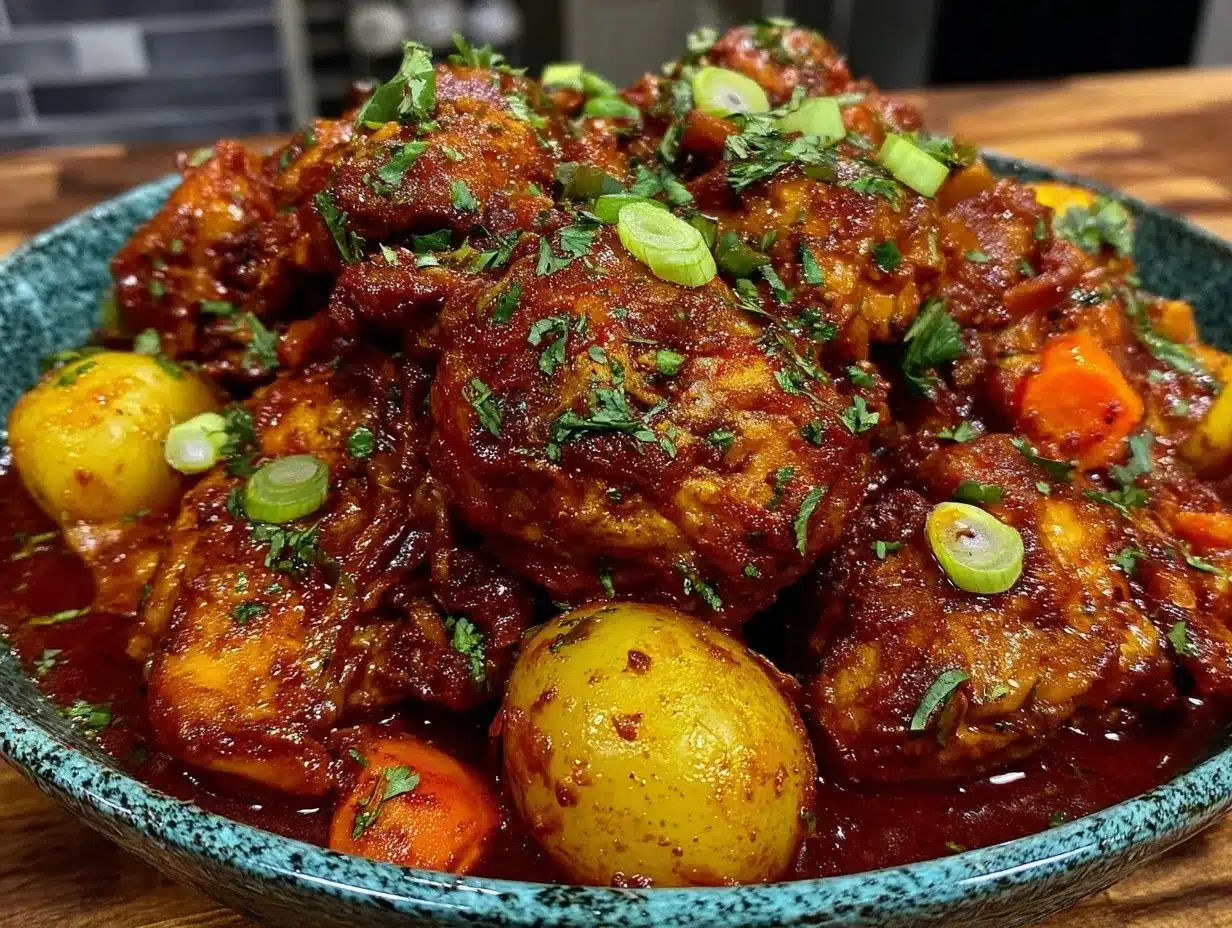
- Prep the chicken: Rinse and pat dry 2 pounds (900 g) of bone-in chicken thighs. Trim any excess fat or skin if desired. Season lightly with black pepper. (Approx. 5 minutes)
- Chop the vegetables: Peel and cut 3 medium potatoes into large chunks, slice 2 carrots diagonally, and roughly chop 1 medium onion. Mince 4 garlic cloves and 1 tablespoon fresh ginger. (Approx. 10 minutes)
- Make the sauce: In a small bowl, combine 3 tablespoons gochujang, 1/4 cup (60 ml) soy sauce, 2 tablespoons rice wine or mirin, and 1 tablespoon honey or rice syrup. Stir until smooth. This sauce will be the backbone of your dish.
- Sear the chicken (optional): Heat a tablespoon of oil in your pot over medium-high heat. Add chicken pieces skin-side down and sear until golden brown, about 3-4 minutes per side. This step adds depth but can be skipped if short on time. Remove chicken and set aside. (Approx. 10 minutes)
- Sauté aromatics: In the same pot, add the chopped onion, garlic, and ginger. Cook until fragrant and softened, about 3 minutes, stirring frequently to avoid burning.
- Add vegetables and sauce: Toss in the potatoes and carrots, pouring the gochujang mixture over them. Stir to coat evenly so the sauce starts to mingle with the veggies.
- Add chicken and liquid: Nestle the chicken pieces back into the pot on top of the veggies. Pour in 1 1/2 cups (360 ml) water or chicken broth. The liquid should come about halfway up the chicken; add a bit more if needed.
- Braise: Bring everything to a simmer, then cover with the lid and reduce heat to low. Let it cook gently for 30-35 minutes, stirring once halfway, until chicken is tender and potatoes are soft.
- Check seasoning and thicken sauce: Remove the lid, taste the sauce, and adjust salt or sweetness as needed. If the sauce is too thin, increase heat to medium and cook uncovered for 5-7 minutes to reduce and thicken.
- Finish and garnish: Sprinkle with sliced green onions and toasted sesame seeds before serving. (Approx. 5 minutes)
Pro tip: If your chicken isn’t quite tender after the braising time, give it another 5-10 minutes on low heat. The goal is that melt-in-your-mouth texture that makes this dish unforgettable.
Cooking Tips & Techniques for Perfect Dakdoritang
Cooking Dakdoritang is as much about patience as it is about the right ingredients. Here are some things I’ve learned after a handful of tries:
- Don’t rush the braise: Low and slow is the key. A gentle simmer allows the chicken to absorb flavors and stay juicy. High heat dries it out fast.
- Balance your heat: Gochujang packs a punch, but it’s also sweet and savory. If you’re wary of spice, start with 2 tablespoons and adjust up later.
- Searing the chicken first: Adds a caramelized depth, but if you’re pressed for time or prefer less mess, you can skip this step. The dish will still be delicious.
- Use bone-in chicken: The bones add richness to the broth that you just can’t get with boneless meat.
- Keep an eye on liquid levels: The potatoes soak up a lot of sauce, so add extra water or broth if it looks dry during cooking.
- Timing the vegetables: Cut the potatoes and carrots into similar-sized pieces so they cook evenly and don’t turn mushy.
Once, I overcooked the potatoes to the point they started falling apart, turning the sauce too thick and starchy. Lesson learned: keep them chunky and check early. Also, multitasking while it simmers is a lifesaver—cleaning up or prepping a quick side dish like creamy garlic butter Tuscan shrimp pasta works great.
Variations & Adaptations
This spicy Dakdoritang recipe is flexible enough for different tastes and dietary needs:
- Less spicy version: Use less gochujang and add a splash of soy sauce for saltiness. You can also swap some of the chili paste for mild Korean chili flakes (gochugaru) for a subtler heat.
- Vegetable-packed: Add chunks of Korean radish or sweet potatoes for extra texture and sweetness.
- Low-carb adaptation: Skip the potatoes and use more vegetables like zucchini or mushrooms to soak up the sauce.
- Alternate protein: Try this with bone-in pork shoulder or even firm tofu for a vegetarian spin (increase cooking time for tofu to absorb flavors).
- Instant Pot option: Use the sauté function to brown chicken and aromatics, then pressure cook for 15 minutes for an even quicker meal.
Once, I swapped sweet potatoes for the regular kind and loved the natural sweetness it added, balancing the spicy sauce beautifully. Feel free to experiment and find your favorite combo.
Serving & Storage Suggestions
This Dakdoritang tastes best served hot, straight from the pot, spooned over steamed white rice or sticky rice for soaking up that spicy sauce. Garnish with fresh green onions and a sprinkle of sesame seeds to add a bit of crunch and freshness.
It pairs wonderfully with simple side dishes like kimchi or a crisp cucumber salad to cut through the richness. For drinks, a cold beer or a light, fruity white wine complements the heat nicely.
To store leftovers, let the dish cool to room temperature, then transfer to an airtight container. It keeps well in the refrigerator for up to 3 days. Reheat gently on the stove or microwave, adding a splash of water if the sauce thickened too much.
For longer storage, you can freeze Dakdoritang in a freezer-safe container for up to 2 months. Thaw overnight in the fridge before reheating. Flavors often deepen after resting, so leftovers can taste even better the next day.
Nutritional Information & Benefits
This spicy Dakdoritang recipe offers a balanced meal with protein from the chicken, complex carbs from potatoes, and vitamins from fresh vegetables like carrots and onions. A typical serving (about 1/4 of the recipe) contains approximately:
| Nutrient | Amount |
|---|---|
| Calories | 400-450 kcal |
| Protein | 35 grams |
| Carbohydrates | 25 grams |
| Fat | 15 grams |
| Fiber | 3 grams |
| Sodium | 700 mg (can vary based on soy sauce) |
The ingredients provide antioxidants, immune-boosting garlic and ginger, and anti-inflammatory compounds from chili paste. This recipe is naturally gluten-free if you use tamari instead of soy sauce and can be adjusted to fit low-carb or dairy-free diets.
Conclusion
This easy spicy Dakdoritang Korean braised chicken one-pot recipe has become a dependable favorite for me because it hits that sweet spot of bold flavor, comforting warmth, and effortless cooking. Whether you’re new to Korean cuisine or looking for a quick, satisfying meal, this dish is approachable and rewarding.
Feel free to tweak the spice level or swap veggies to suit what you have on hand. I love how forgiving it is, allowing for personal touches without losing its signature character. Plus, it’s a lovely way to bring a bit of cozy, homemade Korean flavor into your week.
If you try it, I’d love to hear how it turns out for you—don’t hesitate to share your tweaks or questions in the comments below. Cooking is always better when we share the journey.
Here’s to many warm, spicy nights filled with good food and good company.
Frequently Asked Questions About Spicy Dakdoritang
What cut of chicken is best for Dakdoritang?
Bone-in chicken thighs or drumsticks are ideal because they stay juicy and add flavor to the broth. Boneless can be used but may dry out faster.
Can I make Dakdoritang less spicy?
Absolutely! Reduce the amount of gochujang or replace part of it with soy sauce to cut down on heat while keeping flavor.
Is this recipe gluten-free?
It can be if you substitute regular soy sauce with tamari or a gluten-free soy sauce alternative.
Can I cook Dakdoritang in an Instant Pot?
Yes, sear the chicken and aromatics using the sauté function, then pressure cook for about 15 minutes for a speedy version.
What should I serve with spicy Dakdoritang?
Steamed white or sticky rice is classic. You can also add simple sides like kimchi, cucumber salad, or lightly sautéed greens to balance the spice.
Pin This Recipe!
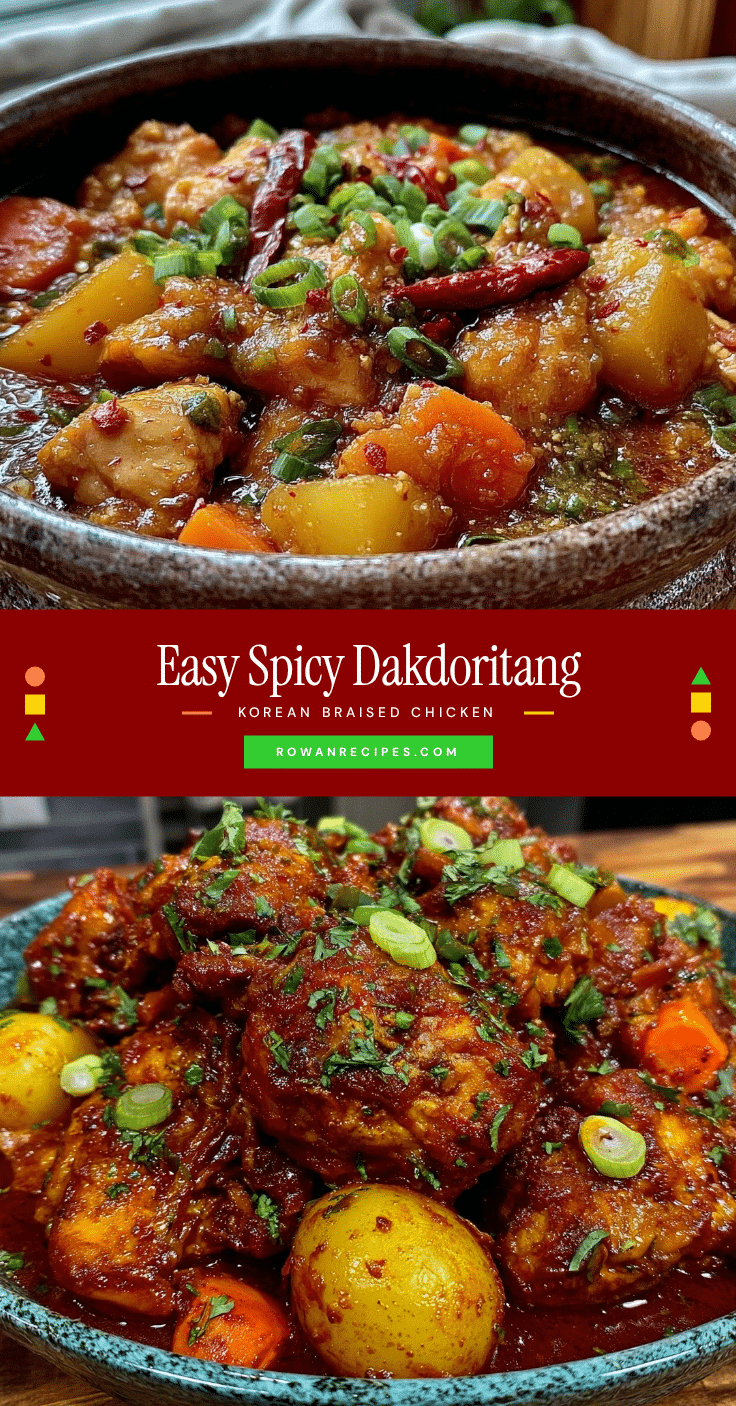
Easy Spicy Dakdoritang Recipe Perfect Korean Braised Chicken One-Pot Meal

A comforting and flavorful Korean braised chicken dish made in one pot with a spicy, savory, and slightly sweet sauce. Perfect for busy weeknights, this recipe uses simple ingredients and delivers tender chicken and hearty vegetables.
- Prep Time: 15 minutes
- Cook Time: 35 minutes
- Total Time: 50 minutes
- Yield: 4 servings 1x
- Category: Main Course
- Cuisine: Korean
Ingredients
- 2 pounds bone-in chicken thighs or drumsticks (skin on for extra flavor and moisture)
- 3 medium potatoes, peeled and cut into chunks (Yukon Gold or Russet)
- 2 medium carrots, sliced diagonally
- 1 medium yellow onion, roughly chopped
- 4 cloves garlic, minced
- 1 tablespoon fresh ginger, minced
- 3 tablespoons Korean gochujang (red chili paste)
- 1/4 cup soy sauce (60 ml), low-sodium preferred
- 2 tablespoons rice wine or mirin
- 1 tablespoon honey or rice syrup
- 1 1/2 cups water or chicken broth (360 ml)
- 2 stalks green onions, sliced (for garnish)
- 1 teaspoon toasted sesame seeds (optional)
- Black pepper to taste
Instructions
- Rinse and pat dry 2 pounds of bone-in chicken thighs. Trim excess fat or skin if desired. Season lightly with black pepper.
- Peel and cut 3 medium potatoes into large chunks, slice 2 carrots diagonally, roughly chop 1 medium onion. Mince 4 garlic cloves and 1 tablespoon fresh ginger.
- In a small bowl, combine 3 tablespoons gochujang, 1/4 cup soy sauce, 2 tablespoons rice wine or mirin, and 1 tablespoon honey or rice syrup. Stir until smooth.
- Optional: Heat a tablespoon of oil in a large pot over medium-high heat. Add chicken skin-side down and sear until golden brown, about 3-4 minutes per side. Remove chicken and set aside.
- In the same pot, add chopped onion, garlic, and ginger. Cook until fragrant and softened, about 3 minutes, stirring frequently.
- Add potatoes and carrots to the pot. Pour the gochujang sauce over the vegetables and stir to coat evenly.
- Nestle the chicken pieces back into the pot on top of the vegetables. Pour in 1 1/2 cups water or chicken broth, ensuring liquid comes about halfway up the chicken.
- Bring to a simmer, cover with lid, reduce heat to low, and braise gently for 30-35 minutes, stirring once halfway, until chicken is tender and potatoes are soft.
- Remove lid, taste sauce, adjust salt or sweetness as needed. If sauce is too thin, increase heat to medium and cook uncovered for 5-7 minutes to thicken.
- Sprinkle with sliced green onions and toasted sesame seeds before serving.
Notes
Searing the chicken is optional but adds depth of flavor. Adjust gochujang to control spice level. Keep an eye on liquid levels during braising as potatoes absorb sauce. For gluten-free, substitute soy sauce with tamari. Leftovers keep well refrigerated for 3 days or frozen for up to 2 months.
Nutrition
- Serving Size: Approximately 1/4 of
- Calories: 425
- Sodium: 700
- Fat: 15
- Carbohydrates: 25
- Fiber: 3
- Protein: 35
Keywords: Dakdoritang, Korean braised chicken, spicy chicken stew, one-pot meal, gochujang recipe, easy Korean dinner, comfort food