“You’ll love this,” my neighbor had said, passing me a small bowl of what looked like a simple, pale-green paste. I was skeptical—coconut chutney? For breakfast? But that rainy morning, with the soft drizzle tapping on my kitchen window, I decided to give it a shot. The first bite was a revelation: creamy, fresh, with a gentle heat that played off the subtle sweetness of coconut. Honestly, I never imagined that an easy South Indian coconut chutney could turn my idlis and dosas from ‘meh’ to ‘wow’ so effortlessly.
That day, juggling a hectic morning and a picky eater, I needed a quick, no-fuss recipe that felt authentic but wasn’t intimidating. This coconut chutney, with its humble ingredients and straightforward method, became my go-to. I found myself making it repeatedly, tweaking the spice level just a bit, and sharing it with friends who were equally new to South Indian cooking. It’s funny how a simple chutney can build confidence in the kitchen and bring a touch of comfort when you least expect it.
Unlike some chutneys that require grinding stones or complicated spice blends, this one blends just right in a regular mixer. The freshness of grated coconut combined with roasted mustard seeds and curry leaves creates a flavor that’s bright but soothing at the same time. Over time, it’s become my quiet little secret to making every dosa or idli breakfast a moment to savor, even on the busiest days. This easy South Indian coconut chutney stuck with me because it’s honest—no fuss, just pure taste.
Why You’ll Love This Recipe
After countless mornings testing this easy South Indian coconut chutney, I can say it really checks all the boxes for anyone starting out with idli and dosa. Here’s why it’s worth keeping in your recipe box:
- Quick & Easy: Ready in under 15 minutes, perfect for those rushed mornings or unexpected guests.
- Simple Ingredients: Uses pantry staples like fresh coconut, green chilies, and mustard seeds—no exotic shopping needed.
- Perfect for Beginners: No grinding stones or fancy equipment required; a basic blender does the job beautifully.
- Crowd-Pleaser: Mild enough for kids but flavorful enough to impress adults, always disappearing fast.
- Unbelievably Delicious: The balance of creamy coconut and tangy tamarind or yogurt gives a unique texture and taste that complements idli and dosa perfectly.
What sets this recipe apart isn’t just the taste—it’s the little tricks I picked up, like roasting mustard seeds just right to bring out a nutty aroma or adding a pinch of asafoetida for a subtle depth. Plus, the chutney’s texture is just right—not too thick, not watery—making every dip a delight. It’s comforting in a way that feels like a warm kitchen hug, making it a reliable companion for your South Indian breakfasts.
What Ingredients You Will Need
This easy South Indian coconut chutney calls for a handful of fresh, wholesome ingredients that come together to create a flavorful and satisfying dip. Most of these are pantry staples or easy to find at your local market.
- Fresh grated coconut (about 1 cup) – the star of the chutney, providing creaminess and natural sweetness. If fresh isn’t available, frozen unsweetened coconut works too.
- Green chilies (1-2, adjust to taste) – adds mild heat; for beginners, start with one and increase gradually.
- Roasted chana dal (2 tablespoons) – these little roasted lentils add body and slight nuttiness to the chutney.
- Ginger (1 teaspoon, finely chopped) – adds a fresh zing that brightens the flavors.
- Tamarind paste (1 teaspoon) or fresh lime juice – for that essential tanginess that cuts through the richness.
- Salt to taste – balances the flavors.
- Water – to adjust the consistency during blending.
For the tempering:
- Mustard seeds (1 teaspoon) – roasted till they pop, delivering a nutty, spicy aroma.
- Curry leaves (8-10 fresh leaves) – a classic South Indian flavor enhancer.
- Dried red chili (1, optional) – for a subtle smoky heat in the tempering.
- Asafoetida (hing) (a pinch) – adds a savory depth, especially useful if you’re new to Indian spices.
- Oil (1 tablespoon) – traditionally coconut or vegetable oil, used for tempering the spices.
Pro tip: I prefer using fresh grated coconut from the market for the best texture, but if you’re pressed for time, frozen coconut is a decent fallback. Also, brands like Organic India offer excellent tamarind paste that’s clean and tangy. For a dairy twist, some like to add a spoonful of yogurt to the blend, which gives a creamy, slightly sour note—feel free to experiment!
Equipment Needed
- Blender or food processor: A basic household blender works well for this chutney. No need for a fancy wet grinder, especially if you’re a beginner.
- Small frying pan or tadka pan: For tempering the mustard seeds and curry leaves. A non-stick skillet is ideal to avoid sticking and burning.
- Measuring spoons and cups: Accuracy helps, especially with spices and tamarind.
- Grater: If you’re using fresh coconut, a fine hand grater or a small box grater works just fine.
- Spatula or spoon: For stirring the tempering.
If you don’t have a dedicated tadka pan, a regular small skillet or even a saucepan will do. I’ve made this chutney with a simple blender and a standard frying pan countless times—it’s all about the timing and keeping an eye on the tempering so it doesn’t burn. Plus, investing in a good non-stick pan can save you a lot of frustration when working with spices.
Preparation Method
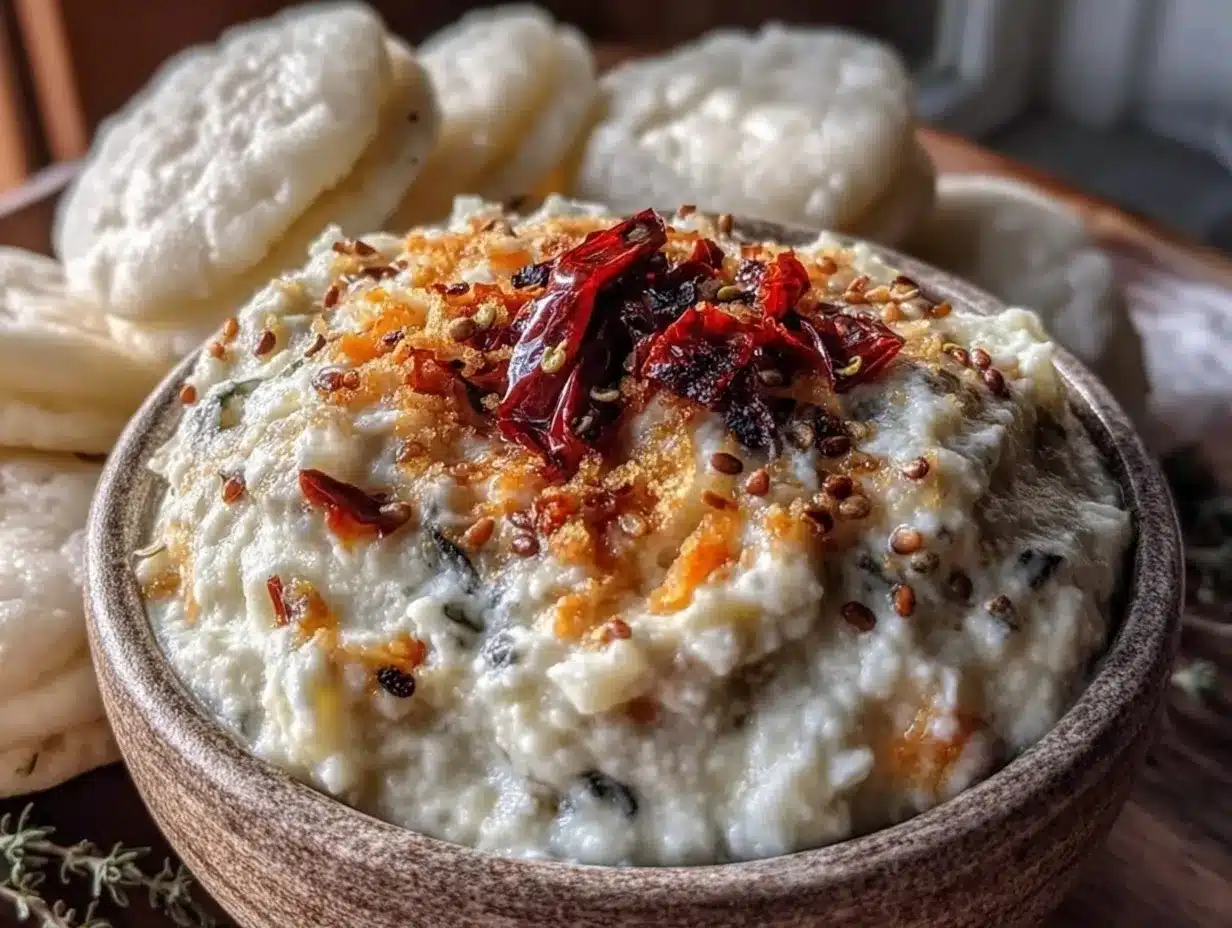
- Prepare the coconut: If using fresh coconut, grate about 1 cup finely. Frozen grated coconut should be thawed completely. This will form the base of your chutney.
- Gather the other ingredients: Measure out 1-2 green chilies (seeded if you prefer less heat), 2 tablespoons roasted chana dal, 1 teaspoon ginger, and 1 teaspoon tamarind paste or juice of half a lime. Keep salt handy.
- Blend the chutney: In your blender, combine the grated coconut, green chilies, roasted chana dal, ginger, tamarind paste, and salt. Add about 1/4 cup (60 ml) of water to start. Blend until smooth but still slightly textured—you want it creamy, not watery.
- Adjust consistency: If the chutney is too thick, add a tablespoon of water at a time and pulse to mix. It should be thick enough to coat but still easy to dip into.
- Prepare the tempering: Heat 1 tablespoon of oil in a small pan over medium heat. Once hot, add 1 teaspoon mustard seeds. When they start popping, add 8-10 fresh curry leaves, 1 dried red chili, and a pinch of asafoetida. Stir quickly to prevent burning and remove from heat as soon as the curry leaves crisp up (about 30 seconds).
- Combine and serve: Pour the tempering over the blended chutney and gently mix. Taste and adjust salt or tamarind if needed. Serve immediately with hot idlis or crispy dosas.
Note: The popping mustard seeds and aroma of curry leaves are signs your tempering is just right. If the seeds burn, the tempering will taste bitter, so keep a close eye and use medium heat. Also, make the chutney fresh if possible; it tastes best on the day you prepare it.
Cooking Tips & Techniques
Making this easy South Indian coconut chutney is pretty forgiving, but a few insider tips make a big difference:
- Roast the chana dal: Roasting the chana dal until golden brown adds nuttiness and prevents the chutney from tasting raw or starchy.
- Control the spice: If you’re new to green chilies, start with one and remove seeds to keep the heat mild. You can always add more later.
- Tempering timing: Don’t walk away during tempering—the mustard seeds pop quickly, and burnt spices can ruin the flavor. A quick 30-second tempering is perfect.
- Fresh curry leaves: These are key to authentic flavor. If you can’t find fresh ones, dried curry leaves can work but won’t be as vibrant.
- Texture matters: Blend just until combined; over-blending can make the chutney watery. It’s okay if it has a little texture—that’s part of the charm.
One thing I learned the hard way is to avoid skipping the tempering. It’s a small step but transforms the chutney from bland to aromatic and flavorful. Also, if you’re making chutney ahead, keep the tempering separate until serving to retain its crispness.
Variations & Adaptations
This easy South Indian coconut chutney is wonderfully adaptable. Here are a few ways to make it your own:
- Vegan and dairy-free: This recipe is naturally vegan, but you can add a spoonful of coconut yogurt instead of tamarind for a creamy tang, perfect if you want a probiotic boost.
- Spicy version: Add a small piece of dried red chili into the blender for extra heat along with green chilies.
- Nutty twist: Substitute roasted chana dal with roasted peanuts or cashews for a richer, nuttier flavor.
- Herb infusion: Toss in a handful of fresh coriander or mint leaves while blending for a fresh herbal note.
- South vs North: Some prefer adding a little ginger and garlic together for a more pungent chutney, which works great if you like bold flavors.
I’ve also tried this chutney with different batches of idli batter, and it pairs wonderfully with my crispy sheet pan honey mustard chicken when I want a fusion twist for dinner. It’s surprising how versatile this chutney is—not just for breakfast but as a dip or side for various dishes.
Serving & Storage Suggestions
This chutney shines best fresh, served cool or at room temperature. It pairs beautifully with soft, fluffy idlis and crispy dosas, creating a harmony of textures and flavors that’s comforting and satisfying.
- Serving tip: Spoon it into a small bowl alongside your idli or dosa plate. For an extra touch, drizzle a little melted ghee on top.
- Complementary dishes: Try serving it with cheesy taco pasta for a fusion brunch or alongside simple steamed rice and sambar for a classic South Indian meal.
- Storage: Store leftover chutney in an airtight container in the refrigerator for up to 2 days. The flavors deepen slightly but the texture may thicken.
- Reheating: It’s best enjoyed cold, but if needed, warm it gently in a microwave, then add fresh tempering to brighten it up.
- Flavor development: Over time, the chutney may develop a tangier profile—perfect if you like a bit more zing.
Nutritional Information & Benefits
This easy South Indian coconut chutney is not only delicious but also packed with nutrients. Fresh coconut is a good source of healthy fats and fiber, which help keep you full and satisfied. The green chilies add a boost of vitamin C and antioxidants.
The tempering spices like mustard seeds and curry leaves are known for their digestive benefits—helping balance the meal and soothe the stomach. Since this chutney uses simple, whole ingredients without added sugars or preservatives, it fits well into gluten-free and vegan diets.
One serving (about 2 tablespoons) roughly contains:
| Calories | 70-80 kcal |
|---|---|
| Fat | 6-7 g (mostly healthy fats) |
| Carbohydrates | 3-4 g |
| Protein | 1 g |
It’s a small calorie addition that packs a flavor punch and supports a balanced breakfast.
Conclusion
This easy South Indian coconut chutney has become my quiet kitchen companion—the kind of recipe that’s approachable, forgiving, and honestly, just plain tasty. Whether you’re dipping idlis or drizzling it over crispy dosas, it adds that perfect touch of South Indian charm without fuss or fancy ingredients.
Feel free to tweak the spice levels, swap ingredients, or try different temperings to make it truly yours. It’s a recipe that invites experimentation and rewards with consistent comfort. Honestly, I’ve never met a guest who didn’t ask for the recipe after tasting this chutney!
So next time you’re craving a simple yet authentic side, give this chutney a whirl—you might find yourself making it over and over. And hey, if you try it, drop a comment or share your twist. I love hearing how this humble chutney finds a place in kitchens everywhere.
FAQs
Can I use frozen coconut for this chutney?
Yes, frozen unsweetened grated coconut works well if fresh isn’t available. Just thaw it completely before blending.
How long does this chutney stay fresh?
Store it in an airtight container in the fridge for up to 2 days. For best flavor, make it fresh when possible.
Can I make this chutney without tamarind?
Absolutely! You can substitute tamarind paste with fresh lime juice or skip it for a milder taste.
Is this chutney suitable for kids?
Yes, it’s mild and flavorful. You can reduce or omit the green chilies to make it even more kid-friendly.
What can I use if I don’t have roasted chana dal?
Roasted peanuts or cashews can be a tasty alternative, adding a different kind of nuttiness and richness.
Pin This Recipe!
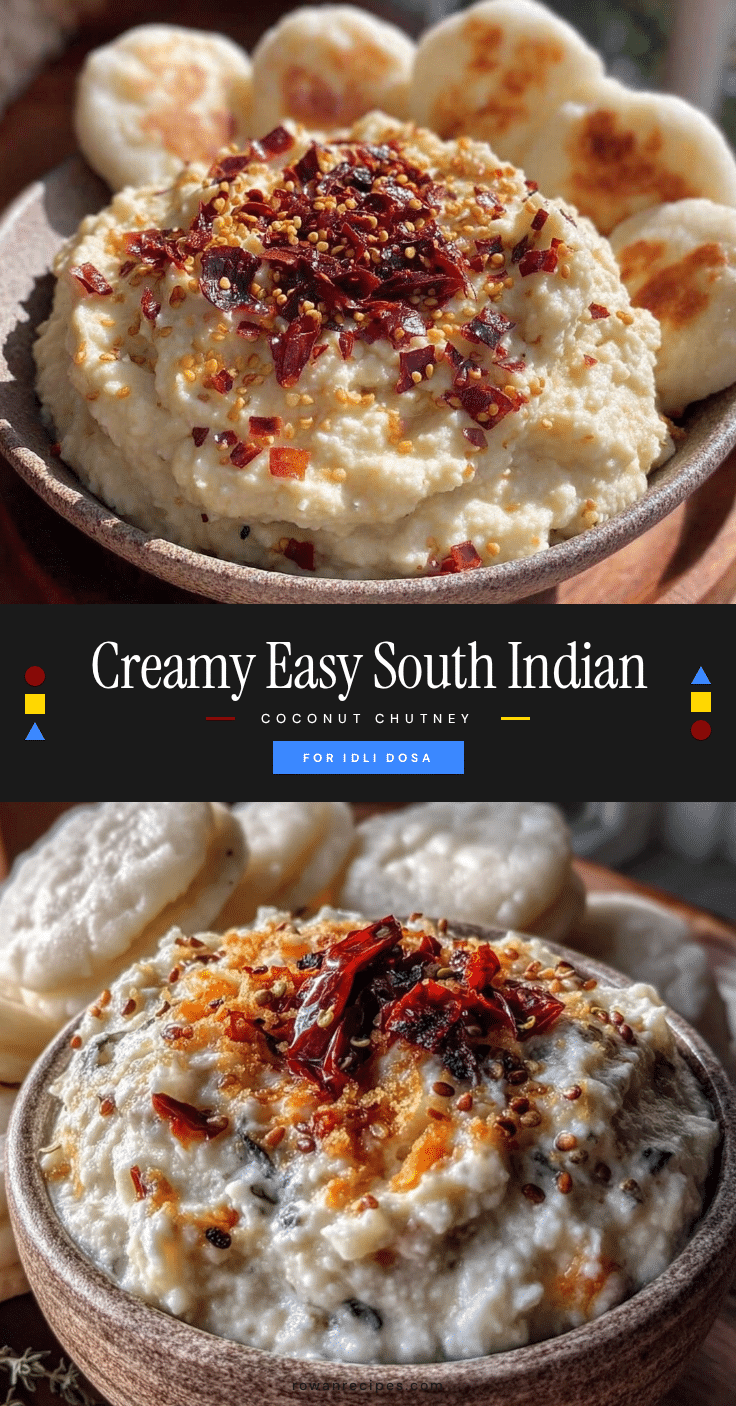
Easy South Indian Coconut Chutney Recipe for Idli and Dosa Beginners
A quick and easy South Indian coconut chutney that pairs perfectly with idli and dosa, featuring fresh coconut, mild spices, and a flavorful tempering.
- Prep Time: 10 minutes
- Cook Time: 5 minutes
- Total Time: 15 minutes
- Yield: 6 servings 1x
- Category: Side Dish
- Cuisine: South Indian
Ingredients
- 1 cup fresh grated coconut (or frozen unsweetened grated coconut, thawed)
- 1–2 green chilies (adjust to taste)
- 2 tablespoons roasted chana dal
- 1 teaspoon finely chopped ginger
- 1 teaspoon tamarind paste or juice of half a lime
- Salt to taste
- Water (about 1/4 cup to adjust consistency)
- 1 tablespoon oil (coconut or vegetable oil) for tempering
- 1 teaspoon mustard seeds
- 8–10 fresh curry leaves
- 1 dried red chili (optional)
- A pinch of asafoetida (hing)
Instructions
- If using fresh coconut, grate about 1 cup finely. Thaw frozen grated coconut completely if using.
- Measure out green chilies (seeded if preferred), roasted chana dal, ginger, tamarind paste or lime juice, and salt.
- In a blender, combine grated coconut, green chilies, roasted chana dal, ginger, tamarind paste, and salt. Add about 1/4 cup (60 ml) water and blend until smooth but slightly textured.
- Adjust consistency by adding water a tablespoon at a time if too thick, blending to mix.
- Heat oil in a small pan over medium heat. Add mustard seeds and wait until they start popping.
- Add curry leaves, dried red chili, and asafoetida. Stir quickly and remove from heat as soon as curry leaves crisp up (about 30 seconds).
- Pour the tempering over the blended chutney and mix gently.
- Taste and adjust salt or tamarind if needed. Serve immediately with hot idlis or crispy dosas.
Notes
Roast chana dal until golden brown for nuttiness. Control spice by adjusting green chilies and removing seeds if desired. Do not burn mustard seeds during tempering. Make chutney fresh for best taste and keep tempering separate if storing.
Nutrition
- Serving Size: About 2 tablespoons
- Calories: 75
- Sugar: 1
- Sodium: 150
- Fat: 6.5
- Saturated Fat: 5
- Carbohydrates: 3.5
- Fiber: 1.5
- Protein: 1
Keywords: coconut chutney, South Indian chutney, idli chutney, dosa chutney, easy chutney recipe, vegan chutney, gluten-free chutney