“Wait, is that saffron?” my roommate asked, sniffing the warm kitchen air with curiosity. I had just pulled my first attempt at Persian Jeweled Rice, or Morasa Polo, from the stove, and honestly, I wasn’t sure if I’d nailed it. Growing up, Persian dishes were always this magical, intricate thing — all those colorful nuts and jewels of fruit nestled in perfectly fluffy rice. It seemed like a special-occasion kind of meal, not something a weekday cook like me could pull off without stress. But that evening, after a long day where I just wanted something comforting and a little fancy without the fuss, I threw together this easy Persian Jeweled Rice Morasa Polo with saffron aroma. I half-expected it to flop or end up a mushy mess.
Instead, the aroma filled the whole apartment, and the bright orange strands of saffron mingled with the glistening barberries and pistachios looked like a little treasure chest on my plate. The best part? It came together surprisingly fast and didn’t require a million complicated steps or hard-to-find ingredients. That night, my skepticism turned into quiet pride—this wasn’t just a pretty dish; it was a recipe that felt special but manageable. Since then, I’ve made it a handful of times, each batch better than the last, and it’s become my go-to when I want to impress with minimal effort.
There’s something about the subtle saffron aroma and the jewel-like bursts of sweetness and crunch that stuck with me — a little reminder that cooking can be both joyful and unpretentious. If you’ve ever felt intimidated by Persian cooking or just want a dish that feels like a celebration without hours in the kitchen, this recipe is quietly ready to become your new favorite.
Why You’ll Love This Recipe
After testing this recipe multiple times and tweaking it for ease and flavor, I can say this Morasa Polo stands out for a bunch of reasons. It’s not just beautiful; it’s friendly for cooks who want authentic taste without the hassle.
- Quick & Easy: From start to finish, you’re looking at about an hour, most of which is hands-off simmering or toasting. Perfect for busy nights when you want a special meal without chaos.
- Simple Ingredients: Most of what you need is probably already in your pantry: basmati rice, dried fruits, nuts, and saffron (which, yes, you can find reasonably priced now!). No need for exotic shopping trips.
- Perfect for Entertaining: Whether it’s a casual dinner party or a festive celebration, this jeweled rice brings color and an inviting aroma to the table that guests always notice.
- Crowd-Pleaser: I’ve served this alongside everything from tender slow cooker French dip sandwiches to easy crispy sheet pan chicken, and it never fails to get compliments—even from folks who thought they weren’t “rice people.”
- Unbelievably Delicious: The balance of sweet, tart barberries, crunchy pistachios, and fragrant saffron makes this more than just plain rice—it’s a flavor journey in every bite.
What makes this version different? Honestly, it’s the saffron-infused water that you soak the rice in, giving it a subtle, luxurious aroma that’s not overpowering. Plus, the gentle toasting of nuts and fruits right before folding them in keeps everything crisp and bright. This isn’t just a side dish—it’s a centerpiece that feels like a warm hug from Persian kitchens far away.
What Ingredients You Will Need
This recipe uses simple, wholesome ingredients to deliver bold flavor and satisfying texture without the fuss. Most are pantry staples, and if you can’t find a few, I’ve included substitutions to keep you covered.
- Basmati rice: 2 cups (400 g), rinsed and soaked — long grain with a fluffy texture is key here.
- Saffron threads: 1/2 teaspoon, steeped in 2 tablespoons hot water (adds that signature aroma and golden hue).
- Butter or ghee: 3 tablespoons, for richness and toasting the nuts.
- Barberries (zereshk): 1/4 cup dried (tart and sweet, but if you can’t find barberries, dried cranberries lightly soaked work as a mild substitute).
- Slivered almonds: 1/4 cup, toasted for crunch and nuttiness.
- Pistachios: 1/4 cup, shelled and roughly chopped (adds vibrant color and texture).
- Orange peel: 1 tablespoon finely grated (fresh zest preferred for brightness).
- Sugar: 1 tablespoon (balances the tartness of the barberries).
- Salt: 1 teaspoon, to season the rice.
- Water: 4 cups (950 ml), for cooking the rice.
Ingredient tips: I recommend using a trusted brand of basmati rice like Tilda for best texture. For saffron, Iranian saffron works great but any high-quality threads will do; just avoid powder as it lacks aroma. If you’re aiming for gluten-free or vegan, this recipe fits right in as-is.
Equipment Needed
- Large pot with a tight-fitting lid – ideally non-stick or heavy-bottomed to prevent sticking and burning.
- Small bowl or cup – for steeping saffron threads in hot water.
- Fine mesh strainer – to rinse and drain the rice thoroughly.
- Frying pan or skillet – for toasting nuts and drying barberries gently.
- Wooden spoon or spatula – for folding ingredients without breaking the rice grains.
- Measuring cups and spoons – for precise ingredient amounts.
If you don’t have a heavy-bottomed pot, just be sure to keep the heat low and watch carefully during steaming. I’ve used a basic stainless steel pot with good results, but a non-stick pan makes cleanup easier. When toasting nuts, keep an eye on them—nuts can go from toasted to burnt in seconds. If you don’t have barberries, soaking dried cranberries in warm water before adding helps mimic the texture.
Preparation Method
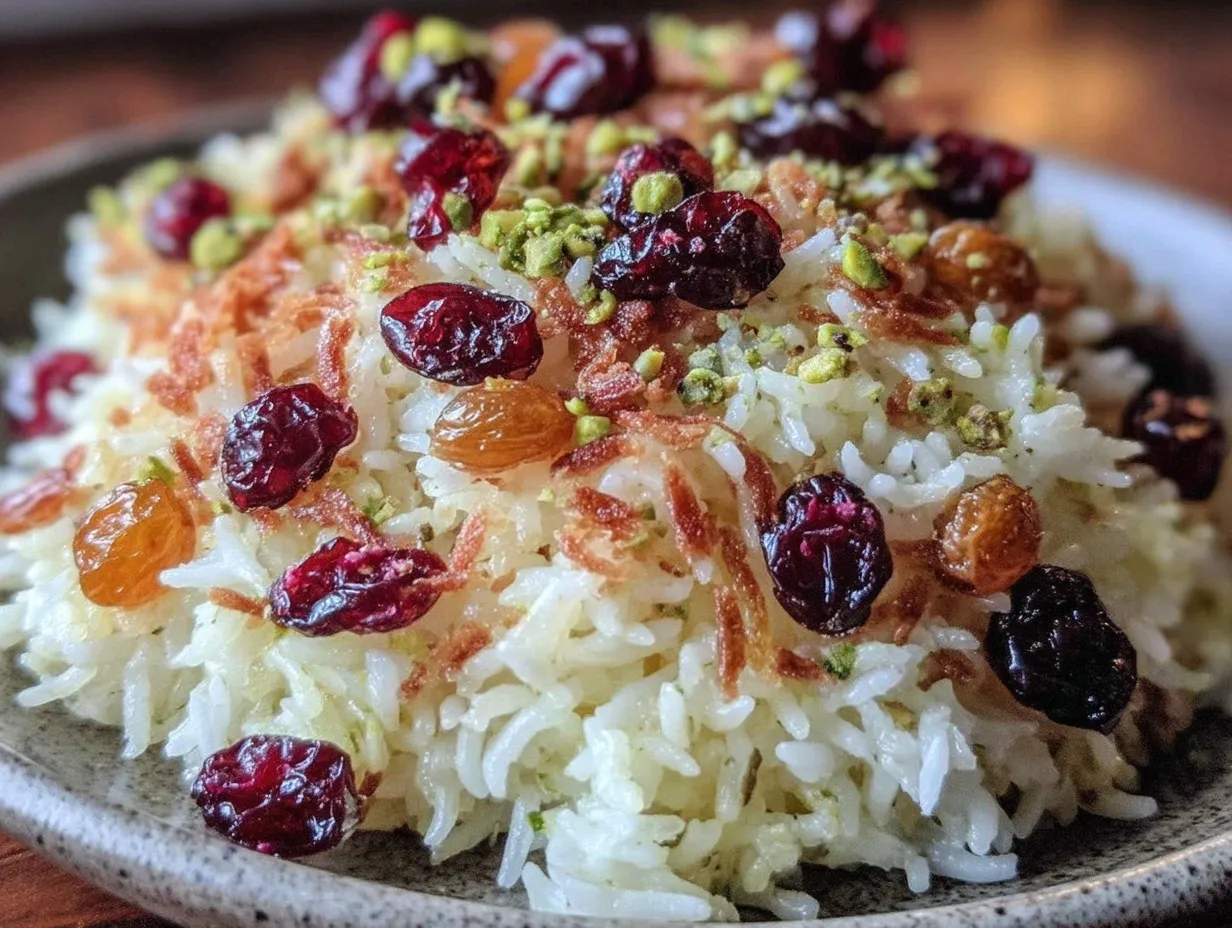
- Rinse and soak the rice: Place the basmati rice in a fine mesh strainer and rinse under cold water until the water runs clear. Transfer to a bowl and cover with cold water. Soak for at least 30 minutes to help elongate the grains and remove excess starch.
- Steep the saffron: While the rice soaks, crush the saffron threads lightly with your fingers and steep in 2 tablespoons of hot water. Set aside for about 10 minutes to release its color and aroma.
- Toast the nuts and barberries: Heat 1 tablespoon of butter or ghee in a skillet over medium-low heat. Add the slivered almonds and pistachios, stirring frequently until fragrant and golden (about 3-4 minutes). Remove nuts from pan. In the same pan, gently toast the barberries for 1-2 minutes, stirring carefully to avoid burning. Add a teaspoon of sugar to the barberries to balance their tartness, then remove from heat.
- Cook the rice: Drain the soaked rice and transfer to a large pot with 4 cups (950 ml) of water and 1 teaspoon salt. Bring to a boil over high heat, then reduce heat to medium-low and simmer uncovered until the rice is slightly tender but still firm in the center (about 6-8 minutes). Drain the rice in a colander and rinse briefly with hot water to remove excess starch.
- Layer and steam: Return half of the rice to the pot. Drizzle half of the saffron water and 1 tablespoon of butter over the rice. Gently fold in half of the toasted nuts, barberries, and orange zest. Add the remaining rice on top and repeat the drizzling and folding with the rest of the saffron water, butter, nuts, barberries, and zest. Cover the pot with a clean kitchen towel and place the lid on tightly.
- Steam the rice: Cook over very low heat for 30-40 minutes. This slow steam allows the flavors to meld and the rice to finish cooking gently. You can check occasionally to make sure it’s not sticking or burning—adding a little water around the edges if needed.
- Fluff and serve: Remove the pot from heat and let it rest for 5 minutes. Then, carefully fluff the rice with a fork, mixing the jeweled nuts and fruits evenly throughout. The result should be fluffy, aromatic rice with beautiful pops of color and texture.
Pro tip: If you want that signature golden crust (tahdig), reserve a little more butter and let the bottom layer crisp up during steaming. Just watch closely to avoid burning.
Cooking Tips & Techniques
Getting Persian Jeweled Rice just right can feel tricky, but a few tricks make all the difference. First, rinsing and soaking your rice is a must. It keeps the grains from sticking and helps them cook evenly. I remember my first batch was a sticky mess because I skipped the soak—lesson learned!
Steeping saffron properly is another key step. Crushing the threads before steeping releases more color and aroma. Don’t rush this; even 10 minutes makes a big difference in flavor and hue. Also, avoid pouring the saffron water directly into boiling rice—it’s better layered during steaming to preserve its delicate aroma.
When toasting nuts and barberries, keep the heat low and stir often. Barberries burn quickly and get bitter, so patience here pays off. Adding a little sugar to the barberries softens their tart edge and balances the dish beautifully.
Finally, don’t rush the steaming step. It’s tempting to peek or stir often, but patience yields fluffy rice with that perfect texture and infused aroma.
If you want to pair this with proteins, this jeweled rice works wonderfully beside dishes like the crispy sheet pan honey mustard chicken or the tender slow cooker French dip sandwiches. Both balance the rich, fragrant rice with savory flavors.
Variations & Adaptations
This recipe is flexible and lends itself well to personal tweaks. Here are some ideas to make it your own:
- Vegan version: Swap butter for coconut oil or olive oil and skip honey if you add it elsewhere. The nuts and fruits still bring richness.
- Seasonal fruits: In place of barberries, try dried cherries or cranberries in winter, or fresh pomegranate seeds in fall for a juicy burst.
- Nut swaps: Use walnuts or cashews if you prefer or have allergies to almonds or pistachios.
- Spice it up: Add a pinch of cinnamon or cardamom to the saffron water for a warmer spice note.
- Cooking method: For a quicker version, cook the rice fully in a rice cooker, then stir in the toasted nuts and fruits just before serving.
One of my favorite variations is adding a handful of golden raisins soaked in warm water for extra sweetness and chew. It’s a little twist that makes the dish feel even more jewel-like and festive.
Serving & Storage Suggestions
Serve this Persian Jeweled Rice Morasa Polo warm, ideally right after fluffing so the textures stay fresh and the saffron aroma is most vibrant. It pairs beautifully with grilled meats, roasted vegetables, or even a simple yogurt cucumber salad to balance the sweetness.
If you’re storing leftovers, place the rice in an airtight container and refrigerate for up to 3 days. Reheat gently on the stovetop with a splash of water to loosen the grains, or microwave with a damp paper towel covering to retain moisture.
Freezing is possible but can affect texture slightly; if you do freeze, thaw overnight in the fridge and reheat slowly.
Interestingly, the flavors deepen overnight as the nuts and fruits mingle with the rice, making the next-day leftovers a treat in their own right—sometimes even better than fresh!
Nutritional Information & Benefits
This jeweled rice recipe is moderately rich thanks to the nuts and butter, but it balances nutrition with wholesome ingredients. A serving provides:
- Approximately 300-350 calories, depending on portion size and butter amount
- Good sources of healthy fats from pistachios and almonds
- Carbohydrates primarily from basmati rice, a low-glycemic option that digests slowly
- Antioxidants and vitamins from saffron and barberries, which are packed with vitamin C and anti-inflammatory compounds
If you’re watching carbs, the recipe can be adjusted by reducing rice and adding more nuts and fruit for texture. It’s naturally gluten-free and dairy-free if you use oil instead of butter. For those mindful of allergens, swapping nuts for seeds (like pumpkin or sunflower) still keeps the crunch alive.
Personally, I appreciate how this dish brings together comfort and mindful eating without sacrificing flavor or tradition.
Conclusion
This Easy Persian Jeweled Rice Morasa Polo with saffron aroma is proof that you can create something stunning and soulful without complicated steps or exotic ingredients. It’s the kind of recipe that invites you to slow down, savor the colors and smells, and feel a little pride in your kitchen craft. Feel free to customize it to your tastes, whether that means swapping nuts, adding spices, or pairing it with your favorite protein.
Every time I make it, it reminds me that cooking is about joy as much as technique—about sharing something beautiful and delicious without pressure. If you try it, I’d love to hear how you make it your own!
And if you’re looking for other simple meals that complement this rice perfectly, you might find inspiration in my creamy garlic butter Tuscan shrimp pasta or the easy one-pot lemon chicken and rice recipes—both bring bold flavors with minimal fuss.
FAQs
What can I substitute if I don’t have barberries?
You can use dried cranberries or cherries lightly soaked in warm water to mimic the tart-sweet flavor and texture of barberries.
How do I know when the rice is done cooking?
After boiling, the rice should be tender but still firm in the center (al dente). It will finish cooking during the steaming step, so avoid overcooking in the first boil.
Can I make this recipe ahead of time?
Yes! You can prepare the rice and toppings in advance and steam it just before serving to keep it fresh and fluffy.
Is saffron necessary, or can I skip it?
Saffron adds the signature aroma and golden color, but if unavailable, you can omit it or use a pinch of turmeric for color, though the flavor will differ.
How do I get the crispy tahdig on the bottom?
Use a generous amount of butter or oil on the bottom of the pot and steam the rice over very low heat without stirring. The bottom layer will crisp up in 30-40 minutes—just watch carefully to avoid burning.
Pin This Recipe!
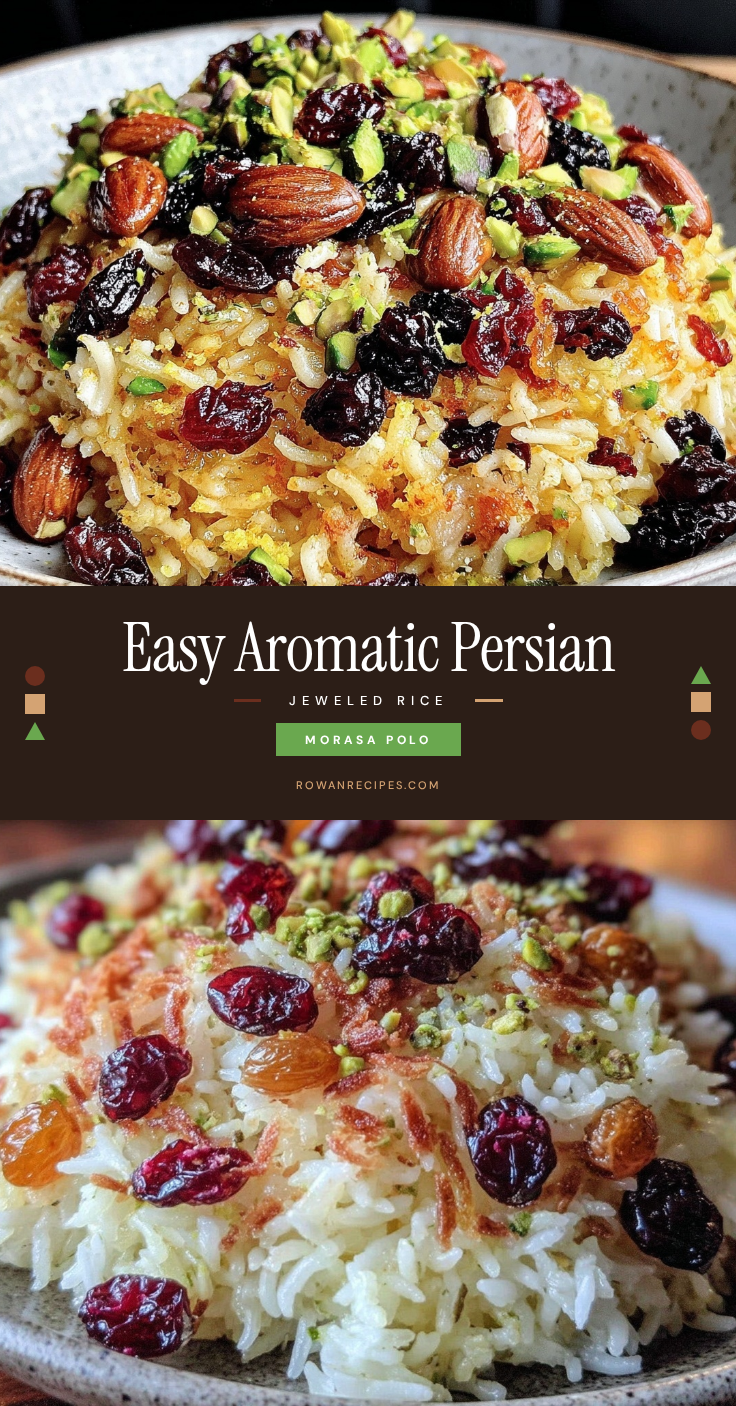
Easy Persian Jeweled Rice Morasa Polo Recipe with Saffron Aroma Perfect for Beginners
A quick and easy Persian Jeweled Rice (Morasa Polo) recipe featuring fragrant saffron, tart barberries, and crunchy nuts, perfect for a special yet manageable meal.
- Prep Time: 40 minutes
- Cook Time: 40 minutes
- Total Time: 1 hour 20 minutes
- Yield: 6 servings 1x
- Category: Main Course
- Cuisine: Persian
Ingredients
- 2 cups basmati rice (400 g), rinsed and soaked
- 1/2 teaspoon saffron threads, steeped in 2 tablespoons hot water
- 3 tablespoons butter or ghee
- 1/4 cup dried barberries (zereshk) or dried cranberries as substitute
- 1/4 cup slivered almonds, toasted
- 1/4 cup shelled and roughly chopped pistachios
- 1 tablespoon finely grated orange peel
- 1 tablespoon sugar
- 1 teaspoon salt
- 4 cups water (950 ml)
Instructions
- Rinse and soak the basmati rice in cold water for at least 30 minutes to elongate grains and remove excess starch.
- Crush saffron threads lightly and steep in 2 tablespoons hot water for about 10 minutes to release color and aroma.
- Heat 1 tablespoon butter or ghee in a skillet over medium-low heat. Toast slivered almonds and pistachios until fragrant and golden, about 3-4 minutes. Remove nuts from pan.
- In the same pan, gently toast barberries for 1-2 minutes, stirring carefully to avoid burning. Add 1 teaspoon sugar to balance tartness, then remove from heat.
- Drain soaked rice and transfer to a large pot with 4 cups water and 1 teaspoon salt. Bring to a boil over high heat, then reduce to medium-low and simmer uncovered until rice is slightly tender but firm in center, about 6-8 minutes. Drain rice and rinse briefly with hot water.
- Return half of the rice to the pot. Drizzle half of the saffron water and 1 tablespoon butter over it. Gently fold in half of the toasted nuts, barberries, and orange zest.
- Add remaining rice on top and repeat drizzling and folding with remaining saffron water, butter, nuts, barberries, and zest.
- Cover pot with a clean kitchen towel and lid tightly. Steam over very low heat for 30-40 minutes, checking occasionally to prevent sticking or burning.
- Remove pot from heat and let rest for 5 minutes. Fluff rice carefully with a fork to mix nuts and fruits evenly before serving.
Notes
Use a trusted brand of basmati rice for best texture. Avoid saffron powder as it lacks aroma. Keep heat low when toasting nuts and barberries to prevent burning. For a crispy tahdig crust, add extra butter and steam carefully without stirring.
Nutrition
- Serving Size: 1 cup cooked rice
- Calories: 325
- Sugar: 7
- Sodium: 400
- Fat: 15
- Saturated Fat: 7
- Carbohydrates: 42
- Fiber: 3
- Protein: 7
Keywords: Persian rice, Morasa Polo, Jeweled rice, saffron rice, barberries, basmati rice, Persian cuisine, easy Persian recipe, saffron aroma, nutty rice