“I don’t know why I waited so long to get serious about seasoning my cast iron skillet,” I confessed to my friend over the phone one evening. The truth is, the skillet sat neglected for months, a stubborn black pan that I wasn’t sure how to handle properly. Every time I tried cooking with it, food stuck, and cleanup felt like a chore. Then one rainy Saturday, with nothing but time and a curious spirit, I decided to give it one more shot. After a few rounds of trial and error, I finally nailed the easy perfect cast iron skillet seasoning guide that changed everything in my kitchen.
There’s something quietly satisfying about the scent of warming oil, the gentle hiss as it seeps into the pan’s surface, and that first effortless flip of a perfectly cooked egg or seared steak. Seasoning cast iron isn’t just a task; it’s a ritual that sets you up for cooking success, no matter how busy your week gets. And honestly? Once you get it right, you’ll find yourself reaching for that skillet more often than any other pan.
That slow transformation from a crusty, sticky pan to a smooth, non-stick workhorse is what made me stick with this process. The story of how the seasoning stuck—and stayed—reminded me that sometimes patience and the right technique pay off in a big way. By the end of this guide, you’ll understand why this ritual is worth every minute and how it makes your skillet your most trusted kitchen partner.
Why You’ll Love This Recipe
This easy perfect cast iron skillet seasoning guide comes from countless experiments and honest kitchen moments, where I learned what works and what just wastes your time and oil. It’s simple, straightforward, and designed to fit your busy life while giving you professional results.
- Quick & Easy: The whole process takes just a couple of hours, mostly hands-off, perfect for a weekend afternoon or a slow evening.
- Simple Ingredients: You’ll only need basic kitchen staples like vegetable oil or flaxseed oil—no fancy products required.
- Perfect for Any Skill Level: Whether you’re a cast iron newbie or a seasoned pro, this guide breaks down every step clearly.
- Long-Lasting Results: Follow these steps and your skillet will develop a durable, non-stick surface that improves with use.
- Cost-Effective: No need to buy expensive cookware—proper seasoning can revive even the most neglected pans.
What sets this guide apart is the focus on patience and technique instead of shortcuts. For example, I swear by warming the pan gradually and using thin, even coats of oil, which helps build layers of seasoning like a pro chef would do. This isn’t just about making a pan non-stick; it’s about creating that deep, dark patina that feels like your skillet has its own personality.
Plus, this method pairs perfectly with recipes where a well-seasoned skillet shines, like the crispy sheet pan honey mustard chicken or the creamy garlic butter Tuscan shrimp pasta. Once your skillet is seasoned, cooking these recipes becomes even more rewarding.
What Ingredients You Will Need
This recipe uses simple, wholesome ingredients to build up that essential seasoning layer on your cast iron skillet. Most are kitchen staples, so no last-minute store runs needed.
- Cast Iron Skillet: The star of the show. Any size works, but a 10-12 inch pan is ideal for beginners.
- Oil for Seasoning: Choose a high-smoke point oil for best results:
– Flaxseed oil (my personal favorite for a hard, durable coating)
– Vegetable oil (widely available and budget-friendly)
– Canola oil (good alternative if you prefer a neutral flavor)
– Grapeseed oil (another solid option with a high smoke point) - Soap and Water: For initial cleaning if your skillet is new or rusty.
- Coarse Salt: Optional, for scrubbing during cleaning (helps remove stuck-on bits without damaging the surface).
- Paper Towels or Clean Cloth: For wiping excess oil and drying the skillet.
When selecting oil, I usually go with Bob’s Red Mill flaxseed oil because it polymerizes nicely to create a rock-hard surface. But honestly, if that’s not in your pantry, vegetable oil works just fine. Just avoid olive oil for seasoning—it burns at too low a temperature and can leave a sticky residue.
Equipment Needed
Seasoning cast iron is straightforward, and the tools you need are mostly what you already have in your kitchen.
- Oven: A conventional or convection oven that can reach at least 450°F (232°C).
- Heat-Resistant Gloves or Oven Mitts: To handle the hot skillet safely.
- Aluminum Foil or Baking Sheet: Placed under the skillet to catch any drips during seasoning.
- Paper Towels or a Lint-Free Cloth: For applying and wiping off oil.
- Scrubbing Pad: Optional, for initial cleaning if needed.
If you don’t have a full oven available, you can also season your pan on a stovetop over medium heat, but the oven method is more even and reliable. When using the oven, placing a sheet of foil on the rack below prevents oil drips from smoking up your oven—a simple trick I learned the hard way.
Preparation Method
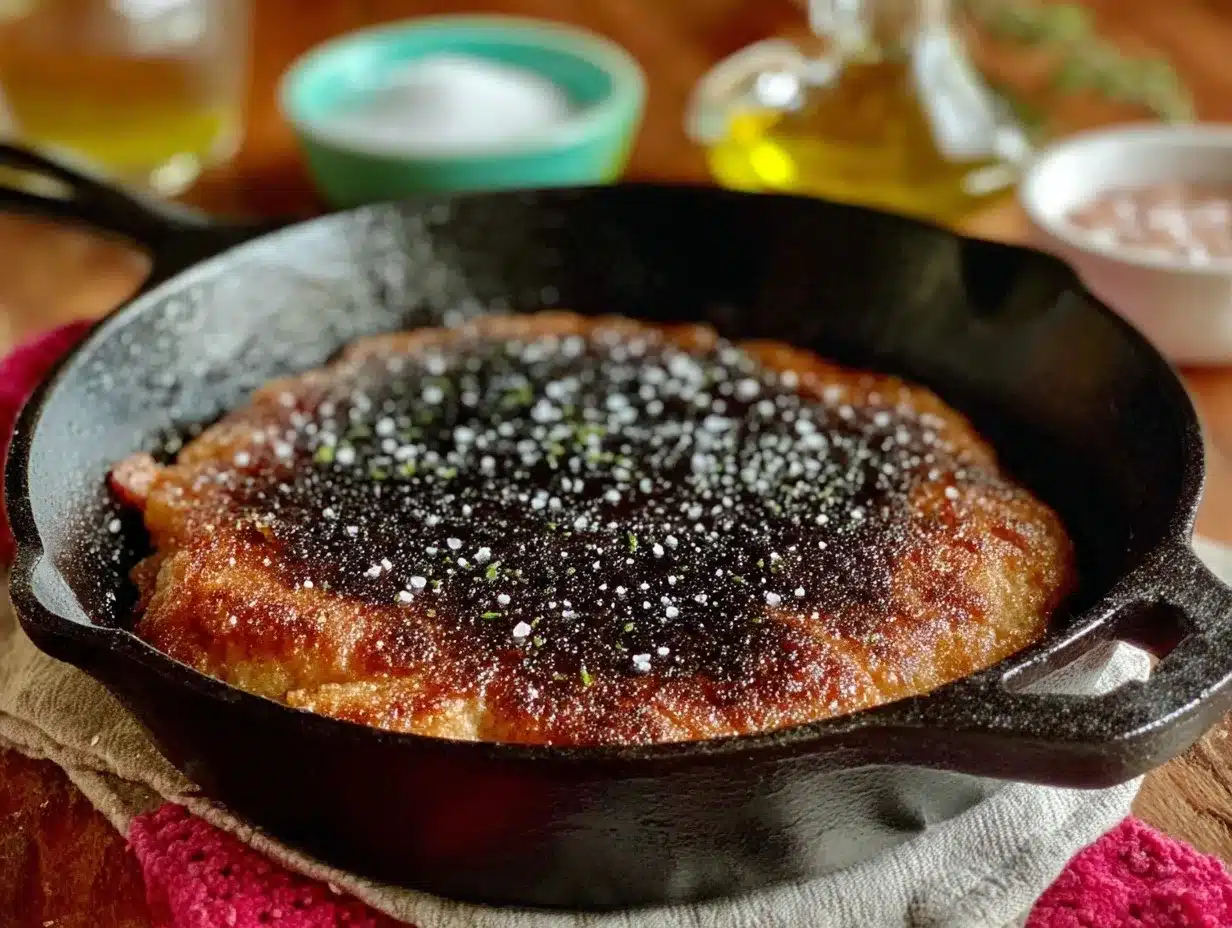
- Clean Your Skillet Thoroughly (10-15 minutes): If it’s new or rusty, scrub the skillet with warm water, a little mild soap, and a coarse salt scrub. Rinse well and dry completely with a towel. Leaving any moisture can cause rust.
- Preheat Your Oven to 450°F (232°C): This temperature is key for oil polymerization, so don’t skip this step or lower the heat.
- Apply a Thin, Even Layer of Oil (5 minutes): Pour about one tablespoon of your chosen oil into the skillet. Use a paper towel or cloth to spread it evenly across all surfaces—inside, outside, and the handle. The coat should be thin enough that it doesn’t drip or pool anywhere; wipe off excess oil thoroughly.
- Place the Skillet Upside Down in the Oven (1 hour): Put a sheet of aluminum foil or a baking sheet on the lower rack to catch drips. Bake the skillet upside down for 60 minutes. This ensures the oil bonds properly and prevents pooling.
- Turn Off the Oven and Let the Skillet Cool Inside (1-2 hours): After baking, switch off the oven but leave the skillet inside until it cools completely. This slow cooling helps set the seasoning.
Repeat this process 3-4 times for the best seasoning build-up. I often do this over a weekend afternoon, letting the pan cool while I prep other dishes, like the creamy cheesy taco pasta. This layering technique is what really transforms the skillet’s surface from dull to beautifully slick.
Watch out for these signs during seasoning: if the oil pools or feels sticky, you’ve applied too much. Wipe more off next round. If the skillet is unevenly black, make sure your oven heats evenly or rotate the pan halfway through baking.
Cooking Tips & Techniques
Seasoning cast iron can feel like a mystery, but these tips from my own kitchen experience will save you time and frustration.
- Use Thin Coats of Oil: Thick layers take forever to cure and often leave a sticky mess. Less is more here.
- Consistency is Key: Rather than seasoning once, build layers over several sessions. Each coat adds protection and smoothness.
- Avoid Soap After Seasoning: Once seasoned, clean your skillet with hot water and a stiff brush. Soap strips the seasoning layers.
- Dry Immediately: Cast iron hates moisture—dry it on the stove over low heat after washing to prevent rust.
- Re-season When Needed: If food starts sticking or the pan looks dull, a quick re-seasoning session can revive it.
- Don’t Skip Cooling in the Oven: The slow cool-down phase helps the oil bond fully to the metal.
I learned the hard way that rushing or skipping steps leads to uneven seasoning and flaking. Also, avoid cooking acidic foods like tomato sauces in a newly seasoned pan until it’s well established to protect the layers.
Variations & Adaptations
Though the basic seasoning method is straightforward, you can tweak it to fit your needs or preferences.
- Oil Choices: Flaxseed oil creates a hard, durable finish but can be pricier. Vegetable or canola oil is budget-friendly and effective for most home cooks.
- Stovetop Seasoning: If you don’t have an oven, heat your pan on low, apply oil, and let it smoke lightly for several minutes. Repeat multiple times, though it’s less consistent than the oven method.
- Quick Seasoning Boost: After cooking oily or fatty foods like bacon or steak, wipe your skillet clean and heat it with a light oil coat to reinforce seasoning naturally.
- For Rusty Pans: Strip old seasoning with steel wool and soap, dry thoroughly, then follow the full seasoning process.
One personal twist I tried was seasoning a cast iron griddle using coconut oil, which gave a subtle tropical aroma to pancakes—a fun variation for weekend breakfasts. If you’re interested in skillet-friendly meals, you might want to try the crispy sheet pan Italian sausage and peppers which cooks beautifully on a well-seasoned cast iron surface.
Serving & Storage Suggestions
Once your skillet is perfectly seasoned, it’s ready to become your daily workhorse. Here’s how to keep it happy and performing well:
- Serving Temperature: Use your skillet hot for searing and frying, but avoid overheating to preserve the seasoning.
- Cleaning: Clean after use with hot water and a brush—no soap. For stuck-on bits, scrub with coarse salt and a paper towel.
- Storage: Store your skillet in a dry place. Some cooks lightly oil the surface before storing to prevent rust.
- Reheating: Warm your skillet slowly before cooking to maintain seasoning integrity.
- Flavor Development: The more you cook with your skillet, the better the seasoning gets—think of it as seasoning that ages like fine wine.
Keeping your skillet well-maintained lets you enjoy effortless cooking for dishes like the creamy garlic butter Tuscan shrimp pasta, where a non-stick surface is a game-changer.
Nutritional Information & Benefits
Seasoning your cast iron skillet doesn’t just improve cooking—it can boost your meals nutritionally as well. Cooking in cast iron naturally adds small amounts of iron to your food, which can be beneficial for those with iron deficiencies.
The key ingredients for seasoning—like flaxseed or vegetable oil—are neutral and don’t add calories unless excess oil is left behind. Plus, a well-seasoned skillet requires less cooking fat, helping reduce overall oil consumption.
Cast iron cookware is gluten-free, non-toxic, and durable, making it a healthier and more sustainable choice than some non-stick pans that can release harmful chemicals when overheated.
Just keep in mind, seasoning oils vary in nutritional profiles, but the amounts absorbed into the pan are minimal. The biggest health factor is cooking technique—using moderate heat and avoiding burnt food ensures the best outcomes.
Conclusion
Getting your cast iron skillet seasoned just right might feel a bit like a slow dance—it takes patience, attention, and a few tries. But once you’ve followed this easy perfect cast iron skillet seasoning guide, you’ll have a reliable, non-stick pan that’s ready for all your favorite recipes.
Whether you’re cooking a quick weeknight dinner or impressing guests with a cozy meal, your skillet will be there, performing beautifully with every use. I still remember the relief and satisfaction when my first perfectly seasoned pan flipped a fried egg with zero sticking—that feeling never gets old.
Give yourself permission to experiment and customize your seasoning process. And when you do, I’d love to hear how it goes! Share your seasoning stories or favorite skillet recipes in the comments below.
Here’s to many delicious meals and the trusty skillet that makes them possible.
FAQs
How often should I season my cast iron skillet?
For regular use, seasoning every few months or when you notice food starting to stick is usually enough. If the skillet looks dull or rusty, it’s time for a full seasoning.
Can I use olive oil to season my cast iron pan?
It’s best to avoid olive oil for seasoning because it has a low smoke point and can leave sticky residue. Use flaxseed, vegetable, or canola oil instead.
Is it necessary to use the oven for seasoning?
Oven seasoning is the most reliable method because it provides even heat. You can do stovetop seasoning, but results may vary and often require more repetition.
Can I season a rusty cast iron skillet?
Yes! Remove the rust by scrubbing with steel wool and soap, dry thoroughly, then follow the full seasoning process to restore your pan.
How do I clean a well-seasoned cast iron skillet?
Use hot water and a stiff brush or coarse salt to scrub. Avoid soap and soaking. Dry immediately and lightly oil if storing for long periods.
Pin This Recipe!
Easy Perfect Cast Iron Skillet Seasoning Guide 5 Steps for Best Results

A straightforward guide to seasoning your cast iron skillet for a durable, non-stick surface using simple oils and a patient layering technique.
- Prep Time: 15 minutes
- Cook Time: 1 hour
- Total Time: 2 hours 15 minutes to 3 hours 15 minutes (including cooling and repetitions)
- Yield: 1 seasoned cast iron skillet
- Category: Cookware Maintenance
- Cuisine: N/A
Ingredients
- Cast iron skillet (10-12 inch recommended)
- Flaxseed oil (preferred for hard, durable coating)
- Vegetable oil (budget-friendly alternative)
- Canola oil (neutral flavor alternative)
- Grapeseed oil (high smoke point option)
- Soap and water (for initial cleaning if skillet is new or rusty)
- Coarse salt (optional, for scrubbing during cleaning)
- Paper towels or clean cloth (for wiping excess oil and drying)
Instructions
- Clean your skillet thoroughly with warm water, mild soap, and coarse salt if rusty or new. Rinse well and dry completely (10-15 minutes).
- Preheat your oven to 450°F (232°C).
- Apply a thin, even layer of oil (about 1 tablespoon) to the entire skillet surface, inside, outside, and handle. Wipe off any excess oil so it does not pool (5 minutes).
- Place the skillet upside down on the oven rack with a sheet of aluminum foil or baking sheet underneath to catch drips. Bake for 1 hour.
- Turn off the oven and let the skillet cool inside slowly for 1-2 hours to set the seasoning.
- Repeat the seasoning process 3-4 times for best results.
Notes
Use thin coats of oil to avoid sticky residue. Avoid olive oil due to low smoke point. Let skillet cool slowly in the oven after baking. Repeat seasoning 3-4 times for durable layers. Avoid soap after seasoning; clean with hot water and brush. Dry immediately to prevent rust. Re-season when food starts sticking or pan looks dull.
Nutrition
- Serving Size: N/A
Keywords: cast iron skillet seasoning, how to season cast iron, cast iron maintenance, non-stick skillet, kitchen tips