“Are you sure this will work?” I muttered half to myself, half to my skeptical roommate, as I dumped coconut milk and pandan leaves into the rice cooker. Honestly, I wasn’t expecting much—just wanted something quick and comforting after a day that felt like it packed in every possible little disaster. But then, as the kitchen filled with that rich, sweet aroma of coconut and the faint, grassy hint of pandan, something shifted. It wasn’t just rice; it was like a warm hug in a bowl. That’s when I realized I’d stumbled on the magic of Easy Malaysian Nasi Lemak Coconut Rice with Spicy Sambal.
It’s funny how a simple meal can totally change the mood. The creamy coconut rice paired with that fiery sambal brought a balance that felt like both comfort food and an adventure—all without turning me into a kitchen hostage. This recipe didn’t come from some fancy cookbook or elaborate prep; it came from a late-night craving and a desperate need for something that felt like home, even when I was miles away from Malaysia. And honestly, once you make this, you’ll see why it’s stuck with me ever since.
What’s wild is how easy it is to pull together, even if you think you’re not “really a cook.” The perfect harmony between the fragrant rice and the spicy sambal feels like a little celebration in every bite. It’s not just a recipe; it’s a quiet reminder that sometimes, the best meals are the ones that come together with just a handful of ingredients and a bit of patience. And hey, once you get this down, it’s a breeze to impress friends or switch up dinner vibes when you’re tired of the usual.
Why You’ll Love This Recipe
From the first time I made this Easy Malaysian Nasi Lemak Coconut Rice with Spicy Sambal, I knew it wasn’t your average weeknight dinner. Here’s why it quickly became one of my go-to dishes:
- Quick & Easy: The entire meal comes together in under 45 minutes, perfect for those nights when you want something satisfying without the fuss.
- Simple Ingredients: No need for exotic or hard-to-find items—coconut milk, rice, and pantry staples are all you need, making it super accessible.
- Perfect for Any Occasion: Whether it’s a casual dinner, a weekend brunch, or a small gathering, this recipe fits right in.
- Crowd-Pleaser: I’ve made this for friends who usually shy away from spicy food, and even they come back for seconds (after a little warning about the sambal, of course!).
- Unbelievably Delicious: The creamy texture of the coconut rice combined with the fiery punch of homemade sambal creates a flavor profile that’s both comforting and exciting.
This isn’t just another coconut rice dish. What sets it apart is how the rice absorbs the coconut milk and pandan essence perfectly, keeping each grain fluffy yet fragrant. The sambal is not just spicy heat—it’s got layers of sweetness, tang, and umami from simple ingredients like shallots and dried shrimp (which you can skip if you prefer). Honestly, it’s the kind of meal that makes you pause, close your eyes, and savor the moment.
Plus, if you want to switch things up, pairing this coconut rice with dishes like crispy sheet pan honey mustard chicken or even garlic butter Tuscan shrimp pasta adds a whole new dimension to your meal rotation. It’s versatile and forgiving, which makes it perfect for cooks still figuring out their way around Southeast Asian flavors.
What Ingredients You Will Need
This recipe uses simple, wholesome ingredients to deliver bold flavor and satisfying texture without the fuss. Most are pantry staples, and the fresh ones are easy to find in any grocery store.
- For the Coconut Rice:
- 1 1/2 cups jasmine rice (washed and drained) – I like to use Thai Hom Mali for its fragrance
- 1 1/4 cups coconut milk (full fat for creaminess)
- 1 1/4 cups water (adjust as needed)
- 2 pandan leaves (tied in a knot) – if unavailable, a small piece of lime zest works too
- 1/2 tsp salt
- For the Spicy Sambal:
- 6 dried red chilies (soaked in hot water for 15 minutes)
- 3 fresh red chilies (seeds removed for milder heat)
- 4 shallots, peeled and chopped
- 2 cloves garlic
- 1 tbsp tamarind paste (adds tangy depth)
- 1 tbsp palm sugar or brown sugar
- 2 tbsp vegetable oil
- Salt to taste
- Optional: 1 tsp dried shrimp powder for authentic umami
- Classic Nasi Lemak Sides (Optional but recommended):
- Hard-boiled eggs
- Cucumber slices
- Roasted peanuts
- Fried anchovies (ikan bilis)
For the coconut milk, I usually grab Chaokoh brand—it’s thick and creamy without being overpowering. If you’re avoiding dairy, this recipe is naturally dairy-free and gluten-free, which is a bonus.
Don’t worry if you can’t find pandan leaves; the lime zest trick I mentioned adds a subtle citrus note that’s close enough. And if you want a milder sambal, just reduce the fresh chilies or swap for a milder variety.
Equipment Needed
- Rice cooker or heavy-bottomed pot with a tight-fitting lid (for cooking coconut rice)
- Blender or food processor (to grind the chilies, shallots, and garlic into a smooth paste)
- Small saucepan or frying pan (to cook the sambal)
- Knife and cutting board
- Mixing bowls
- Measuring cups and spoons
If you don’t have a rice cooker, a good-quality pot with a thick base works just fine, but keep an eye on the rice to avoid burning. I’ve tried this recipe both ways, and while the rice cooker makes life easier (hands off!), the stovetop method gives a bit more control over texture.
For the sambal, a blender is a time-saver, but if you want to go old-school, a mortar and pestle works beautifully and adds a rustic touch. Just be ready for a bit of a workout.
Preparation Method
- Prepare the Rice: Rinse 1 1/2 cups of jasmine rice under cold water until the water runs clear to remove excess starch. This helps prevent clumping. Drain well.
- Cook the Rice: Place the washed rice in your rice cooker or pot. Add 1 1/4 cups coconut milk, 1 1/4 cups water, 1/2 teaspoon salt, and the tied pandan leaves. Stir gently to combine. Cook on the regular rice setting or bring to a boil on the stovetop, then reduce heat to low and cover tightly. Cook for about 15-18 minutes or until the liquid is absorbed and rice is tender.
- Rest the Rice: Once cooked, let the rice sit covered for 10 minutes. This step steams the rice to fluffy perfection. Remove pandan leaves before serving.
- Prepare the Sambal Paste: Drain the soaked dried chilies and combine them with fresh red chilies, shallots, and garlic in a blender. Blend until you get a smooth paste. You may need to add a splash of water to help it along.
- Cook the Sambal: Heat 2 tablespoons vegetable oil in a pan over medium heat. Add the chili paste and sauté for 5-7 minutes until fragrant and the oil starts to separate. Stir frequently to avoid burning.
- Add Flavor: Stir in 1 tablespoon tamarind paste, 1 tablespoon palm sugar, and salt to taste. If using, add 1 teaspoon dried shrimp powder now. Cook for another 3-5 minutes, letting the flavors meld into a thick, glossy sauce.
- Prepare the Sides: While the sambal cooks, boil eggs, slice cucumbers, roast peanuts, and fry anchovies if using. These add the classic crunch and freshness everyone loves with nasi lemak.
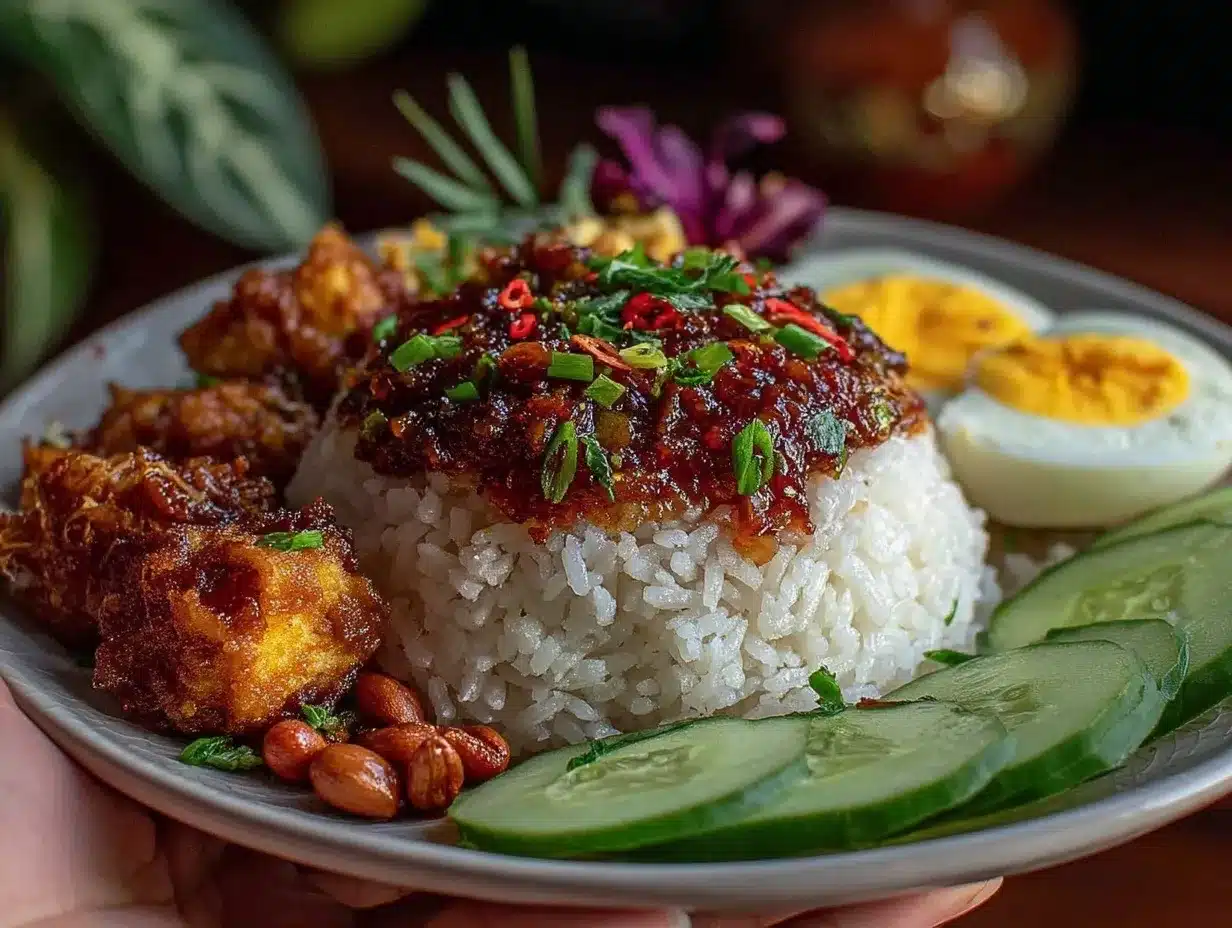
- Assemble: Scoop the fragrant coconut rice onto plates. Spoon over a generous amount of spicy sambal. Add the sides around the rice to create a colorful, inviting spread.
Watch for the rice texture—if it seems too wet, reduce water next time. The sambal should smell rich and spicy, not burnt. If you notice any bitterness, a pinch more sugar balances it out nicely.
Cooking Tips & Techniques
Cooking Easy Malaysian Nasi Lemak Coconut Rice with Spicy Sambal is all about balance and patience. Here are some tips I’ve picked up over multiple tries:
- Rinse the Rice Thoroughly: Don’t skip this. It keeps the rice fluffy and prevents it from sticking together.
- Choose Quality Coconut Milk: Thick, full-fat coconut milk makes a world of difference. It should be rich but not watery.
- Don’t Rush the Sambal: Cooking the chili paste slowly over medium heat brings out a deep, complex flavor. Rushing leads to raw or bitter notes.
- Adjust Chili Levels: Taste as you go with the sambal. If you’re nervous about spice, remove seeds from fresh chilies and start with fewer dried ones.
- Use Pandan Leaves: They add an authentic aroma to the rice, but if unavailable, lime zest or vanilla bean can mimic the subtle fragrance.
- Multitask Wisely: While rice cooks, prepare sambal and sides to save time. A well-timed kitchen workflow makes this meal feel effortless.
- Store Sambal Separately: Keep sambal in a sealed jar in the fridge; it actually tastes better the next day as flavors meld.
I’ve had moments where my sambal turned out too salty or my rice a bit sticky—both fixed with simple tweaks. Heat control is key and trusting your nose helps more than you think.
Variations & Adaptations
One of the best things about this recipe is how easy it is to tweak for different needs or tastes:
- Vegetarian/Vegan: Skip the dried shrimp powder in the sambal and replace with a splash of soy sauce or mushroom powder for umami.
- Low-Spice Version: Use fewer chilies or substitute with milder peppers. Adding a dollop of creamy coconut yogurt on the side cools the heat nicely.
- Seasonal Twist: Swap cucumber slices for pickled mango or add fresh pineapple chunks for a sweet contrast in summer.
- Cooking Method: If you don’t have a rice cooker, try making this as a one-pot dish by cooking rice and coconut milk on the stovetop, stirring occasionally for even cooking.
- Protein Add-On: Add crispy fried chicken or sambal prawns for a heartier meal. It pairs wonderfully with this coconut rice base, similar to the way I’ve combined flavors in dishes like lemon chicken and rice.
Once, I made a batch with roasted eggplant added to the sambal, and the smoky depth was a surprising crowd-pleaser. Feel free to experiment—this recipe is forgiving and fun.
Serving & Storage Suggestions
Serve your nasi lemak warm for the best experience. The coconut rice should be fluffy and fragrant, with the sambal steaming gently beside it.
- Arrange the hard-boiled eggs, cucumber slices, roasted peanuts, and fried anchovies around the rice for a colorful and textural contrast.
- This dish pairs beautifully with a strong black tea or a refreshing iced lime drink to balance the spice.
- Leftovers keep well—store rice and sambal separately in airtight containers in the fridge for up to 3 days.
- To reheat, steam the rice or microwave covered with a damp paper towel to prevent drying. Warm the sambal gently on the stove before serving.
- Flavors deepen after resting overnight, so making it a day ahead is a great option if you want to save time.
For a quick lunch, pack the rice and sambal with some fresh greens, and you’re good to go. This recipe’s versatility is part of why it stuck with me through busy weeks.
Nutritional Information & Benefits
This dish offers a satisfying balance of carbs, fats, and flavor. Here’s a rough breakdown per serving:
| Nutrient | Amount |
|---|---|
| Calories | 350-400 kcal |
| Carbohydrates | 55g |
| Fat | 10g (mostly from coconut milk) |
| Protein | 5g |
| Fiber | 2g |
The coconut milk provides healthy medium-chain triglycerides (MCTs), which some studies suggest may support metabolism. Plus, the chilies in the sambal add capsaicin, which can boost circulation and add antioxidant benefits.
This recipe is naturally gluten-free and can be made vegan by adjusting the sambal as mentioned. If you have a shrimp allergy, simply omit dried shrimp powder without losing much flavor.
Conclusion
There’s something quietly satisfying about making a dish that feels both exotic and comforting without hours of prep. This Easy Malaysian Nasi Lemak Coconut Rice with Spicy Sambal recipe has become a little ritual for me—a way to reset after hectic days and surprise friends with a taste of something different but approachable.
Feel free to tweak the spice level, swap sides, or add your favorite proteins to make it your own. I love how this recipe invites creativity while staying true to its roots.
If you try it out, I’d love to hear how you made it your own or what sides you paired it with. Sharing these little kitchen stories is what keeps the joy alive.
Here’s to many cozy meals and spicy sambal adventures ahead.
FAQs
What type of rice is best for nasi lemak?
Jasmine rice is the traditional choice for nasi lemak due to its fragrant aroma and fluffy texture. Thai Hom Mali jasmine rice is my favorite for this recipe.
Can I make the sambal less spicy?
Absolutely! Remove the seeds from fresh chilies and reduce the number of dried chilies. Starting with fewer chilies and adjusting to taste helps control the heat.
What can I use if I don’t have pandan leaves?
If pandan leaves aren’t available, a small piece of lime zest or a drop of vanilla extract can mimic the subtle aroma and add a nice twist to the coconut rice.
Is this recipe gluten-free?
Yes, this recipe is naturally gluten-free as long as you use gluten-free tamarind paste and check any packaged ingredients for hidden gluten.
Can I prepare parts of this recipe ahead of time?
Definitely. The sambal tastes even better after sitting overnight, and you can cook the coconut rice earlier and reheat it gently before serving.
Pin This Recipe!

Easy Malaysian Nasi Lemak Coconut Rice Recipe with Spicy Sambal Perfect for Beginners

A quick and comforting Malaysian coconut rice dish paired with a spicy sambal, perfect for beginners and packed with authentic flavors.
- Prep Time: 15 minutes
- Cook Time: 30 minutes
- Total Time: 45 minutes
- Yield: 4 servings 1x
- Category: Main Course
- Cuisine: Malaysian
Ingredients
- 1 1/2 cups jasmine rice (washed and drained)
- 1 1/4 cups full-fat coconut milk
- 1 1/4 cups water (adjust as needed)
- 2 pandan leaves (tied in a knot) or a small piece of lime zest
- 1/2 tsp salt
- 6 dried red chilies (soaked in hot water for 15 minutes)
- 3 fresh red chilies (seeds removed for milder heat)
- 4 shallots, peeled and chopped
- 2 cloves garlic
- 1 tbsp tamarind paste
- 1 tbsp palm sugar or brown sugar
- 2 tbsp vegetable oil
- Salt to taste
- Optional: 1 tsp dried shrimp powder
- Optional sides: hard-boiled eggs, cucumber slices, roasted peanuts, fried anchovies (ikan bilis)
Instructions
- Rinse 1 1/2 cups jasmine rice under cold water until the water runs clear. Drain well.
- Place the washed rice in a rice cooker or heavy-bottomed pot. Add 1 1/4 cups coconut milk, 1 1/4 cups water, 1/2 tsp salt, and tied pandan leaves or lime zest. Stir gently to combine.
- Cook on the regular rice setting in the rice cooker or bring to a boil on stovetop, then reduce heat to low and cover tightly. Cook for 15-18 minutes or until liquid is absorbed and rice is tender.
- Let the rice sit covered for 10 minutes to steam. Remove pandan leaves before serving.
- Drain soaked dried chilies and combine with fresh red chilies, shallots, and garlic in a blender. Blend to a smooth paste, adding a splash of water if needed.
- Heat 2 tbsp vegetable oil in a pan over medium heat. Add chili paste and sauté for 5-7 minutes until fragrant and oil separates, stirring frequently.
- Stir in 1 tbsp tamarind paste, 1 tbsp palm sugar, and salt to taste. Add 1 tsp dried shrimp powder if using. Cook for another 3-5 minutes until thick and glossy.
- Prepare optional sides: boil eggs, slice cucumbers, roast peanuts, and fry anchovies.
- Serve coconut rice with a generous spoonful of sambal and arrange sides around the plate.
Notes
Rinse rice thoroughly to keep it fluffy. Use full-fat coconut milk for best creaminess. Cook sambal slowly to avoid bitterness. Adjust chili levels to taste. Pandan leaves add authentic aroma but lime zest or vanilla can substitute. Store sambal separately in fridge; flavors improve overnight.
Nutrition
- Serving Size: 1 serving (approxima
- Calories: 375
- Sugar: 5
- Sodium: 300
- Fat: 10
- Saturated Fat: 8
- Carbohydrates: 55
- Fiber: 2
- Protein: 5
Keywords: Nasi Lemak, Malaysian recipe, coconut rice, spicy sambal, easy dinner, Southeast Asian cuisine, coconut milk rice