“You gotta try this spicy pork,” my friend texted me one chaotic Thursday evening while I was juggling dinner plans and a mountain of laundry. Honestly, I was skeptical—foil packets, Korean flavors, and noodles all in one? But that night, curiosity got the better of me. I whipped up the Easy Korean Spicy Pork and Noodles Foil Packets recipe, mostly because it promised minimal cleanup and quick prep. The kitchen quickly filled with the tangy, spicy aroma of gochujang and garlic, and I found myself savoring every bite, surprised how effortlessly bold and comforting this dish was.
What hooked me wasn’t just the flavor but the simplicity. No standing over the stove for ages, no fussing with multiple pans—just a handful of ingredients wrapped in foil, steaming to perfection. It felt like a cheat meal that was actually good for me, packed with tender pork, perfectly cooked noodles, and that punchy sauce with a subtle sweet heat. Plus, it’s a dish that invites you to pause and appreciate a quiet, satisfying meal even on the busiest nights.
Since then, I’ve made these foil packets more times than I can count—each time tweaking the spice level or adding a new veggie. It’s become my go-to dinner when life gets hectic but I still want something that feels a bit special. If you’re anything like me, juggling a million things, this recipe might just become your new secret weapon in the kitchen.
It’s the kind of meal that quietly promises ease and warmth, a little spicy hug on a plate that reminds you good food doesn’t have to be complicated.
Why You’ll Love This Easy Korean Spicy Pork and Noodles Foil Packets Recipe
This recipe has been tested repeatedly in my kitchen, tweaking the balance of flavors and cooking times to get it just right. It’s the kind of meal that works whether you’re feeding one or a crowd, and honestly, it’s so adaptable it fits right into whatever your week looks like.
- Quick & Easy: Ready in under 30 minutes—including prep and cook time—making it perfect for busy weeknights or when you’re craving something fast but satisfying.
- Simple Ingredients: No need for exotic grocery runs. Most ingredients like gochujang paste, pork shoulder, and noodles are pantry staples or easy to find at any supermarket.
- Perfect for Casual Dinners: Whether you’re having a low-key solo meal or an informal dinner with friends, these foil packets make serving a breeze.
- Crowd-Pleaser: The spicy-sweet flavor combo is a hit with kids and adults alike—plus, the individual packets let everyone customize their spice level.
- Unbelievably Delicious: The pork turns out juicy and tender, soaking up the sauce, while the noodles absorb just enough heat and sweetness to keep you coming back for more.
This isn’t your run-of-the-mill Korean pork dish. Wrapping everything in foil locks in moisture and flavors beautifully, while keeping cleanup minimal. The method also lets the noodles cook right alongside the pork, saving time and effort.
It’s a good balance of bold and comforting, spicy but not overwhelming, and honestly, it’s a recipe that’s guaranteed to make you close your eyes after the first bite and savor the moment.
What Ingredients You Will Need
This recipe uses straightforward, wholesome ingredients to create a bold, flavorful dish that feels special without any complicated prep. Most are pantry staples, and substitutions are simple if needed.
- Pork Shoulder, thinly sliced (about 1 lb / 450 g): The star protein—rich and tender when cooked in foil packets. You can substitute pork belly for a fattier option.
- Rice Noodles (8 oz / 225 g): These soak up the sauce perfectly. Use dry or fresh, and soak dry noodles briefly before assembling.
- Gochujang (Korean chili paste, 3 tbsp): Adds the signature spicy-sweet flavor. I like Chung Jung One brand for consistency.
- Soy Sauce (2 tbsp): For umami depth—low sodium works well here.
- Sesame Oil (1 tbsp): Adds nuttiness and aroma—don’t skip it!
- Garlic (3 cloves, minced): Fresh is best for that punchy flavor.
- Ginger (1 tbsp, grated): Adds warmth and brightness.
- Brown Sugar (1 tbsp): Balances the heat with subtle sweetness.
- Green Onions (2 stalks, sliced): For garnish and fresh bite.
- Shredded Carrots (1/2 cup): Adds slight sweetness and crunch, optional but recommended.
- Red Bell Pepper (1 small, thinly sliced): Optional for color and mild sweetness.
- Red Chili Flakes (optional, to taste): For extra heat if you like it spicy.
If you want to swap for a gluten-free version, use tamari instead of soy sauce and make sure your gochujang is gluten-free. For a vegetarian spin, try swapping pork with firm tofu or mushrooms and increase the garlic and ginger for punch.
Equipment Needed
- Large mixing bowl: For tossing the pork and sauce together.
- Sharp knife and cutting board: For slicing pork and veggies thinly.
- Aluminum foil sheets: The key to this recipe’s magic—be generous with size to wrap packets tightly.
- Baking sheet or large roasting pan: To hold foil packets in the oven or on the grill.
- Measuring spoons and cups: For accurate seasoning.
- Tongs or heatproof gloves: To safely handle hot foil packets.
For those without an oven, these packets work great on a grill or even over a campfire. Just keep an eye on cooking times. I’ve also found that using heavy-duty foil helps prevent any leaks or tearing during cooking, making cleanup even easier.
Preparation Method
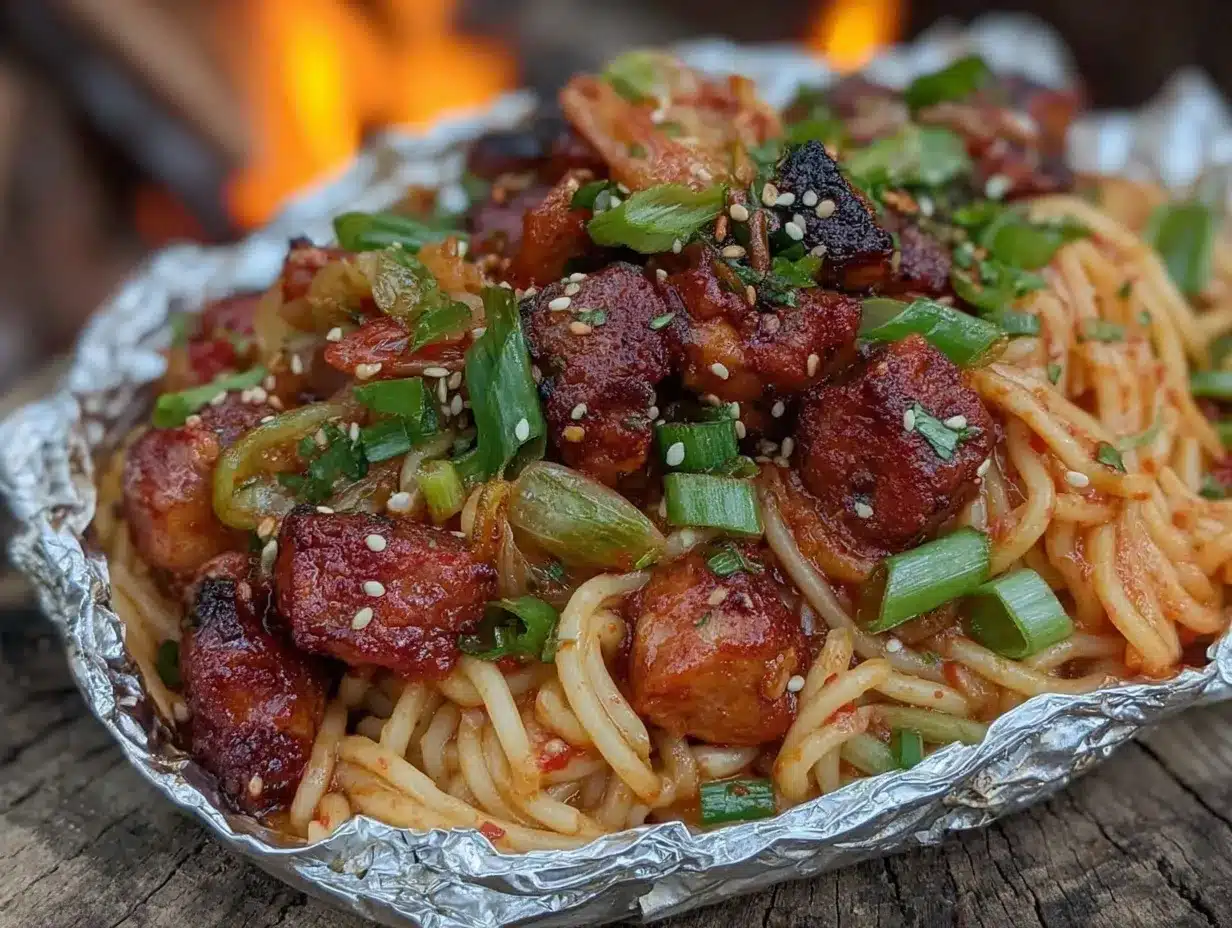
- Prepare the noodles: Soak 8 oz (225 g) of rice noodles in warm water for 10 minutes or until pliable but not fully cooked. Drain and set aside.
- Mix the sauce: In a large bowl, combine 3 tbsp gochujang, 2 tbsp soy sauce, 1 tbsp sesame oil, 1 tbsp brown sugar, 3 cloves minced garlic, and 1 tbsp grated ginger. Whisk until smooth.
- Slice the pork: Thinly slice 1 lb (450 g) pork shoulder into bite-sized strips. Toss the pork in the sauce mixture until well coated. Let marinate for 10–15 minutes if you have time.
- Prep the veggies: Thinly slice 1 small red bell pepper and shred about 1/2 cup of carrots. These add color and crunch.
- Assemble the foil packets: Lay out large aluminum foil sheets (about 12×12 inches). Divide the pork mixture evenly onto each sheet, add a handful of noodles, and sprinkle with sliced bell pepper and shredded carrots. Add a pinch of red chili flakes if you want extra heat.
- Seal the packets: Fold the foil over the ingredients and crimp the edges tightly to create sealed packets. This traps steam and cooks everything evenly.
- Cook the packets: Place packets on a baking sheet and bake in a preheated oven at 400°F (200°C) for 20–25 minutes. The pork should be cooked through and tender, and the noodles soft but not mushy.
- Finish and garnish: Carefully open the packets (steam will be hot!), sprinkle with sliced green onions, and a drizzle of extra sesame oil if desired.
Pro tip: Don’t overcrowd the packets; leaving a little space inside helps steam circulate and cook everything evenly. Also, if you find your pork isn’t quite tender, cover the packets again and let them rest for 5 minutes off heat—the residual steam makes a difference.
Cooking Tips & Techniques
Getting the perfect balance of juicy pork and tender noodles in foil packets takes just a bit of practice, but here are some tips I’ve picked up along the way:
- Thin slicing is key: Thin pork slices cook quickly and absorb sauce better. If your slices are thick, they might turn chewy or underdone.
- Marinate briefly: Even a short 10-minute soak in the sauce helps flavor penetrate, but don’t overdo it or the pork texture changes.
- Don’t overcook noodles: Soak dry rice noodles just until pliable before assembling. They’ll finish cooking in the foil steam. Over-soaking makes them mushy.
- Seal packets tightly: A good seal traps steam and prevents drying out. Double-layer foil for extra security if needed.
- Watch your oven time: Cooking times vary by oven and thickness of pork. Start checking at 20 minutes to avoid overcooking.
Once, I left packets a little too long in the oven, and the pork dried out—lesson learned! Now I set a timer and peek early. Also, layering the noodles below the pork keeps them from sticking or burning.
Multitasking tip: While the packets bake, use the time to prep a quick side salad or whisk up a simple dipping sauce. It’s a great way to make the meal feel complete without extra hassle.
Variations & Adaptations
This recipe is wonderfully flexible, so feel free to experiment based on what you like or have on hand.
- Protein swaps: Try chicken thighs instead of pork for a lighter option. If you prefer seafood, shrimp cooks quickly in foil packets with similar seasoning.
- Vegetarian version: Use firm tofu or a mix of mushrooms like shiitake and oyster. Add extra garlic and ginger to boost flavor.
- Heat level: Adjust spice by adding more or less gochujang, or include sliced fresh jalapeños for a different kick.
- Alternate noodles: Substitute rice noodles with soba or udon for a different texture. Just adjust soak or cook times accordingly.
- Cooking method: Grill the foil packets outdoors for a smoky twist or cook them over a campfire for a fun twist on this quick dinner.
Personally, I once added kimchi right into the packets for an extra tangy crunch—it was a hit. Feel free to customize with your favorite veggies or spice blends to make the dish truly your own.
Serving & Storage Suggestions
Serve these foil packets hot straight from the oven, carefully opening the foil so the steam doesn’t burn you. I like to plate them with a sprinkle of extra green onions and a side of steamed greens or crunchy cucumber salad to contrast the spicy pork.
They pair nicely with a chilled glass of iced green tea or a light beer to balance the heat. If you want a creamy side, something like creamy garlic butter Tuscan shrimp pasta offers a rich counterpoint.
Leftovers keep well in the fridge for up to 3 days—just transfer the contents from foil to an airtight container. To reheat, warm gently in the microwave or oven, covered to retain moisture. Flavors actually deepen a bit overnight, so sometimes leftovers taste even better.
Nutritional Information & Benefits
Each serving of this Easy Korean Spicy Pork and Noodles Foil Packets recipe provides a balanced mix of protein, carbs, and healthy fats. The pork offers a good dose of iron and B vitamins, while the garlic and ginger contribute antioxidants and anti-inflammatory benefits.
The dish is naturally gluten-free if you use tamari instead of soy sauce and rice noodles, making it accessible for many dietary needs. The moderate spice level helps boost metabolism without overwhelming sensitive palates. Just watch for allergens like soy and wheat in some gochujang brands.
From a wellness perspective, this recipe feels indulgent without being heavy, and the steaming method keeps the pork juicy without added fats, so it’s satisfying and nourishing.
Conclusion
This Easy Korean Spicy Pork and Noodles Foil Packets recipe is one of those rare finds that balances flavor, speed, and ease perfectly. It’s flexible enough for all kinds of cooks and occasions, from quick solo dinners to casual meals with friends. I love how it turns a handful of simple ingredients into a meal that feels vibrant and comforting all at once.
Feel free to tweak the spice, swap veggies, or try different proteins to make it your own. Cooking should be fun and stress-free, and this recipe fits right into that vibe.
If you make it, I’d love to hear how you customize your packets! Drop a comment below or share your version—let’s keep the kitchen conversation going.
Here’s to many cozy, flavorful dinners that come together in a flash.
Frequently Asked Questions
Can I make these foil packets ahead of time?
Yes, you can assemble the packets in advance and store them in the fridge for up to 24 hours before cooking. Just keep them sealed tightly and bake as directed when ready.
What if I don’t have gochujang paste?
You can substitute with a mix of chili garlic sauce and a touch of miso paste or soy sauce to mimic the spicy-sweet flavor, but gochujang gives the authentic Korean kick that’s hard to replicate exactly.
Can I use other noodles besides rice noodles?
Absolutely! Soba, udon, or even thin spaghetti can work. Just adjust soaking or cooking times accordingly so the noodles don’t overcook or stay too firm.
Is this recipe freezer-friendly?
It’s best fresh or refrigerated. Freezing foil packets can affect noodle texture negatively, making them mushy when reheated. If freezing, remove noodles and store separately.
How spicy is this dish?
The spice level is moderate and can be adjusted easily by adding more or less gochujang or chili flakes. It’s friendly for most palates but packs a flavorful punch.
Pin This Recipe!
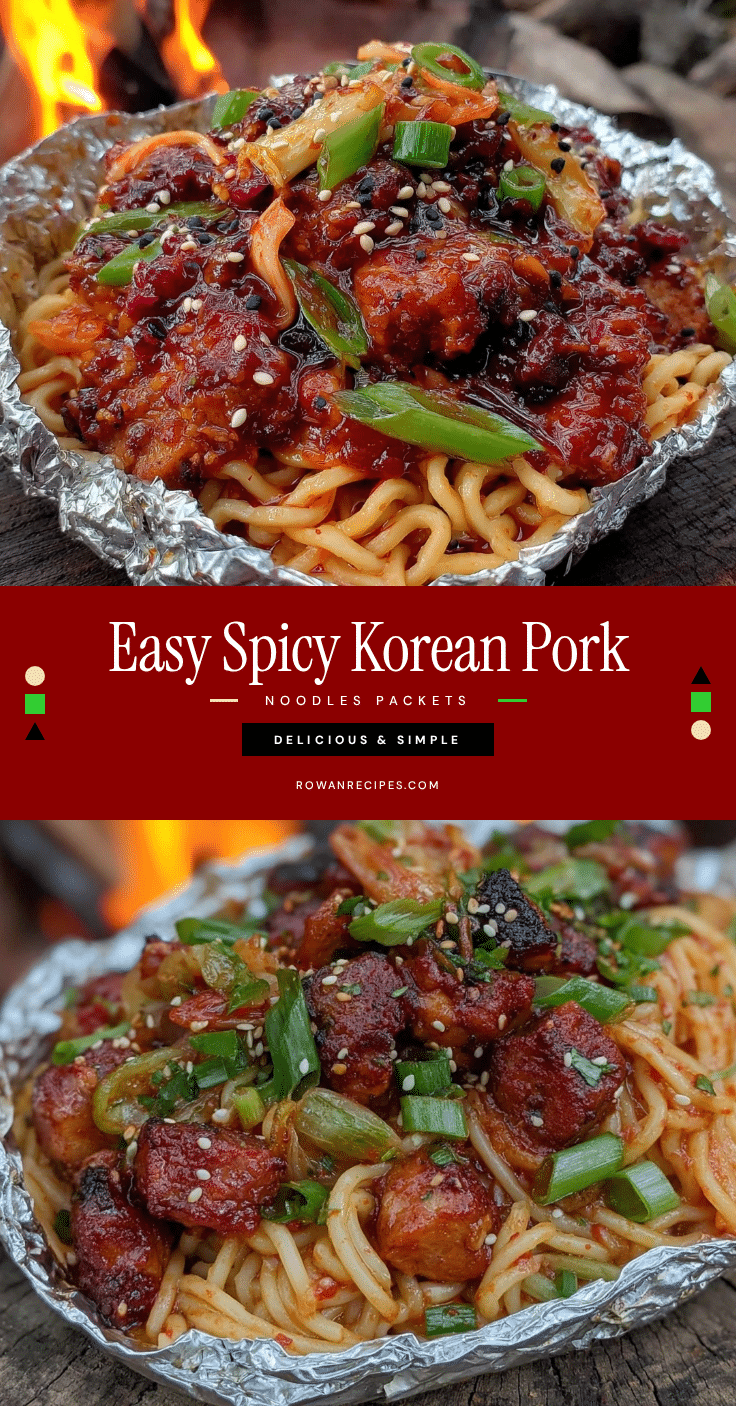
Easy Korean Spicy Pork and Noodles Foil Packets
A quick and easy Korean-inspired dish featuring tender pork shoulder, rice noodles, and a spicy-sweet gochujang sauce cooked in foil packets for minimal cleanup and maximum flavor.
- Prep Time: 15 minutes
- Cook Time: 25 minutes
- Total Time: 40 minutes
- Yield: 4 servings 1x
- Category: Main Course
- Cuisine: Korean
Ingredients
- 1 lb (450 g) pork shoulder, thinly sliced
- 8 oz (225 g) rice noodles
- 3 tbsp gochujang (Korean chili paste)
- 2 tbsp soy sauce (low sodium recommended)
- 1 tbsp sesame oil
- 3 cloves garlic, minced
- 1 tbsp grated ginger
- 1 tbsp brown sugar
- 2 stalks green onions, sliced
- 1/2 cup shredded carrots (optional)
- 1 small red bell pepper, thinly sliced (optional)
- Red chili flakes to taste (optional)
Instructions
- Soak 8 oz (225 g) of rice noodles in warm water for 10 minutes or until pliable but not fully cooked. Drain and set aside.
- In a large bowl, combine 3 tbsp gochujang, 2 tbsp soy sauce, 1 tbsp sesame oil, 1 tbsp brown sugar, 3 cloves minced garlic, and 1 tbsp grated ginger. Whisk until smooth.
- Thinly slice 1 lb (450 g) pork shoulder into bite-sized strips. Toss the pork in the sauce mixture until well coated. Let marinate for 10–15 minutes if time allows.
- Thinly slice 1 small red bell pepper and shred about 1/2 cup of carrots.
- Lay out large aluminum foil sheets (about 12×12 inches). Divide the pork mixture evenly onto each sheet, add a handful of noodles, and sprinkle with sliced bell pepper and shredded carrots. Add a pinch of red chili flakes if desired.
- Fold the foil over the ingredients and crimp the edges tightly to create sealed packets.
- Place packets on a baking sheet and bake in a preheated oven at 400°F (200°C) for 20–25 minutes until pork is cooked through and noodles are tender.
- Carefully open the packets (steam will be hot!), sprinkle with sliced green onions, and drizzle with extra sesame oil if desired.
Notes
Do not overcrowd the foil packets to allow steam circulation. Use heavy-duty foil to prevent leaks. Thinly slice pork for quick cooking and better sauce absorption. Marinate pork for at least 10 minutes if possible. Soak noodles just until pliable to avoid mushiness. Check packets at 20 minutes to avoid overcooking. Let packets rest for 5 minutes off heat if pork is not tender enough.
Nutrition
- Serving Size: 1 foil packet (appro
- Calories: 420
- Sugar: 8
- Sodium: 650
- Fat: 18
- Saturated Fat: 4
- Carbohydrates: 38
- Fiber: 3
- Protein: 28
Keywords: Korean spicy pork, foil packets, easy dinner, gochujang, rice noodles, quick recipe, weeknight meal