“You’re really going to make that spongy sourdough flatbread from scratch?” my friend laughed when I mentioned trying to whip up injera at home. Honestly, I wasn’t sure myself at first. I’d seen injera on food shows—those delicate, bubbly Ethiopian flatbreads made from teff flour—and figured it was some culinary sorcery. But after a chaotic week where I just wanted something comforting and simple, I decided to give it a shot. The kitchen smelled tangy, a bit funky, but in that good way, like a well-lived-in pantry.
The batter bubbled softly overnight, and the next morning I nervously poured it onto my skillet. The first round was a little patchy, sure, but that slightly puckered texture and the way it puffed up made me smile—there was something just so satisfying about this humble, ancient bread coming to life under my hands. Before I knew it, I was making it several times a week, tweaking the fermentation times and learning how to read the batter’s readiness like a secret code.
Easy fluffy beginner injera sourdough teff flatbread isn’t just a recipe; it became a quiet ritual that grounded me on hectic days. It’s proof that with a little patience, even the most intimidating traditional foods can become accessible, comforting, and downright delicious in your own kitchen.
Why You’ll Love This Recipe
From my experience fiddling with sourdough starters and exploring teff flour’s unique flavor, this injera recipe is a gem for anyone wanting a gentle introduction to fermented flatbreads. Here’s why it stands out:
- Quick & Easy: The batter takes just a few minutes to mix, and while it ferments overnight, the hands-on prep is minimal—ideal for busy folks looking for a low-effort culinary win.
- Simple Ingredients: You won’t need a list of obscure items. Teff flour and a basic sourdough starter are the stars here, and you probably already have everything else in your pantry.
- Perfect for Cozy Dinners: Whether you’re serving up a spicy stew or want a gluten-free alternative to regular flatbreads, this injera is a crowd-pleaser at the dinner table.
- Crowd-Pleaser: My family—usually skeptical about fermented foods—keeps asking for more, especially when paired with Ethiopian-inspired lentil dishes.
- Unbelievably Delicious: The subtle tang from the sourdough starter mingled with the earthy teff notes creates a flavor combo that’s both comforting and intriguing.
- This isn’t just any injera recipe— blending traditional fermentation with a beginner-friendly approach means you get fluffy, tender results without the fuss or long waiting times of classic methods.
Honestly, this recipe feels like a little magic trick in your kitchen—comfort food with soul that also teaches you a thing or two about sourdough culture.
What Ingredients You Will Need
This easy fluffy beginner injera sourdough teff flatbread uses simple, wholesome ingredients to deliver bold flavor and that signature airy texture without complicated steps. Most are pantry staples or easy to find online if your local store doesn’t carry teff flour yet.
- Teff flour: The heart of injera, offering that nutty, slightly sweet flavor. I use a finely ground whole grain teff for the best texture.
- Sourdough starter: Active and bubbly, about ½ cup (120 ml). If you don’t have one, a bit of commercial yeast can work as a shortcut, but sourdough adds authentic tang.
- Water: Approximately 2 cups (475 ml), filtered if possible to keep the fermentation steady.
- Salt: Just a pinch to balance flavors—sea salt or kosher salt works well.
- Optional: A teaspoon of sugar or honey can help kickstart fermentation if your starter is young or sluggish.
For substitutions, if you’re gluten-sensitive, teff is naturally gluten-free, so this recipe fits well. You can also experiment with mixing in a little brown rice flour to lighten the texture if you want, but I recommend starting with pure teff for that authentic experience.
Pro tip: Look for a lively sourdough starter with a mild aroma—too strong or overly sour can overpower the delicate teff flavor. I’ve found King Arthur Flour’s teff to be consistently reliable, but local health food stores often have great options too.
Equipment Needed
Making this easy fluffy beginner injera sourdough teff flatbread doesn’t call for fancy gear, just a few kitchen basics you probably already own.
- Non-stick skillet or crepe pan: Around 10 inches (25 cm) diameter. A well-seasoned cast iron skillet works wonders too for even cooking.
- Mixing bowl: Medium size, for combining and fermenting the batter.
- Whisk or spoon: For mixing the batter smoothly without lumps.
- Measuring cups and spoons: Accuracy helps when starting with sourdough recipes.
- Lid or plate: To cover the skillet while cooking each injera, helping steam the batter and form those classic bubbles.
Don’t stress if you don’t have a dedicated crepe pan—the regular non-stick skillet is perfect for beginners. I’ve cooked injera on everything from electric stoves to gas burners, and the key is a steady medium heat.
Pro tip: If you get serious about injera, a large flat cast iron pan with a lid can make the process even easier, but for now, keep it simple and budget-friendly.
Preparation Method
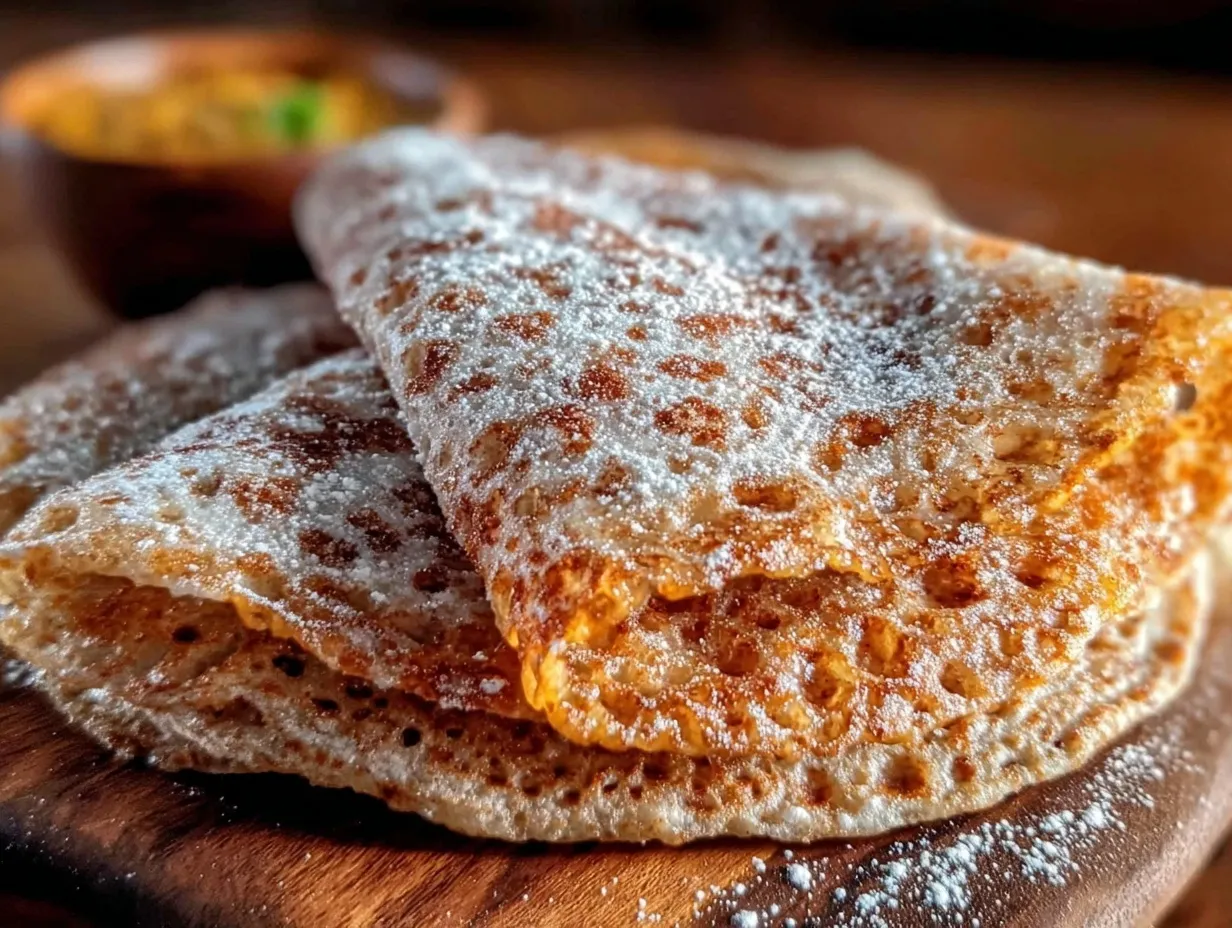
- Mix the batter: In your mixing bowl, combine 1 cup (120 g) of teff flour and ½ cup (120 ml) sourdough starter. Slowly stir in 2 cups (475 ml) of water until smooth. The batter should be pourable but not watery—like a thick pancake batter. Add a pinch of salt and stir again. (Time: 5 minutes)
- Ferment: Cover the bowl loosely with a kitchen towel or plastic wrap. Let it sit at room temperature (around 70°F/21°C) for 12 to 24 hours. You’ll notice bubbles forming on the surface—that’s your batter coming alive! The smell should be pleasantly tangy, not sour or off-putting. (Time: Overnight or up to 24 hours)
- Check consistency: After fermentation, the batter might have thickened. Stir it gently and add a splash of water if it seems too thick to spread easily—aim for a flowing but slightly thick batter.
- Heat your pan: Place your skillet over medium heat and let it warm up. A drop of water should sizzle and evaporate quickly but not snap. (Time: 3-5 minutes)
- Cook the injera: Pour about ½ cup (120 ml) of batter into the pan, swirling to cover the surface evenly. You’ll see bubbles forming almost immediately. Cover the pan with a lid or plate to trap steam and let the injera cook for 2-3 minutes until the edges lift and the surface is dry. Do NOT flip it. (Time: 2-3 minutes per injera)
- Remove and cool: Carefully lift the injera with a spatula and transfer it to a plate. Let it cool slightly—it will be soft and flexible. Repeat with the remaining batter.
- Serve: Stack your injera on a plate, cover with a clean towel to keep warm and moist. It’s ready for your favorite stews or dips.
Troubleshooting tips: If your injera cracks or tears, your batter might be too thick or your pan too hot. Lower the heat and add a bit more water to the batter next time. If it’s gummy, it might need a longer cooking time or a hotter pan.
Trust me, it takes a few tries to get the feel of pouring and cooking, but once you nail that perfect bubbly texture, you’ll be hooked.
Cooking Tips & Techniques
Getting that fluffy, spongy injera texture is all about temperature control and batter consistency. Here are some tips I picked up from trial and error:
- Patience with fermentation: Let the batter bubble and ferment fully for that traditional tang. Rushing this step leads to flat, flavorless bread.
- Don’t flip: Injera cooks from the bottom up, and the steam trapped under the lid finishes it perfectly. Flipping can deflate those precious bubbles.
- Adjust heat as you go: Too hot and the injera burns on the edges before cooking through; too low and it won’t set properly. Medium heat is your friend.
- Use a lid or plate as a cover: This traps steam and helps form the signature holes on the injera’s surface, giving it that light, airy feel.
- Practice pouring: Smooth, even spreading helps create uniform injera. If your batter is too thick, it won’t swirl well; too thin, and it might tear.
One lesson I learned the hard way was about starter strength—if your sourdough starter isn’t lively, your injera won’t rise or bubble properly, making it dense. For a quick fix, I sometimes add a pinch of yeast, but only when I’m in a hurry.
Once you get comfortable making injera, you might even enjoy the ritual of feeding your starter and watching the batter ferment slowly overnight—it’s oddly satisfying.
Variations & Adaptations
While this recipe keeps it simple and traditional, I’ve tried a few variations that add fun twists or accommodate dietary needs:
- Gluten-free adaptation: Pure teff flour is naturally gluten-free, but if you prefer, mix in ¼ cup (30 g) of sorghum or millet flour for a slightly different flavor and texture.
- Quick yeast version: In a pinch, replace the sourdough starter with 1 teaspoon (3 g) of active dry yeast and warm water to speed up fermentation—results won’t be quite as tangy but still tasty.
- Spiced injera: Add a pinch of ground cumin or smoked paprika to the batter for a subtle smoky aroma that complements savory dishes beautifully.
- Whole grain blend: Swap half the teff flour with whole wheat or buckwheat flour for a nuttier, heartier injera.
- Personal favorite: I once folded in a tablespoon of finely chopped fresh herbs like rosemary or thyme for a garden-fresh flavor that surprised everyone at dinner.
Different cooking surfaces can also affect the texture—cast iron pans give a slightly crispier bottom, while non-stick keeps it soft and pliable.
Serving & Storage Suggestions
Injera is best served warm and fresh, but it also stores well if you want to prep ahead. Here’s how I handle it:
- Serving temperature: Serve injera at room temperature or gently warmed. I like to wrap it in a clean kitchen towel to keep it moist and soft during meals.
- Complementary dishes: Traditional Ethiopian stews like doro wat or lentil misir fit perfectly, but it also pairs well with any spiced vegetable or protein dishes. For a fusion touch, try it alongside honey mustard chicken or creamy taco pasta.
- Storage: Wrap cooled injera tightly in plastic wrap or place in an airtight container. It keeps in the fridge for up to 3 days and freezes well for up to a month.
- Reheating: Warm gently in a skillet over low heat or in the microwave wrapped in a damp paper towel to retain moisture. Avoid overheating to prevent dryness.
- Flavor development: The sourdough tang mellows slightly after refrigeration, which some find even more enjoyable the next day.
Nutritional Information & Benefits
This injera recipe is a wholesome choice packed with nutrition from teff flour, a tiny grain powerhouse. Here’s a snapshot:
- Calories: Approximately 120 calories per injera (about 8-inch diameter).
- Protein: Around 4 grams, thanks to teff’s complete amino acid profile.
- Fiber: High in dietary fiber, supporting digestion and fullness.
- Gluten-free: Naturally, making it suitable for those with gluten sensitivities.
- Rich in iron and calcium: Teff is known for its mineral content, beneficial for bone and blood health.
From a wellness perspective, the sourdough fermentation enhances digestibility and may improve nutrient absorption, making this injera a gentle choice for sensitive stomachs or those new to fermented foods.
Conclusion
Making easy fluffy beginner injera sourdough teff flatbread at home has been a rewarding journey—a blend of patience, curiosity, and simple ingredients yielding something truly special. It’s a recipe that invites you to slow down, enjoy the process, and savor the flavorful results.
Feel free to adapt it to your taste and kitchen style; the flexibility is part of its charm. For me, injera connects me to a whole world of flavors and traditions, and I hope you find the same quiet joy in your kitchen.
When you’ve tried this recipe, I’d love to hear how your injera turned out or what variations you’ve experimented with. Happy cooking!
FAQs
- What is the best flour to use for injera?
Teff flour is traditional and gives injera its distinctive flavor and texture. Whole grain teff works best. - Can I use regular flour instead of teff?
You can try mixing teff with other gluten-free flours like sorghum, but regular wheat flour will change the flavor and texture significantly. - How long should I ferment the injera batter?
Ideally, 12 to 24 hours at room temperature until bubbly and slightly sour. - Do I need a sourdough starter for this recipe?
A sourdough starter gives the authentic tang and bubbles, but you can substitute with a bit of yeast for a quicker version. - How do I store leftover injera?
Wrap in plastic or airtight containers and refrigerate for up to 3 days or freeze for longer storage. Reheat gently before serving.
Pin This Recipe!
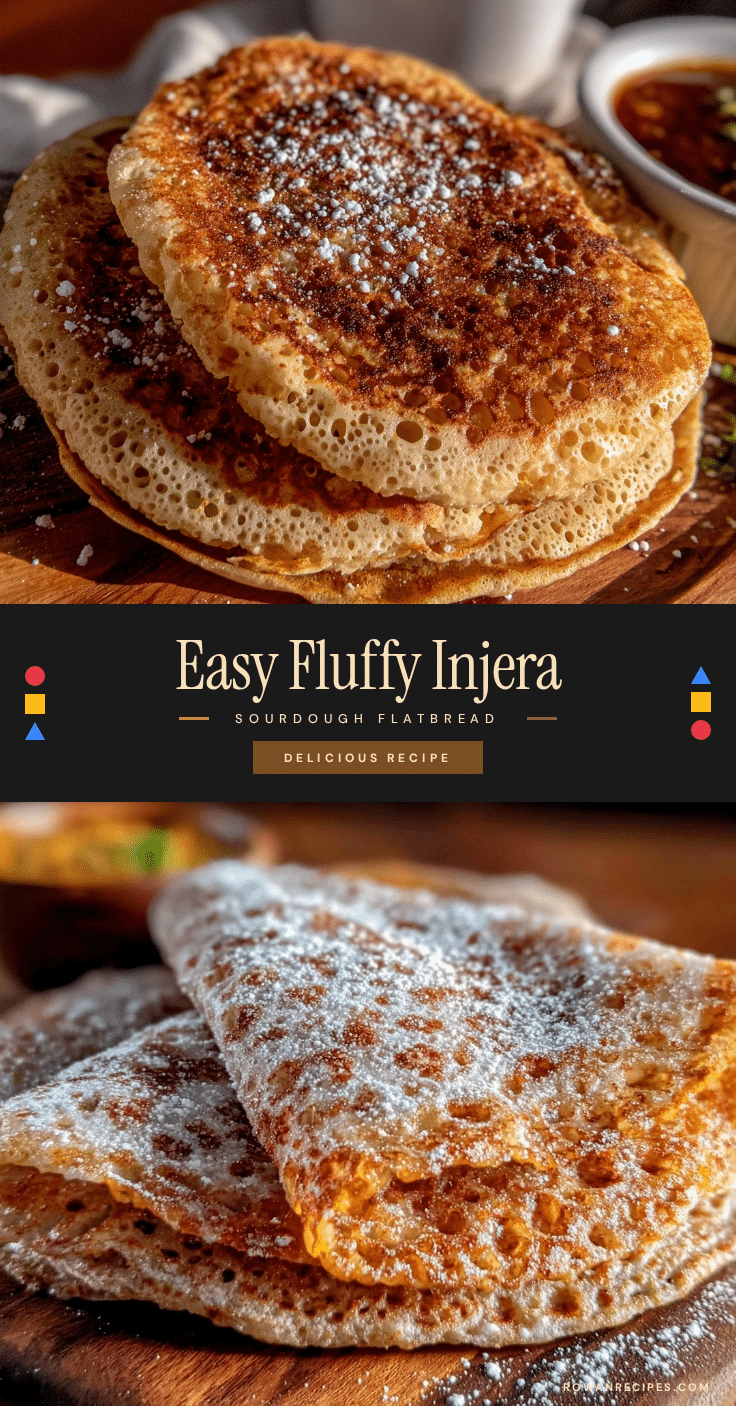
Easy Fluffy Injera Recipe Perfect for Beginner Sourdough Flatbread
A simple and approachable recipe for making traditional Ethiopian injera flatbread at home using teff flour and sourdough starter. This recipe yields fluffy, tender injera with a subtle tang, perfect for cozy dinners and gluten-free diets.
- Prep Time: 5 minutes
- Cook Time: 2-3 minutes per injera
- Total Time: 12 to 24 hours fermentation + 5 minutes prep + cooking time
- Yield: 6-8 injera (about 8-inch diameter each) 1x
- Category: Main Course
- Cuisine: Ethiopian
Ingredients
- 1 cup (120 g) teff flour
- ½ cup (120 ml) active sourdough starter
- 2 cups (475 ml) water, filtered if possible
- Pinch of salt (sea salt or kosher salt)
- Optional: 1 teaspoon sugar or honey to help fermentation if starter is young or sluggish
Instructions
- In a mixing bowl, combine 1 cup (120 g) of teff flour and ½ cup (120 ml) sourdough starter.
- Slowly stir in 2 cups (475 ml) of water until smooth. The batter should be pourable but not watery—like a thick pancake batter.
- Add a pinch of salt and stir again.
- Cover the bowl loosely with a kitchen towel or plastic wrap and let it sit at room temperature (around 70°F/21°C) for 12 to 24 hours until bubbles form and the batter smells pleasantly tangy.
- After fermentation, stir the batter gently and add a splash of water if it seems too thick to spread easily.
- Heat a non-stick skillet or crepe pan over medium heat until a drop of water sizzles and evaporates quickly but does not snap (about 3-5 minutes).
- Pour about ½ cup (120 ml) of batter into the pan, swirling to cover the surface evenly. Bubbles will form almost immediately.
- Cover the pan with a lid or plate to trap steam and cook the injera for 2-3 minutes until the edges lift and the surface is dry. Do not flip.
- Carefully lift the injera with a spatula and transfer it to a plate. Let it cool slightly; it will be soft and flexible.
- Repeat with the remaining batter.
- Stack the injera on a plate and cover with a clean towel to keep warm and moist before serving.
Notes
Do not flip the injera while cooking; steam trapped under the lid finishes it perfectly. Adjust heat to medium to avoid burning edges or undercooking. If batter is too thick, add water to achieve a pourable consistency. Use a lively sourdough starter for best results. Injera stores well in the fridge for up to 3 days and freezes for up to a month. Reheat gently to retain moisture.
Nutrition
- Serving Size: One injera (about 8-
- Calories: 120
- Sugar: 0.2
- Sodium: 150
- Fat: 0.5
- Saturated Fat: 0.1
- Carbohydrates: 25
- Fiber: 3
- Protein: 4
Keywords: injera, teff flour, sourdough flatbread, gluten-free, Ethiopian bread, fermented bread, beginner sourdough, flatbread recipe