“You’ve got to try this—honestly, it’s a game changer,” my friend texted me late one evening after I’d complained about being too tired to cook. I was skeptical, not gonna lie. Za’atar flatbread? I’d seen it at markets but never thought it could be something I could whip up in my own kitchen without a fuss. But there I was, in my cramped apartment kitchen, flour dusting the counter, trying this recipe for easy crispy Lebanese za’atar flatbread manakish on a whim.
The first time I pulled these golden, fragrant flatbreads out of the oven, the smell alone was enough to brighten a day that had been otherwise messy and exhausting. The crisp edges, the warm, herby za’atar topping with that perfect hint of olive oil—it felt like a little moment of calm and comfort I didn’t even expect. I’ve since made these manakish multiple times that week, each batch disappearing faster than the last. Honestly, they became my go-to quick snack and a surprise hit whenever friends dropped by. There’s something about the crunch paired with those aromatic spices that just sticks with you.
What’s funny is how this simple, effortless recipe found its way into my routine. It’s not just a flatbread—it’s a little escape, a quiet moment of joy, easy enough for anyone to make. If you’re looking for something that’s crispy, flavorful, and downright addictive, this easy crispy Lebanese za’atar flatbread manakish might just be your new favorite too. No complicated steps, no fancy ingredients—just good food that feels like a warm hug.
Why You’ll Love This Easy Crispy Lebanese Za’atar Flatbread Manakish Recipe
After testing this recipe several times (sometimes two or three times a week), I can confidently say it hits all the right notes for a quick, satisfying snack or light meal. Here’s why this easy crispy Lebanese za’atar flatbread manakish stands apart:
- Quick & Easy: The entire process takes about 30 minutes from start to finish. Perfect when you don’t want to spend hours in the kitchen but crave something homemade.
- Simple Ingredients: You probably already have za’atar, flour, olive oil, and yeast in your pantry or can find them easily. No obscure items, no stress.
- Perfect for Any Occasion: Whether it’s a casual brunch, a cozy snack while binge-watching, or a crowd-pleaser at a get-together, these flatbreads always hit the spot.
- Crowd-Pleaser: The balance of crispy crust and herby, tangy za’atar topping makes it a favorite among kids and adults alike—even the pickiest eaters have asked for seconds.
- Unbelievably Delicious: The flatbread’s light crunch combined with the earthy, zesty flavor of za’atar is comfort food with a Mediterranean twist that’s hard to beat.
What sets this recipe apart is the little tweaks that bring out the best in every bite. For example, brushing the dough with olive oil before sprinkling the za’atar mixture creates that perfect golden, crispy finish. Plus, using a mix of fresh and dried za’atar gives it depth that’s often missing in store-bought versions. Honestly, it’s not just another flatbread—it’s my go-to for when I want something quick but still special.
And if you’re wondering about pairing or similar easy recipes with bold flavors, you might enjoy the creamy garlic butter Tuscan shrimp pasta or the sheet pan Italian sausage and peppers for more fuss-free meals that deliver big on taste.
What Ingredients You Will Need
This recipe relies on straightforward ingredients that come together to create that signature crispy, flavorful manakish experience. The za’atar topping is the star, but every component plays a role in texture and taste.
- For the Dough:
- All-purpose flour – 2 cups (250 g), sifted for smooth texture
- Active dry yeast – 1 teaspoon (about 3 g), to get that perfect rise
- Warm water – 3/4 cup (180 ml), around 110°F (43°C) for activating yeast
- Olive oil – 2 tablespoons (30 ml), adds tenderness and flavor
- Salt – 1 teaspoon (5 g), balances the flavors
- Sugar – 1 teaspoon (4 g), helps yeast bloom and adds slight sweetness
- For the Za’atar Topping:
- Za’atar spice blend – 3 tablespoons (about 15 g), the essential herb and sesame seed mix
- Olive oil – 3 tablespoons (45 ml), to mix with za’atar for spreading
For the za’atar, I prefer brands like Sultan’s or Ziyad—they offer a robust, fresh flavor that really shines through. If you’re feeling adventurous, you can try making your own za’atar blend, but store-bought works just fine and saves time.
If you need a gluten-free option, swapping the all-purpose flour for a 1:1 gluten-free baking flour blend works quite well here, though the texture will be slightly different. For a dairy-free version, this recipe is naturally free of dairy, so no changes needed there.
Equipment Needed
- Mixing bowl – for combining and proofing the dough
- Measuring cups and spoons – for accuracy in ingredients
- Whisk or fork – to activate yeast with warm water
- Rolling pin – to roll out the dough evenly (a wine bottle can work in a pinch!)
- Baking sheet or stone – I prefer a rimmed baking sheet lined with parchment for easy cleanup
- Pastry brush – for applying olive oil and za’atar topping evenly
- Kitchen towel or plastic wrap – to cover dough while it rises
If you don’t have a rolling pin, your hands can do the trick by gently stretching and flattening the dough. Using a pizza stone is optional but gives an extra crispy bottom if you have one. For those on a budget, a simple baking sheet and a clean glass bottle will do just fine.
Keeping your tools clean and dry, especially the mixing bowl, helps the dough rise better—trust me, I’ve learned the hard way when a greasy bowl slowed down the yeast.
Preparation Method
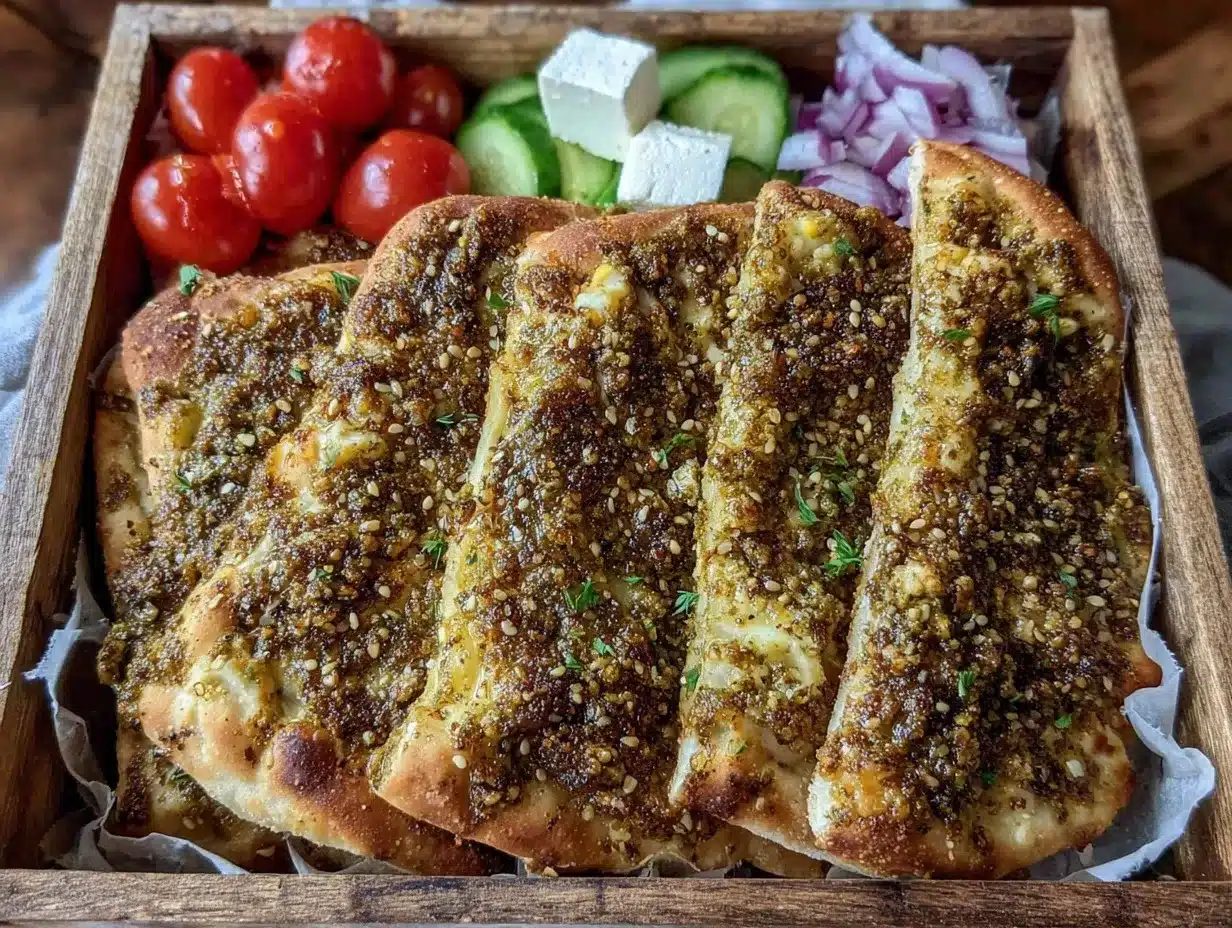
- Activate the yeast: In a small bowl, whisk 3/4 cup (180 ml) of warm water with 1 teaspoon (3 g) active dry yeast and 1 teaspoon (4 g) sugar. Let it sit for 5-7 minutes until frothy and bubbly. If nothing happens, your yeast might be old—better to start over.
- Make the dough: In a large mixing bowl, combine 2 cups (250 g) sifted all-purpose flour and 1 teaspoon (5 g) salt. Slowly pour in the yeast mixture and 2 tablespoons (30 ml) olive oil. Stir with a wooden spoon or your hand until it forms a shaggy dough.
- Knead: Turn the dough onto a lightly floured surface and knead for about 8-10 minutes until smooth and elastic. The dough should spring back when poked. If it’s sticky, add a sprinkle of flour but don’t go overboard—you want it soft, not tough.
- Let it rise: Shape the dough into a ball, place it in a lightly oiled bowl, and cover with a damp towel or plastic wrap. Leave it in a warm spot for 45-60 minutes until it doubles in size. I usually set mine near the stove or a sunny window.
- Prepare the za’atar topping: While the dough rises, mix 3 tablespoons (15 g) of za’atar with 3 tablespoons (45 ml) olive oil in a small bowl until combined into a paste.
- Shape the flatbreads: Preheat the oven to 475°F (245°C). Punch down the risen dough and divide it into 4 equal portions. Roll each portion into a 7-8 inch (18-20 cm) circle on parchment paper or a floured surface.
- Top and bake: Place the rolled dough on a baking sheet. Using a pastry brush, spread a thin, even layer of the za’atar paste over each flatbread. Bake for 8-12 minutes, or until the edges are golden and crispy and the topping is fragrant.
- Cool and enjoy: Let the manakish cool for a few minutes before slicing. They’re best enjoyed warm, ideally with a drizzle of extra olive oil or alongside fresh veggies or labneh.
Pro tip: If your oven tends to run cool, placing a baking stone or inverted sheet on the bottom rack helps crisp the flatbread base better. Also, keep an eye on the bake time during the last few minutes to avoid burning the za’atar topping.
Cooking Tips & Techniques for Perfect Za’atar Manakish
Consistency is key with this recipe, but there are a few tricks I’ve picked up to make it foolproof:
- Yeast activation matters: Make sure your water is warm, not hot—too hot kills the yeast, too cold slows it. Frothy bubbles are your green light.
- Kneading technique: Knead with the heel of your hand, folding the dough over itself. It’s a workout but worth it for that elastic crumb.
- Don’t overload the topping: Too much za’atar paste can make the flatbread soggy. A thin, even layer crisps up beautifully and lets the herbs shine.
- Oven temperature is crucial: High heat is what gives you that satisfying crunch. Preheating the oven fully before baking is a must.
- Use parchment paper: It prevents sticking and makes transferring the flatbreads easier, especially if you don’t have a pizza peel.
I once tried rushing the rising step, and the dough turned out dense and chewy—not the light, crispy texture I was aiming for. Patience definitely pays off here. Also, multitasking during the dough’s rise by prepping a quick pasta dish like the creamy cheesy taco pasta helps make dinner feel less hectic.
Variations & Adaptations to Try
Manakish is wonderfully versatile, and tweaking it lets you enjoy this recipe in new ways:
- Cheese Manakish: Add a layer of akkawi or mozzarella cheese under the za’atar for a gooey, melty twist. I tried this once with a blend of mozzarella and feta—so good!
- Spinach and Za’atar: Mix finely chopped cooked spinach into the za’atar topping for a green, earthy flavor boost.
- Gluten-Free Version: Use a gluten-free flour blend and add a tablespoon of xanthan gum if your blend lacks it. The texture will be slightly different but still delicious.
- Herby Variations: Swap or mix za’atar with sumac or dried mint for a different herbaceous profile.
- Cooking Method: Try cooking the flatbread on a hot cast-iron skillet over medium-high heat for a slightly smoky flavor and quick crisp.
One personal favorite variation was spreading a thin layer of labneh on the flatbread after baking, then topping with fresh tomatoes and cucumbers—a fresh contrast to the crispy, warm base.
Serving & Storage Suggestions
These crispy za’atar flatbreads are best served warm, straight from the oven, with a drizzle of extra virgin olive oil and maybe a side of sliced cucumbers, tomatoes, or labneh for dipping. They’re perfect on their own as a snack or as part of a Mediterranean mezze spread.
You can store leftovers in an airtight container at room temperature for up to 2 days. To reheat, pop them in a hot oven (350°F / 175°C) for 5-7 minutes or toast briefly in a skillet to bring back that crispness. Avoid microwaving—it makes them chewy and limp.
Over time, the flavors mellow and meld nicely, especially if you make the flatbreads a day ahead. I often prepare a batch and use them as quick sandwich bases the next day.
Nutritional Information & Benefits
Each flatbread contains approximately 180-220 calories depending on size and amount of olive oil used. This recipe offers a good source of complex carbohydrates and healthy fats from olive oil. Za’atar itself provides antioxidants and anti-inflammatory compounds thanks to its thyme, oregano, and sesame seed components.
It’s naturally vegetarian and can be made vegan by checking your za’atar blend (some contain sumac or sesame seeds only). For those watching gluten intake, swapping to gluten-free flour works with minor texture differences.
From my perspective, it’s a snack that combines wholesome ingredients with a satisfying crunch, making it a great option for quick energy without feeling heavy or processed.
Conclusion
This easy crispy Lebanese za’atar flatbread manakish recipe is proof that simple ingredients and a little patience can deliver incredibly satisfying results. It’s approachable enough for beginners yet flavorful enough to impress anyone craving something fresh and crunchy with a herby punch. I love how it fits into my busy days—quick to make, versatile, and always a crowd-pleaser.
Take it as a base and make it your own—whether by adding cheese, herbs, or serving it alongside your favorite dips. If you try it out, I’d love to hear how you tweak it or what your favorite pairing is.
Enjoy the process, and here’s to many delicious, crispy bites ahead!
FAQs About Easy Crispy Lebanese Za’atar Flatbread Manakish
What is za’atar, and where can I find it?
Za’atar is a Middle Eastern spice blend usually made with dried thyme, oregano, sesame seeds, sumac, and salt. You can find it in Middle Eastern grocery stores, online, or sometimes in the spice aisle of large supermarkets.
Can I make the dough without yeast?
Yeast is key for the soft yet crispy texture in this recipe. Without it, the dough won’t rise properly. However, you could try a quick flatbread recipe with baking powder if you want a yeast-free alternative.
How do I store leftover manakish?
Store flatbreads in an airtight container at room temperature for up to 2 days. For longer storage, freeze them wrapped tightly and reheat in a hot oven or skillet when ready.
Can I prepare the dough ahead of time?
Yes! You can prepare and refrigerate the dough overnight, covered tightly. Let it come to room temperature before shaping and baking for best results.
What can I serve with za’atar manakish?
They pair beautifully with labneh, fresh vegetables, olives, or even alongside dishes like the easy one-pot lemon chicken and rice for a complete meal.
Pin This Recipe!
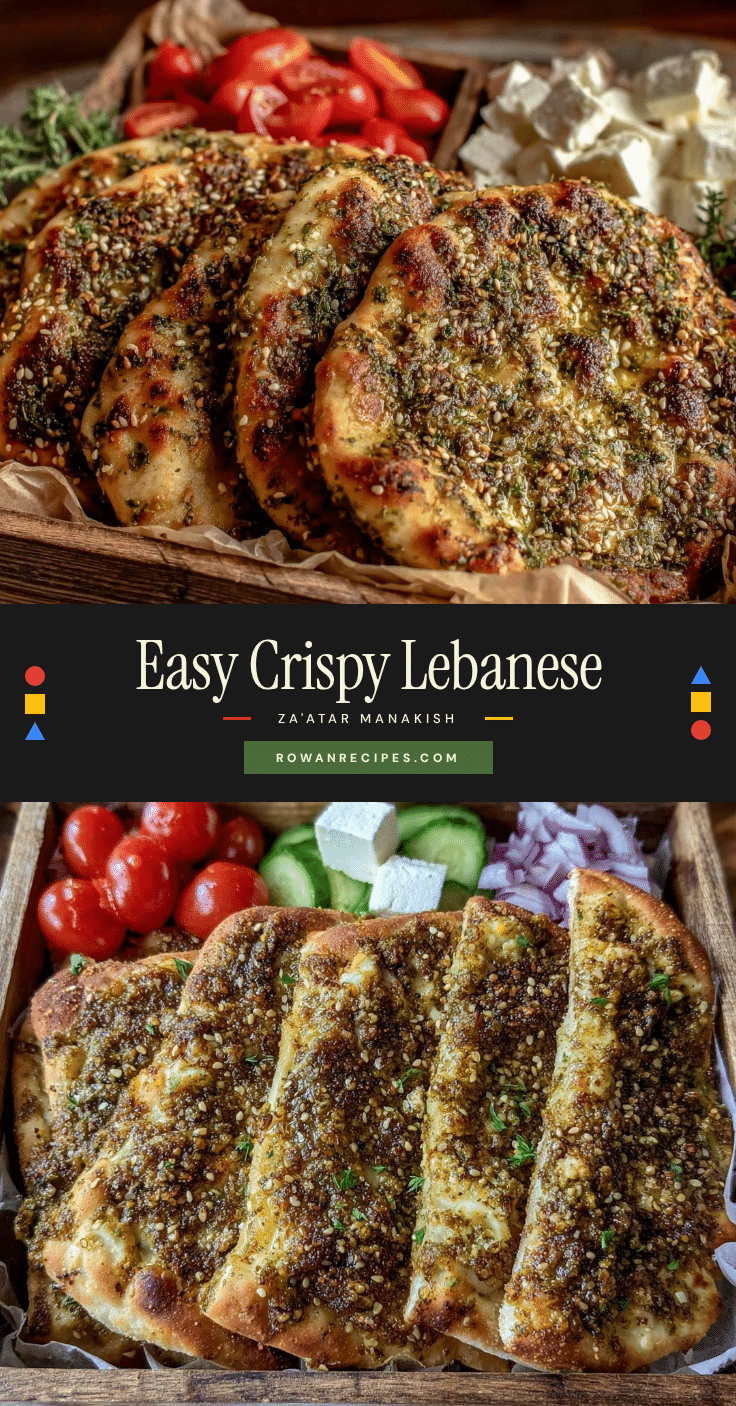
Easy Crispy Lebanese Za’atar Manakish Recipe Perfect for Beginners
A quick and easy recipe for crispy Lebanese za’atar flatbread manakish, perfect for a flavorful snack or light meal with simple ingredients and a satisfying crunch.
- Prep Time: 15 minutes
- Cook Time: 12 minutes
- Total Time: 1 hour 15 minutes
- Yield: 4 servings 1x
- Category: Snack
- Cuisine: Lebanese, Middle Eastern
Ingredients
- 2 cups (250 g) all-purpose flour, sifted
- 1 teaspoon (3 g) active dry yeast
- 3/4 cup (180 ml) warm water (around 110°F / 43°C)
- 2 tablespoons (30 ml) olive oil (for dough)
- 1 teaspoon (5 g) salt
- 1 teaspoon (4 g) sugar
- 3 tablespoons (15 g) za’atar spice blend
- 3 tablespoons (45 ml) olive oil (for za’atar topping)
Instructions
- Activate the yeast: In a small bowl, whisk 3/4 cup warm water with 1 teaspoon active dry yeast and 1 teaspoon sugar. Let sit for 5-7 minutes until frothy and bubbly.
- Make the dough: In a large mixing bowl, combine 2 cups sifted all-purpose flour and 1 teaspoon salt. Slowly pour in the yeast mixture and 2 tablespoons olive oil. Stir until a shaggy dough forms.
- Knead: Turn dough onto a lightly floured surface and knead for 8-10 minutes until smooth and elastic. Add flour if sticky, but keep dough soft.
- Let it rise: Shape dough into a ball, place in a lightly oiled bowl, cover with a damp towel or plastic wrap, and let rise in a warm spot for 45-60 minutes until doubled in size.
- Prepare the za’atar topping: Mix 3 tablespoons za’atar with 3 tablespoons olive oil in a small bowl until combined into a paste.
- Shape the flatbreads: Preheat oven to 475°F (245°C). Punch down risen dough and divide into 4 equal portions. Roll each into a 7-8 inch circle on parchment or floured surface.
- Top and bake: Place rolled dough on baking sheet. Brush a thin, even layer of za’atar paste over each flatbread. Bake for 8-12 minutes until edges are golden and crispy.
- Cool and enjoy: Let cool a few minutes before slicing. Serve warm with extra olive oil or alongside fresh veggies or labneh.
Notes
Use warm water (not hot) to activate yeast properly. Brush dough with olive oil before topping for a crispy golden finish. Use parchment paper to prevent sticking. For extra crispness, use a baking stone or inverted sheet on the oven bottom rack. Avoid overloading za’atar paste to prevent sogginess. Store leftovers in airtight container at room temperature for up to 2 days; reheat in oven or skillet, avoid microwave.
Nutrition
- Serving Size: 1 flatbread (about 7
- Calories: 200
- Sugar: 2
- Sodium: 300
- Fat: 9
- Saturated Fat: 1.3
- Carbohydrates: 27
- Fiber: 3
- Protein: 5
Keywords: zaatar, manakish, Lebanese flatbread, crispy flatbread, easy snack, Mediterranean, zaatar flatbread, homemade manakish