“Are you sure this isn’t just miso soup?” my friend asked, poking at the simmering pot of doenjang jjigae with a curious spoon. Honestly, I wasn’t expecting much the first time I tried making this Korean fermented soybean soup. I had grabbed a jar of doenjang from the back of my fridge, forgotten for months, and figured, why not give it a go? What started as a cautious experiment turned into a cozy ritual I couldn’t shake off. The earthy aroma of the fermented paste mingling with the gentle heat of the broth filled my kitchen, cutting through the dullness of a long, chilly evening.
That night, the soup did more than just warm me up — it grounded me. Each spoonful carried a deep, savory punch that felt both familiar and exotic. I found myself tweaking the recipe repeatedly, making small adjustments until it hit that perfect balance of umami and comfort. It’s funny how a simple pot of easy doenjang jjigae could turn into my go-to comfort food, especially on those days when I just want something honest, straightforward, and satisfying without fuss.
This soup isn’t just a recipe; it’s a slow-building companion that teaches you patience and offers quiet moments of warmth. If you’ve never cooked with fermented soybean paste or felt intimidated by Korean soups, this one’s for you. It’s approachable, forgiving, and honestly, a little addictive once you get the hang of it.
Why You’ll Love This Recipe
Having made easy doenjang jjigae countless times, I can say it’s one of those dishes that feels like a hug in a bowl. Here’s why you’ll want to have this recipe on speed dial:
- Quick & Easy: Ready in under 30 minutes, it fits perfectly into busy weeknights or whenever you crave something cozy without a ton of prep.
- Simple Ingredients: Mostly pantry staples like doenjang, tofu, and veggies that you might already have, making it budget-friendly and low-stress.
- Great for Comfort Food Cravings: Whether you’re winding down after a long day or need something soothing, this soup hits the spot.
- Flavorful Depth: The fermented soybean paste delivers a rich, earthy umami that’s surprisingly complex for such a simple dish.
- Flexible & Adaptable: You can easily swap in seasonal vegetables or protein options, making it your own.
What sets this version apart is the balance of flavors — not too salty or overpowering, with a subtle sweetness and a slight tang from the fermentation that makes the soup feel alive. I also like to add a touch of fresh chili or garlic for some kick, but that’s totally up to you. Honestly, it’s the kind of meal that makes you close your eyes after the first spoonful and think, “Yeah, this is just right.”
If you’ve enjoyed hearty, comforting dishes like the creamy cheesy taco pasta or crave a warming stew after a busy day, this Korean stew will quickly become a favorite in your rotation.
What Ingredients You Will Need
This recipe uses simple, wholesome ingredients to deliver bold flavors and satisfying texture without much fuss. Most are pantry staples or easy to find at Asian markets, and you can often find good doenjang at larger grocery stores too.
- Doenjang (Korean fermented soybean paste): The star ingredient. Look for a quality brand like Chung Jung One or Jongga for authentic flavor.
- Water or Broth: Use about 4 cups (950 ml) of water or vegetable/chicken broth for richer flavor.
- Tofu: Medium-firm or soft tofu, cut into cubes (about 200 grams/7 oz). It absorbs the broth nicely.
- Zucchini: Thinly sliced, about 1 small zucchini (150 grams/5 oz), adds freshness and texture.
- Potatoes: 1 medium potato (150 grams/5 oz), peeled and cubed for heartiness.
- Onion: 1 small yellow or white onion, thinly sliced to bring natural sweetness.
- Green chili pepper: Optional but recommended for a gentle heat and authentic touch.
- Garlic: 2 cloves, minced to deepen the flavor.
- Dried anchovies: A small handful (10 grams/0.35 oz) if available, for homemade anchovy broth (optional but adds umami).
- Scallions: 1-2 stalks, sliced thin for garnish and freshness.
- Sesame oil: 1 teaspoon for finishing, adds a nutty aroma.
- Salt and pepper: To taste.
If you want to switch things up, you can replace tofu with thinly sliced beef or add mushrooms for extra earthiness. Using homemade anchovy broth is a little trick I picked up that really brings the soup to life, but store-bought broth works fine too.
Equipment Needed
- Medium-sized pot or Korean earthenware pot (ttukbaegi): I love using a ttukbaegi for authentic heat retention, but any medium pot works well.
- Cutting board and sharp knife: For prepping vegetables and tofu.
- Measuring cups and spoons: To keep the seasoning balanced.
- Wooden spoon or ladle: For stirring without scratching your pot.
- Strainer or fine sieve: Useful if you make anchovy broth to remove solids.
For budget-friendly cooks, a simple stainless steel pot is perfectly fine. I’ve had good luck with ceramic-coated pots too, which prevent sticking. Keeping your knives sharp really makes chopping less of a chore when preparing ingredients like onion and zucchini.
Preparation Method
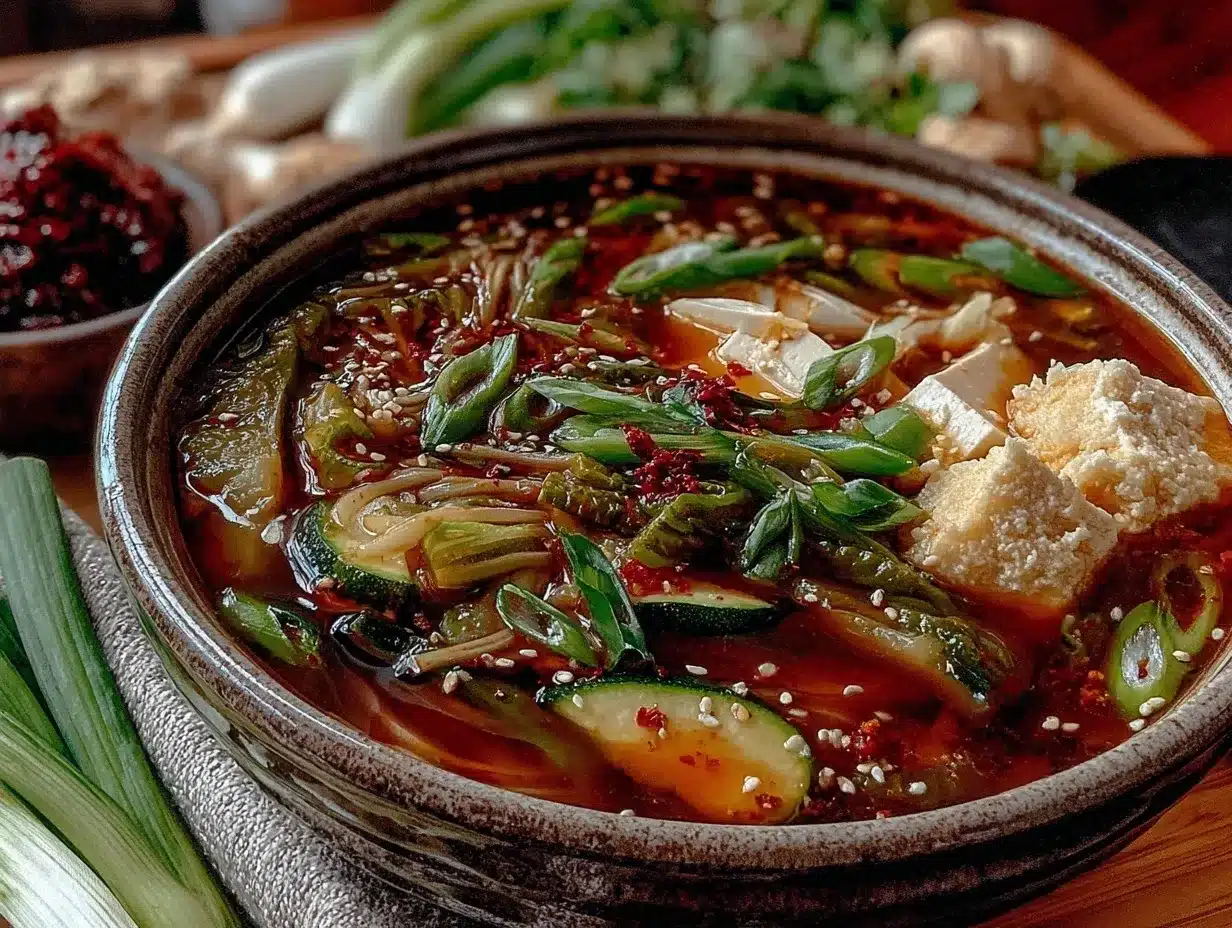
- Prepare the anchovy broth (optional but recommended): Rinse 10 grams (about 0.35 oz) of dried anchovies to remove excess salt. Add to 4 cups (950 ml) of water in a pot and bring to a gentle boil. Simmer for 10 minutes, then strain out the anchovies. This broth creates a deep umami base for the soup.
- Chop the vegetables: Peel and cube 1 medium potato (150 grams/5 oz). Slice 1 small zucchini (150 grams/5 oz) into thin half-moons. Thinly slice 1 small onion and mince 2 garlic cloves. Slice 1 green chili pepper if using.
- Mix the doenjang paste: In a bowl, dissolve 3 tablespoons (45 grams) of doenjang in about 1/2 cup (120 ml) of the prepared broth or water. Stir well to avoid clumps.
- Cook the soup base: Bring the rest of the broth (or water) to a boil in your pot. Add the dissolved doenjang mixture. Then add the potatoes and onion. Simmer for 7-10 minutes until potatoes start to soften.
- Add the zucchini and tofu: Gently add the tofu cubes and zucchini slices. Simmer for another 5 minutes. Add minced garlic and sliced chili pepper. Season with salt and pepper to taste.
- Finish and garnish: Turn off the heat and drizzle 1 teaspoon of sesame oil on top. Sprinkle sliced scallions before serving. The soup should be hot, aromatic, and slightly thickened from the potatoes.
Pro tip: When simmering, avoid stirring too vigorously to keep the tofu intact. If the soup tastes too salty, add a splash of water or broth. If it feels flat, a pinch of sugar can balance the flavors.
Cooking Tips & Techniques
Getting the perfect bowl of easy doenjang jjigae is all about balance and gentle cooking. Here are some tips from my kitchen trials:
- Dissolve the doenjang paste thoroughly: This prevents clumps and ensures even flavor distribution. I usually mix it with a small amount of broth first.
- Simmer gently: Boiling too hard can break the tofu and make the soup cloudy. A gentle simmer keeps ingredients intact and flavors clear.
- Adjust salt carefully: Doenjang can be salty, so always taste before adding extra salt. Sometimes the broth or anchovies add enough seasoning.
- Anchovy broth is a game changer: If you’ve never made it, I suggest trying it once. It adds an extra layer of savory depth that store-bought broth can’t match.
- Don’t rush the potatoes: They soften slowly and help thicken the soup naturally, giving it a comforting body.
- Use fresh vegetables: Overripe or watery veggies can dilute the flavor. Fresh zucchini and onion bring brightness.
One time, I accidentally added too much doenjang and ended up watering down the soup—lesson learned! Always start with less and add more if needed. Multitasking while making this soup is easy, so it’s perfect to prepare while you’re getting other dishes ready, like a quick one-pot lemon chicken and rice.
Variations & Adaptations
This recipe is a great base for customizing to your taste or dietary needs. Here are some ideas I’ve played around with:
- Protein Swap: Replace tofu with thinly sliced beef or pork belly for a meatier version. Just add the meat early to cook through.
- Vegetarian/Vegan: Skip anchovy broth and use vegetable broth instead. Add mushrooms like shiitake or oyster for umami depth.
- Spice Level: Increase heat by adding more green chilies or a spoonful of Korean chili flakes (gochugaru) for a spicy kick.
- Seasonal Veggies: In spring or summer, swap potatoes for sweet potatoes or add fresh green beans and spinach.
- Low-Sodium: Use low-sodium doenjang or rinse off the paste slightly before use, then adjust seasoning as needed.
Once, I tried adding kimchi to the soup for extra tang and texture—it was a fun twist that gave the stew a new dimension. Feel free to experiment; the soup is forgiving and flexible.
Serving & Storage Suggestions
Serving: This soup is best served piping hot, straight from the pot. It pairs wonderfully with steamed white rice and some simple side dishes like kimchi or pickled vegetables. I often enjoy it alongside a crisp cucumber salad to balance the richness.
Storage: Store leftovers in an airtight container in the refrigerator for up to 3 days. The flavors actually deepen overnight, making the next-day soup even better.
Reheating: Reheat gently on the stovetop over low heat to avoid breaking the tofu apart. Add a splash of water or broth if the soup has thickened too much. Avoid microwaving aggressively as it can alter the texture.
For a quick meal prep idea, pair your easy doenjang jjigae with a side of crispy sheet pan Italian sausage and peppers—the salty sausage contrasts beautifully with the mellow soup.
Nutritional Information & Benefits
One serving of this easy doenjang jjigae (about 1.5 cups/360 ml) roughly contains:
| Nutrient | Amount |
|---|---|
| Calories | 150-180 kcal |
| Protein | 10g |
| Fat | 5g |
| Carbohydrates | 15g |
| Fiber | 3g |
| Sodium | 600-700 mg (varies with paste) |
Doenjang is rich in probiotics due to fermentation, which can support gut health. Tofu provides plant-based protein and is low in calories. The veggies add fiber, vitamins, and minerals, rounding out a nutritious, balanced meal. For those watching sodium intake, controlling the amount of doenjang and broth used is key.
Conclusion
This easy doenjang jjigae recipe has become a quiet staple in my kitchen, offering more than just a meal — a moment of warmth and simplicity. It’s a dish that invites you to slow down, savor the depth of fermented flavors, and feel comfort without complication. Feel free to make it your own by adjusting ingredients or adding your favorite twists.
Whether you’re new to Korean cooking or a seasoned home chef, this soup is approachable and rewarding. I hope it becomes a trusted recipe in your rotation, just like it did in mine. Drop a comment if you try it or want to share your favorite variations — I’d love to hear how you make this cozy Korean fermented soybean soup your own!
FAQs
What is doenjang and where can I buy it?
Doenjang is a traditional Korean fermented soybean paste with a rich umami flavor. You can find it at Asian grocery stores or online. Look for reputable brands like Chung Jung One or Jongga.
Can I make this soup without anchovy broth?
Yes! While anchovy broth adds depth, you can substitute with vegetable or chicken broth, or simply use water for a lighter version.
How spicy is doenjang jjigae?
By default, it’s mild and savory. You can add green chilies or Korean chili flakes (gochugaru) to increase the heat according to your taste.
Is this recipe gluten-free?
Most doenjang pastes are naturally gluten-free, but check the label to be sure. This recipe can be gluten-free if you use gluten-free broth and seasonings.
Can I freeze leftover doenjang jjigae?
Yes, but tofu’s texture may change after freezing. It’s best to freeze the broth and vegetables separately or consume leftovers within a few days refrigerated for optimal taste and texture.
Pin This Recipe!
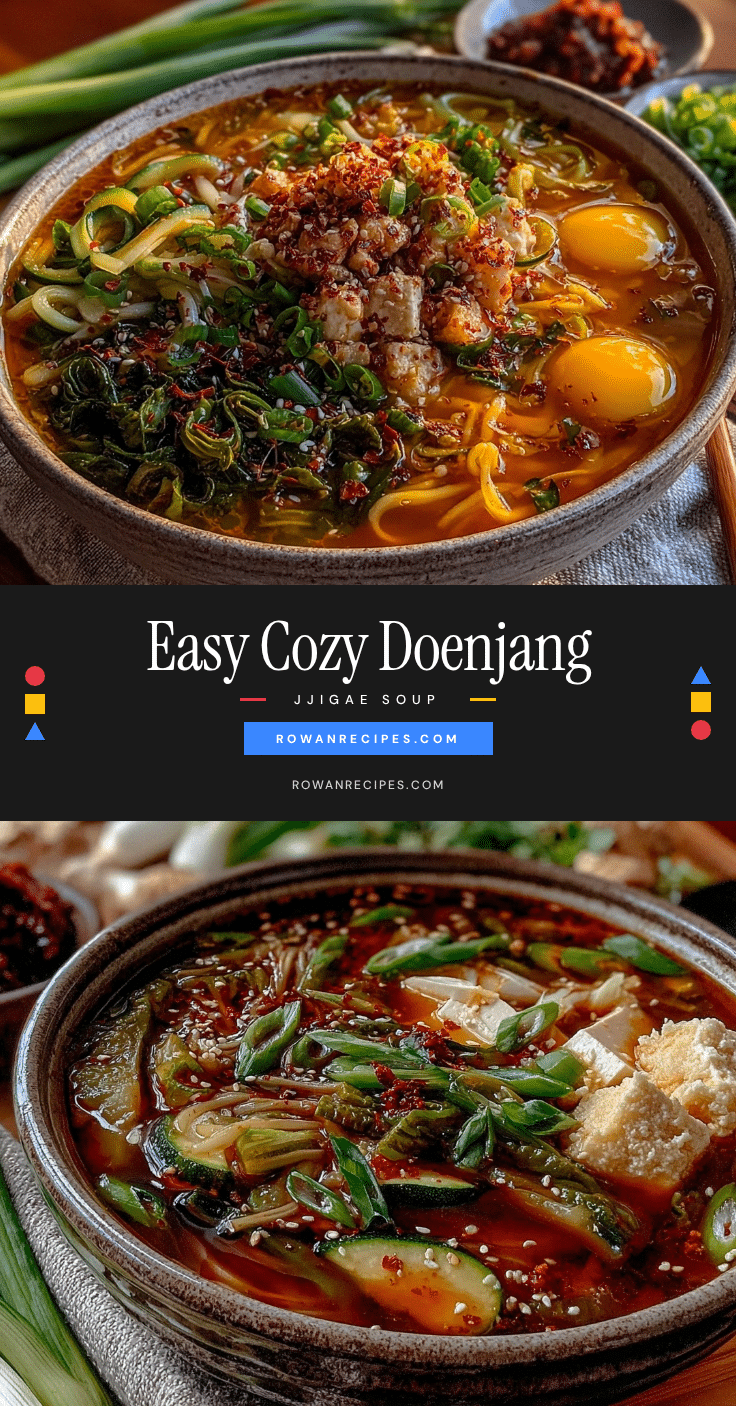
Easy Doenjang Jjigae Recipe 5 Steps for Cozy Korean Soup
A simple and comforting Korean fermented soybean soup made with doenjang, tofu, and vegetables, perfect for cozy meals and quick preparation.
- Prep Time: 10 minutes
- Cook Time: 20 minutes
- Total Time: 30 minutes
- Yield: 4 servings 1x
- Category: Main Course
- Cuisine: Korean
Ingredients
- 3 tablespoons (45 grams) doenjang (Korean fermented soybean paste)
- 4 cups (950 ml) water or vegetable/chicken broth
- 200 grams (7 oz) medium-firm or soft tofu, cut into cubes
- 1 small zucchini (150 grams/5 oz), thinly sliced
- 1 medium potato (150 grams/5 oz), peeled and cubed
- 1 small yellow or white onion, thinly sliced
- 1 green chili pepper, sliced (optional)
- 2 cloves garlic, minced
- 10 grams (0.35 oz) dried anchovies (optional, for broth)
- 1–2 stalks scallions, sliced thin for garnish
- 1 teaspoon sesame oil
- Salt and pepper to taste
Instructions
- Prepare the anchovy broth (optional): Rinse dried anchovies to remove excess salt. Add to 4 cups (950 ml) of water in a pot and bring to a gentle boil. Simmer for 10 minutes, then strain out the anchovies.
- Chop the vegetables: Peel and cube the potato. Slice the zucchini into thin half-moons. Thinly slice the onion and mince the garlic cloves. Slice the green chili pepper if using.
- Mix the doenjang paste: In a bowl, dissolve 3 tablespoons of doenjang in about 1/2 cup (120 ml) of the prepared broth or water. Stir well to avoid clumps.
- Cook the soup base: Bring the rest of the broth or water to a boil in your pot. Add the dissolved doenjang mixture, then add the potatoes and onion. Simmer for 7-10 minutes until potatoes start to soften.
- Add the zucchini and tofu: Gently add the tofu cubes and zucchini slices. Simmer for another 5 minutes. Add minced garlic and sliced chili pepper. Season with salt and pepper to taste.
- Finish and garnish: Turn off the heat and drizzle 1 teaspoon of sesame oil on top. Sprinkle sliced scallions before serving.
Notes
Avoid stirring vigorously when simmering to keep tofu intact. If soup is too salty, add a splash of water or broth. If flat, add a pinch of sugar. Anchovy broth adds extra umami but can be substituted with vegetable or chicken broth or water. Use fresh vegetables for best flavor. Store leftovers in airtight container for up to 3 days and reheat gently on stovetop.
Nutrition
- Serving Size: About 1.5 cups (360
- Calories: 150180
- Sodium: 600700
- Fat: 5
- Carbohydrates: 15
- Fiber: 3
- Protein: 10
Keywords: doenjang jjigae, Korean soup, fermented soybean paste, tofu soup, easy Korean recipe, comfort food, quick soup