“You really don’t have to be a ramen master to make this,” my friend said the first time I mentioned trying my hand at homemade Tonkotsu broth. I was skeptical—tons of pork bones and hours of simmering seemed daunting for a weeknight meal. But honestly, after that first batch, I couldn’t stop making this creamy Japanese ramen bowl. The rich, silky broth quickly became my go-to comfort food after hectic days, and even my picky eater gave it a thumbs up (a rare win!).
I remember the kitchen filled with that soft, meaty aroma—like a warm hug in a bowl—while the noodles boiled away. The broth’s creamy texture was unlike any instant ramen I’d ever had. It felt like a cozy secret, something I stumbled upon by accident when I tried a shortcut to cut down simmering time but ended up with a flavor that genuinely surprised me. It’s the kind of recipe that quietly earns a spot in your rotation because it’s both satisfying and straightforward.
Over time, I tweaked the seasoning and toppings, making it my perfect bowl every time. What stuck with me the most was how approachable this beginner Tonkotsu broth recipe is—no fancy ingredients, no stress, just pure, creamy goodness that feels special. If you’re here, you probably want to know how to make that happen in your kitchen too. Trust me, once you get this down, you’ll see why it’s so addictive.
And hey, if you’re curious about pairing it with other comforting dishes, I once paired a bowl of this ramen with creamy cheesy taco pasta for a night of serious comfort food vibes—talk about a flavor party!
Why You’ll Love This Recipe
After testing this creamy Japanese ramen bowl recipe multiple times, I can confidently say it’s a winner for both beginners and ramen fans. Here’s why it might become your new favorite too:
- Quick & Easy: The broth simmers for a shorter time than traditional versions—under 4 hours—making it doable on a weekend or even a day off.
- Simple Ingredients: No need for exotic spices or rare cuts of pork; just a handful of bones, aromatics, and pantry staples.
- Perfect for Cozy Nights: Whether you’re unwinding solo or feeding a small crowd, this ramen bowl delivers warmth and satisfaction.
- Crowd-Pleaser: The creamy texture and umami depth always get rave reviews, even from those who usually prefer lighter broths.
- Unbelievably Delicious: The silky tonkotsu broth, paired with springy noodles and well-seasoned toppings, hits that next-level comfort spot.
This isn’t just another ramen recipe—it’s the kind I’ve come back to again and again, because the broth has that perfect balance of richness without feeling heavy. The secret? A beginner-friendly technique that extracts all that creamy collagen goodness from the pork bones without needing an all-day simmer. Plus, the way the flavors layer with simple soy and miso touches makes it feel authentic yet approachable.
Honestly, it’s the kind of bowl that makes you pause after the first slurp and think, “Yeah, this is exactly what I needed.” And if you love quick, creamy, and comforting dishes, you might also appreciate the creamy garlic butter Tuscan shrimp pasta I whipped up recently—same comforting vibes but with a different twist!
What Ingredients You Will Need
This recipe uses straightforward, wholesome ingredients to build a deeply flavorful yet creamy tonkotsu broth that supports all the ramen toppings you love. Most are pantry staples, with a few fresh items that really make a difference.
- Pork Bones: 3 lbs (1.4 kg) pork neck bones or femur bones – these provide the collagen and rich flavor essential for that creamy broth.
- Water: About 12 cups (2.8 liters) to cover bones during simmering.
- Ginger: 2-inch piece, smashed – adds warmth and cuts through richness.
- Garlic: 6 cloves, smashed – for depth and aroma.
- Green Onions: 3 stalks, tied – infuses subtle freshness into broth.
- Onion: 1 medium, quartered – for sweetness.
- Shiitake Mushrooms: 4 dried, soaked – enhances umami richness.
- Soy Sauce: 1/4 cup (60 ml) – adds savory saltiness.
- Miso Paste: 2 tbsp (30 g), preferably white miso – balances broth with gentle sweetness.
- Sake or Mirin: 2 tbsp (30 ml) – optional, adds subtle sweetness and complexity.
- Sesame Oil: 1 tbsp (15 ml) – for finishing touch.
- Ramen Noodles: Fresh or dried, enough for 4 servings.
- Toppings: Soft-boiled eggs, sliced pork belly or chashu, bamboo shoots, nori sheets, green onions, corn kernels, and toasted sesame seeds (all optional but recommended for authenticity).
For best results, I prefer pork bones from a trusted butcher, but supermarket options work fine too if you’re careful to blanch them first to remove impurities. When it comes to miso, I like using a mild white miso for a subtle touch that won’t overpower the broth’s creaminess.
Note: If you want a vegetarian spin, substitute pork bones with a mix of shiitake, kombu, and mushrooms, although it won’t have the same creamy tonkotsu texture.
Equipment Needed
- Large Stockpot: A 6-quart (5.7 L) or larger pot works best for simmering the broth comfortably without spilling.
- Fine Mesh Strainer or Cheesecloth: For straining out bones and aromatics to get a clear broth.
- Large Bowl: For soaking dried shiitake mushrooms and holding toppings.
- Sharp Knife: For prepping toppings and slicing pork.
- Slotted Spoon or Skimmer: Useful for removing scum during the initial broth simmer.
- Ramen Bowls and Chopsticks: For serving—makes the experience feel authentic!
If you don’t have a large stockpot, a slow cooker or Instant Pot can be used for broth simmering—just adjust times accordingly. I once used a large Dutch oven, and it worked great too (just keep an eye on the water level).
Preparation Method
- Blanch the Bones: Place pork bones in a large stockpot and cover with cold water. Bring to a rolling boil over high heat for 10 minutes. This step removes impurities and results in a cleaner broth. Drain bones and rinse under cold water to remove any residue. (Time: 15 minutes)
- Simmer the Broth: Return the cleaned bones to the pot and add 12 cups (2.8 L) of fresh water. Add smashed ginger, garlic, green onions, onion, and soaked shiitake mushrooms. Bring to a boil, then reduce to a simmer. Skim any foam or scum that rises to the surface regularly during the first hour. Simmer uncovered for about 3 to 4 hours, topping up water as needed to keep bones submerged. (Time: 3.5-4 hours)
- Strain the Broth: After simmering, carefully strain the broth through a fine mesh strainer or cheesecloth into a clean pot or bowl. Press gently on solids to extract as much flavor as possible. Discard solids. (Time: 10 minutes)
- Season the Broth: Return the strained broth to the pot and stir in soy sauce, miso paste, and sake or mirin if using. Heat gently and taste; adjust saltiness if needed. Finish with a drizzle of sesame oil for aroma. (Time: 5 minutes)
- Prepare Noodles and Toppings: Cook ramen noodles according to package instructions until just tender. Meanwhile, soft-boil eggs (6-7 minutes for runny yolks), slice cooked pork belly or chashu, and prep other toppings like bamboo shoots, corn, and nori. (Time: 15 minutes)
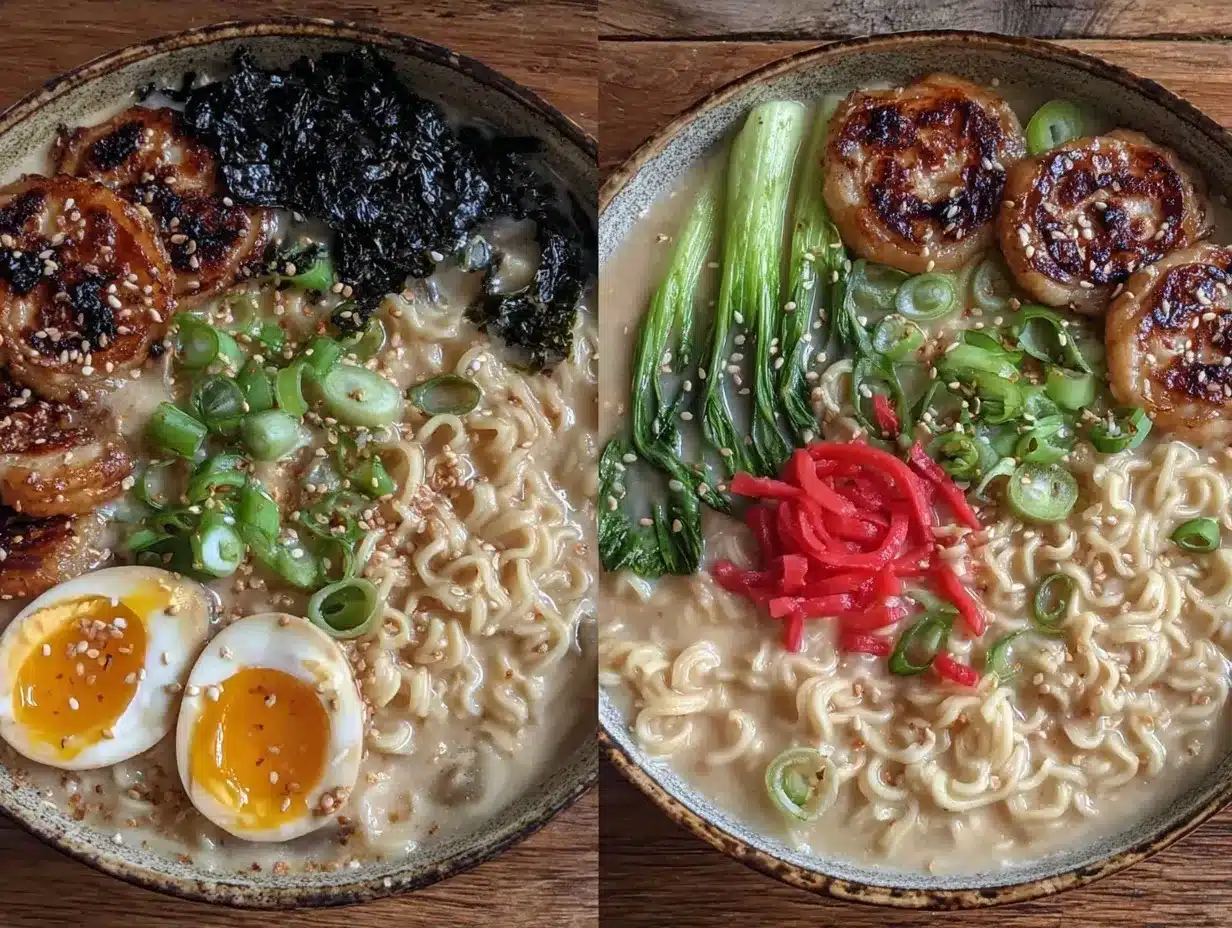
- Assemble the Bowl: Divide cooked noodles among warm bowls. Ladle hot broth over noodles. Arrange toppings on top: halved soft-boiled eggs, sliced pork, green onions, corn, nori sheets, and a sprinkle of toasted sesame seeds. (Time: 5 minutes)
- Enjoy: Slurp up the noodles and sip the creamy broth slowly. The layers of flavor from the rich broth and fresh toppings create a deeply satisfying experience that’s hard to beat.
Pro tip: If the broth seems too thick or gelatinous when cooled, just warm gently and stir in a little hot water to loosen before serving. I’ve found that keeping the broth refrigerated overnight helps the flavors meld beautifully.
Cooking Tips & Techniques
One key to nailing this creamy Japanese ramen bowl is patience during the simmer. Skimming that foam early on makes a huge difference in clarity and taste. I learned this the hard way after one cloudy batch that tasted off because I skipped it.
Also, don’t rush the seasoning step. Adding soy sauce and miso slowly, tasting as you go, helps balance the broth’s richness without overpowering it. I sometimes add a splash of rice vinegar if I want a little brightness.
Soft-boiled eggs are a small challenge but worth mastering. I found that plunging eggs into an ice bath right after cooking makes peeling easier and stops the cooking perfectly.
For noodles, fresh ramen noodles are ideal but dried works fine if you’re careful not to overcook. If you want an even quicker weeknight meal, you could try pairing this broth with some quick crispy sheet pan Italian sausage and peppers to round things out.
Lastly, leftovers? The broth thickens as it cools—just gently reheat and stir. I like to reheat on the stove rather than microwave to keep the texture smooth.
Variations & Adaptations
- Vegetarian Version: Replace pork bones with dried shiitake mushrooms, kombu, and root vegetables simmered longer for a rich umami broth, though it won’t have the classic creaminess.
- Spicy Ramen: Add a spoonful of chili oil or togarashi (Japanese chili powder) when assembling for a nice heat kick.
- Low-Carb Option: Swap ramen noodles for shirataki noodles or spiralized zucchini for a lighter bowl.
- Protein Variations: Use grilled chicken or tofu instead of pork for a different protein profile. I’ve tried this with marinated tofu and loved the contrast with the creamy broth.
- Instant Pot Shortcut: Use an Instant Pot to pressure cook bones and aromatics for 2 hours to cut simmering time drastically with good results.
Serving & Storage Suggestions
Serve this creamy Japanese ramen bowl steaming hot with all your favorite toppings. Presentation counts here—arrange eggs, pork slices, corn, and nori artfully for that authentic ramen shop feel.
Pair the bowl with light sides like a crisp cucumber salad or pickled vegetables to balance richness. A chilled glass of green tea or sake complements the flavors beautifully.
Store leftover broth in airtight containers in the fridge for up to 3 days or freeze portions for up to 3 months. When reheating, warm slowly on the stove and stir gently. Leftover toppings are best eaten fresh but can be stored separately for a day or two.
The broth’s flavor deepens after resting overnight—if you can wait that long! Just reheat and enjoy the next day for an even more satisfying meal.
Nutritional Information & Benefits
This creamy Japanese ramen bowl recipe offers a comforting balance of protein, collagen-rich broth, and carbs from noodles, making it a filling meal. A typical serving provides approximately 450-550 calories, depending on toppings.
Pork bones contribute collagen and minerals beneficial for joint and skin health. Aromatics like garlic and ginger add antioxidants and digestive support.
While this isn’t a low-calorie dish, it’s a wholesome meal that can fit into a balanced diet. Gluten-free eaters can swap noodles for rice noodles or shirataki to avoid gluten.
Be mindful of soy sauce’s sodium content; low-sodium versions work well if you’re watching salt intake.
Conclusion
This creamy Japanese ramen bowl with beginner Tonkotsu broth is proof that making authentic-tasting ramen at home doesn’t have to be intimidating. It’s approachable, satisfying, and endlessly customizable for your taste and schedule. Once you get the broth down, the rest comes together quickly, turning any night into a cozy, soul-soothing experience.
I love this recipe because it combines simple ingredients with bold flavor and a creamy texture that feels special but is surprisingly easy to make. It’s become a staple for me whenever I crave something warm and comforting without fuss.
If you try it, I’d love to hear how you personalized your bowl or any twists you added. Drop a comment below or share your ramen moments!
FAQs
How long does it take to make Tonkotsu broth for beginners?
Typically, this beginner-friendly recipe takes about 3.5 to 4 hours simmering. Using an Instant Pot can reduce that to around 2 hours.
Can I use chicken bones instead of pork bones?
Chicken bones won’t give the same creamy, rich texture typical of Tonkotsu broth, but they can make a lighter broth if you prefer.
What’s the best way to soften the pork bones for broth?
Blanching the bones in boiling water for 10 minutes removes impurities and helps extract maximum flavor during simmering.
Can I make the broth ahead of time?
Yes! The broth actually tastes better after resting overnight. Store it in the fridge and reheat gently before serving.
What toppings work best for this creamy ramen bowl?
Classic toppings include soft-boiled eggs, sliced pork belly or chashu, bamboo shoots, green onions, corn, and nori sheets. Feel free to add mushrooms or spinach too!
Pin This Recipe!
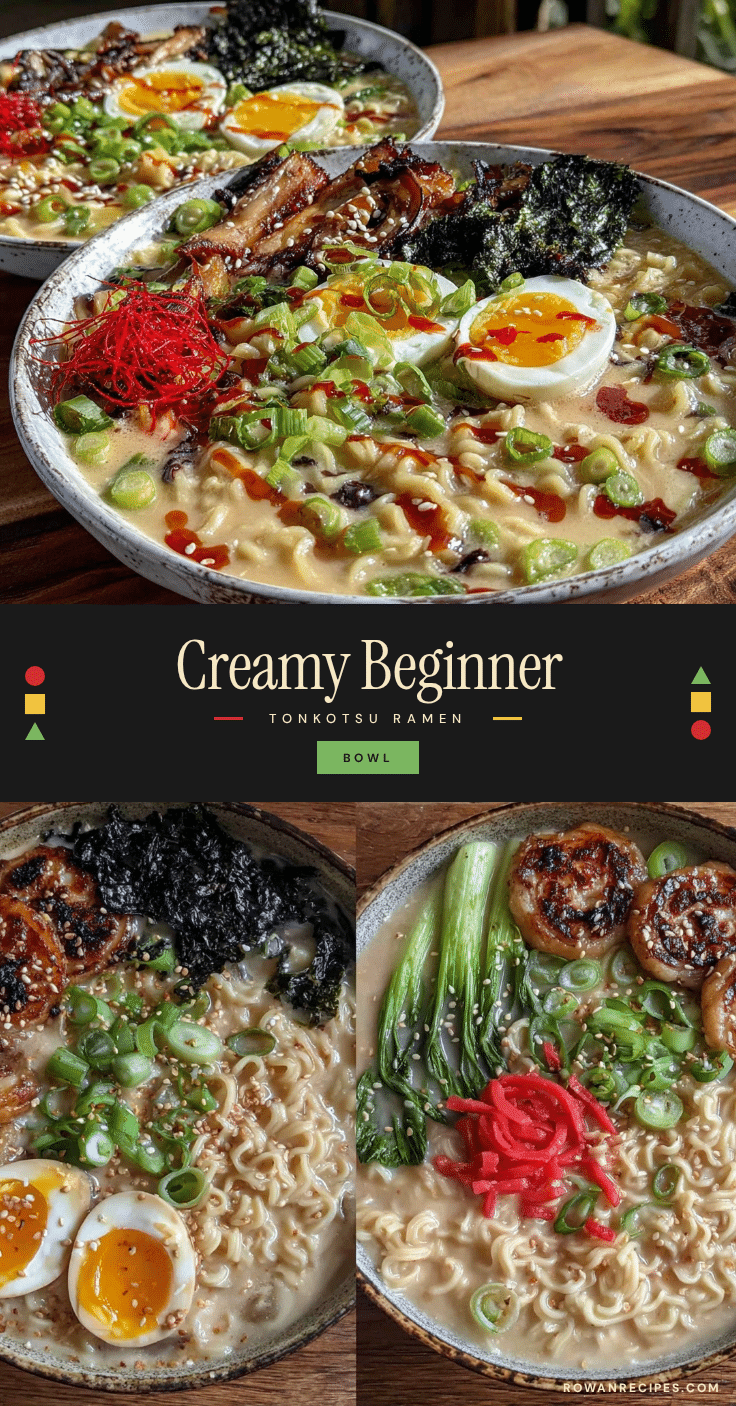
Creamy Japanese Ramen Bowl Recipe Easy Homemade Tonkotsu Broth Guide

A beginner-friendly recipe for creamy Tonkotsu broth ramen with simple ingredients and rich, silky texture. Perfect for cozy nights and customizable with authentic toppings.
- Prep Time: 30 minutes
- Cook Time: 4 hours
- Total Time: 4 hours 30 minutes
- Yield: 4 servings 1x
- Category: Main Course
- Cuisine: Japanese
Ingredients
- 3 lbs pork neck bones or femur bones
- 12 cups water
- 2-inch piece ginger, smashed
- 6 cloves garlic, smashed
- 3 stalks green onions, tied
- 1 medium onion, quartered
- 4 dried shiitake mushrooms, soaked
- 1/4 cup soy sauce
- 2 tbsp white miso paste
- 2 tbsp sake or mirin (optional)
- 1 tbsp sesame oil
- Ramen noodles for 4 servings
- Toppings: soft-boiled eggs, sliced pork belly or chashu, bamboo shoots, nori sheets, green onions, corn kernels, toasted sesame seeds (all optional)
Instructions
- Blanch the bones: Place pork bones in a large stockpot and cover with cold water. Bring to a rolling boil over high heat for 10 minutes. Drain bones and rinse under cold water to remove residue. (15 minutes)
- Simmer the broth: Return cleaned bones to pot and add 12 cups fresh water. Add smashed ginger, garlic, green onions, onion, and soaked shiitake mushrooms. Bring to boil, reduce to simmer. Skim foam regularly during first hour. Simmer uncovered for 3.5 to 4 hours, topping up water as needed. (3.5-4 hours)
- Strain the broth: Strain broth through fine mesh strainer or cheesecloth into clean pot or bowl. Press solids gently to extract flavor. Discard solids. (10 minutes)
- Season the broth: Return strained broth to pot. Stir in soy sauce, miso paste, and sake or mirin if using. Heat gently and taste; adjust saltiness if needed. Finish with drizzle of sesame oil. (5 minutes)
- Prepare noodles and toppings: Cook ramen noodles according to package instructions until just tender. Soft-boil eggs (6-7 minutes for runny yolks), slice cooked pork belly or chashu, prep other toppings like bamboo shoots, corn, and nori. (15 minutes)
- Assemble the bowl: Divide cooked noodles among warm bowls. Ladle hot broth over noodles. Arrange toppings on top: halved soft-boiled eggs, sliced pork, green onions, corn, nori sheets, toasted sesame seeds. (5 minutes)
- Enjoy: Slurp noodles and sip creamy broth slowly for a deeply satisfying experience.
Notes
Blanch bones to remove impurities for clearer broth. Skim foam during simmering for better flavor and clarity. Add soy sauce and miso slowly, tasting to balance saltiness. Soft-boil eggs and plunge in ice bath for easy peeling. Broth thickens when cooled; warm gently and stir in hot water to loosen. Refrigerate broth overnight for deeper flavor. Instant Pot can reduce simmer time to 2 hours. Vegetarian version uses shiitake, kombu, and root vegetables but lacks creamy texture.
Nutrition
- Serving Size: 1 bowl (approximatel
- Calories: 500
- Sugar: 4
- Sodium: 900
- Fat: 20
- Saturated Fat: 7
- Carbohydrates: 50
- Fiber: 3
- Protein: 30
Keywords: Japanese ramen, Tonkotsu broth, creamy ramen, homemade ramen, pork bone broth, easy ramen recipe, comfort food, ramen toppings