“You’ve got to try making salsa with those tomatoes before they go bad,” my neighbor called out as I wrestled with a basket of overripe garden tomatoes on a sticky August afternoon. Honestly, I was skeptical—homemade salsa for canning? I’d always thought it was complicated, time-consuming, and frankly, a bit intimidating. But that afternoon, with the sun beating down and the scent of fresh basil hanging in the air, I decided to give it a shot.
The first batch was a bit chunky, a little too spicy, and honestly, a little rough around the edges. But the vibrant taste of those freshly picked tomatoes, mingled with just the right kick of jalapeño and the brightness of lime, made me keep tweaking the recipe. By the third jar, I had something truly special: fresh homemade salsa for canning that captured the essence of my garden in a jar.
It’s funny how a simple suggestion, paired with the hum of summer cicadas and the smell of roasting peppers on the stove, can turn a hesitant cook into a salsa enthusiast. Now, every late summer and early fall, I find myself chopping, simmering, and filling jars with this fresh homemade salsa, knowing that winter will be a little warmer and a lot tastier thanks to those preserved garden tomatoes.
There’s a quiet satisfaction in turning your garden’s bounty into something that lasts—something that brings back the taste of sun-warmed tomatoes and backyard chats. This recipe stuck with me because it’s honest, approachable, and brings that garden-fresh feeling right to your table all year long.
Why You’ll Love This Fresh Homemade Salsa for Canning with Garden Tomatoes
Making your own salsa for canning from garden tomatoes isn’t just about preserving produce—it’s about capturing a moment, a flavor, and a little bit of summer magic. Having tinkered with this recipe over several seasons, I can say it’s one of those rare kitchen wins that’s easy, tasty, and endlessly satisfying.
- Quick & Easy: This salsa comes together in about 45 minutes, perfect for turning a bounty of tomatoes into pantry-ready goodness without spending hours in the kitchen.
- Simple Ingredients: You won’t need fancy or hard-to-find items—just fresh garden tomatoes, onions, peppers, and pantry staples you likely have on hand.
- Perfect for Canning: Designed specifically to safely preserve those garden tomatoes, this recipe follows tested methods that help you enjoy fresh salsa flavor all year.
- Crowd-Pleaser: Whether it’s game day or a casual family dinner, this salsa earns rave reviews from kids and adults alike, thanks to its balanced heat and fresh zest.
- Unbelievably Delicious: The bright acidity of the tomatoes and lime combined with the mild heat from jalapeños results in an irresistible flavor combo that keeps you spooning more.
What makes this salsa stand out isn’t just the fresh-picked tomatoes but the way the ingredients harmonize—no overpowering heat, no mushy texture. Instead, you get a salsa that’s vibrant, fresh, and perfectly balanced. Plus, the canning process locks in that garden freshness with a homemade touch that no store-bought salsa can match.
It’s the kind of recipe that turns saving tomatoes into a joyful ritual, not a chore. You can open a jar on a dreary winter night, close your eyes, and feel like you’re back on that porch, tomatoes in hand, chatting with your neighbor about the summer’s harvest.
What Ingredients You Will Need for Fresh Homemade Salsa for Canning with Garden Tomatoes
This recipe keeps things simple but flavorful, relying on fresh, wholesome ingredients to bring out the best in your garden tomatoes. Most are pantry staples or garden classics, so you won’t need to hunt down anything exotic.
- Garden tomatoes: About 10 pounds (4.5 kg) of ripe, firm tomatoes (Roma or plum tomatoes work great for less watery salsa)
- Onions: 2 medium white onions, finely chopped (adds sweetness and crunch)
- Garlic: 4 cloves, minced (fresh for best aroma)
- Jalapeño peppers: 2-3, seeded and finely chopped (adjust to taste for heat)
- Green bell pepper: 1 medium, finely chopped (for a mild pepper flavor and texture)
- Fresh cilantro: ½ cup, chopped (adds brightness and herbal notes)
- Lime juice: 3 tablespoons fresh squeezed (balances acidity and boosts freshness)
- Apple cider vinegar: ½ cup (helps with preservation and adds tang)
- Granulated sugar: 1 tablespoon (balances acidity without sweetness overload)
- Salt: 2 teaspoons (enhances all flavors)
- Ground cumin: 1 teaspoon (optional, for a subtle smoky undertone)
- Black pepper: ½ teaspoon freshly ground (for mild warmth)
When selecting tomatoes, look for firm, blemish-free fruit with deep color—this will make your salsa shine. For canning, Roma tomatoes or other paste varieties are ideal as they have less water, giving your salsa a thicker consistency.
If you want to keep it gluten-free and vegan, this recipe fits perfectly without any tweaks. For a dairy-free twist on salsa dips, try pairing it with creamy garlic butter Tuscan shrimp pasta, which balances rich textures with fresh heat wonderfully.
Equipment Needed
- Large stockpot or heavy-bottomed pot: For cooking the salsa—choose one that holds at least 6 quarts (5.7 liters) to prevent overflow when bubbling.
- Cutting board and sharp knives: For chopping tomatoes, peppers, and onions efficiently and safely.
- Food processor or blender (optional): If you prefer a smoother salsa texture, a quick pulse can help, but be careful not to over-process.
- Measuring cups and spoons: To keep ingredient ratios accurate, especially important for safe canning.
- Canning jars and lids: Quart-sized (32 oz / 946 ml) or pint-sized (16 oz / 473 ml) mason jars with new lids for safe sealing.
- Water bath canner or large stockpot with rack: For processing jars safely and extending shelf life.
- Jar lifter and funnel: To handle hot jars without risk and to fill jars cleanly.
Personally, investing in a good-quality canning set made the process less stressful. I started with budget-friendly jars and found the glass quality varies, so I upgraded to brands like Ball for durability and seal reliability. If you don’t have a water bath canner, a large deep pot with a rack works just fine—just make sure the jars are covered by at least an inch of water during processing.
Preparation Method for Fresh Homemade Salsa for Canning with Garden Tomatoes
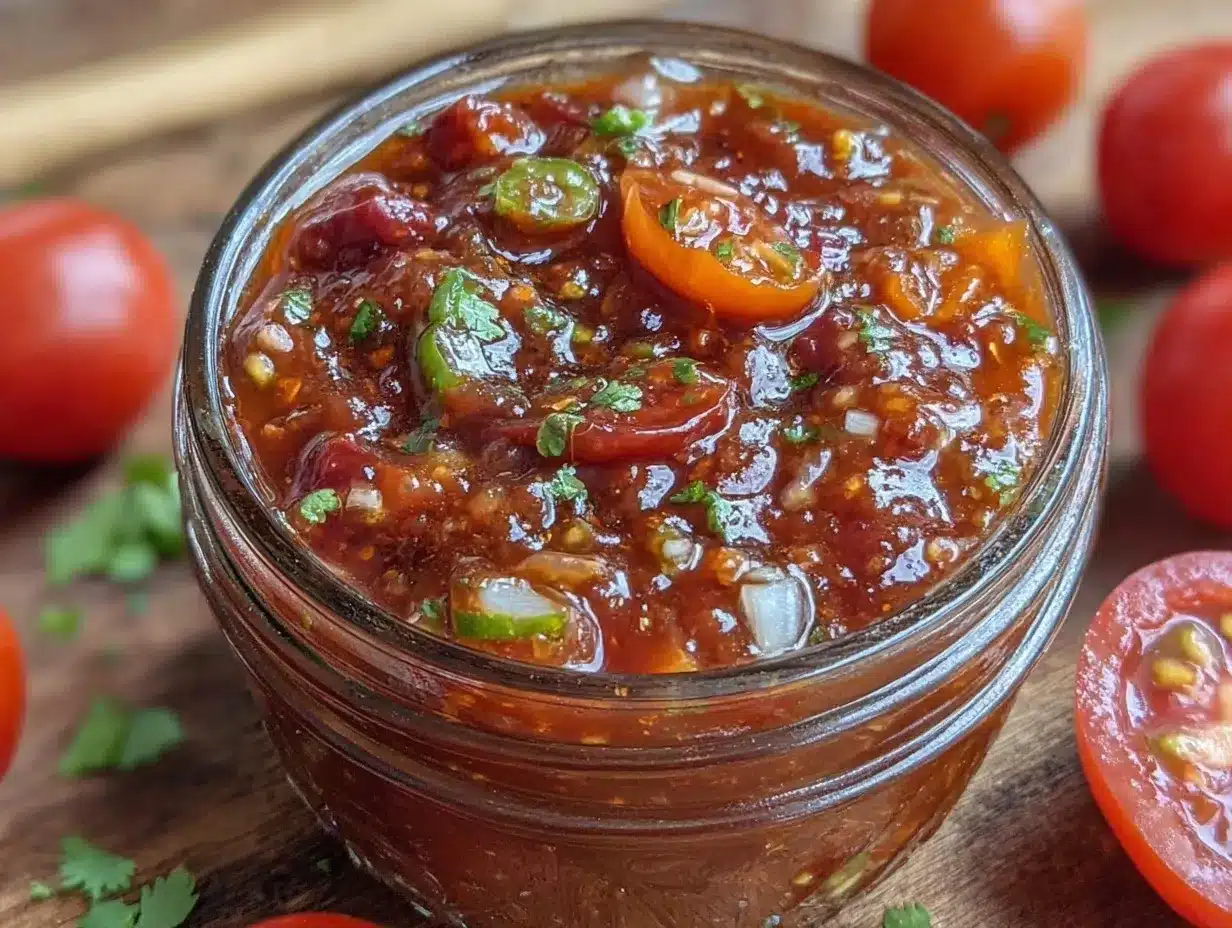
- Prepare your workspace and sterilize jars: Wash jars and lids in hot soapy water; boil jars for 10 minutes to sterilize. Keep them warm until ready to fill.
- Wash and chop tomatoes: Rinse tomatoes thoroughly. Core and roughly chop about 10 pounds (4.5 kg) of tomatoes. If you prefer a less chunky salsa, you can peel tomatoes by blanching them in boiling water for 30 seconds, then plunging into ice water—skins will slip off easily.
- Chop vegetables and herbs: Finely dice onions, jalapeños (seeded if less heat desired), green bell pepper, and mince garlic. Chop fresh cilantro and set aside.
- Cook the salsa base: In a large stockpot, combine chopped tomatoes, onions, bell pepper, jalapeños, and garlic. Bring to a boil over medium-high heat, then reduce heat and simmer uncovered for 15-20 minutes, stirring occasionally. The mixture should thicken slightly and smell fragrant.
- Add seasonings and acid: Stir in apple cider vinegar, lime juice, sugar, salt, cumin (if using), black pepper, and cilantro. Simmer for another 5 minutes, tasting and adjusting salt or heat as needed. The bright acidity should balance the natural sweetness of the tomatoes.
- Fill jars with hot salsa: Using a funnel, ladle the hot salsa into sterilized jars, leaving about ½ inch (1.3 cm) headspace at the top. Wipe rims clean with a damp cloth to ensure a good seal.
- Seal and process jars: Place lids on jars and screw on bands finger-tight. Process jars in a boiling water bath canner for 15 minutes (adjust time for altitude if necessary). Remove jars and let cool undisturbed for 12-24 hours.
- Check seals and store: After cooling, press the center of each lid—if it doesn’t pop back, the jar is sealed. Label and store in a cool, dark place. Any unsealed jars should be refrigerated and used within a week.
Pro tip: If you want a bit smoother texture without fully blending, pulse a few times in a food processor just before cooking. This gives salsa a nice chunky yet cohesive feel. Also, don’t rush the simmering stage—letting flavors marry while the salsa thickens makes all the difference.
Cooking Tips & Techniques for Perfect Fresh Homemade Salsa
Cooking salsa for canning can feel a bit daunting, but a few lessons I learned the hard way might help you avoid common pitfalls.
- Don’t skip sterilizing jars: It might seem tedious, but sterilizing jars and lids is crucial to prevent spoilage and keep your salsa fresh for months.
- Balance acidity carefully: Tomatoes can vary in acidity depending on the season and variety. Adding the right amount of vinegar and lime juice not only brightens flavor but ensures safe preservation.
- Seed peppers if you want milder salsa: The seeds and membranes hold most of the heat. Removing them can keep things approachable for picky eaters.
- Simmer uncovered: This helps reduce excess liquid and concentrates flavors. Stir occasionally to prevent burning.
- Use fresh herbs wisely: Adding cilantro at the end preserves its fresh flavor and vibrant color.
- Test small batches first: Before canning a large batch, cook a small portion to taste and tweak seasoning. This saves waste and lets you customize heat and tang.
- Don’t overfill jars: Leaving proper headspace prevents jar breakage and ensures a vacuum seal during processing.
Personally, I once tried skipping the vinegar step to “keep it natural” and ended up with a jar that bubbled ominously after a week. Lesson learned! Following tested canning guidelines is key to safe and tasty salsa.
Variations & Adaptations for Fresh Homemade Salsa
Fresh homemade salsa is a great canvas for personalization. Here are some ways I’ve mixed things up depending on mood, season, or pantry contents.
- Roasted Salsa: Roast tomatoes, peppers, and onions under the broiler or on a grill before chopping for a smoky depth.
- Chunky vs. Smooth: Use a food processor for a smoother salsa or chop everything finely by hand for a chunky texture.
- Heat Levels: Swap jalapeños with milder Anaheim peppers or add a pinch of crushed red pepper flakes for extra kick.
- Herb Variations: Try fresh oregano or parsley instead of cilantro for different herbal notes.
- Low-Sodium Option: Reduce salt to taste and add a splash of lemon juice for brightness.
- Seasonal Twists: In late summer, adding diced fresh corn or black beans after canning makes a vibrant salsa fresca.
One time, I tossed in a handful of chopped peaches to give the salsa a subtle sweetness that surprised everyone. It paired beautifully with honey mustard chicken on a busy weeknight. These little twists keep the recipe fresh and exciting.
Serving & Storage Suggestions
Fresh homemade salsa for canning is wildly versatile. Serve it chilled or at room temperature alongside chips, tacos, or grilled meats for a burst of garden flavor.
When serving, a sprinkle of fresh cilantro or a squeeze of lime can brighten the salsa even more. It pairs wonderfully with dishes like cheesy taco pasta or simple grilled chicken for a quick, tasty meal.
Store sealed jars in a cool, dark pantry. Properly processed salsa keeps for up to a year. Once opened, refrigerate and consume within 7–10 days for best freshness.
Reheating salsa isn’t usually necessary, but warming it slightly can soften the flavors for recipes that call for cooked salsa, like chili or enchiladas. Over time, the flavors meld and deepen, making the salsa even more enjoyable after a few weeks.
Nutritional Information & Benefits
This fresh homemade salsa is naturally low in calories, fat-free, and packed with vitamins and antioxidants from garden tomatoes and fresh herbs. Tomatoes provide vitamin C, potassium, and lycopene—a powerful antioxidant linked to heart health.
Using fresh ingredients keeps sodium and sugar levels moderate, making it a healthier choice than many store-bought salsas heavy on preservatives and added sugars.
It’s gluten-free, vegan, and fits well into a variety of diets. The fresh lime juice adds vitamin C and a refreshing zing, while the garlic and jalapeños offer immune-boosting properties.
Conclusion
This fresh homemade salsa for canning with garden tomatoes has become a staple in my kitchen—not just for its vibrant, fresh flavor, but for the memories and simple joy it brings. It’s proof that preserving the garden’s bounty doesn’t have to be complex or intimidating.
Feel free to adjust the heat, texture, or herbs to your liking—this salsa is as flexible as your garden’s harvest. Whether you’re a seasoned canner or trying this for the first time, I hope it becomes a recipe you return to year after year.
There’s something special about opening a jar and tasting summer anytime you want. I’d love to hear how your salsa turns out or any fun twists you’ve tried—sharing those stories makes cooking even better!
Frequently Asked Questions
Can I use other types of tomatoes besides Roma for this salsa?
Yes, but Roma or plum tomatoes are best for canning salsa because they have less water. If using other tomatoes, consider peeling and draining excess juice to avoid a watery salsa.
How long does canned salsa last on the shelf?
Properly canned salsa can last up to 12 months when stored in a cool, dark place. Always check the seal and appearance before use.
Is it safe to can salsa without vinegar?
Vinegar is important to maintain acidity for safe preservation. Skipping it can risk spoilage and foodborne illness, so it’s best not to leave it out.
Can I freeze this homemade salsa instead of canning?
Yes! Freezing preserves freshness and flavor well. Use freezer-safe containers and consume within 6 months for best quality.
How spicy will this salsa be with jalapeños?
It has a mild to medium heat, depending on how many jalapeños you include and whether you seed them. Remove seeds for less heat, or add more peppers if you like it hotter.
Pin This Recipe!
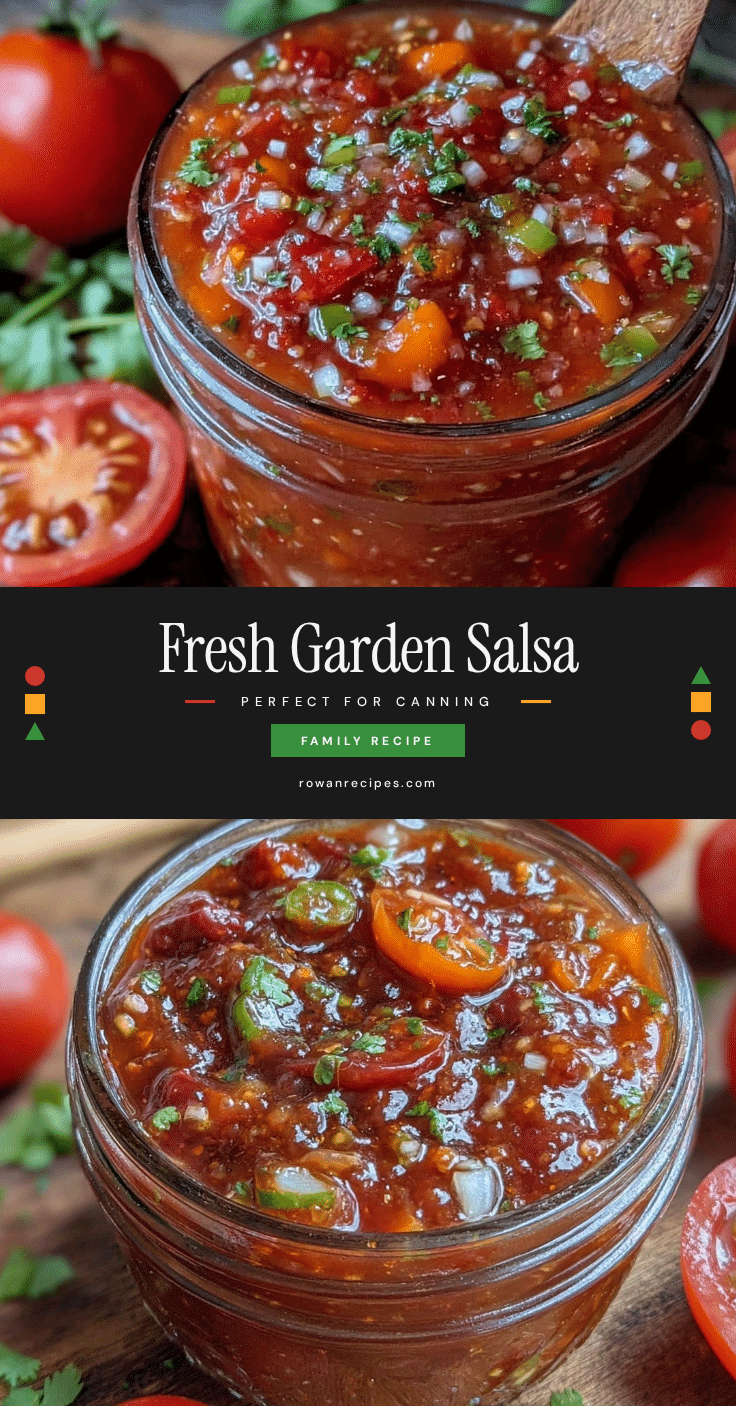
Fresh Homemade Salsa for Canning with Garden Tomatoes
A vibrant and perfectly balanced fresh homemade salsa recipe designed for canning, capturing the essence of garden tomatoes with a mild kick of jalapeño and bright lime.
- Prep Time: 15 minutes
- Cook Time: 30 minutes
- Total Time: 45 minutes
- Yield: 8-10 servings 1x
- Category: Condiment
- Cuisine: Mexican
Ingredients
- 10 pounds ripe, firm garden tomatoes (Roma or plum tomatoes preferred)
- 2 medium white onions, finely chopped
- 4 cloves garlic, minced
- 2–3 jalapeño peppers, seeded and finely chopped
- 1 medium green bell pepper, finely chopped
- ½ cup fresh cilantro, chopped
- 3 tablespoons fresh lime juice
- ½ cup apple cider vinegar
- 1 tablespoon granulated sugar
- 2 teaspoons salt
- 1 teaspoon ground cumin (optional)
- ½ teaspoon freshly ground black pepper
Instructions
- Prepare your workspace and sterilize jars: Wash jars and lids in hot soapy water; boil jars for 10 minutes to sterilize. Keep them warm until ready to fill.
- Wash and chop tomatoes: Rinse tomatoes thoroughly. Core and roughly chop about 10 pounds of tomatoes. Optionally peel tomatoes by blanching in boiling water for 30 seconds, then plunging into ice water.
- Chop vegetables and herbs: Finely dice onions, jalapeños (seeded if less heat desired), green bell pepper, and mince garlic. Chop fresh cilantro and set aside.
- Cook the salsa base: In a large stockpot, combine chopped tomatoes, onions, bell pepper, jalapeños, and garlic. Bring to a boil over medium-high heat, then reduce heat and simmer uncovered for 15-20 minutes, stirring occasionally until thickened and fragrant.
- Add seasonings and acid: Stir in apple cider vinegar, lime juice, sugar, salt, cumin (if using), black pepper, and cilantro. Simmer for another 5 minutes, tasting and adjusting salt or heat as needed.
- Fill jars with hot salsa: Using a funnel, ladle the hot salsa into sterilized jars, leaving about ½ inch headspace. Wipe rims clean with a damp cloth.
- Seal and process jars: Place lids on jars and screw on bands finger-tight. Process jars in a boiling water bath canner for 15 minutes (adjust for altitude if necessary). Remove jars and let cool undisturbed for 12-24 hours.
- Check seals and store: After cooling, press the center of each lid—if it doesn’t pop back, the jar is sealed. Label and store in a cool, dark place. Refrigerate and use any unsealed jars within a week.
Notes
Sterilizing jars is crucial for safe preservation. Adjust heat by seeding jalapeños or using milder peppers. Simmer uncovered to reduce liquid and concentrate flavors. Pulse in a food processor for a smoother texture but avoid over-processing. Test small batches first to customize seasoning and heat. Leave proper headspace in jars to ensure vacuum seal.
Nutrition
- Serving Size: About ½ cup per serv
- Calories: 35
- Sugar: 5
- Sodium: 460
- Carbohydrates: 8
- Fiber: 2
- Protein: 1
Keywords: fresh salsa, homemade salsa, salsa for canning, garden tomatoes, preserving tomatoes, easy salsa recipe, canning salsa, mild salsa, jalapeño salsa