“You know, I wasn’t even planning to make dumplings that night,” I muttered to myself, kneading the dough on the countertop, flour dusting the air like a light snowfall. The kitchen was quiet except for the rhythmic slap of dough against the wooden board. It started as a spur-of-the-moment idea after rummaging through my pantry, realizing I only had flour and water left—no fancy ingredients or pre-made wrappers in sight. Honestly, I was skeptical. Could something so simple really work? But after a few tries, this easy no-fail homemade dumpling wrapper dough recipe with flour and water became my go-to. No fuss, no mystery ingredients, just the basics that yield perfect dumplings every time.
There’s something oddly satisfying about making your own wrappers—kind of meditative, really. It’s like the dough tells you when it’s ready, soft but not sticky, smooth but pliable. I remember the first time I rolled out the dough, the thin sheets stretching without tearing, and the dumplings steamed to tender perfection. That night, my friends couldn’t stop asking for the recipe, and I realized I had stumbled on something quietly special. It’s a humble recipe, but it sticks with you because it’s reliable and just plain comforting. So, if you’ve ever thought making dumpling wrappers was complicated or out of reach, this recipe might just change your mind.
What I love most is how this simple dough serves as the perfect canvas for any filling—whether you’re into savory pork and cabbage, spicy kimchi, or even sweet red bean paste. It’s an easy, no-fail way to make dumplings feel homemade without the usual hassle. And honestly, once you’ve made your own wrappers, going back to store-bought feels like a missed opportunity. This dough has made my dumpling nights more joyful, more connected, and frankly, a whole lot tastier.
Why You’ll Love This Recipe
After countless experiments in my kitchen, this easy no-fail homemade dumpling wrapper dough recipe with flour and water has become my trusted staple. It’s tested over many family dinners, quick weekday meals, and even relaxed weekend gatherings where everyone pitches in. What makes this recipe stand apart isn’t just its simplicity—it’s how consistent and forgiving it is. Here’s why it might become your favorite too:
- Quick & Easy: Takes about 15 minutes to mix and knead, no waiting for yeast or resting overnight. Perfect when dumpling cravings hit unexpectedly.
- Simple Ingredients: Only need all-purpose flour and water—no eggs, no special starches, no mystery powders. Chances are, you already have these in your pantry.
- Perfect for Any Occasion: Whether you’re making a cozy weeknight dinner or an impromptu potluck dish, homemade dumplings impress without the stress.
- Crowd-Pleaser: The dough’s tender chewiness and elasticity hold fillings beautifully, making dumplings that both kids and adults devour happily.
- Unbelievably Delicious: The texture is just right—not too thick, not too flimsy—which means the wrappers steam to tender perfection every time.
This recipe isn’t just another flour-and-water dough. What sets it apart is the precise water temperature and kneading technique I honed over many batches. Using warm water activates the gluten just enough for elasticity without toughness. I even found that letting the dough rest wrapped in a damp cloth makes rolling out the perfect thin sheets a breeze. This isn’t some complicated chef’s trick—just well-practiced, straightforward kitchen know-how.
Honestly, after making this dough a handful of times in one week (I wasn’t kidding about the obsession phase), I realized that homemade dumplings don’t have to be intimidating. If you’ve been hesitant to try because you thought it was too tricky, this recipe is your friendly welcome mat. It’s dumpling-making for real life—simple, reliable, and totally satisfying.
What Ingredients You Will Need
This recipe uses simple, wholesome ingredients to deliver a dough that’s both tender and strong enough to hold your favorite fillings. All you need are pantry staples, which means no extra trips to the store and no fuss.
- All-purpose flour: 2 cups (250 grams) – I always use King Arthur for consistent texture, but any reliable brand works fine.
- Warm water: About 3/4 cup (180 ml) – temperature is key here; warm (not hot) water helps create the right gluten development.
- Salt (optional): 1/4 teaspoon – adds a subtle depth to the dough but can be skipped if you prefer plain wrappers.
Optional variations:
- Gluten-free option: Swap all-purpose flour with a gluten-free blend (note: texture will differ slightly, and dough might be less elastic).
- Whole wheat variation: Replace half the flour with whole wheat for a nuttier flavor and heartier bite.
Pro tip: When selecting your flour, look for a medium-protein content (around 10-12%) for ideal elasticity. Too low, and the dough gets brittle; too high, and it can be chewy. While I prefer all-purpose for this recipe, experimenting with bread flour can create a slightly different texture if you want to get creative.
Equipment Needed
Making your own dumpling wrappers doesn’t require fancy kitchen gadgets—just a few basics that you probably already own:
- Mixing bowl: A large one to comfortably mix and knead the dough.
- Measuring cups and spoons: For accurate flour and water measurements.
- Rolling pin: Essential for rolling the dough into thin, even circles. A wooden rolling pin works best for me.
- Bench scraper or sharp knife: To divide dough into even portions.
- Clean kitchen towel or plastic wrap: For covering the dough during resting to keep it moist.
If you don’t have a rolling pin, a smooth wine bottle or drinking glass can do the trick in a pinch (I’ve been there!). As for the bench scraper, a butter knife or pizza cutter can help divide dough pieces neatly. Keeping your workspace lightly floured will prevent sticking, but don’t overdo it—too much flour can dry out the dough.
Preparation Method
- Measure your flour and salt: In a large mixing bowl, combine 2 cups (250 g) all-purpose flour and 1/4 teaspoon salt (if using). Mix briefly to distribute the salt evenly.
- Warm the water: Heat about 3/4 cup (180 ml) water until warm to the touch but not hot (around 110°F/43°C). This warmth is crucial—it helps the dough develop elasticity without making it tough.
- Mix water into flour: Gradually pour the warm water into the flour mixture, stirring with chopsticks or a wooden spoon to form loose clumps. This usually takes about 1-2 minutes.
- Knead the dough: Once the dough starts coming together, transfer it to a clean surface and knead for 8-10 minutes. You’re aiming for a smooth, elastic ball that feels slightly tacky but doesn’t stick to your hands. If it’s too sticky, sprinkle a little more flour; if dry, add a teaspoon of water at a time.
- Rest the dough: Wrap the dough ball tightly with plastic wrap or cover with a damp kitchen towel. Let it rest for at least 30 minutes at room temperature. This resting time relaxes the gluten, making the dough easier to roll out.
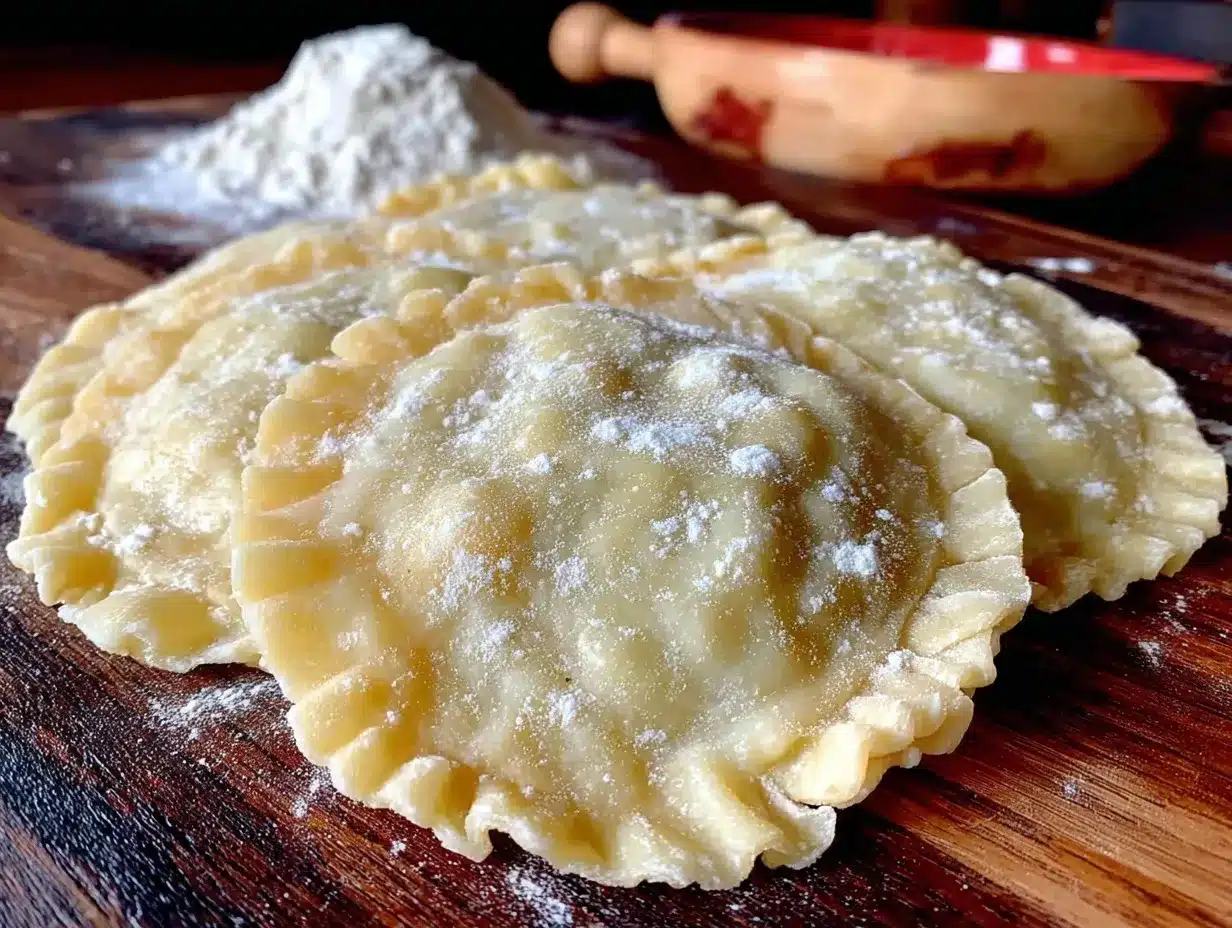
- Divide and roll: After resting, cut the dough into four equal pieces with a bench scraper or knife. Roll each piece into a long log about 1 inch (2.5 cm) thick. Cut each log into 12 equal small pieces for a total of 48 wrappers.
- Shape the wrappers: Lightly dust a piece of dough with flour and flatten it with your palm. Using a rolling pin, roll from the center outwards into a thin circle about 3-4 inches (7.5-10 cm) in diameter. The edges should be slightly thinner than the center to seal better without breaking.
- Use or store: If not using immediately, layer the wrappers separated by parchment paper, cover with a damp towel, and refrigerate for up to 2 days or freeze for longer storage.
Note: Rolling out dumpling wrappers takes practice. If the dough springs back, let the piece rest for a few minutes to relax. Also, don’t worry if the circles aren’t perfectly round—homemade charm counts!
Cooking Tips & Techniques
Mistakes happen, especially when you’re getting started with homemade dumpling wrappers. Here are some tips I’ve learned the hard way that might save you a few headaches:
- Water temperature matters: Using cold water results in a stiffer dough that’s hard to roll, while boiling water can make the dough too soft or gummy. Aim for warm, tepid water around 110°F (43°C).
- Kneading is key: Don’t rush this step. Kneading develops the gluten structure, which gives the dough stretch and strength. An under-kneaded dough tears easily, while over-kneaded dough can be tough.
- Resting time helps: Give the dough at least 30 minutes to rest. This step relaxes the gluten and makes rolling out smoother.
- Keep dough covered: Dumpling dough dries out fast, which causes cracks when rolling. Cover with a damp cloth between rolling each wrapper.
- Flour sparingly: Use just enough flour on your surface and rolling pin to prevent sticking. Excess flour can make wrappers dry and brittle.
Over the years, I’ve found multitasking during the resting period helpful—prepping fillings or setting the table while the dough takes a breather. This little break always makes the process feel less daunting and more fun. Plus, if you want to speed things up, try easy sheet pan honey mustard chicken for a quick main to serve alongside your dumplings.
Variations & Adaptations
While this basic flour-and-water wrapper is a classic, there’s room to tailor it to your needs or experiment with different tastes and textures:
- Egg-based dough: Swap half the water for one large beaten egg for richer, more tender wrappers (common in northern Chinese dumplings).
- Gluten-free dough: Use a gluten-free flour blend with xanthan gum to mimic elasticity. Expect a slightly different texture but still delicious.
- Whole wheat or multigrain: Substitute half the all-purpose flour with whole wheat or buckwheat flour for a nuttier flavor and chewier bite.
- Steamed vs. pan-fried wrappers: For potstickers, roll wrappers slightly thinner; for steamed dumplings, a slightly thicker wrapper holds up better.
- Personal twist: I once added a pinch of turmeric powder to the dough for a subtle color and earthy note—fun for a special occasion.
For a quick meal that pairs wonderfully with these dumplings, I often turn to creamy garlic butter Tuscan shrimp pasta. The blend of buttery richness and fresh herbs complements the simplicity of homemade dumplings beautifully.
Serving & Storage Suggestions
Serving homemade dumplings fresh out of the steamer or pan is ideal—they’re tender, warm, and wonderfully fragrant. Serve them with a dipping sauce made from soy sauce, rice vinegar, a splash of sesame oil, and a sprinkle of chopped scallions or chili flakes for extra oomph.
Leftover dumplings store well in the refrigerator for up to 2 days. Place them in an airtight container with parchment paper between layers to avoid sticking. To reheat, steam for 5-7 minutes or pan-fry briefly to crisp up the bottoms again.
For longer storage, freeze uncooked dumplings on a parchment-lined tray until firm, then transfer to a freezer-safe bag. Cook from frozen by steaming for 10-12 minutes or pan-frying with a splash of water, covered, until cooked through.
Flavors tend to deepen after resting, so if you’re making dumplings ahead for a party, that’s a bonus! Try pairing them with a light broth or a crunchy Asian slaw for a complete meal.
Nutritional Information & Benefits
This homemade dumpling wrapper dough is a simple mix of flour and water, making it a low-calorie, low-fat base for your dumplings. Each wrapper contains approximately 30-35 calories, depending on thickness and size.
Using all-purpose flour provides carbohydrates that fuel your day, and since there’s no added fat or sugar, these wrappers keep your dumplings light. For those watching gluten intake, swapping to gluten-free flour blends opens up options.
Because you control the ingredients, you avoid preservatives or additives found in packaged wrappers. This makes the dough a wholesome option, especially when paired with fresh vegetable or lean meat fillings.
From a wellness perspective, making your own wrappers encourages mindful cooking and eating—a little time in the kitchen creating something from scratch can be a satisfying break from processed foods.
Conclusion
This easy no-fail homemade dumpling wrapper dough with flour and water is proof that simple ingredients and a bit of patience can create something truly delicious. Whether you’re a dumpling newbie or a seasoned kitchen adventurer, this recipe gives you the confidence to make dumplings at home without stress or special ingredients.
Feel free to tweak the dough to your taste and experiment with different fillings or cooking methods. For me, this dough turned humble pantry staples into a comforting meal that friends and family always ask about. It’s one of those recipes that quietly becomes a kitchen classic—always ready when you need a little homemade goodness.
Give it a try, and if you find your own favorite filling or technique, I’d love to hear about it in the comments. Sharing recipes and stories is what keeps cooking fun and alive. Happy dumpling making!
FAQs
- Can I make dumpling wrappers without eggs?
Yes! This recipe uses only flour and water, making it an easy egg-free option that still produces tender, elastic wrappers. - How thin should I roll the dumpling wrappers?
Aim for about 1/8 inch (3 mm) thickness, slightly thinner at the edges than the center for easy folding and sealing. - Can I freeze homemade dumpling wrappers?
Absolutely. Layer them with parchment paper, freeze on a tray until firm, then transfer to a freezer bag. Use within 2 months for best quality. - What water temperature is best for the dough?
Warm water around 110°F (43°C) helps activate gluten for elastic dough without making it tough or sticky. - What can I use instead of a rolling pin?
A smooth bottle or glass can work in a pinch, but a rolling pin gives the best control for evenly thin wrappers.
Pin This Recipe!
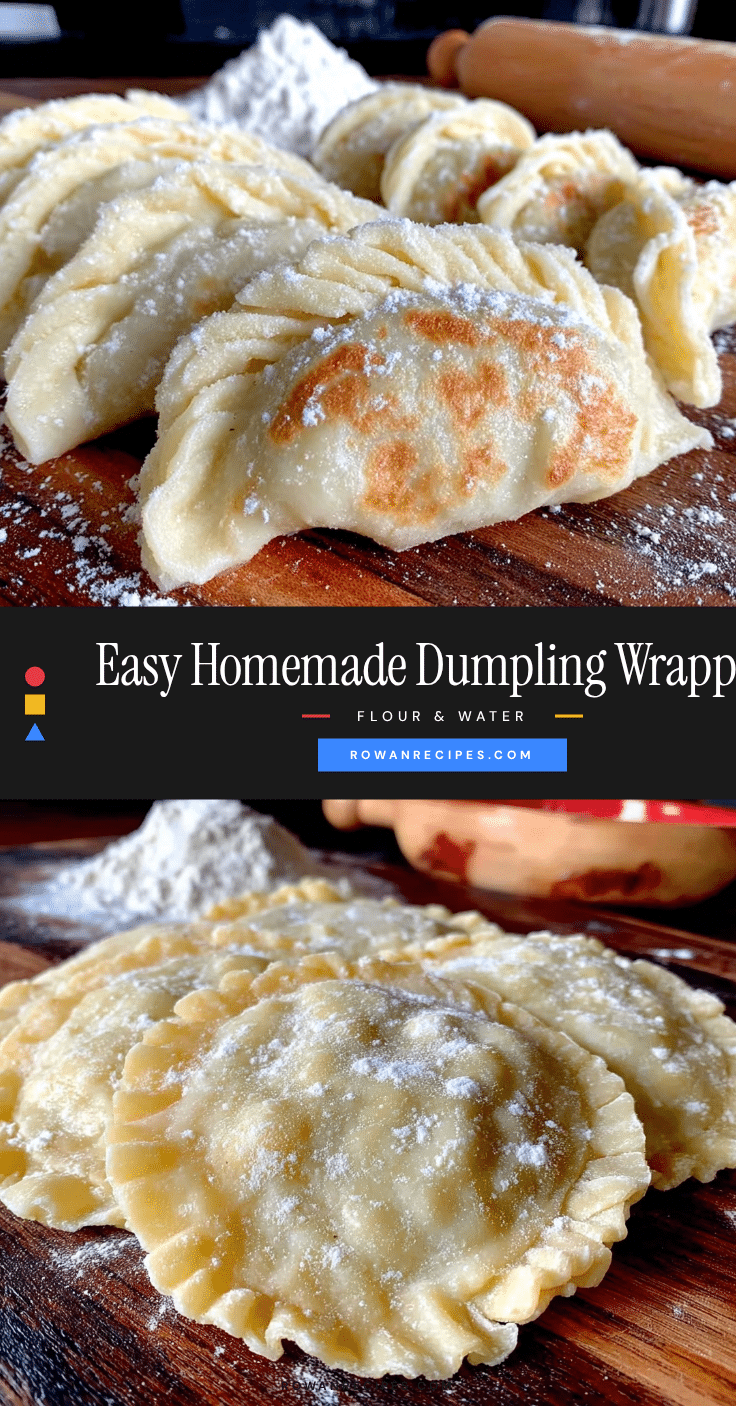
Easy No-Fail Homemade Dumpling Wrapper Dough Recipe with Flour and Water for Perfect Dumplings
A simple and reliable homemade dumpling wrapper dough made with just flour and warm water, perfect for tender and elastic dumplings every time.
- Prep Time: 15 minutes
- Cook Time: Varies depending on cooking method
- Total Time: 45 minutes
- Yield: 48 wrappers 1x
- Category: Appetizer
- Cuisine: Chinese
Ingredients
- 2 cups (250 grams) all-purpose flour
- 3/4 cup (180 ml) warm water (around 110°F / 43°C)
- 1/4 teaspoon salt (optional)
Instructions
- In a large mixing bowl, combine 2 cups (250 g) all-purpose flour and 1/4 teaspoon salt (if using). Mix briefly to distribute the salt evenly.
- Heat about 3/4 cup (180 ml) water until warm to the touch but not hot (around 110°F/43°C).
- Gradually pour the warm water into the flour mixture, stirring with chopsticks or a wooden spoon to form loose clumps, about 1-2 minutes.
- Transfer the dough to a clean surface and knead for 8-10 minutes until smooth, elastic, slightly tacky but not sticky. Adjust with flour or water as needed.
- Wrap the dough ball tightly with plastic wrap or cover with a damp kitchen towel. Let it rest for at least 30 minutes at room temperature.
- Cut the dough into four equal pieces. Roll each piece into a 1 inch (2.5 cm) thick log, then cut each log into 12 equal pieces for a total of 48 wrappers.
- Lightly dust a piece of dough with flour and flatten with your palm. Roll from the center outwards into a thin circle about 3-4 inches (7.5-10 cm) in diameter, edges thinner than center.
- Use immediately or layer wrappers separated by parchment paper, cover with a damp towel, and refrigerate up to 2 days or freeze for longer storage.
Notes
Use warm water around 110°F (43°C) for best gluten development. Knead dough well for elasticity. Rest dough for at least 30 minutes to relax gluten. Flour sparingly when rolling to avoid dry, brittle wrappers. Dough can be refrigerated for 2 days or frozen for longer storage. If dough springs back when rolling, let it rest a few more minutes.
Nutrition
- Serving Size: One dumpling wrapper
- Calories: 30
- Sodium: 60
- Carbohydrates: 7
- Fiber: 0.3
- Protein: 1
Keywords: dumpling wrappers, homemade dough, flour and water dough, easy dumpling wrappers, no-fail dumpling dough, dumpling recipe, Chinese dumplings