“You’re telling me this sour soup is just tamarind and pork? No way,” my friend scoffed over the phone as I described my latest kitchen experiment. Honestly, I had my doubts too when I first stumbled upon this Easy Sinigang Sour Tamarind Pork Soup recipe. It wasn’t one of those fancy, complicated dishes with a million steps or hard-to-find ingredients. Nope. Just a humble pot bubbling away on a busy weekday evening, when I needed something comforting but fuss-free.
That night, the tangy aroma of tamarind mingling with tender pork simmering away quietly in the kitchen was a quiet promise that dinner would be worth it. It wasn’t about impressing anyone — just something to soothe the soul after a hectic day. And I kept making it, tweaking it slightly here and there, because it was that kind of recipe you can’t quite let go of.
What surprised me most was how this simple soup, with its bright, sour broth and soft pork chunks, felt like a warm hug in a bowl. It’s the kind of dish that’s approachable for beginners but still delivers that authentic Filipino flavor punch. So, if you’re new to sinigang or just want an uncomplicated, satisfying meal that doesn’t demand hours in the kitchen, this recipe might become your new go-to. No frills, just honest, delicious sour tamarind pork soup that sticks with you.
Why You’ll Love This Recipe
After making this Easy Sinigang Sour Tamarind Pork Soup several times (and honestly, more than a few times in a week), it’s clear why it’s such a keeper:
- Quick & Easy: Ready in about 45 minutes, making it perfect for those rushed weeknights or when you need a comforting meal fast.
- Simple Ingredients: No need to hunt down exotic items. Tamarind paste or fresh tamarind, pork, and everyday veggies come together easily in your local market or pantry.
- Perfect for Any Occasion: Whether you’re cooking for family dinners, casual get-togethers, or even a cozy solo meal, this soup hits the spot.
- Crowd-Pleaser: The bright sourness balanced with tender pork always gets thumbs up from kids and adults alike — even those who usually shy away from sour flavors.
- Unbelievably Delicious: The marriage of tangy tamarind broth and juicy pork chunks creates a flavor depth you wouldn’t expect from such a straightforward recipe.
What sets this sinigang apart is the balance — not too sour, not too bland — achieved by a few handy tricks I picked up: simmering pork bones for richer broth, adding vegetables just at the right time so they stay crisp yet tender, and using tamarind paste that’s just enough to bring out the signature tang without overpowering the dish. It’s a recipe that feels like home, but without the stress.
Honestly, this is the kind of dish that grows on you. The next time you want to switch up your dinner routine but keep things comforting, this easy sinigang recipe is exactly where you want to be.
What Ingredients You Will Need
This Easy Sinigang Sour Tamarind Pork Soup uses straightforward ingredients that work together to build a satisfying, flavorful dish. Most are pantry staples or easy to find at any grocery store. Here’s what you’ll need:
- Pork: 1.5 pounds (700g) pork shoulder or pork ribs, cut into chunks (shoulder offers a nice balance of meat and fat for flavor)
- Tamarind: 3 oz (85g) tamarind paste or 1 cup fresh tamarind pods, boiled and mashed (paste is more convenient and consistent)
- Water or Broth: 8 cups (2 liters) of water or pork broth (homemade broth deepens the flavor, but water works fine)
- Vegetables:
- 1 medium onion, quartered
- 2 medium tomatoes, quartered
- 1 cup daikon radish, peeled and sliced
- 1 cup string beans, trimmed
- 1 cup water spinach (kangkong) or substitute with spinach or Swiss chard
- 1-2 green chili peppers (optional, adds mild heat)
- Seasoning:
- 2 tablespoons fish sauce (patis) – I recommend Marca Pinas for authentic flavor
- Salt and freshly ground black pepper, to taste
For a beginner, tamarind paste is the easiest choice and gives a consistent sourness every time. If you want to embrace the traditional way, fresh tamarind pods add a lovely earthy tone but require a little more prep.
You can swap the pork shoulder for pork belly if you prefer a fattier soup, or even try pork ribs for more broth richness. And don’t worry if you can’t find water spinach; spinach works just as well and is easier to find year-round.
Equipment Needed
This recipe doesn’t call for anything fancy — just the basics every kitchen likely already has:
- Large stockpot or deep saucepan (at least 6 quarts/5.7 liters) – ideal for simmering the pork and vegetables comfortably.
- Wooden spoon or heatproof spatula for stirring.
- Measuring cups and spoons for accuracy.
- Knife and cutting board for prepping pork and veggies.
- Strainer or slotted spoon (optional) for removing any scum or impurities while boiling pork.
If you don’t own a large stockpot, a heavy-bottomed Dutch oven works wonderfully too and retains heat well.
For tamarind paste, a small bowl to mix and dissolve it in water helps, but it’s not a must. I tend to keep a jar of good-quality tamarind paste in my fridge for dishes like this and even for dips or sauces.
Preparation Method
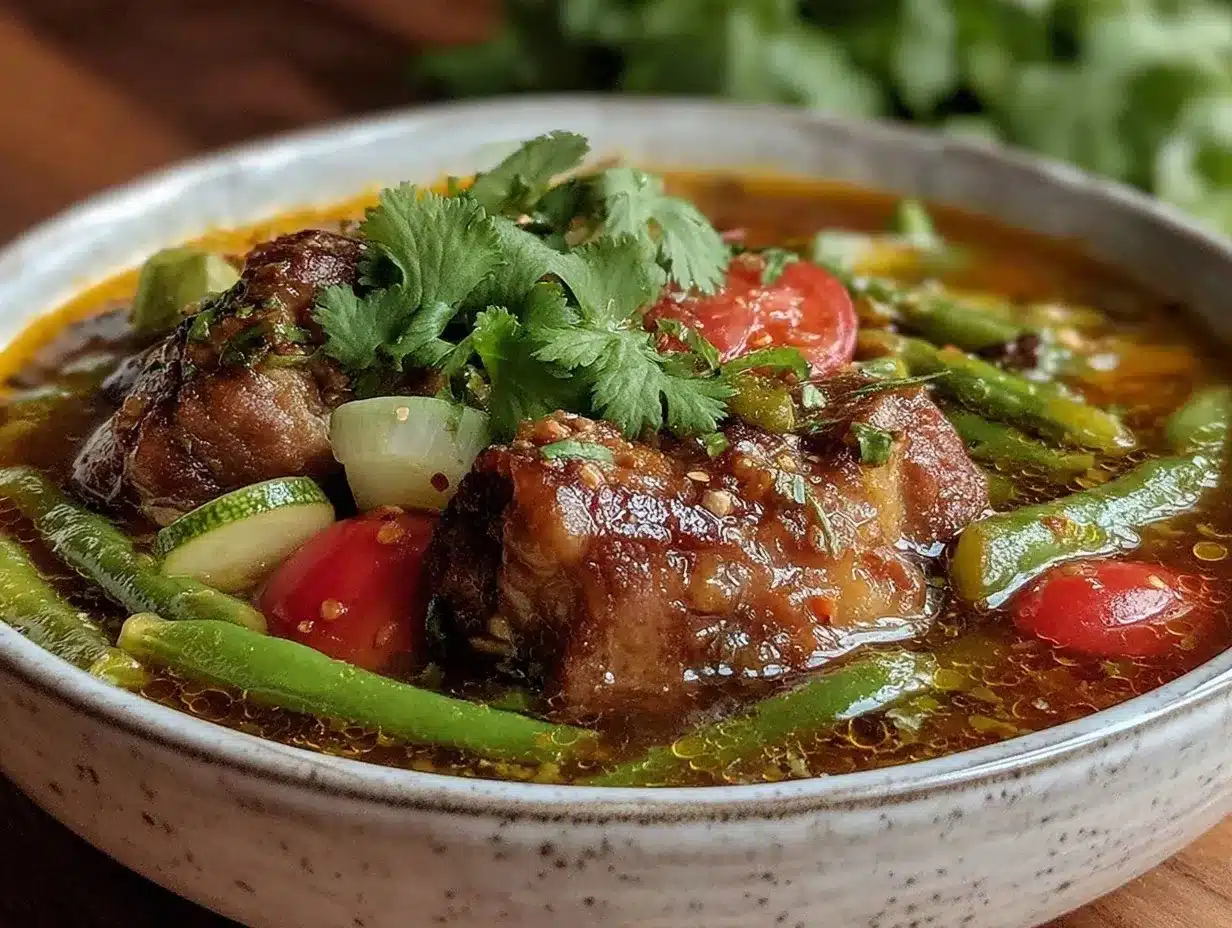
- Prepare the pork: Rinse 1.5 pounds (700g) of pork shoulder chunks under cold water and pat dry. This helps remove excess blood and impurities that can cloud the broth. Set aside.
- Simmer the pork: Place the pork in your large stockpot and add 8 cups (2 liters) of water. Bring to a boil over medium-high heat. As it heats, skim off any scum or foam that rises to the surface using a slotted spoon. This step makes the broth clearer and cleaner in taste. Lower the heat to medium-low and let it simmer gently for about 45 minutes to 1 hour until the pork is tender but not falling apart.
- Add aromatics: Toss in 1 quartered medium onion and 2 quartered medium tomatoes. These infuse the broth with savory sweetness. Continue simmering for another 10 minutes.
- Prepare the tamarind: While the broth simmers, mix 3 oz (85g) tamarind paste with about ½ cup (120ml) warm water until smooth. If using fresh tamarind pods, boil them in water, mash, and strain to get a sour liquid.
- Incorporate tamarind and season: Pour the tamarind liquid into the pot. Add 2 tablespoons fish sauce (patis) and stir. Taste the broth and adjust saltiness or sourness by adding more fish sauce or tamarind liquid as preferred.
- Add vegetables: Add 1 cup sliced daikon radish and 1-2 green chili peppers (optional). Simmer for 5 minutes.
- Finish with greens: Add 1 cup string beans and cook for 3-4 minutes until crisp-tender. Lastly, stir in 1 cup water spinach or substitute greens, cooking just until wilted (about 1-2 minutes).
- Final seasoning: Taste again and season with salt and pepper as needed. Remove from heat.
- Serve hot: Ladle into bowls and enjoy with steamed rice on the side for that classic Filipino experience.
Keep an eye on the simmering pork so it doesn’t overcook and become tough. The broth should smell pleasantly tangy but balanced. If you ever feel the soup is too sour, a pinch of sugar can soften the edge without ruining the flavor.
Cooking Tips & Techniques
Here are a few things I learned the hard way while perfecting this Easy Sinigang Sour Tamarind Pork Soup:
- Don’t rush the simmer: Low and slow is your friend here. It breaks down pork collagen, giving you tender meat and richer broth without cloudiness.
- Skim the scum: Removing that foam early ensures your soup is clear and clean-tasting. It’s not glamorous but makes a big difference.
- Tamarind balance: Add tamarind gradually. You can always add more sourness but can’t take it away once it’s in. Taste often!
- Vegetable timing: Add veggies in order of how long they take to cook. Daikon needs longer, while water spinach wilts quickly. This keeps textures fresh and pleasant.
- Fish sauce flavor: Use a good-quality fish sauce like Marca Pinas; it adds a subtle umami depth without overwhelming saltiness.
- Multitasking tip: While the pork simmers, chop your vegetables and prepare tamarind paste. It saves time and keeps things moving smoothly.
Once, I forgot to skim the pork broth, and the soup looked cloudy and tasted somewhat dull. Lesson learned — it’s a small step with a big payoff. Also, beware of overcooking your greens; they should stay vibrant, not mushy.
Variations & Adaptations
This recipe is wonderfully flexible, and you can tailor it to fit your tastes or dietary needs:
- Protein swap: Try chicken or shrimp for a lighter take. The cooking time changes, so adjust accordingly—shrimp only needs a couple of minutes at the end.
- Vegetarian version: Skip the pork and use vegetable broth with mushrooms and tofu. Tamarind still shines as the sour base.
- Low-sodium adaptation: Use low-sodium fish sauce or reduce it, supplementing with a splash of soy sauce or a pinch of sea salt.
- Seasonal veggies: Swap daikon for sweet potatoes in cooler months, or add eggplant and okra for more variety.
- Spicy kick: Add extra green chilies or a dash of chili flakes for heat.
My personal twist once involved adding a handful of fresh green beans straight from the garden, which gave the soup a delightful crunch and freshness. It reminded me a bit of the comforting vibes of my stuffed pepper soup but with a Filipino tang.
Serving & Storage Suggestions
Sinigang tastes best piping hot, straight from the pot. Serve it in generous bowls with steamed white rice — the rice helps balance the sour broth perfectly. For a casual gathering, you can serve it family-style with bowls of extra fish sauce and chilies on the side.
Leftovers keep well in the refrigerator for up to 3 days. The flavors actually deepen, but the vegetables may soften further. To reheat, warm gently on the stovetop — avoid boiling again to keep the pork tender.
For longer storage, you can freeze the broth and pork separately from the veggies. Thaw in the fridge overnight and add fresh greens when reheating for a fresher taste.
This soup also pairs surprisingly well with something like crispy sheet pan honey mustard chicken for a contrasting texture, especially if you’re serving a crowd.
Nutritional Information & Benefits
This Easy Sinigang Sour Tamarind Pork Soup is not just comforting but also nourishing. A typical serving (about 1.5 cups or 350 ml) contains approximately:
| Calories | 280 |
|---|---|
| Protein | 25g |
| Fat | 15g |
| Carbohydrates | 10g |
| Fiber | 3g |
| Sodium | 600mg |
Key benefits come from the pork’s protein and iron content, while tamarind adds vitamin C and antioxidants. The soup is naturally gluten-free and low in carbs if you skip the rice. Just watch the fish sauce if you’re on a sodium-restricted diet.
It’s a great way to get a balanced meal in one bowl, with fresh vegetables, lean protein, and that classic tang that perks up your appetite.
Conclusion
This Easy Sinigang Sour Tamarind Pork Soup is proof that beginner-friendly cooking can still deliver bold, comforting flavors. It’s simple enough to make on a busy weekday but satisfying enough to become a staple in your recipe box. I love how it brings that bright, tangy freshness to the table without fuss, and it’s a reliable way to warm up on chilly or hectic days.
Feel free to tweak the sourness, swap veggies, or even try different proteins to make it your own. If you’ve enjoyed hearty soups like the creamy cheesy taco pasta or the slow cooker French dip sandwiches, this sinigang will fit right into your rotation.
Give it a go, and please share how your version turns out — I love hearing about your twists and successes. Cooking doesn’t have to be complicated to be wonderful, and this soup is a great place to start.
FAQs
What can I use if I can’t find tamarind paste?
You can boil fresh tamarind pods and mash them to extract the sour juice, or use a mix of lemon and vinegar as a last resort, but the flavor won’t be quite the same.
Can I make this sinigang in a slow cooker?
Absolutely! Brown the pork first, then add all ingredients except delicate vegetables. Cook on low for 6-8 hours. Add greens and quick-cooking veggies near the end.
Is there a vegetarian version of sinigang?
Yes! Use vegetable broth, tamarind, and hearty veggies like mushrooms, eggplant, and okra. Tofu can replace pork for protein.
How sour should the broth be?
It depends on your taste, but traditionally sinigang is pleasantly tangy without overwhelming sourness. Start with less tamarind and adjust to taste.
Can I freeze leftover sinigang?
Yes, freeze the broth and pork separately from vegetables for best texture. Thaw in the fridge overnight and reheat gently, adding fresh greens at serving.
Pin This Recipe!
Easy Sinigang Sour Tamarind Pork Soup Recipe for Beginners to Master

A simple and comforting Filipino sour tamarind pork soup that is quick to prepare and perfect for beginners. This recipe balances tangy tamarind broth with tender pork and fresh vegetables for a soul-soothing meal.
- Prep Time: 15 minutes
- Cook Time: 45 minutes
- Total Time: 1 hour
- Yield: 4 servings 1x
- Category: Main Course
- Cuisine: Filipino
Ingredients
- 1.5 pounds (700g) pork shoulder or pork ribs, cut into chunks
- 3 oz (85g) tamarind paste or 1 cup fresh tamarind pods, boiled and mashed
- 8 cups (2 liters) water or pork broth
- 1 medium onion, quartered
- 2 medium tomatoes, quartered
- 1 cup daikon radish, peeled and sliced
- 1 cup string beans, trimmed
- 1 cup water spinach (kangkong) or substitute with spinach or Swiss chard
- 1–2 green chili peppers (optional)
- 2 tablespoons fish sauce (patis)
- Salt and freshly ground black pepper, to taste
Instructions
- Rinse 1.5 pounds (700g) of pork shoulder chunks under cold water and pat dry.
- Place the pork in a large stockpot and add 8 cups (2 liters) of water. Bring to a boil over medium-high heat. Skim off any scum or foam that rises to the surface.
- Lower the heat to medium-low and simmer gently for about 45 minutes to 1 hour until the pork is tender but not falling apart.
- Add 1 quartered medium onion and 2 quartered medium tomatoes. Continue simmering for another 10 minutes.
- Mix 3 oz (85g) tamarind paste with about ½ cup (120ml) warm water until smooth. If using fresh tamarind pods, boil, mash, and strain to get sour liquid.
- Pour the tamarind liquid into the pot. Add 2 tablespoons fish sauce and stir. Taste and adjust saltiness or sourness as preferred.
- Add 1 cup sliced daikon radish and 1-2 green chili peppers (optional). Simmer for 5 minutes.
- Add 1 cup string beans and cook for 3-4 minutes until crisp-tender.
- Stir in 1 cup water spinach or substitute greens, cooking just until wilted (about 1-2 minutes).
- Taste again and season with salt and pepper as needed. Remove from heat.
- Serve hot with steamed rice on the side.
Notes
Skim the scum during boiling to keep broth clear and clean-tasting. Add tamarind gradually to balance sourness. Add vegetables in order of cooking time to maintain texture. Use good-quality fish sauce for authentic flavor. Avoid overcooking greens to keep them vibrant. Leftovers keep well refrigerated for up to 3 days; reheat gently to keep pork tender. For freezing, store broth and pork separately from vegetables.
Nutrition
- Serving Size: 1.5 cups (350 ml)
- Calories: 280
- Sodium: 600
- Fat: 15
- Carbohydrates: 10
- Fiber: 3
- Protein: 25
Keywords: sinigang, tamarind soup, pork soup, Filipino soup, sour soup, easy sinigang recipe, tamarind pork soup, comfort food