“Pass me the skillet,” my friend called out, poking at the glowing embers of our campfire. We’d just settled in for the evening after a long day hiking, and honestly, I wasn’t expecting much beyond some cold sandwiches. But that night, the Easy Rustic Campfire Shakshuka Skillet changed everything. I was skeptical at first—eggs cooked in a cast iron over a fire? Seemed a bit ambitious for a camping meal. Yet, with just a few pantry staples and that crackling campfire, the skillet transformed into this hearty, smoky, saucy breakfast that had us all licking our plates clean. The aroma of simmering tomatoes mixed with garlic and spices while the eggs poached gently on top—it was rustic comfort at its best, made simple and wildly satisfying.
That experience stuck with me, not just because it was delicious but because it was the perfect reset after a day outdoors. I’ve since made it several times, sometimes swapping ingredients on the fly, always craving that warm, soul-soothing skillet meal that feels like a cozy hug in the wilderness. This recipe isn’t fussy or fancy; it’s honest, bold, and just right for mornings when you want to feel grounded and nourished. It’s become my go-to whenever I want a break from the usual trail snacks or even just a quick, comforting meal at home.
What I love most is how the Easy Rustic Campfire Shakshuka Skillet brings people together—whether it’s friends gathered around a fire or a quiet solo moment with a cast iron pan. The flavors settle deep, and that smoky edge from the fire adds a layer you just can’t replicate indoors. It’s a dish with personality, history, and a bit of magic, all cooked in one skillet.
Why You’ll Love This Recipe
After countless trials with shakshuka versions, this Easy Rustic Campfire Shakshuka Skillet feels like the best blend of simplicity and flavor, especially for outdoor cooking. Honestly, the joy comes from how straightforward it is, combined with that unbeatable campfire taste.
- Quick & Easy: Ready in about 25 minutes, this recipe is perfect for those mornings when you want a hearty meal without a lot of fuss.
- Simple Ingredients: No complicated grocery runs—just basics like canned tomatoes, eggs, and pantry spices you probably have on hand.
- Ideal for Outdoor Cooking: Crafted specifically for the campfire or grill, it’s rustic and sturdy, making cleanup a breeze.
- Crowd-Pleaser: From kids to adults, the balance of savory tomato sauce and runny eggs always earns second helpings.
- Unbelievably Delicious: The smoky char from the fire adds a depth of flavor that elevates this humble dish beyond ordinary shakshuka.
What makes this recipe stand out is the method—cooking it directly in a cast iron skillet over the fire lets the flavors meld beautifully while giving the eggs a tender, almost velvety texture. And the rustic twist? I throw in a pinch of smoked paprika and a hint of chili flakes for warmth that’s just right. It’s not just shakshuka; it’s a campfire classic that’s become my personal favorite way to break fast on the trail or in the backyard.
What Ingredients You Will Need
This recipe uses simple, wholesome ingredients to deliver bold flavor and satisfying texture without the fuss. Most of these are pantry staples, which makes it super easy to throw together last minute.
- Olive oil – about 2 tablespoons for sautéing (extra virgin works best for flavor)
- Yellow onion, finely chopped (1 medium) – adds sweetness and depth
- Garlic cloves (3 large), minced – for that punch of aroma
- Bell pepper (1 medium, red or orange), diced – brings natural sweetness and color
- Canned diced tomatoes (1 can, 14 oz / 400 g) – the base of the sauce (I prefer San Marzano for that rich, balanced flavor)
- Tomato paste (2 tablespoons) – thickens and intensifies the sauce
- Smoked paprika (1 teaspoon) – essential for that campfire smokiness
- Ground cumin (1 teaspoon) – adds earthiness
- Chili flakes (optional, ¼ teaspoon) – a subtle kick
- Salt and freshly ground black pepper – to taste
- Eggs (4 large) – laid gently on top to poach in the sauce
- Fresh parsley or cilantro (a handful, chopped) – for garnish and freshness
- Crusty bread or pita (optional) – perfect for dipping
If you want to swap things up, you can use almond flour flatbreads or gluten-free bread to keep it gluten-free. For dairy lovers, a sprinkle of crumbled feta on top just before serving adds a lovely tangy contrast. In summer months, fresh tomatoes can be roasted and used instead of canned for a brighter flavor. I’ve found that using fresh garlic and good-quality olive oil really lifts the whole dish, so don’t skimp there.
Equipment Needed
- Cast iron skillet (10 to 12 inches) – This is key. It holds heat evenly and withstands the campfire’s direct flame. If you don’t have cast iron, a heavy-duty stainless steel skillet with a lid can work, but the flavor won’t be quite the same.
- Wooden spoon or heat-safe spatula – For stirring the sauce without scratching your skillet.
- Campfire or portable grill – A reliable heat source that can maintain medium heat is essential.
- Lid or large metal plate – To cover the skillet and help eggs poach evenly.
- Knife and cutting board – For prepping veggies.
Personally, I keep a dedicated campfire skillet set separate from my indoor cookware to avoid any wear and tear. Season your cast iron well before heading out to prevent sticking and rust—I’ve learned this the hard way after a rough camping trip! If budget’s tight, simple cast iron pans from brands like Lodge offer excellent durability and value. Oh, and carry a heatproof glove or thick towel—those handles get seriously hot over the fire.
Preparation Method

- Prepare your fire or grill: Light your campfire or heat your grill to medium heat. You want steady, moderate heat—not roaring flames.
- Heat olive oil in the skillet: Place your cast iron skillet over the heat source and add 2 tablespoons olive oil. Let it warm for about 2 minutes until shimmering but not smoking.
- Sauté the aromatics: Add the chopped onion and bell pepper. Cook for 5-7 minutes, stirring occasionally, until softened and slightly caramelized. Add the garlic and cook for another minute until fragrant. The smell here is a good sign—it should be sweet and inviting.
- Add tomatoes and spices: Stir in the canned diced tomatoes and tomato paste. Sprinkle in smoked paprika, cumin, chili flakes (if using), salt, and pepper. Mix well and bring to a gentle simmer. Let it cook uncovered for about 10 minutes, stirring occasionally, until the sauce thickens and the flavors meld.
- Make wells and add eggs: Using the back of a spoon, create four small wells in the sauce. Crack one egg into each well carefully. Cover the skillet with a lid or a metal plate to trap heat and help eggs poach evenly.
- Cook eggs to preference: Let the eggs cook for 5-8 minutes. For runny yolks, check around 5 minutes; for firmer yolks, wait closer to 8 minutes. Watch carefully to avoid overcooking.
- Garnish and serve: Sprinkle chopped parsley or cilantro over the top. Serve hot directly from the skillet with crusty bread or pita on the side for dipping.
Pro tip: If your fire is uneven, you can move the skillet away from direct flames to avoid burning the bottom. And if the sauce gets too thick, splash in a little water to loosen it up. That balance between thick and saucy is what makes this dish so good. I’ve learned to trust the smell and sight more than the clock here—if it smells deep and the eggs look set, you’re golden.
Cooking Tips & Techniques
Cooking shakshuka over a campfire isn’t just about tossing ingredients in a pan; it’s about managing heat and timing. The cast iron’s heat retention is your friend but also a challenge if the fire flares up unexpectedly.
- Control the heat: Keep embers steady and avoid placing the skillet over large flames. Cooking too hot burns the sauce and undercooks the eggs.
- Even cooking: Use a lid or metal plate to cover the skillet when cooking eggs. It traps steam and cooks the eggs evenly without drying them out.
- Don’t rush the sauce: Let those tomatoes simmer long enough to develop a rich flavor—patience pays off.
- Handling eggs: Crack them into a small bowl first, then gently pour into the sauce wells. This prevents shells or broken yolks from spoiling the look and texture.
- Keep it rustic: Don’t fuss too much. Part of the charm is a slightly charred edge or a smoky hint from the fire.
One time, I tried making this on a windy day and nearly lost my skillet handle to the flames—lesson learned: always keep an eye on your cooking setup! Multitasking while campfire cooking means prepping veggies ahead and having your spices measured out. Staying organized helps avoid scrambling when the fire’s ready.
Variations & Adaptations
This recipe lends itself well to tweaks, depending on your mood, dietary needs, or what you have on hand.
- Vegetarian variation: Add diced zucchini or mushrooms along with the bell pepper for extra veggies.
- Spicy twist: Use harissa paste or fresh jalapeños instead of chili flakes for a bolder heat.
- Cheesy finish: Sprinkle crumbled feta or goat cheese on top just before serving for a creamy tang.
- Low-carb adaptation: Skip the bread and serve alongside sautéed greens or roasted cauliflower.
- Indoor version: You can make this on a stovetop or in the oven—just use a heavy skillet and bake at 375°F (190°C) for about 12 minutes after adding eggs.
Personally, I adore adding a handful of spinach at the end, letting it wilt in the sauce—it adds freshness and color. If you want to try a smoky seafood twist, check out the creamy garlic butter Tuscan shrimp pasta, which has complementary flavors and is just as satisfying!
Serving & Storage Suggestions
This shakshuka is best served hot straight from the skillet, with plenty of crusty bread or pita to soak up the sauce and runny egg yolks. For outdoor meals, a wooden board or plate works perfectly for rustic charm. Pair it with fresh fruit or a simple green salad for balance.
Leftovers can be stored in an airtight container in the refrigerator for up to 2 days. Reheat gently on low heat, adding a splash of water if the sauce has thickened too much. Avoid microwaving if possible, as it can cook the eggs further and change the texture.
Flavors actually deepen after a day, so don’t be shy about saving extra. This makes a fantastic quick lunch or dinner, especially when paired with something like the easy crispy sheet pan Italian sausage and peppers for a heartier meal.
Nutritional Information & Benefits
Each serving of this Easy Rustic Campfire Shakshuka Skillet provides a balanced mix of protein from the eggs and vitamins from the tomatoes and peppers. It’s naturally gluten-free and low in carbs unless you add bread on the side.
- Approximate calories per serving: 270–320 kcal
- Protein: 14–16 grams (eggs are a great source)
- Rich in antioxidants from tomatoes and bell peppers
- Contains healthy fats from olive oil
- Low in sugar and free from processed ingredients
For anyone mindful of dairy, this recipe is easily kept dairy-free, but adding feta boosts calcium and brings additional flavor. I appreciate how it feels nourishing yet light after a night outside or a busy morning.
Conclusion
The Easy Rustic Campfire Shakshuka Skillet is more than just a recipe—it’s a reminder that simple ingredients cooked with care can make a meal feel special, even in the wild. Whether you’re camping under the stars or craving a no-fuss breakfast at home, this skillet checks all the boxes for flavor, ease, and that comforting rustic vibe.
Feel free to make it your own by switching up the herbs, adding your favorite veggies, or pairing it with a trusty side like the creamy cheesy taco pasta for a different meal experience. This recipe has earned a spot in my regular rotation because it’s forgiving, flavorful, and just plain good food, no matter where you cook it.
Give it a try and share how you make it yours—I’d love to hear your twists and campfire tales!
FAQs About Easy Rustic Campfire Shakshuka Skillet
Can I make this shakshuka indoors if I don’t have a campfire?
Absolutely! Use a heavy skillet on your stove or finish it in the oven at 375°F (190°C) for about 12 minutes after adding the eggs. Covering the pan helps eggs cook evenly.
What if I don’t have smoked paprika? Can I use regular paprika?
You can use regular paprika, but the smoky flavor is a signature part of this recipe. Adding a small pinch of chipotle powder can help mimic the smokiness.
How do I know when the eggs are perfectly cooked?
Look for whites that are set but yolks still jiggly if you want them runny. Cooking time usually ranges from 5 to 8 minutes—covering the skillet helps cook the tops gently.
Is this recipe gluten-free?
The shakshuka itself is naturally gluten-free. Just be mindful of the bread or pita you serve on the side and swap for gluten-free options if needed.
What’s the best way to store and reheat leftovers?
Store leftovers in an airtight container in the fridge for up to 2 days. Reheat gently on a low stovetop heat, adding a splash of water if the sauce thickened. Avoid microwaving to preserve egg texture.
Pin This Recipe!
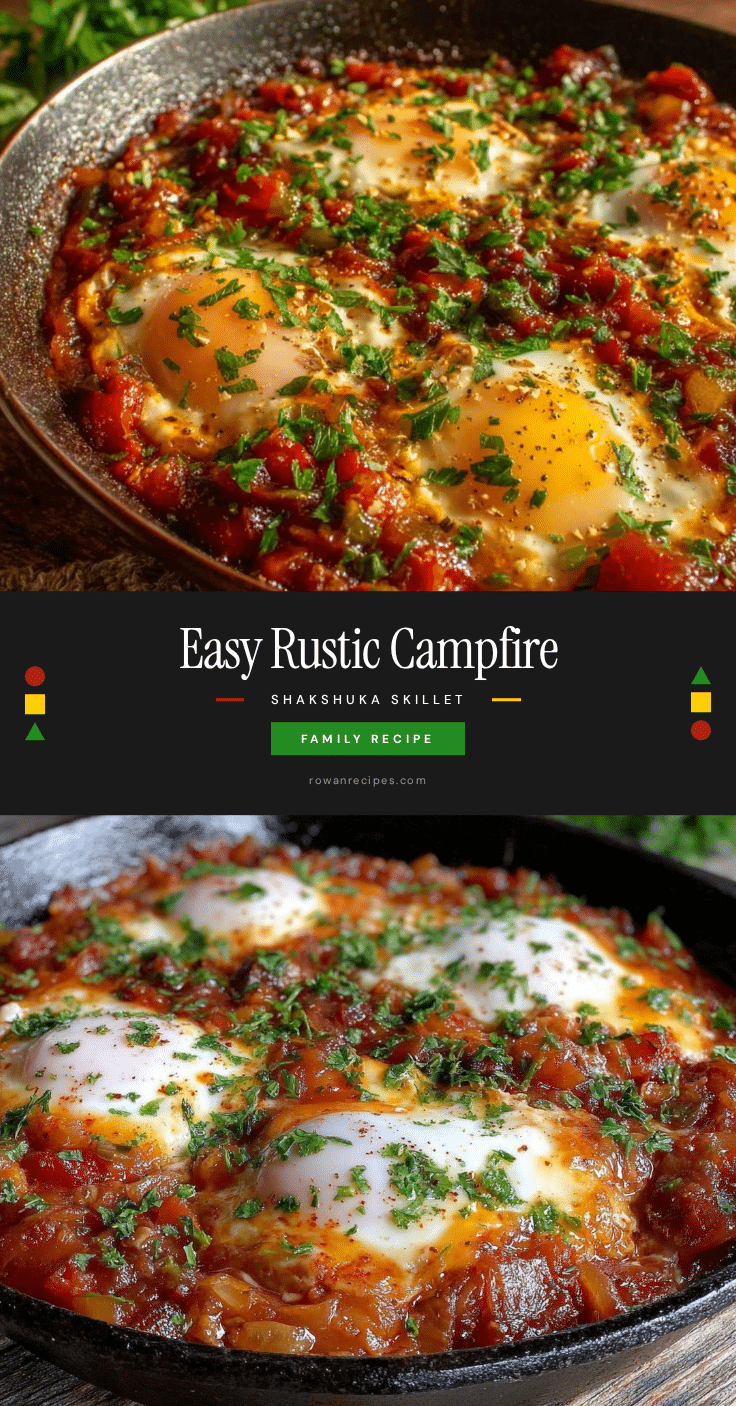
Easy Rustic Campfire Shakshuka Skillet Recipe Perfect for Outdoor Cooking

A hearty, smoky shakshuka cooked in a cast iron skillet over a campfire, perfect for outdoor cooking or a comforting meal at home.
- Prep Time: 10 minutes
- Cook Time: 15 minutes
- Total Time: 25 minutes
- Yield: 4 servings 1x
- Category: Main Course
- Cuisine: Middle Eastern
Ingredients
- 2 tablespoons olive oil (extra virgin preferred)
- 1 medium yellow onion, finely chopped
- 3 large garlic cloves, minced
- 1 medium bell pepper (red or orange), diced
- 1 can (14 oz / 400 g) canned diced tomatoes (San Marzano preferred)
- 2 tablespoons tomato paste
- 1 teaspoon smoked paprika
- 1 teaspoon ground cumin
- ¼ teaspoon chili flakes (optional)
- Salt and freshly ground black pepper, to taste
- 4 large eggs
- A handful fresh parsley or cilantro, chopped (for garnish)
- Crusty bread or pita (optional, for serving)
Instructions
- Prepare your fire or grill to medium heat with steady, moderate heat.
- Heat 2 tablespoons olive oil in a 10-12 inch cast iron skillet over the heat source until shimmering (about 2 minutes).
- Add chopped onion and diced bell pepper; sauté for 5-7 minutes until softened and slightly caramelized.
- Add minced garlic and cook for another minute until fragrant.
- Stir in canned diced tomatoes and tomato paste.
- Add smoked paprika, ground cumin, chili flakes (if using), salt, and pepper; mix well.
- Bring sauce to a gentle simmer and cook uncovered for about 10 minutes, stirring occasionally, until thickened and flavors meld.
- Create four small wells in the sauce using the back of a spoon.
- Crack one egg into each well carefully.
- Cover the skillet with a lid or metal plate to trap heat and poach eggs evenly.
- Cook eggs for 5-8 minutes depending on desired yolk consistency (5 minutes for runny yolks, 8 minutes for firmer yolks).
- Sprinkle chopped parsley or cilantro over the top.
- Serve hot directly from the skillet with crusty bread or pita for dipping.
Notes
Control the heat to avoid burning the sauce or undercooking eggs. Use a lid to poach eggs evenly. Crack eggs into a small bowl before adding to sauce to avoid shells. Splash water if sauce thickens too much. Season cast iron well before use to prevent sticking. For indoor cooking, bake at 375°F (190°C) for about 12 minutes after adding eggs.
Nutrition
- Serving Size: 1 skillet serving (a
- Calories: 270320
- Sugar: 8
- Sodium: 400
- Fat: 18
- Saturated Fat: 3
- Carbohydrates: 15
- Fiber: 4
- Protein: 15
Keywords: shakshuka, campfire cooking, rustic breakfast, eggs, tomato sauce, outdoor cooking, cast iron skillet, easy recipe