“Are you sure this will actually taste good?” my friend asked, eyeing the odd little seaweed rolls I was packing for lunch. Honestly, I wasn’t convinced myself at first. I had grabbed some leftover rice, a few veggies, and a random assortment of fillings and thought, why not try making Korean gimbap? The kitchen was a mess, my hands sticky with rice, and the seaweed sheets seemed flimsy at best. But as I bit into the first roll later that day, the mix of savory, slightly sweet, and fresh flavors surprised me completely. It was simple, filling, and a perfect handheld snack that didn’t feel like a boring sandwich.
Since then, I couldn’t stop making these easy flavorful Korean gimbap lunchbox rolls, almost like a little obsession—rolling and tweaking the combos multiple times a week. What started as a casual experiment quickly became my go-to for a quick meal that packs a punch without much fuss. The balance between the chewy rice, crisp veggies, and savory fillings is just right, and the whole thing feels like a little gift wrapped in seaweed.
What’s odd is how this recipe stuck with me—it’s not flashy or complicated, but it carries that quiet satisfaction of homemade comfort food that’s easy to grab on the go. It’s perfect for those moments when you want something better than fast food but don’t have the energy for a full cooking marathon. Plus, it’s fun to make, kind of like edible origami, if you ask me. So, here’s the recipe that turned my skeptical lunch into a happy, flavorful break in the middle of a busy day.
Why You’ll Love This Recipe
After trying countless versions of gimbap, this recipe stands out because it’s straightforward, fuss-free, and genuinely delicious. I’ve tested it in my kitchen more times than I can count, tweaking the ingredient balance and rolling technique to get the perfect bite every time. Whether you’re packing lunches for work, school, or just need a quick snack, these Korean gimbap lunchbox rolls deliver on flavor and convenience.
- Quick & Easy: Comes together in about 30 minutes—no long marination or tricky steps, ideal for busy days.
- Simple Ingredients: Uses pantry staples and common fresh veggies; no specialty grocery runs required.
- Perfect for Lunchboxes: Portable, mess-free, and satisfying, making them a smart choice for school or work meals.
- Crowd-Pleaser: Kids and adults alike love the mild, savory flavor and fun bite-sized rolls.
- Unbelievably Flavorful: The seasoning on the rice and fillings gives a subtle depth without overpowering the palate.
What really sets this recipe apart is the perfectly seasoned rice—lightly coated with sesame oil and a bit of salt—that acts as the glue holding everything together with just the right texture. Plus, the mix of crunchy veggies and tender protein creates a satisfying contrast in every bite. I’ve even swapped in different fillings like marinated beef or tofu, and it still shines. If you’ve ever wondered about making gimbap at home but thought it’d be complicated, this recipe will change your mind. It’s approachable, forgiving, and honestly a little addictive.
What Ingredients You Will Need
This recipe uses simple, wholesome ingredients to deliver bold flavor and satisfying texture without the fuss. Most are pantry staples or easy to find fresh produce, making it perfect for a quick whip-up anytime.
- Sushi Rice – 2 cups (360g) cooked and slightly cooled; short-grain rice is best for stickiness.
- Rice Vinegar – 2 tablespoons, to season the rice gently (adds subtle tang and shine).
- Sesame Oil – 1 tablespoon, toasted for that nutty aroma and smooth mouthfeel.
- Salt – 1 teaspoon, to balance the rice seasoning.
- Roasted Seaweed Sheets (Gim) – 5 sheets, standard size for rolling.
- Carrot – 1 medium, julienned or thinly sliced for crunch and sweetness.
- Cucumber – 1 small, peeled and cut into matchsticks (removes excess moisture).
- Pickled Radish (Danmuji) – 5 strips, for that classic sweet and tangy kick; available at most Asian markets.
- Egg – 2 large, beaten and cooked into a thin omelet, then sliced (adds protein and softness).
- Imitation Crab or Cooked Protein – 5 sticks or about 100g of cooked beef/tofu for variety (optional).
- Spinach – 1 cup, blanched and lightly seasoned with salt and sesame oil.
- Black Sesame Seeds – 1 teaspoon, for garnish and extra flavor.
For best results, I recommend using a reliable brand of roasted seaweed sheets, like GimMe or Harirang, which are crisp and easy to roll. You can swap out the imitation crab for cooked beef, grilled chicken, or firm tofu for a vegetarian twist. If pickled radish isn’t available, thin strips of pickled cucumber or even a quick homemade vinegar pickle work well. The key is balancing textures and flavors—sweet, salty, fresh, and savory all in one roll.
Equipment Needed
- Bamboo Sushi Rolling Mat: Helps roll the gimbap tightly and evenly. If you don’t have one, a clean kitchen towel or parchment paper can work in a pinch, though it takes a little more practice.
- Sharp Knife: For clean slicing of the rolls without squashing them. A serrated knife can sometimes tear the seaweed, so a sharp chef’s knife is best.
- Rice Cooker or Pot: For perfectly cooked sushi rice. A rice cooker is convenient, but stovetop works fine too.
- Mixing Bowls: For prepping fillings and seasoning the rice.
- Non-stick Pan: To make the thin egg omelet smoothly without sticking.
I’ve tried rolling gimbap without a bamboo mat, and it’s a bit clumsy, but not impossible—just be ready for a few imperfect attempts! Investing in a bamboo mat (they’re usually under $10) really makes the process smoother and less messy. Also, keeping a damp cloth nearby to wipe the knife between slices helps prevent rice from sticking and tearing the roll apart.
Preparation Method
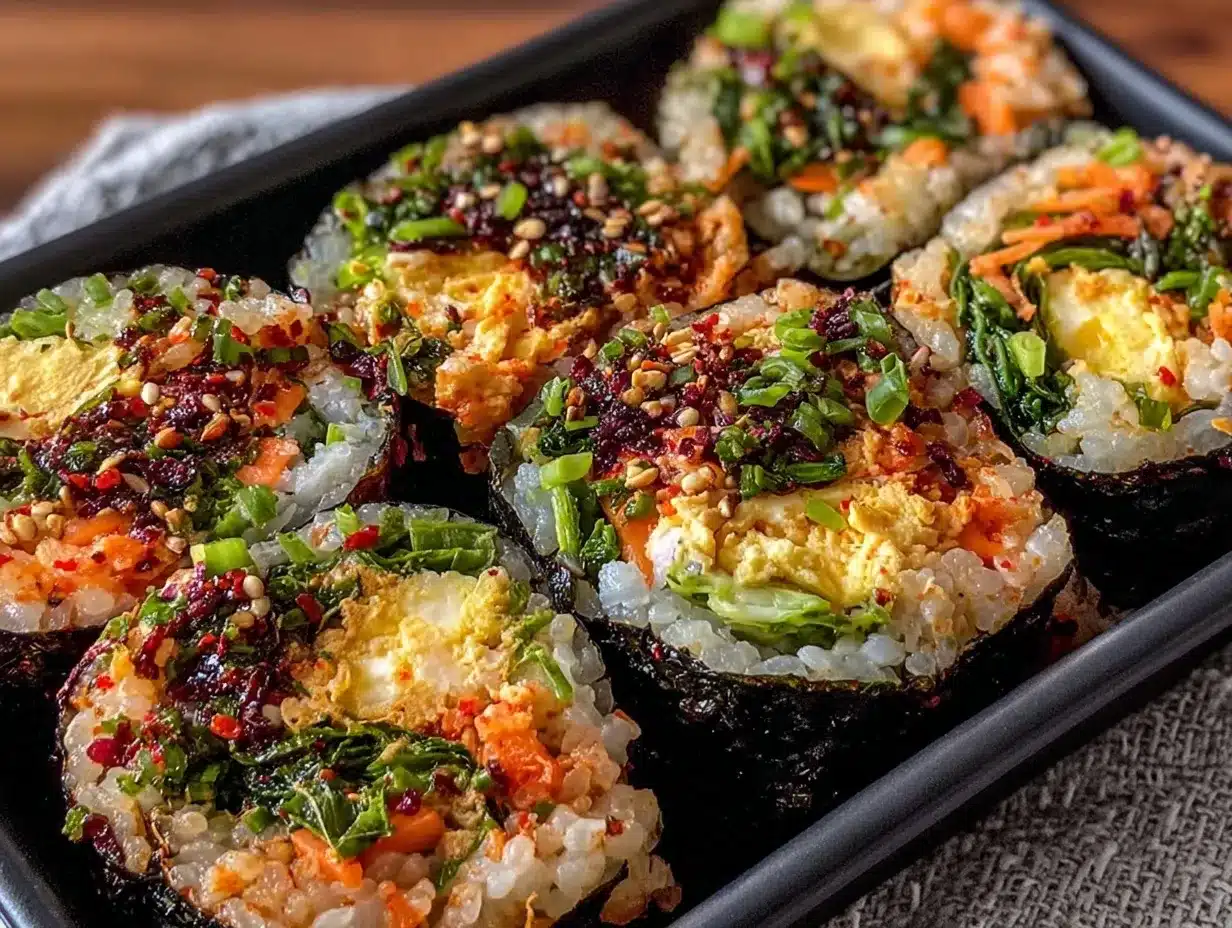
- Cook the Rice: Rinse 1 cup (180g) short-grain rice under cold water until the water runs clear. Cook with 1¼ cups (300ml) water in a rice cooker or pot. Once done, transfer to a large bowl and gently fold in 2 tablespoons rice vinegar, 1 tablespoon toasted sesame oil, and 1 teaspoon salt. Let cool to room temperature (about 15-20 minutes).
- Prepare Fillings: Julienne the carrot and cucumber into thin, even strips. Blanch spinach in boiling water for 30 seconds, then drain and squeeze out excess water. Season lightly with salt and a few drops of sesame oil. Cook the egg by pouring beaten eggs into a lightly oiled non-stick pan over medium heat, swirling to make a thin omelet. Cool and slice into strips.
- Assemble the Gimbap: Place a bamboo sushi mat on a flat surface and lay one seaweed sheet shiny side down. Spread a thin, even layer of seasoned rice over the seaweed, leaving about 1 inch (2.5 cm) at the top edge free of rice to seal the roll later.
- Add Fillings: Arrange a few strips each of carrot, cucumber, spinach, egg, pickled radish, and protein (if using) horizontally about 1 inch (2.5 cm) from the bottom edge of the seaweed.
- Roll It Up: Using the bamboo mat, gently lift the edge closest to you and roll the gimbap over the fillings, pressing lightly but firmly to keep it tight. Continue rolling until the free edge of seaweed seals the roll. Use a few drops of water on the edge if needed to help seal.
- Slice and Serve: Using a sharp, dampened knife, slice each roll into 1-inch (2.5 cm) pieces. Wipe the knife between cuts for clean slices.
This whole process takes about 30 minutes once you’ve got the hang of it. A key tip: don’t overfill the roll or press too hard while rolling—it can tear the seaweed or make the roll too dense. The rice should be spread evenly but thin enough to allow for a neat roll. If the rice cools too much and gets sticky, you can gently warm it up for a few seconds in the microwave before assembling.
Cooking Tips & Techniques
Rolling gimbap well is an art, but a few tricks can make it much easier. First, the rice needs to be sticky but not mushy—using short-grain sushi rice and seasoning it properly with vinegar and sesame oil is key. I learned the hard way that skipping the vinegar results in bland rice that just feels dry.
When arranging the fillings, try to keep everything in a neat line. It helps to prep all ingredients uniformly, so the roll slices look pretty and the flavors balance well. Also, don’t overload the seaweed with rice—about a thin layer is perfect, or it gets unwieldy.
Using a bamboo sushi rolling mat really helps press the roll tight without crushing it. Roll slowly and evenly, applying gentle pressure to avoid tearing the seaweed. If the seaweed edges feel dry, lightly dampen them with water to seal the roll properly.
One mistake I often made was slicing with a dry knife; rice sticks to the blade and squishes the roll. Keeping your knife wet and wiping it clean between cuts makes for nice, clean slices every time.
Finally, gimbap tastes best fresh but can be stored wrapped in plastic wrap for a few hours without drying out. For longer storage, refrigerate but bring to room temperature before serving for the best texture.
Variations & Adaptations
You can easily customize this Korean gimbap lunchbox rolls recipe to suit different tastes or dietary needs. Here are some ideas I’ve tried and loved:
- Vegetarian: Skip the imitation crab or meat. Add marinated shiitake mushrooms or avocado slices for creaminess and umami.
- Spicy Kick: Spread a thin layer of gochujang (Korean chili paste) on the seaweed before adding rice for a spicy twist.
- Low-Carb: Substitute the rice with cauliflower rice seasoned similarly. The texture will change but it’s a fresh, lighter option.
- Seasonal Veggie Swap: In the summer, fresh bell peppers or thin asparagus spears add a nice crunch and color.
- Protein Options: Use grilled bulgogi beef, smoked salmon, or pan-fried tofu to change up the flavor profile.
One personal favorite is adding a little crunchy tempura shrimp inside, which creates a fun texture contrast and makes the roll feel more indulgent. I also sometimes mix in Italian sausage and peppers for a fusion twist when I’m feeling adventurous.
Serving & Storage Suggestions
These Korean gimbap lunchbox rolls are best served at room temperature, making them perfect for packed lunches or picnic snacks. Arrange them on a plate with a small dish of soy sauce or a mix of soy and sesame oil for dipping, if you like a little extra flavor.
They pair wonderfully with light, refreshing sides like pickled radishes or a crisp cucumber salad. For a heartier meal, I sometimes serve them alongside dishes like creamy garlic butter Tuscan shrimp pasta or steamed vegetables.
To store, wrap the rolls tightly in plastic wrap or place them in an airtight container. They keep well in the fridge for up to 2 days but can lose their crispness over time. Reheat slightly in the microwave wrapped in a damp paper towel to bring back some softness without drying out.
Flavors tend to mellow after resting, which can be nice if you want a less sharp, more blended taste. Just avoid storing for too long, or the seaweed will get soggy.
Nutritional Information & Benefits
One serving of these gimbap lunchbox rolls (about 3-4 pieces) is roughly 250-300 calories, depending on fillings. They provide a balanced mix of carbohydrates from the rice, protein from eggs and optional meat or tofu, and fiber-rich veggies.
The key ingredients like spinach and cucumber add vitamins A and C, while sesame oil contributes heart-healthy fats and antioxidants. Using pickled radish gives a little probiotic benefit, too.
This recipe is naturally gluten-free if you use gluten-free soy sauce or tamari for dipping. It’s also dairy-free and can be adapted for vegetarian or vegan diets by swapping proteins.
From a health standpoint, these rolls offer a lighter alternative to many typical packed lunches, combining fresh vegetables and lean protein in a compact and satisfying way.
Conclusion
Easy flavorful Korean gimbap lunchbox rolls are a fantastic recipe to have in your arsenal when you want a snack or meal that’s quick, tasty, and portable. The balanced textures and subtle savory flavors make them a joy to eat, whether at home or on the go. I love how customizable they are—you can tweak fillings to suit your mood or what’s in the fridge, yet still end up with a satisfying roll every time.
Give this recipe a try and see how simple it is to bring a little Korean-inspired flavor into your daily routine. Don’t hesitate to experiment with different veggies or proteins; it’s all part of the fun. And if you enjoy hearty, comforting dishes, you might appreciate the cozy vibes in the creamy crack chicken penne that I often make when I want something rich and warming after a day of light bites like these rolls.
Feel free to share your own twists or questions below—I’d love to hear how your gimbap adventures turn out!
FAQs About Easy Flavorful Korean Gimbap Lunchbox Rolls
What is the best type of rice for making gimbap?
Short-grain sushi rice works best because it’s sticky enough to hold the roll together but still light and fluffy after seasoning.
Can I make gimbap ahead of time?
Yes, you can prepare them a few hours in advance and keep them wrapped tightly in the fridge. Just bring them to room temperature before eating for best taste.
How do I prevent the rice from sticking to my hands?
Keep a small bowl of water nearby and wet your hands slightly before handling the rice. This helps keep it from sticking and makes spreading easier.
What can I use instead of pickled radish?
If pickled radish isn’t available, thin strips of cucumber or quick vinegar pickles work well as a crunchy, tangy substitute.
Is there a vegetarian version of this recipe?
Absolutely! Skip any meat or seafood and add marinated mushrooms, avocado, or tofu for a delicious plant-based gimbap.
Pin This Recipe!
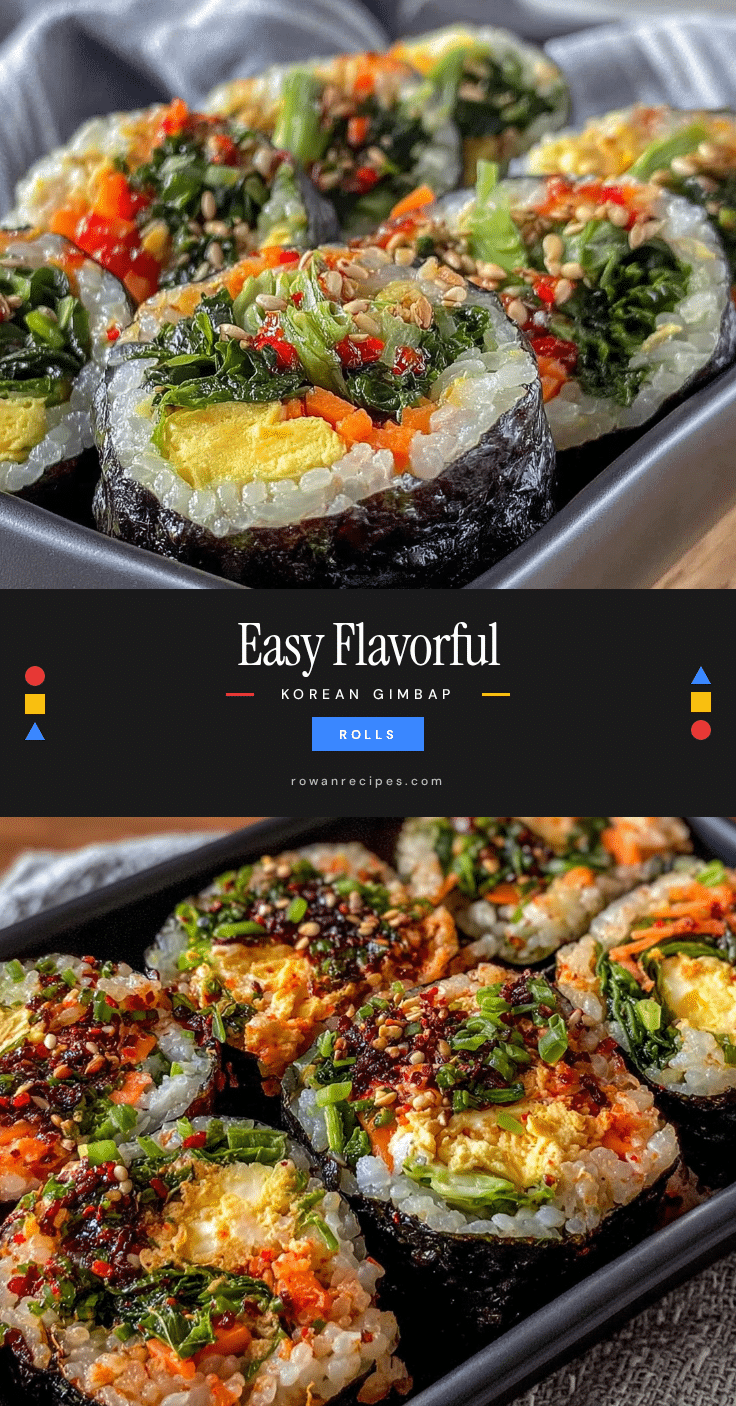
Easy Flavorful Korean Gimbap Lunchbox Rolls Recipe for Perfect Snack

A quick and easy Korean gimbap recipe featuring seasoned sushi rice, fresh veggies, and savory fillings rolled in seaweed sheets. Perfect for a portable, flavorful snack or lunch.
- Prep Time: 15 minutes
- Cook Time: 15 minutes
- Total Time: 30 minutes
- Yield: 5 rolls (about 15-20 pieces) 1x
- Category: Snack
- Cuisine: Korean
Ingredients
- 2 cups (360g) cooked short-grain sushi rice, slightly cooled
- 2 tablespoons rice vinegar
- 1 tablespoon toasted sesame oil
- 1 teaspoon salt
- 5 sheets roasted seaweed (gim), standard size
- 1 medium carrot, julienned or thinly sliced
- 1 small cucumber, peeled and cut into matchsticks
- 5 strips pickled radish (danmuji)
- 2 large eggs, beaten and cooked into a thin omelet, then sliced
- 5 sticks imitation crab or about 3.5 oz (100g) cooked beef/tofu (optional)
- 1 cup blanched spinach, lightly seasoned with salt and sesame oil
- 1 teaspoon black sesame seeds for garnish
Instructions
- Cook the rice: Rinse 1 cup (180g) short-grain rice under cold water until water runs clear. Cook with 1¼ cups (300ml) water in a rice cooker or pot. Transfer to a large bowl and gently fold in 2 tablespoons rice vinegar, 1 tablespoon toasted sesame oil, and 1 teaspoon salt. Let cool to room temperature (15-20 minutes).
- Prepare fillings: Julienne carrot and cucumber into thin strips. Blanch spinach in boiling water for 30 seconds, drain, squeeze out excess water, and season lightly with salt and sesame oil. Cook beaten eggs in a lightly oiled non-stick pan over medium heat into a thin omelet, cool, and slice into strips.
- Assemble gimbap: Place bamboo sushi mat on flat surface, lay one seaweed sheet shiny side down. Spread a thin, even layer of seasoned rice over seaweed, leaving about 1 inch (2.5 cm) at top edge free of rice.
- Add fillings: Arrange strips of carrot, cucumber, spinach, egg, pickled radish, and protein (if using) horizontally about 1 inch (2.5 cm) from bottom edge of seaweed.
- Roll it up: Using bamboo mat, gently lift edge closest to you and roll gimbap over fillings, pressing lightly but firmly to keep it tight. Continue rolling until free edge seals the roll. Use a few drops of water if needed to seal.
- Slice and serve: Using a sharp, dampened knife, slice each roll into 1-inch (2.5 cm) pieces. Wipe knife between cuts for clean slices.
Notes
Use short-grain sushi rice for best stickiness. Keep knife damp when slicing to prevent rice sticking. Do not overfill rolls to avoid tearing seaweed. Rolls are best eaten fresh but can be stored wrapped in plastic wrap for a few hours or refrigerated up to 2 days. Bring to room temperature before serving for best texture.
Nutrition
- Serving Size: About 3-4 pieces per
- Calories: 275
- Sugar: 4
- Sodium: 450
- Fat: 7
- Saturated Fat: 1
- Carbohydrates: 42
- Fiber: 3
- Protein: 8
Keywords: Korean gimbap, gimbap recipe, Korean lunchbox rolls, seaweed rolls, sushi rice rolls, easy Korean snack, portable lunch, healthy snack