“You really need to try this tabbouleh,” my friend insisted over a lazy Sunday brunch. I’d always been a bit wary of salads that seemed more like a bowl of weeds than food. But then, curiosity — and a fridge stocked with some leftover parsley — nudged me to give this Lebanese tabbouleh with bulgur wheat a shot. Honestly, I wasn’t expecting much, just a quick, healthy side to balance out a heavy meal. Instead, I found myself chopping parsley with a surprising eagerness, the vibrant aromas filling the kitchen. The zesty lemon and fresh mint teased me from the mixing bowl, and by the time I took that first bite, all skepticism melted away.
It wasn’t just a salad; it was a refreshing jolt on a tired afternoon, a simple dish that felt like a small celebration of freshness and zest. The bulgur wheat added the right bit of texture — not mushy, not crunchy — just perfectly chewy. It struck me as a dish that could quietly steal the show at any gathering. And that’s why this tabbouleh recipe stayed with me — not because it was fancy, but because it was honest, bright, and just plain good.
That little brunch invitation led to me making tabbouleh multiple times in the week after, tweaking the lemon juice here, adding a touch more olive oil there. It’s the kind of salad that grows on you, turning into a staple without any fuss. Plus, pairing it alongside something like the easy crispy sheet pan Italian sausage and peppers or a simple grilled chicken created meals that felt thoughtfully put together but didn’t require hours in the kitchen.
There’s something quietly satisfying about a bowl full of fresh herbs, ripe tomatoes, and zesty lemon with the hearty chew of bulgur — it’s a salad that feels alive, you know? It’s no wonder this simple Lebanese tabbouleh with bulgur wheat recipe has become one of those dishes I can’t quite stop recommending. It’s bright, it’s fresh, and it’s honestly one of the best ways to make a salad that doesn’t feel like a chore.
Why You’ll Love This Recipe
Having tested countless tabbouleh recipes, this version stands out as a true keeper. It’s not just about mixing parsley and bulgur; it’s about getting the balance just right so every bite sings with freshness and zest. Here’s why this fresh Lebanese tabbouleh with bulgur wheat is worth a spot in your recipe box:
- Quick & Easy: Comes together in under 20 minutes, perfect for those busy evenings when you need a fresh side without the hassle.
- Simple Ingredients: Uses pantry staples like bulgur wheat and fresh herbs you can find year-round—no exotic trips required.
- Perfect for Any Occasion: Whether it’s a casual weeknight, a picnic, or an addition to a mezze spread, this salad fits right in.
- Crowd-Pleaser: Kids and adults alike enjoy the zesty flavors and satisfying texture—trust me, I’ve seen it happen.
- Unbelievably Delicious: The lemon and olive oil dressing perfectly coats the bulgur and herbs, making it a refreshing, soul-soothing dish.
What sets this tabbouleh apart? It’s the attention to detail—soaking the bulgur just right, finely chopping the parsley and mint to avoid bitterness, and balancing the lemon’s zing with just enough olive oil. It’s not just a salad; it’s a little ritual that makes fresh ingredients shine. Honestly, the way it brightens up a plate reminds me of the zestiness in my creamy garlic butter Tuscan shrimp pasta, where freshness meets comfort in the best way.
What Ingredients You Will Need
This fresh Lebanese tabbouleh recipe uses simple, wholesome ingredients to deliver bold flavor and satisfying texture without the fuss. Most are pantry staples or fresh herbs you can easily find at any market. Here’s what you’ll want to have on hand:
- Bulgur wheat: Fine or medium grain (about 1 cup / 170 g), soaked or briefly boiled to soften. I prefer fine bulgur for the best texture.
- Fresh flat-leaf parsley: 2 bunches, finely chopped (this is the hero ingredient—bright, fresh, and herbaceous).
- Fresh mint leaves: About 1/2 cup, finely chopped (adds a cooling note that balances the lemon).
- Ripe tomatoes: 2 medium, finely diced (I usually go for Roma or vine-ripened for sweetness).
- Green onions or scallions: 3-4 stalks, thinly sliced (for that subtle sharpness).
- Fresh lemon juice: Approximately 1/4 cup (60 ml), freshly squeezed—this is key for the zesty kick.
- Extra virgin olive oil: 1/4 cup (60 ml), good quality for richness and silkiness.
- Salt: To taste (usually about 1 teaspoon, but adjust as you go).
- Black pepper: Freshly ground, a pinch or two.
Pro tip: If you want to swap bulgur wheat for gluten-free, try quinoa or fine millet instead—both soak up the dressing nicely. For a dairy-free and vegan salad, this recipe fits perfectly as is.
Equipment Needed
- Large mixing bowl: To toss all the ingredients comfortably without spillage.
- Fine mesh sieve or colander: To rinse bulgur wheat and drain excess water.
- Sharp chef’s knife: For finely chopping parsley, mint, and tomatoes—honestly, a good knife makes all the difference here.
- Cutting board: Preferably large to give you space for chopping herbs neatly.
- Juicer or reamer: Handy for squeezing fresh lemon juice efficiently without seeds.
- Measuring cups and spoons: For accuracy, especially with lemon juice and olive oil balance.
If you don’t have a juicer, no worries—just use your hands and strain out the seeds. I’ve done it plenty of times without fancy gear. Also, a food processor can speed up chopping, but to keep the salad’s texture authentic, I prefer doing it by hand.
Preparation Method
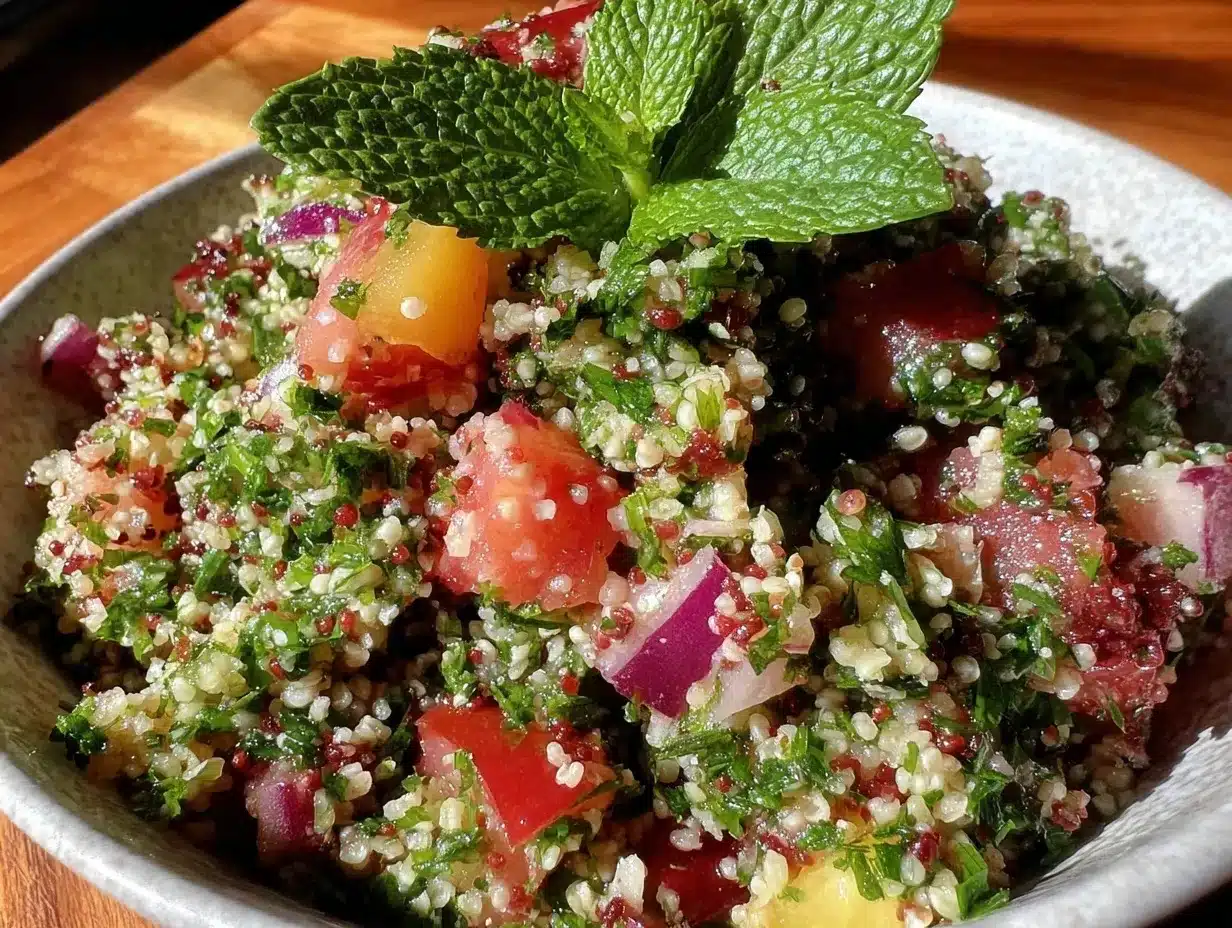
- Prep the bulgur wheat: Place 1 cup (170 g) of fine bulgur wheat in a bowl. Pour about 1 1/4 cups (300 ml) of boiling water over it. Cover and let it soak for 15-20 minutes until tender but still chewy. Drain any excess water through a fine sieve and set aside to cool.
- Chop the herbs: While the bulgur soaks, finely chop 2 bunches of fresh flat-leaf parsley and 1/2 cup of fresh mint leaves. Aim for a consistent, fine dice but avoid pulverizing the herbs to keep the salad bright and fresh.
- Dice the vegetables: Finely chop 2 medium ripe tomatoes and slice 3-4 green onions thinly. Try to remove extra seeds from tomatoes to prevent the salad from getting watery.
- Mix the dressing: In a small bowl, whisk together 1/4 cup (60 ml) of freshly squeezed lemon juice, 1/4 cup (60 ml) of extra virgin olive oil, salt, and freshly ground black pepper. Taste and adjust the seasoning—you want a lively, balanced dressing.
- Toss it all together: In a large mixing bowl, combine the drained bulgur, chopped parsley, mint, tomatoes, and green onions. Pour the dressing over and toss gently but thoroughly so every bit gets coated. Let it rest for at least 10 minutes before serving; the flavors meld beautifully during this time.
Note: If the salad tastes dry after resting, add a splash more olive oil or lemon juice. And if the bulgur feels tough, a little more soaking time next round will fix that. The salad should look bright and fresh, with the parsley vibrant and the tomatoes juicy but not soggy.
Cooking Tips & Techniques
While tabbouleh might sound straightforward, a few insider tips can make your salad sing. First, don’t rush the bulgur soaking. It’s tempting to use hot water and call it done fast, but giving it a good 15-20 minutes makes the texture just right—chewy without being mushy.
Chopping the parsley fine but not pulverizing it is an art. You want the herbs to release their aroma without turning into a paste. I often sprinkle a little salt on the chopped parsley and gently massage it before mixing; it softens the leaves and deepens the flavor.
When squeezing lemons, strain out seeds but keep the pulp—it adds a nice texture burst. Also, add the dressing gradually and taste as you go. Too much lemon can overpower, but not enough leaves it dull. Balance is everything.
One mistake I made early on was not removing tomato seeds, which made the salad too watery. Now, I always scoop out seeds with a spoon before dicing. Also, resting the salad for at least 10 minutes before serving helps the flavors marry and the bulgur absorb the dressing.
If you’re making this ahead, keep the salad refrigerated and add a bit more olive oil before serving to freshen it up. Multitasking tip: while the bulgur soaks, chop the herbs and vegetables to save time.
Variations & Adaptations
This tabbouleh recipe is wonderfully flexible, letting you adjust for taste, season, or diet:
- Quinoa Tabbouleh: Swap bulgur wheat for cooked quinoa for a gluten-free option. Quinoa brings a nuttier flavor and a slightly different texture but still soaks up the dressing beautifully.
- Winter Tabbouleh: In cooler months, try adding chopped kale or finely diced radishes for a seasonal twist. The kale adds a hearty bite, while radishes bring peppery crunch.
- Spicy Tabbouleh: Add a pinch of ground sumac, a sprinkle of chili flakes, or even some finely diced jalapeño to introduce a spicy kick that cuts through the herbs and lemon.
- Protein Boost: Toss in some crumbled feta or chickpeas to turn this side salad into a light main dish. I’ve done this often when craving a quick, healthy lunch.
- Herb Variations: If mint isn’t your thing, swap it for cilantro or basil for a different herbal profile that still complements the bulgur.
I tried a version with pomegranate seeds once—totally unexpected but the juicy bursts worked surprisingly well with the lemon and parsley. Feel free to play around!
Serving & Storage Suggestions
Tabbouleh is best served chilled or at room temperature, making it ideal for summer picnics or as a refreshing side at any meal. Spoon it into a pretty bowl and watch it brighten the table alongside grilled meats or dishes like the easy one-pot lemon chicken and rice, where its freshness balances rich, savory flavors.
For storage, keep tabbouleh in an airtight container in the refrigerator for up to 2 days. The flavors deepen over time, though the herbs will darken slightly. Give it a gentle stir and a drizzle of olive oil before serving to revive its vibrancy.
Reheating isn’t necessary, but if you prefer, bring it to room temperature rather than heating it up. It’s not a cooked dish, so warming it can dull the bright flavors.
Nutritional Information & Benefits
Each serving of this fresh Lebanese tabbouleh offers a nourishing boost with roughly 150-180 calories, depending on portion size. Bulgur wheat provides fiber and plant-based protein, supporting digestion and sustained energy. Parsley and mint not only add flavor but also pack antioxidants and vitamins A and C.
Because this recipe is packed with fresh veggies and uses heart-healthy olive oil, it’s naturally gluten-free if you swap bulgur for quinoa and vegan by default. It’s a light, nutrient-dense option that fits well into balanced eating habits, especially when paired with lean proteins or as a vibrant side dish.
Conclusion
This fresh Lebanese tabbouleh with bulgur wheat isn’t just another salad—it’s a celebration of simple ingredients done right. Its zesty, herb-filled personality brings life to any meal without demanding much time or effort. I keep coming back to this recipe because it’s reliable, fresh, and endlessly satisfying.
Feel free to tweak the lemon, swap herbs, or toss in extras to make it your own. And if you’re in the mood for more easy, homemade dishes that deliver big on flavor, give the creamy cheesy taco pasta a try—it’s become a family favorite around here!
Give this tabbouleh a go and let it add a little zest and brightness to your table. I’d love to hear how you make it yours!
FAQs About Fresh Lebanese Tabbouleh with Bulgur Wheat
Can I make tabbouleh ahead of time?
Yes, tabbouleh actually tastes better after resting for a few hours as the flavors meld. Store it in the fridge in an airtight container for up to 2 days, then stir and add a little olive oil before serving.
Is bulgur wheat gluten-free?
No, bulgur is made from wheat and contains gluten. For a gluten-free version, substitute with cooked quinoa or millet.
How finely should I chop the parsley and mint?
Chop the herbs finely but not into a paste. You want small, uniform pieces so the salad has a bright texture and the flavors blend well.
Can I use dried herbs instead of fresh?
Dried herbs won’t give the same fresh flavor or texture. For tabbouleh, fresh parsley and mint are essential to achieve that vibrant taste.
What’s the best way to soak bulgur wheat?
Pour boiling water over the bulgur and cover it, letting it soak for 15-20 minutes until tender but still chewy. Then drain any excess water before mixing.
Pin This Recipe!
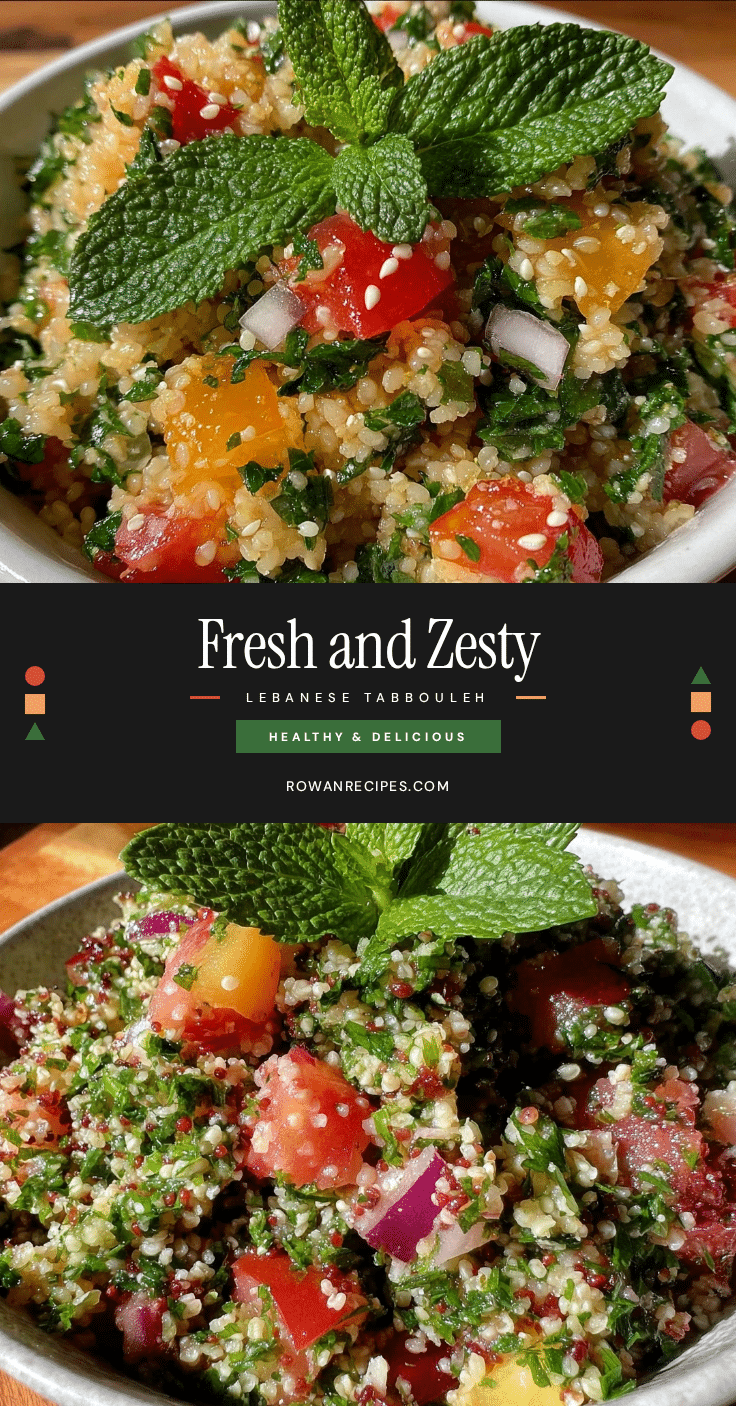
Fresh Lebanese Tabbouleh Recipe Easy 5-Step Zesty Bulgur Salad
A refreshing Lebanese tabbouleh salad featuring bulgur wheat, fresh parsley, mint, tomatoes, and a zesty lemon-olive oil dressing. Quick and easy to prepare, perfect as a healthy side or light meal.
- Prep Time: 10 minutes
- Cook Time: 20 minutes (soaking time)
- Total Time: 30 minutes
- Yield: 4 servings 1x
- Category: Salad
- Cuisine: Lebanese
Ingredients
- 1 cup (170 g) fine or medium grain bulgur wheat
- 2 bunches fresh flat-leaf parsley, finely chopped
- 1/2 cup fresh mint leaves, finely chopped
- 2 medium ripe tomatoes, finely diced
- 3–4 green onions or scallions, thinly sliced
- 1/4 cup (60 ml) fresh lemon juice
- 1/4 cup (60 ml) extra virgin olive oil
- Salt to taste (about 1 teaspoon)
- Freshly ground black pepper, a pinch or two
Instructions
- Place 1 cup (170 g) of fine bulgur wheat in a bowl. Pour about 1 1/4 cups (300 ml) of boiling water over it. Cover and let it soak for 15-20 minutes until tender but still chewy. Drain any excess water through a fine sieve and set aside to cool.
- While the bulgur soaks, finely chop 2 bunches of fresh flat-leaf parsley and 1/2 cup of fresh mint leaves. Aim for a consistent, fine dice but avoid pulverizing the herbs.
- Finely chop 2 medium ripe tomatoes and slice 3-4 green onions thinly. Remove extra seeds from tomatoes to prevent the salad from getting watery.
- In a small bowl, whisk together 1/4 cup (60 ml) of freshly squeezed lemon juice, 1/4 cup (60 ml) of extra virgin olive oil, salt, and freshly ground black pepper. Taste and adjust the seasoning.
- In a large mixing bowl, combine the drained bulgur, chopped parsley, mint, tomatoes, and green onions. Pour the dressing over and toss gently but thoroughly. Let it rest for at least 10 minutes before serving.
Notes
If the salad tastes dry after resting, add a splash more olive oil or lemon juice. Soak bulgur for 15-20 minutes until tender but still chewy. Finely chop herbs without pulverizing to keep freshness. Remove tomato seeds to avoid watery salad. Rest salad for at least 10 minutes before serving to meld flavors. For gluten-free, substitute bulgur with cooked quinoa or millet.
Nutrition
- Serving Size: About 1 cup per serv
- Calories: 165
- Sugar: 3
- Sodium: 250
- Fat: 10
- Saturated Fat: 1.4
- Carbohydrates: 17
- Fiber: 4
- Protein: 4
Keywords: tabbouleh, bulgur salad, Lebanese salad, fresh herbs, healthy side dish, easy salad recipe, gluten-free option, vegan salad