“Are you sure this isn’t too spicy?” my roommate asked, eyeing the bubbling skillet filled with bright red sauce and tender chicken chunks. Honestly, I was skeptical too. The first time I attempted this Easy Korean Dakgalbi Spicy Chicken Stir Fry, I was just trying to whip up something quick on a busy weeknight without any fancy ingredients or complicated steps. I remember juggling a few emails on my laptop and glancing nervously at the stove, half-expecting the whole thing to turn into a fiery disaster. But as the aroma of gochujang and garlic filled the kitchen, something clicked.
That first bite was a surprise—a perfect balance of spicy, sweet, and savory that hit all the right spots. It reminded me how sometimes the best dishes come from simple, honest attempts rather than complicated plans. Since then, I found myself making this recipe multiple times a week, tweaking it just a little here and there—sometimes adding extra veggies, sometimes swapping chicken for tofu. The charm of this dish is how forgiving it is, even if you’re a kitchen newbie like I was.
What really stuck with me was how this recipe became a little comforting ritual after long days. Stirring the sauce, watching the chicken soak up the heat, and hearing that satisfying sizzle—it all felt grounding. Plus, it’s fast, so it fits perfectly when you want something bold but don’t want to spend forever cooking. Honestly, it’s a spicy little joy that makes weeknights better and invites casual gatherings with friends who can’t get enough of the flavor.
So, if you’ve been curious about Korean cooking but feel intimidated, this Easy Korean Dakgalbi Spicy Chicken Stir Fry for Beginners is just the ticket. It’s straightforward, relies on pantry staples (with a few Korean essentials that are easy to keep around), and delivers an amazing punch of flavor without fuss. Let’s be honest, once you try it, you’ll find yourself coming back for more—and that’s a quiet promise I’m happy to make.
Why You’ll Love This Recipe
This Easy Korean Dakgalbi recipe isn’t just another chicken stir fry—it’s a flavorful, fuss-free way to bring bold Korean flavors to your table without sweating over complicated steps. I’ve tested this recipe across busy workweeks and late-night cravings, and it’s become a go-to for both speed and satisfaction.
- Quick & Easy: Ready in under 30 minutes, this recipe fits perfectly into hectic evenings or spontaneous dinner plans.
- Simple Ingredients: Most ingredients are pantry staples or easy-to-find at your local grocery store or Asian market. You probably already have garlic, soy sauce, and gochujang waiting in your fridge.
- Perfect for Casual Gatherings: Whether it’s a cozy dinner for two or a laid-back night with friends, this dish sparks conversation and keeps everyone coming back for seconds.
- Crowd-Pleaser: The balance of spicy, sweet, and savory flavors gets rave reviews from the spice-averse and heat-lovers alike.
- Unbelievably Delicious: The texture of tender chicken cooked in a sticky, glossy sauce is mouthwatering—and the crispy edges where the sauce caramelizes? Next-level comfort food.
- Unique Twist: Unlike some versions that can be overly complicated, this recipe uses a balanced seasoning mix and a quick marinating step that really brings out the flavor without needing hours of prep.
Honestly, this recipe isn’t just about making dinner—it’s about enjoying the process, discovering a new flavor profile, and finding an easy way to spice up your weeknight meals without stress. It’s a little adventure for your taste buds that feels like a warm hug at the end of a long day.
What Ingredients You Will Need
This Easy Korean Dakgalbi recipe uses simple, wholesome ingredients that come together to create bold flavors and satisfying textures without fuss. Most are pantry staples, while others are classic Korean essentials that you can easily find online or at most Asian markets.
- Chicken Thighs: Boneless, skinless, cut into bite-sized pieces (thighs stay juicy and tender better than breast meat).
- Gochujang (Korean Chili Paste): The star ingredient—provides spicy, tangy, and slightly sweet flavor. I recommend Chung Jung One brand for authentic taste.
- Garlic: Minced fresh garlic adds depth and pungency.
- Ginger: Fresh, grated ginger brightens the sauce.
- Soy Sauce: Use low-sodium if preferred to balance saltiness.
- Rice Syrup or Honey: Adds a subtle sweetness that rounds out the heat.
- Sesame Oil: Toasted sesame oil for that signature nutty aroma.
- Vegetables: Napa cabbage or regular cabbage (thinly sliced), sweet potato chunks or rice cakes for chewiness, and green onions sliced on the bias for freshness.
- Cooked Rice: To serve alongside or stir in at the end.
- Optional: Sesame seeds for garnish, and a handful of shredded mozzarella cheese if you want to try the popular cheesy dakgalbi twist.
If you want to keep it gluten-free, swap soy sauce with tamari. For a vegetarian spin, replace chicken with firm tofu or mushrooms. The sauce’s magic still works beautifully.
Equipment Needed
- Large Skillet or Cast Iron Pan: A wide pan is perfect for cooking the dakgalbi evenly and getting those crispy bits on the edges. I use a 12-inch cast iron skillet that holds heat well.
- Mixing Bowls: For marinating chicken and tossing vegetables.
- Sharp Knife and Cutting Board: Essential for prepping chicken and slicing veggies safely.
- Wooden Spoon or Silicone Spatula: For stirring the chicken and sauce without scratching your pan.
- Measuring Spoons and Cups: Accuracy helps balance the bold flavors.
If you don’t have a cast iron skillet, a heavy-bottomed nonstick pan works fine—just keep an eye on the heat to avoid sticking. For those on a budget, simple stainless steel pans do the job well, too. I recommend seasoning your cast iron pan regularly to maintain that perfect nonstick surface and deepen flavor development.
Preparation Method
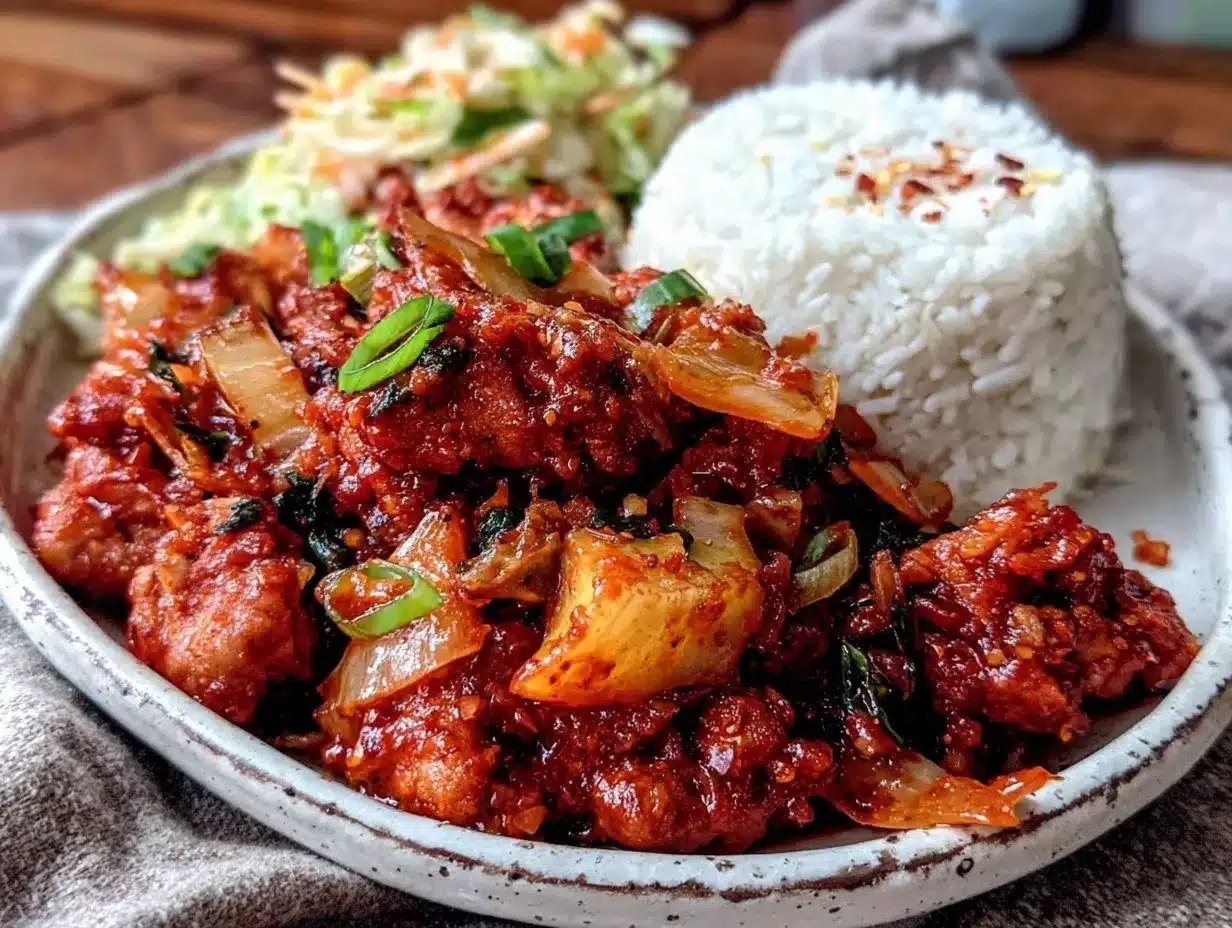
- Prep the Chicken: Cut 1.5 pounds (700g) of boneless, skinless chicken thighs into 1-inch (2.5cm) pieces. Place them in a large bowl.
- Make the Marinade: In a separate bowl, combine 3 tablespoons (45ml) gochujang, 2 tablespoons (30ml) soy sauce, 1 tablespoon (15ml) rice syrup or honey, 1 teaspoon (5ml) toasted sesame oil, 3 cloves minced garlic, and 1 teaspoon (5g) grated ginger. Stir well to blend.
- Marinate the Chicken: Pour the marinade over the chicken pieces and toss to coat evenly. Let it sit for at least 15 minutes (or up to 1 hour) to soak up the flavors.
- Prepare Vegetables: While the chicken marinates, slice 2 cups (150g) napa cabbage thinly, peel and chop 1 medium sweet potato into bite-sized chunks, and slice 2 green onions diagonally for garnish.
- Cook the Dakgalbi: Heat 1 tablespoon (15ml) vegetable oil in a large skillet over medium-high heat. Add the marinated chicken and spread it out evenly. Let it sear without stirring for 3-4 minutes to get some caramelization.
- Stir and Add Veggies: Stir the chicken, then add the sweet potato chunks and cabbage. Cook for another 8-10 minutes, stirring occasionally, until the chicken is cooked through and sweet potatoes are tender. The sauce should thicken and coat everything nicely.
- Finish and Serve: Turn off the heat, drizzle with a little more toasted sesame oil, and sprinkle with green onions and sesame seeds. Serve hot with steamed rice or wrap in lettuce leaves for a fresh contrast.
Tip: If you want the cheesy dakgalbi experience, sprinkle shredded mozzarella over the chicken during the last 2 minutes of cooking and cover the pan for a melty finish. I tried this once on a whim, and it was an absolute hit during a casual dinner with friends.
Cooking Tips & Techniques
Getting the balance right in this Easy Korean Dakgalbi comes down to a few simple tricks I’ve learned by trial and error.
- Don’t Overcrowd the Pan: Give the chicken enough space to sear properly. Overcrowding leads to steaming instead of caramelizing those edges that add so much flavor.
- Marinate for Better Flavor: Even 15 minutes makes a difference. The marinade tenderizes the chicken and infuses the sauce deeply.
- Watch Your Heat: Medium-high is perfect for cooking chicken through without burning the sauce. If the sauce thickens too quickly or starts to stick, lower the heat and add a splash of water or chicken broth.
- Use Chicken Thighs: They stay juicy and tender better than breast meat, especially with spicy sauces.
- Balance the Spice: If you want it milder, reduce the gochujang slightly and add a pinch of sugar or more honey to soften the heat.
Once, I tried skipping the garlic and ginger to save time. Big mistake—the sauce lost its depth. Those fresh aromatics really make the flavor pop, so don’t skip them! Also, multitask by prepping your veggies while the chicken marinates—makes the whole process smoother and quicker.
Variations & Adaptations
This recipe is flexible and welcomes your personal touch. Here are a few variations I’ve enjoyed and recommend:
- Vegetarian Version: Swap chicken for firm tofu or thick slices of king oyster mushrooms. Press the tofu well to avoid sogginess, and cook until golden before adding sauce.
- Cheesy Dakgalbi: Add shredded mozzarella cheese in the last minutes of cooking for a creamy, gooey twist. It’s a favorite among friends who love mixing Korean flavors with a cheesy comfort food vibe.
- Spicy Level Adjustments: For less heat, reduce the gochujang to 2 tablespoons and add 1 tablespoon of soy sauce. For more punch, add a pinch of Korean chili flakes (gochugaru) or a splash of hot sauce.
- Seasonal Veggie Swap: In summer, try adding zucchini or bell peppers for extra color and crunch. In winter, heartier veggies like carrots or daikon radish work beautifully.
- Different Cooking Methods: If you prefer, cook this in a large electric skillet or a wok. Both work well for even heat distribution.
Once, I tried mixing in some leftover sweet corn kernels, which added a nice pop of sweetness contrasting the heat. It was a fun surprise and made the dish feel more like a full meal in one pan.
Serving & Storage Suggestions
Serve your Easy Korean Dakgalbi steaming hot, preferably straight from the pan to the table. The contrast of the spicy chicken with fluffy steamed rice is classic, but I also love wrapping spoonfuls in crisp lettuce leaves with a dab of ssamjang or kimchi for a fresh bite.
Pair it with simple sides like pickled cucumbers or a light fresh pesto tortellini salad to balance the heat.
Leftovers keep well in an airtight container in the fridge for up to 3 days. Reheat gently in a skillet over medium heat with a splash of water to loosen the sauce. The flavors actually deepen overnight, so it tastes even better the next day.
For longer storage, freeze portions in freezer-safe bags for up to 2 months. Thaw overnight in the fridge before reheating.
Nutritional Information & Benefits
This recipe provides a hearty serving of protein from chicken thighs, packed with flavor but moderate in fat. The gochujang chili paste delivers capsaicin, which can boost metabolism and add antioxidants. Garlic and ginger bring anti-inflammatory benefits and immune support.
A typical serving (about 1 cup or 250g) contains approximately 350 calories, 30g protein, 12g fat, and 20g carbohydrates, depending on the exact vegetables and rice served alongside.
Gluten-free options are easily achieved by swapping to tamari instead of soy sauce. This dish is naturally dairy-free unless you add cheese toppings.
Personally, I appreciate how this recipe packs bold flavors without relying on heavy creams or processed ingredients, making it a satisfying yet mindful meal choice.
Conclusion
Easy Korean Dakgalbi Spicy Chicken Stir Fry for Beginners is a recipe worth trying if you want a quick, flavorful, and comforting meal that doesn’t require hours in the kitchen or exotic ingredients. It’s flexible, approachable, and delivers that perfect spicy kick balanced by sweet and savory notes.
I love how it brings a little bit of Korea to my weeknight table without any fuss, and how it invites creativity—whether you want to add cheese, swap veggies, or adjust the heat. It’s become a small favorite that I turn to when I want something satisfying and fuss-free.
Give it a go, and don’t be shy about making it your own. I’d love to hear how you tweak the recipe or what sides you pair it with—drop a comment below or share your adaptations. Happy cooking!
Frequently Asked Questions
What is dakgalbi?
Dakgalbi is a popular Korean dish made with spicy marinated chicken stir-fried with vegetables and often rice cakes or sweet potatoes. It’s known for its bold, spicy, and slightly sweet flavor.
Can I use chicken breast instead of thighs?
Yes, but chicken thighs stay juicier and more tender, especially with spicy sauces. If using breast, cook carefully to avoid drying out.
Where can I find gochujang?
Gochujang is available at most Asian grocery stores and online retailers. Look for a reputable brand like Chung Jung One for authentic flavor.
How spicy is this recipe?
The heat level is moderate and can be adjusted by reducing or increasing gochujang. You can also add sugar or honey to balance the spice if needed.
Can I prepare this recipe ahead of time?
Yes, marinate the chicken up to 24 hours in advance for deeper flavor. Cook just before serving for best texture and taste.
For a cozy dinner with a creamy twist, you might enjoy the creamy garlic butter Tuscan shrimp pasta that brings warmth and richness in a different way.
Or if you want another quick, flavorful chicken meal, the easy 5-ingredient BBQ chicken recipe is a no-fuss winner you should keep in your back pocket.
Pin This Recipe!
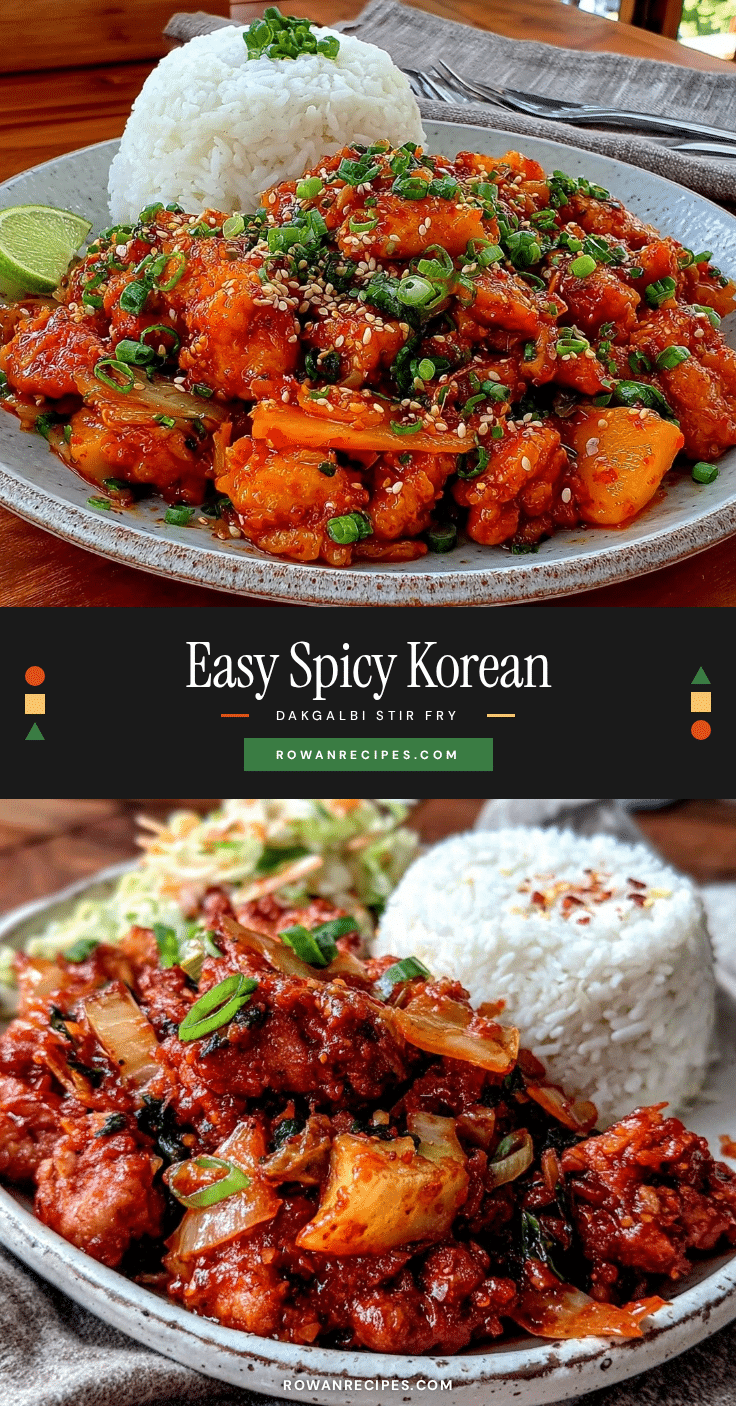
Easy Korean Dakgalbi Recipe

A quick and flavorful spicy chicken stir fry featuring tender chicken thighs marinated in a bold gochujang sauce, perfect for beginners and weeknight meals.
- Prep Time: 15 minutes
- Cook Time: 15 minutes
- Total Time: 30 minutes
- Yield: 4 servings 1x
- Category: Main Course
- Cuisine: Korean
Ingredients
- 1.5 pounds boneless, skinless chicken thighs, cut into 1-inch pieces
- 3 tablespoons gochujang (Korean chili paste)
- 2 tablespoons soy sauce (low-sodium preferred)
- 1 tablespoon rice syrup or honey
- 1 teaspoon toasted sesame oil
- 3 cloves garlic, minced
- 1 teaspoon grated fresh ginger
- 2 cups napa cabbage, thinly sliced
- 1 medium sweet potato, peeled and cut into bite-sized chunks
- 2 green onions, sliced diagonally
- 1 tablespoon vegetable oil
- Cooked rice, for serving
- Optional: sesame seeds for garnish
- Optional: shredded mozzarella cheese for cheesy dakgalbi twist
Instructions
- Cut chicken thighs into 1-inch pieces and place in a large bowl.
- In a separate bowl, mix gochujang, soy sauce, rice syrup or honey, toasted sesame oil, minced garlic, and grated ginger to make the marinade.
- Pour marinade over chicken and toss to coat evenly. Let marinate for at least 15 minutes or up to 1 hour.
- While chicken marinates, prepare vegetables: thinly slice napa cabbage, peel and chop sweet potato, and slice green onions.
- Heat vegetable oil in a large skillet over medium-high heat. Add marinated chicken and spread evenly. Let sear without stirring for 3-4 minutes to caramelize.
- Stir chicken, then add sweet potato chunks and cabbage. Cook for 8-10 minutes, stirring occasionally, until chicken is cooked through and sweet potatoes are tender. Sauce should thicken and coat everything.
- Turn off heat, drizzle with additional toasted sesame oil, and sprinkle with green onions and sesame seeds.
- Serve hot with steamed rice or wrapped in lettuce leaves.
- Optional: For cheesy dakgalbi, sprinkle shredded mozzarella over chicken during last 2 minutes of cooking and cover pan to melt cheese.
Notes
Do not overcrowd the pan to allow proper caramelization. Marinate chicken for at least 15 minutes for best flavor. Adjust spice level by reducing gochujang or adding sugar/honey. Use chicken thighs for juicier texture. For gluten-free, substitute soy sauce with tamari. Cheese is optional for a creamy twist.
Nutrition
- Serving Size: About 1 cup (250g)
- Calories: 350
- Fat: 12
- Carbohydrates: 20
- Protein: 30
Keywords: Korean, dakgalbi, spicy chicken, stir fry, gochujang, easy recipe, weeknight dinner, Korean chicken