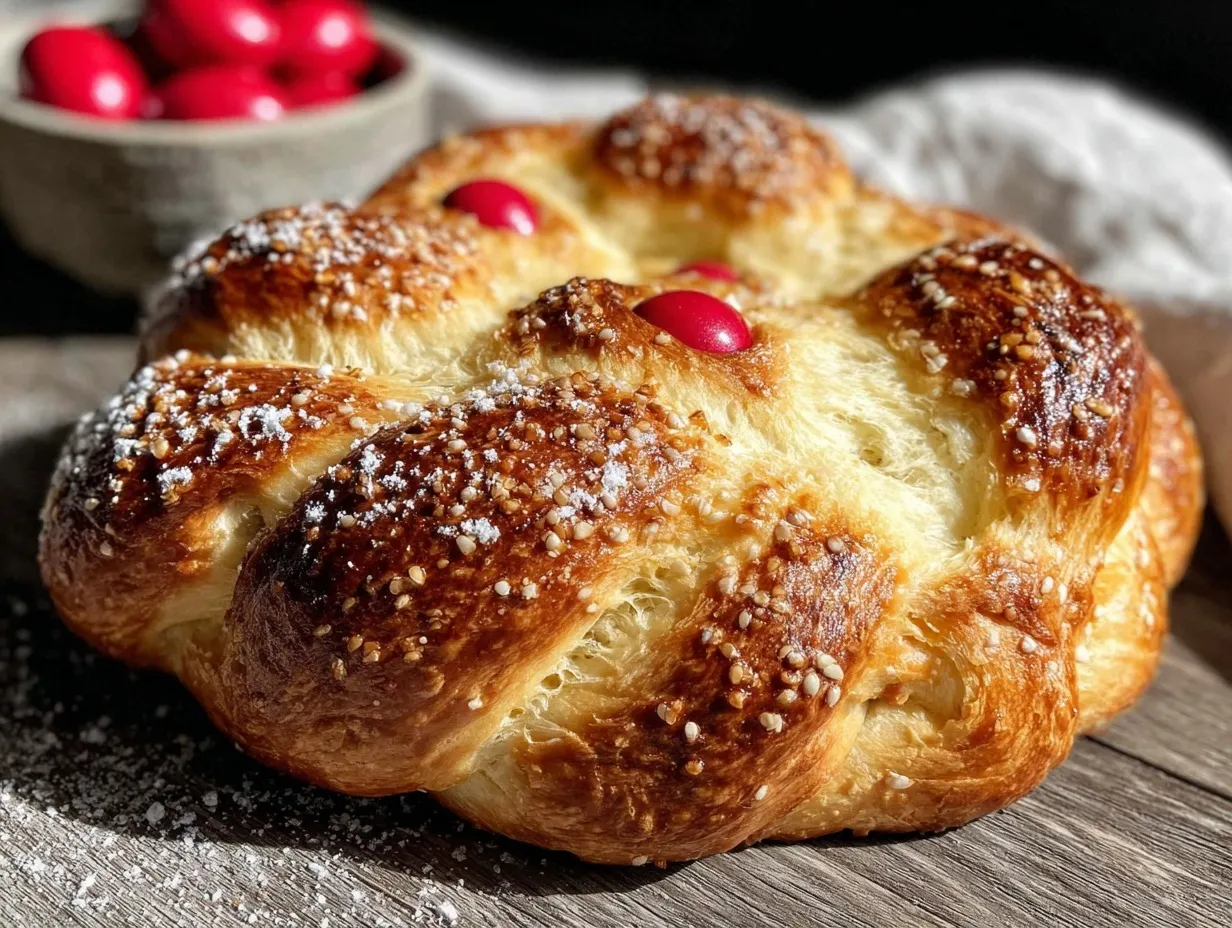
“Look, Mom, the eggs are perfectly red this year!” my niece chirped one Easter morning, her eyes wide as she gently tapped the vibrant eggs nestled in the braided tsoureki loaf. That moment—the warm kitchen filled with the scent of orange blossom and cinnamon, the soft hum of family chatter—remains vivid. Honestly, making Fluffy Tsoureki Greek Easter Sweet Bread with Red Eggs has always felt less like baking and more like weaving a story of heritage, comfort, and a little bit of magic.
One Easter, I remember rushing home after a long day, barely able to think straight, but the ritual of kneading this dough with its fragrant spices grounded me. It wasn’t just about the bread; it was about the pause it offered, the connection to generations before me, and the joy of sharing something truly special. The red eggs, dyed with onion skins the old-fashioned way, aren’t just decoration—they’re a symbol of renewal and hope, nestled right in that tender, fluffy dough.
Tsoureki isn’t your everyday sweet bread. It’s rich but light, fragrant but subtle, and the perfect balance of sweet and spice. Whether you’re new to Greek baking or looking to perfect your family recipe, this guide walks you through making the softest, most pillowy tsoureki, complete with those iconic red eggs. It’s the kind of bread that gets requested every year, and once you try it, you’ll know why it sticks around in your kitchen and your heart.
So, let’s get into this beautiful tradition—because sometimes, the simplest recipes carry the deepest stories.
Why You’ll Love This Fluffy Tsoureki Greek Easter Sweet Bread Recipe with Red Eggs
This tsoureki recipe has been my go-to for years, and it’s not by chance. After countless batches—some a bit too dense, others overly sweet—I finally nailed the balance that makes this bread a standout. Here’s why it’s worth your time:
- Quick & Easy: Despite the traditional steps, the dough comes together smoothly and rises predictably, perfect for those who want an authentic Easter treat without fussing for hours.
- Simple Ingredients: You won’t need hard-to-find spices or specialty flours. The recipe leans on pantry staples like all-purpose flour, warm milk, and fresh yeast, plus a touch of aromatic mahleb and mastic for that authentic flavor.
- Perfect for Easter Celebrations: Whether it’s for brunch or a festive dinner, the braided bread with red eggs is a centerpiece that sparks conversations and smiles.
- Crowd-Pleaser: Kids love the mild sweetness and soft texture, while adults appreciate the subtle spice and tradition.
- Unbelievably Delicious Texture: The secret lies in a gentle knead and a patient rise, resulting in a bread that’s fluffy, tender, and just slightly chewy—comfort food with soul.
What sets this recipe apart? It’s the little details: soaking the mahleb and mastic in warm milk to release their aroma, and incorporating just the right amount of sugar and butter so the bread feels indulgent but not heavy. The red eggs aren’t just for show—they add a festive pop and a nod to Greek Easter customs. You won’t find this combination in every tsoureki recipe, and that’s what makes it special.
After baking this bread multiple times in a week during the Easter season (I admit, obsession phase!), I can say it’s reliable and rewarding every single time. It’s like a soft, fragrant hug from the kitchen.
What Ingredients You Will Need for Fluffy Tsoureki Greek Easter Sweet Bread with Red Eggs
This recipe uses simple, wholesome ingredients to deliver bold flavor and satisfying texture without the fuss. Most are pantry staples, with a few special touches to bring out that classic Greek Easter charm.
- All-Purpose Flour (4 cups / 480g) – The base for the dough, providing structure and chew.
- Milk (1 cup / 240ml, warm) – Activates the yeast and adds tenderness.
- Active Dry Yeast (2 ¼ tsp / 7g) – For that perfect rise; I trust Fleischmann’s for consistency.
- Sugar (½ cup / 100g) – Balances the spices and enriches the dough.
- Unsalted Butter (¼ cup / 60g, softened) – Adds richness and softness.
- Eggs (3 large, room temperature) – One for the dough, two for glazing, plus the red eggs for decoration.
- Orange Zest (from 1 medium orange) – Brings bright citrus notes that lift the bread.
- Mahlab (1 tsp ground) – A traditional spice from cherry pits, lending a subtle almond-cherry aroma; soak in warm milk for 10 minutes before use.
- Mastic Gum (¼ tsp ground) – Adds piney, resinous notes; also soaked with mahleb.
- Salt (1 tsp) – Balances sweetness and enhances flavor.
- Red Eggs (4 hard-boiled, dyed red) – Symbolizing rebirth, these are gently tucked into the braid before baking.
For the red eggs, I recommend natural dyeing with onion skins if you want that authentic deep red, but store-bought dyed eggs work great too. If mahleb or mastic is tricky to find, omit or substitute with a pinch of ground cardamom for a different but pleasant twist.
Equipment Needed
- Large Mixing Bowl: For combining and proofing the dough.
- Measuring Cups and Spoons: Accurate measurements make all the difference here.
- Stand Mixer with Dough Hook (optional): Speeds up kneading, but hand-kneading works just fine if you prefer a more tactile connection.
- Baking Sheet or Loaf Pan: To bake the tsoureki; I like using a parchment-lined sheet for even browning.
- Plastic Wrap or Clean Kitchen Towel: For covering the dough during rises.
- Small Saucepan: To warm milk for yeast activation and soaking spices.
Don’t sweat it if you don’t have a stand mixer. I’ve made this bread countless times by hand—just be ready for a bit of a workout! Also, investing in a quality rolling pin can help when shaping the dough strands, but your hands will do most of the work. For budget-friendly options, a simple silicone baking mat keeps your workspace mess-free.
Preparation Method
- Activate the Yeast: Warm the milk to about 110°F (43°C) – warm to the touch but not hot. Stir in the yeast and a teaspoon of sugar. Let it sit for 5-10 minutes until foamy. This indicates the yeast is alive and ready.
- Soak the Spices: In a small bowl, combine the ground mahleb and mastic with 2 tablespoons of the warm milk. Let sit for 10 minutes to soften and release their aroma.
- Mix the Dough: In a large bowl (or stand mixer), whisk together the flour, sugar, and salt. Add the activated yeast mixture, soaked spices with milk, butter, orange zest, and one egg. Mix until a sticky dough forms.
- Knead the Dough: Turn the dough onto a lightly floured surface and knead for 8-10 minutes until smooth and elastic. Alternatively, use a stand mixer with a dough hook for 6-8 minutes. The dough should be soft but not overly sticky; add a little flour if too wet.
- First Rise: Place the dough in a greased bowl, cover with plastic wrap or a damp towel, and leave in a warm spot for about 1.5 to 2 hours, or until doubled in size. It’s ready when you can gently poke it and the indentation stays.
- Shape the Tsoureki: Punch down the dough gently, then divide into three equal strands. Roll each strand into a rope about 18 inches (45 cm) long. Braid the strands loosely and tuck the red eggs into the braid, pressing gently to secure.
- Second Rise: Place the braided loaf on a parchment-lined baking sheet. Cover loosely and let rise for another 45-60 minutes until puffy.
- Glaze and Bake: Preheat your oven to 350°F (175°C). Beat the remaining two eggs and brush the loaf generously to achieve that shiny, golden crust. Bake for 30-35 minutes, rotating halfway through, until the bread is deep golden and sounds hollow when tapped.
- Cool and Serve: Transfer to a wire rack and cool completely before slicing. This helps the crumb set and makes slicing easier.
Watch the dough closely during rising—temperature changes can speed up or slow down the process. If you notice the glaze starts browning too fast, tent the loaf with foil to prevent burning. The aroma filling your kitchen when this bread is baking is something you won’t forget!
Cooking Tips & Techniques for Perfect Tsoureki Every Time
Making tsoureki can feel intimidating with the braided shape and special spices, but here are some tips I picked up after a few less-than-fluffy attempts:
- Don’t Rush the Rise: The yeast needs time to work its magic. If your kitchen is cold, try placing the dough inside an oven with just the light on—it’s a cozy microclimate.
- Knead Until Elastic: You’ll know the dough is ready when it springs back after a gentle poke. Under-kneading leads to a dense crumb.
- Soak the Mastic and Mahleb: These spices can be grainy or bitter if used dry. Soaking in warm milk mellows and releases their unique flavors.
- Egg Wash is Key: Brush generously for that glossy, golden finish. You can add a teaspoon of water to the egg for a thinner glaze if you want a lighter sheen.
- Keep Braids Loose: Tight braids may bake dense; leaving some space allows the bread to expand beautifully.
- Check for Doneness: Use a thermometer if unsure—the center should be about 190°F (88°C). If you don’t have one, tap the bottom of the loaf; it should sound hollow.
Once, I forgot to cover the dough for the second rise—lesson learned! The top dried out and cracked, making the bread less fluffy. Now, I never skip the cover step. Also, multitasking works well: while the dough rises, I often prep a quick dinner like Italian sausage and peppers, so nothing goes to waste.
Variations & Adaptations of Classic Tsoureki
This traditional bread is pretty flexible, and I’ve enjoyed tweaking it depending on the season or occasion:
- Chocolate Chip Tsoureki: Add ½ cup of mini chocolate chips to the dough for a sweet surprise—a hit with kids and adults alike.
- Gluten-Free Option: Swap all-purpose flour with a gluten-free baking blend, but be aware the texture will be slightly different and may need extra binding agents like xanthan gum.
- Vegan Adaptation: Replace butter with coconut oil, use plant-based milk, and an egg substitute like flax eggs. The rise might be slower, but the flavor remains delightful.
- Seasonal Fruit Twist: Incorporate dried apricots or candied orange peel for a fruity note perfect for spring celebrations.
- Spice Variations: If mahleb and mastic aren’t available, try cardamom and a pinch of cinnamon for a warm, inviting scent.
My favorite personal twist? A batch where I scattered chopped walnuts into the dough, adding crunch and a nutty depth. It paired beautifully with the sweet crumb and is worth trying if you like texture contrasts.
Serving & Storage Suggestions for Tsoureki
Tsoureki is best enjoyed fresh, ideally the same day or next morning, sliced thick with a bit of butter or honey. It pairs wonderfully with a cup of strong coffee or a rich hot chocolate, especially during those quiet Easter mornings.
If you have leftovers (and you might!), store the bread in an airtight container at room temperature for up to 3 days. For longer storage, slice and freeze in zip-top bags—toast or warm slices gently to revive the softness.
Reheating in a low oven (300°F / 150°C) for 5-7 minutes refreshes the texture beautifully without drying it out. Over time, the flavors mellow and deepen, making it even more comforting.
Try serving alongside traditional dishes like garlic butter Tuscan shrimp pasta for a memorable Easter dinner that balances sweet and savory with ease.
Nutritional Information & Benefits
Per slice (approximate): 250 calories, 7g fat, 40g carbohydrates, 5g protein.
Tsoureki combines nourishing ingredients like eggs and butter, providing a satisfying source of protein and healthy fats. The orange zest adds a boost of vitamin C, and spices like mahleb offer antioxidants.
This bread isn’t low-calorie, but it’s a festive treat meant to be savored in moderation. The recipe is naturally gluten-containing but can be adapted for gluten-free diets as mentioned. It contains eggs and dairy, so keep allergies in mind.
From my wellness perspective, it’s a reminder that food can be both indulgent and connected to culture and family, which is just as important for well-being.
Conclusion
Fluffy Tsoureki Greek Easter Sweet Bread with Red Eggs isn’t just a recipe; it’s a bridge between past and present, a slice of tradition you can hold in your hands. Whether you’re making it for the first time or perfecting your technique, this bread rewards patience with warmth and rich flavor.
Don’t be afraid to personalize it—add your favorite nuts, spices, or even a little chocolate. After all, part of what makes tsoureki special is how it brings people together, each loaf carrying a bit of your story.
I hope this recipe invites a little Greek Easter magic into your kitchen, just like it did for me. If you try it, I’d love to hear how it turns out or what tweaks you made—sharing these moments is part of the fun!
Frequently Asked Questions about Fluffy Tsoureki Greek Easter Sweet Bread with Red Eggs
How do I make sure my tsoureki turns out fluffy and not dense?
Make sure your yeast is active and your dough is kneaded well until elastic. Giving the dough enough time to rise—both first and second rise—is crucial for that light texture.
Can I use regular yeast instead of fresh yeast?
Yes! Active dry yeast works perfectly in this recipe. Just activate it in warm milk with a bit of sugar before mixing it into the dough.
What if I can’t find mahleb or mastic?
You can omit them or substitute with a pinch of ground cardamom and cinnamon for a warm, aromatic flavor, though it won’t be quite the same traditional taste.
How do I dye the eggs red naturally?
Boil the eggs with onion skins and a splash of vinegar for about 15-20 minutes. This method gives a beautiful, deep red color without artificial dyes.
Can I make tsoureki ahead of time?
Absolutely! You can prepare the dough and let it rise in the fridge overnight, then shape and bake the next day. This slow rise can enhance flavor and texture.
Pin This Recipe!
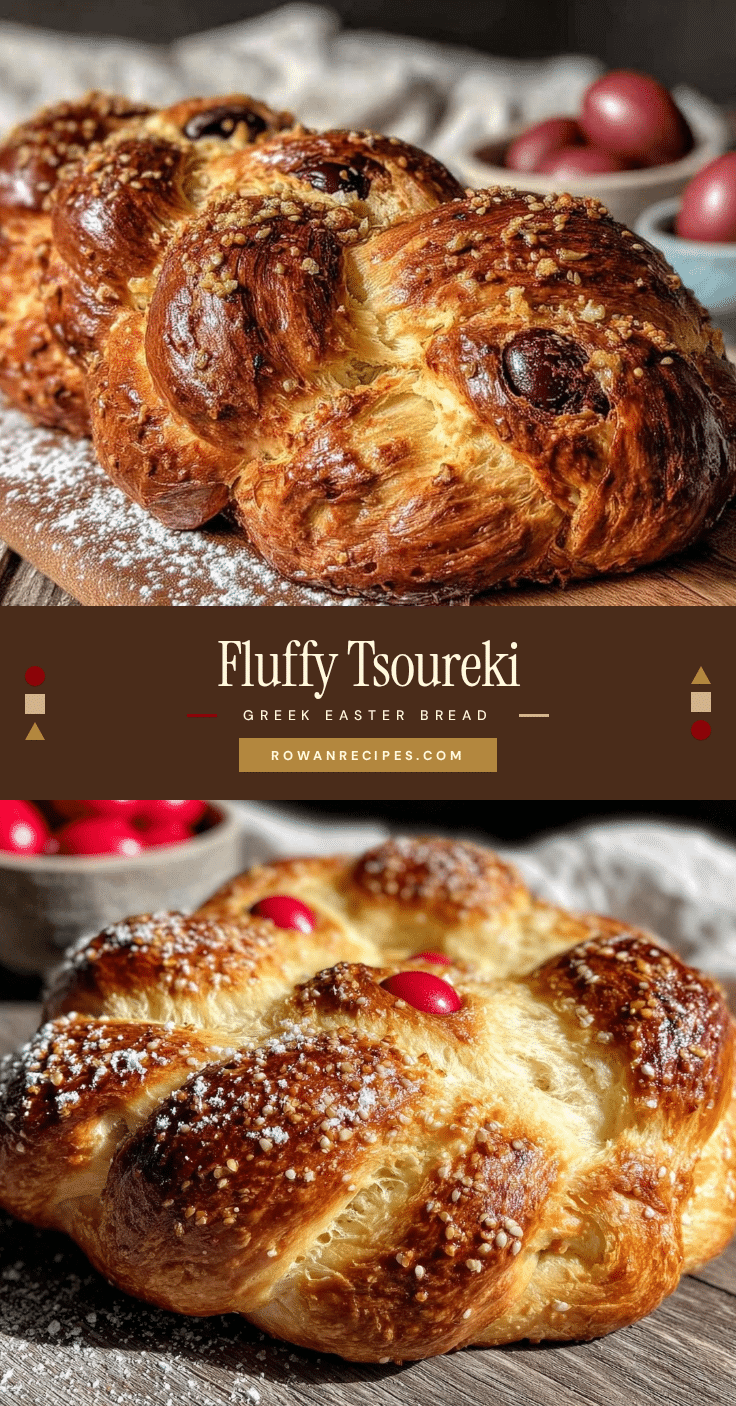
Fluffy Tsoureki Greek Easter Sweet Bread Recipe with Red Eggs

A traditional Greek Easter sweet bread that is fluffy, fragrant, and braided with symbolic red eggs. This recipe balances sweet and spice with authentic flavors like mahleb and mastic.
- Prep Time: 20 minutes
- Cook Time: 30-35 minutes
- Total Time: 3 hours 15 minutes
- Yield: 1 loaf (8-10 servings) 1x
- Category: Bread, Dessert
- Cuisine: Greek
Ingredients
- 4 cups (480g) all-purpose flour
- 1 cup (240ml) warm milk
- 2 ¼ tsp (7g) active dry yeast
- ½ cup (100g) sugar
- ¼ cup (60g) unsalted butter, softened
- 3 large eggs, room temperature (1 for dough, 2 for glazing)
- Orange zest from 1 medium orange
- 1 tsp ground mahleb (soaked in warm milk for 10 minutes)
- ¼ tsp ground mastic gum (soaked with mahleb)
- 1 tsp salt
- 4 hard-boiled red dyed eggs
Instructions
- Activate the yeast by warming the milk to about 110°F (43°C). Stir in the yeast and 1 teaspoon of sugar. Let sit for 5-10 minutes until foamy.
- Soak the ground mahleb and mastic gum in 2 tablespoons of the warm milk for 10 minutes to release their aroma.
- In a large bowl or stand mixer, whisk together the flour, sugar, and salt. Add the activated yeast mixture, soaked spices with milk, softened butter, orange zest, and one egg. Mix until a sticky dough forms.
- Knead the dough on a lightly floured surface for 8-10 minutes until smooth and elastic, or use a stand mixer with a dough hook for 6-8 minutes. Add a little flour if the dough is too wet.
- Place the dough in a greased bowl, cover with plastic wrap or a damp towel, and let rise in a warm spot for 1.5 to 2 hours until doubled in size.
- Punch down the dough gently and divide into three equal strands. Roll each strand into an 18-inch (45 cm) rope. Braid the strands loosely and tuck the red eggs into the braid, pressing gently to secure.
- Place the braided loaf on a parchment-lined baking sheet. Cover loosely and let rise for another 45-60 minutes until puffy.
- Preheat the oven to 350°F (175°C). Beat the remaining two eggs and brush the loaf generously for a shiny, golden crust.
- Bake for 30-35 minutes, rotating halfway through, until the bread is deep golden and sounds hollow when tapped.
- Transfer to a wire rack and cool completely before slicing.
Notes
Soak mahleb and mastic in warm milk to mellow flavors. Keep braids loose for fluffiness. Use egg wash generously for a shiny crust. If glaze browns too fast, tent with foil. Natural red dye for eggs can be made by boiling with onion skins and vinegar.
Nutrition
- Serving Size: 1 slice
- Calories: 250
- Fat: 7
- Carbohydrates: 40
- Protein: 5
Keywords: Tsoureki, Greek Easter bread, sweet bread, braided bread, red eggs, mahleb, mastic, traditional Greek recipe