Let me tell you, the moment the rich aroma of sautéed shallots mingling with fresh asparagus and tender peas filled my kitchen, I knew I was onto something special. The first time I made this creamy spring vegetable risotto with fresh asparagus and peas, it was one of those rare cooking experiences where everything just clicks—the rice perfectly tender, the veggies bursting with vibrant color, and the creamy texture that makes you sigh with pure satisfaction. Honestly, it’s the kind of meal that brings you back to those simple spring afternoons when the garden is just starting to wake up, and every bite tastes like sunshine.
Years ago, when I was knee-high to a grasshopper, my grandma used to cook something similar, but she called it “garden risotto,” and it was always a family favorite at our Sunday dinners. I stumbled on this recipe during a rainy weekend when I wanted to recreate that nostalgic comfort with a fresh, modern twist. My family couldn’t stop sneaking forksful off the stove while it was still cooking (and I can’t really blame them). It’s dangerously easy to make yet feels like a warm hug on a plate—perfect for brightening up a cozy night or impressing friends at a casual dinner.
You know, this creamy spring vegetable risotto with fresh asparagus and peas has become a staple for my family gatherings and even makes an appearance in my meal prep rotation. After testing and tweaking it in the name of research (of course), I can say it’s reliably delicious every time. If you’re looking for a recipe that’s both comforting and fresh, effortlessly elegant but surprisingly simple, you’re going to want to bookmark this one.
Why You’ll Love This Recipe
This creamy spring vegetable risotto with fresh asparagus and peas is one of those kitchen wins that feels both fancy and approachable. It’s not just another risotto—it’s the best version I’ve found that balances creamy, fresh, and bright flavors perfectly.
- Quick & Easy: Comes together in about 35-40 minutes, making it ideal for busy weeknights or last-minute guests.
- Simple Ingredients: No hunting for exotic stuff here; the ingredients are pantry and farmer’s market staples.
- Perfect for Spring: The fresh asparagus and peas bring a light, seasonal punch that’s just right for springtime meals or Easter brunch.
- Crowd-Pleaser: Kids and adults alike love this creamy, comforting dish; it’s a gentle introduction to risotto if you’re new to it.
- Unbelievably Delicious: The velvety texture from slow-cooked arborio rice combined with vibrant veggies is pure magic.
What makes this recipe stand out is the way the fresh asparagus and peas are added just right—so they stay bright and crisp, not mushy. Plus, stirring in a touch of Parmesan cheese and a hint of lemon zest at the end gives it that perfect flavor balance. This isn’t just a side dish; it’s a meal that feels like comfort food reimagined. You close your eyes after the first bite and smile—yes, this is exactly what you needed.
What Ingredients You Will Need
This recipe uses simple, wholesome ingredients to deliver bold flavor and satisfying texture without the fuss. Most of these are pantry staples or fresh market finds that bring this dish to life.
- Arborio rice (1 ½ cups / 300 g) – The star of any risotto, it’s creamy when cooked but holds its shape well.
- Fresh asparagus (1 bunch, about 12 spears) – Trimmed and cut into 1-inch pieces (adds that lovely spring crunch).
- Fresh or frozen peas (1 cup / 150 g) – Sweet and vibrant, I prefer fresh but frozen works well too.
- Shallots (2 medium, finely chopped) – Adds a mild, sweet onion flavor.
- Garlic (2 cloves, minced) – For that subtle punch of aroma.
- Vegetable broth (4 cups / 950 ml), warm – I recommend a good-quality low-sodium broth like Swanson for best flavor control.
- Dry white wine (½ cup / 120 ml) – Optional but adds a lovely depth; use a wine you’d actually drink.
- Olive oil (2 tablespoons) – For sautéing.
- Unsalted butter (3 tablespoons) – Adds richness and creaminess.
- Parmesan cheese (½ cup / 50 g, freshly grated) – Use a good-quality Parmigiano-Reggiano for best results.
- Lemon zest (from 1 lemon) – Brightens up the whole dish.
- Fresh parsley (2 tablespoons, chopped) – For garnish and fresh herbal notes.
- Salt and pepper – To taste.
If you want to make this gluten-free, no worries—risotto is naturally gluten-free as long as your broth is. For a vegan twist, swap butter for dairy-free margarine and Parmesan for nutritional yeast or vegan cheese alternatives. When choosing asparagus, look for firm, bright green spears without woody ends. If peas aren’t in season, frozen peas are a trusty backup.
Equipment Needed
- Large heavy-bottomed skillet or sauté pan – A wide pan helps with even cooking and stirring.
- Medium saucepan – To keep the broth warm while you cook.
- Wooden spoon or silicone spatula – For stirring the risotto without scratching your cookware.
- Measuring cups and spoons – For precise ingredient amounts.
- Fine grater or microplane – For zesting the lemon and grating Parmesan.
If you don’t have a heavy-bottomed pan, a good-quality stainless steel skillet works well too—just watch the heat to avoid scorching. I personally prefer a wooden spoon because it feels sturdy and won’t transfer heat to your hand. Keeping broth warm in a separate pan is a small step that makes a huge difference in risotto texture, so don’t skip it! For budget-friendly options, a decent non-stick pan can also do the trick, but just be gentle when stirring.
Preparation Method
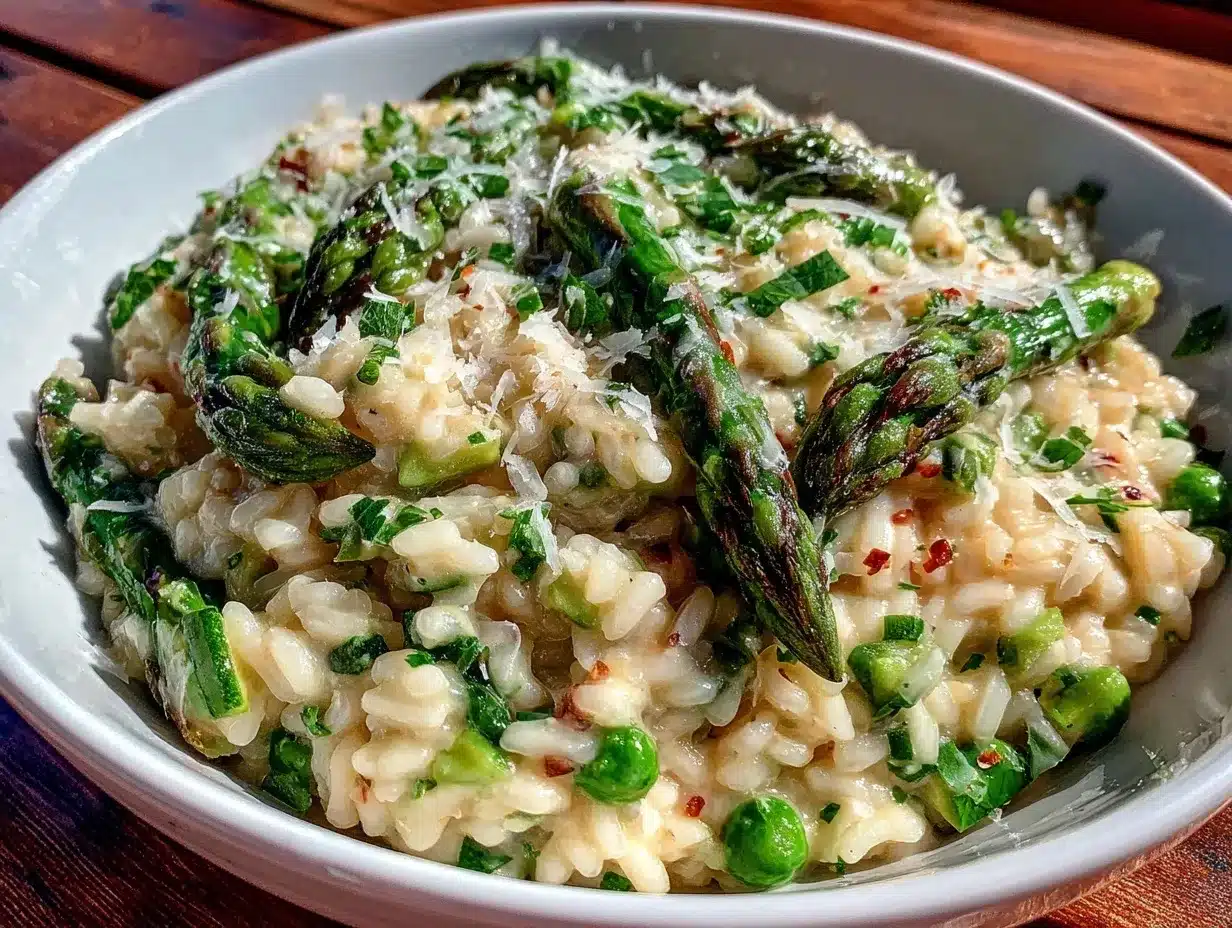
- Warm the broth: Pour your vegetable broth into a medium saucepan and keep it on low heat so it stays hot but not boiling throughout the cooking process. This usually takes about 5 minutes to warm up.
- Sauté the aromatics: In a large skillet over medium heat, add 2 tablespoons of olive oil and 1 tablespoon of butter. Once melted, toss in the finely chopped shallots and sauté for 3-4 minutes until they turn translucent and soft. Add minced garlic and cook for another 30 seconds until fragrant—don’t let it burn!
- Toast the rice: Add the arborio rice to the pan and stir constantly for about 2 minutes. The rice will look glossy and slightly translucent at the edges but still opaque in the center. This step helps the rice soak up flavors and cook evenly.
- Deglaze with wine: Pour in the white wine and stir until it’s mostly absorbed by the rice—this usually takes 2-3 minutes and adds a subtle tanginess that balances the creaminess.
- Add broth gradually: Start ladling in warm broth, about ½ cup (120 ml) at a time, stirring frequently. Wait until the liquid is mostly absorbed before adding the next ladle. This slow process takes around 18-20 minutes and is key to that creamy risotto texture.
- Cook the vegetables: When you’ve used about half the broth, stir in the asparagus pieces and peas. Keep stirring and adding broth until the rice is al dente—soft but with a slight bite to the center. The vegetables will cook just right by the time the rice is done, about 7-8 minutes.
- Finish with butter and cheese: Remove the pan from heat and stir in the remaining 2 tablespoons of butter, grated Parmesan, and lemon zest. Season with salt and pepper to taste. The risotto should be creamy and glossy.
- Garnish and serve: Sprinkle chopped fresh parsley on top and serve immediately. Risotto waits for no one, so dig in while it’s hot and creamy!
Pro tip: If the risotto feels too thick or dry near the end, stir in a splash of warm broth or even a little cream to loosen it up. And remember, stir often but gently to avoid mashing the rice or veggies.
Cooking Tips & Techniques
Risotto can seem intimidating, but it’s honestly just about patience and attention. Here are some tips I’ve learned after many batches (and a few burnt ones!):
- Keep broth warm: Adding cold broth slows the cooking and can make the rice cook unevenly. Warm broth helps maintain steady temperature and texture.
- Stir, but not constantly: Frequent stirring releases rice starch, creating creaminess. But you don’t have to hover over it nonstop—every minute or two stirring is enough.
- Choose the right rice: Arborio is classic, but Carnaroli or Vialone Nano rices also work beautifully for that creamy yet firm bite.
- Don’t wash your rice: Washing removes surface starch that’s essential for creaminess.
- Adjust seasoning at the end: Salt and pepper early on help, but risotto flavors really come together at the finish when you add cheese and butter.
- Fresh is best: Add spring vegetables late so they stay vibrant and slightly crisp—not mushy.
Honestly, the first few times, it might feel like a dance with the stove, but once you get the rhythm, risotto becomes a joy. I’ve found multitasking (like prepping garnish or setting the table) during those broth ladle waits helps keep the process smooth and stress-free.
Variations & Adaptations
This creamy spring vegetable risotto with fresh asparagus and peas is as flexible as it is tasty. Here are some fun ways to mix it up:
- Seasonal swap: In summer, switch out peas for fresh sweet corn and asparagus for zucchini ribbons to keep it fresh and light.
- Protein boost: Stir in cooked shrimp, grilled chicken strips, or crispy pancetta for a heartier meal.
- Vegan version: Replace butter with olive oil, use vegetable broth, and swap Parmesan for nutritional yeast or a vegan cheese alternative. Add a squeeze of lemon for brightness.
- Herb variations: Try fresh basil or tarragon instead of parsley for a different herbal note that pairs beautifully with spring veggies.
- Grain alternative: For a gluten-free, lower-carb option, try pearl barley or farro, but cooking times will vary.
One time, I tried adding a splash of white miso paste before finishing the risotto—it gave a subtle umami kick that was surprisingly delightful. Don’t be afraid to experiment with your favorite flavors!
Serving & Storage Suggestions
Serve this creamy spring vegetable risotto warm, right off the stove, for the best texture and flavor. Plate it in shallow bowls, garnish with a bit more Parmesan and fresh parsley, and maybe a wedge of lemon on the side for those who want an extra zing.
This risotto pairs beautifully with a crisp green salad or roasted spring vegetables. For drinks, a chilled glass of Sauvignon Blanc or a light sparkling water with lemon complements the bright flavors nicely.
Leftovers? Risotto is best eaten fresh but can be refrigerated in an airtight container for up to 2 days. When reheating, add a splash of broth or water and warm gently on the stove over low heat while stirring to bring back creaminess. Avoid the microwave if you can—it can make the texture a bit gummy.
Flavors actually deepen after a day, so if you can wait, leftover risotto can be even tastier the next day. Just don’t let it sit too long or it’ll dry out. If freezing, portion into airtight containers and thaw overnight in the fridge before reheating.
Nutritional Information & Benefits
Each serving of this creamy spring vegetable risotto with fresh asparagus and peas offers approximately 350-400 calories, with a balanced mix of carbohydrates, protein, and healthy fats. Arborio rice provides energy-sustaining carbs, while peas and asparagus contribute fiber, vitamins A, C, and K, plus antioxidants.
Asparagus is known for its anti-inflammatory properties and is a natural diuretic, helping with digestion and detoxification. Peas add protein and essential minerals like iron and magnesium. Using olive oil and moderate butter keeps the fat content reasonable without sacrificing flavor.
This recipe is naturally gluten-free and can be adapted to be vegan or dairy-free. It’s a wholesome meal option that feels indulgent but nourishes your body with fresh, seasonal ingredients.
Conclusion
So, why should you try this creamy spring vegetable risotto with fresh asparagus and peas? Because it’s the kind of recipe that makes you smile with every bite—comforting, fresh, and surprisingly simple. You can tweak it to your liking, whether that means adding protein, trying new veggies, or making it vegan-friendly.
Personally, I love how this risotto brings a little slice of spring into my kitchen any time of year. It’s been a joy to share it with my family and friends, and I hope it finds a place in your recipe box too.
If you give this recipe a go, please leave a comment below and let me know how it turned out or any fun variations you tried! Sharing your kitchen adventures makes cooking all the more rewarding.
Happy cooking and enjoy every creamy, veggie-packed spoonful!
Frequently Asked Questions
Can I use frozen asparagus and peas for this risotto?
Yes! Frozen peas work great and retain their sweetness. For asparagus, use fresh if possible, but frozen can be used—just add it a little earlier to ensure it cooks through.
What if I don’t have white wine? Can I skip it?
Absolutely. You can replace the wine with an equal amount of warm broth or even a splash of lemon juice for acidity. The risotto will still be delicious.
How do I know when the risotto is done?
The rice should be tender with a slight bite in the center (al dente), and the texture should be creamy but not mushy. Taste a grain to check as you go.
Can I make risotto ahead of time?
Risotto is best fresh but can be made a day ahead and reheated gently with some broth. It won’t be quite as creamy, but still tasty and convenient.
What’s the best way to store leftover risotto?
Store in an airtight container in the fridge for up to 2 days. Reheat on the stove with a splash of broth for best texture.
Pin This Recipe!
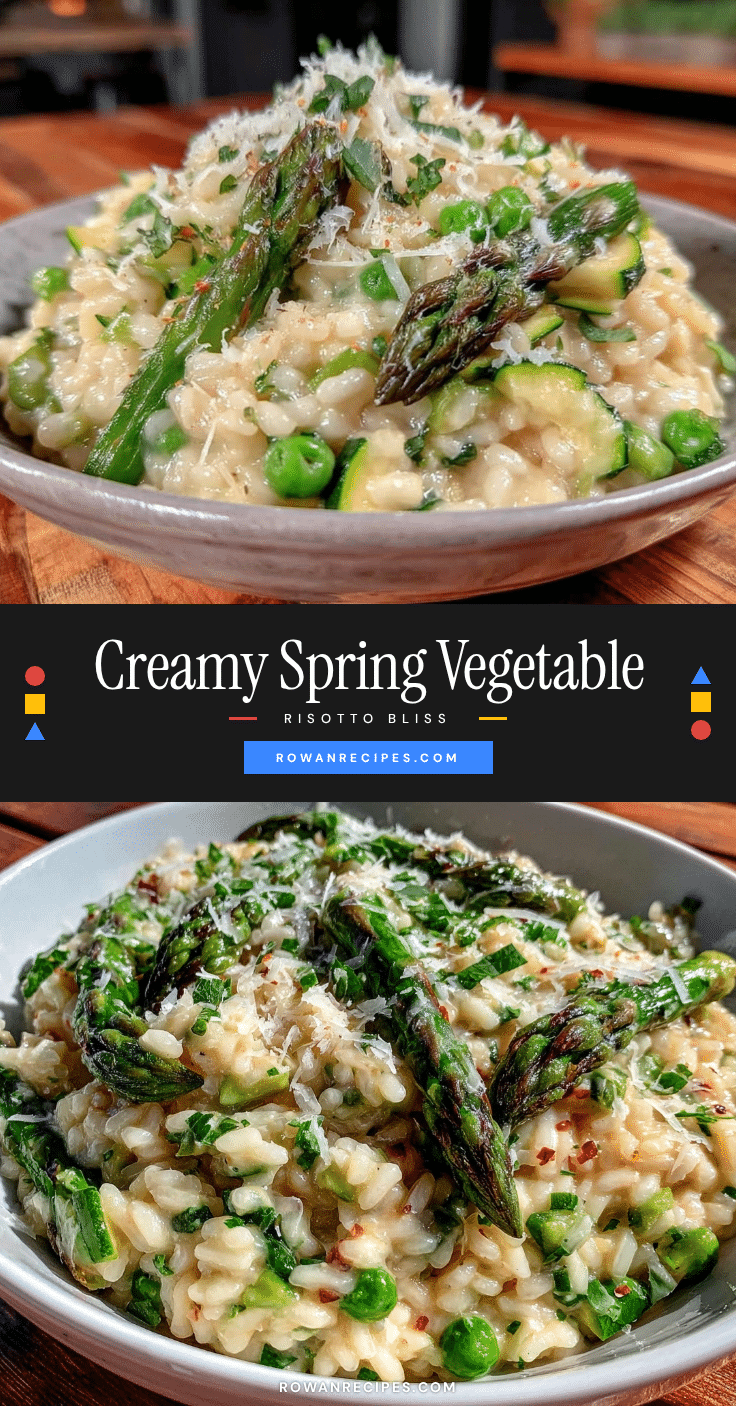
Creamy Spring Vegetable Risotto with Fresh Asparagus and Peas
A creamy and comforting spring vegetable risotto featuring fresh asparagus and peas, perfect for easy homemade meals that bring vibrant, seasonal flavors to your table.
- Prep Time: 10 minutes
- Cook Time: 30 minutes
- Total Time: 40 minutes
- Yield: 4 servings 1x
- Category: Main Course
- Cuisine: Italian
Ingredients
- 1 ½ cups (300 g) Arborio rice
- 1 bunch (about 12 spears) fresh asparagus, trimmed and cut into 1-inch pieces
- 1 cup (150 g) fresh or frozen peas
- 2 medium shallots, finely chopped
- 2 cloves garlic, minced
- 4 cups (950 ml) warm vegetable broth
- ½ cup (120 ml) dry white wine (optional)
- 2 tablespoons olive oil
- 3 tablespoons unsalted butter
- ½ cup (50 g) freshly grated Parmesan cheese
- Zest of 1 lemon
- 2 tablespoons fresh parsley, chopped
- Salt and pepper to taste
Instructions
- Warm the vegetable broth in a medium saucepan over low heat, keeping it hot but not boiling.
- In a large heavy-bottomed skillet over medium heat, heat olive oil and 1 tablespoon butter. Add chopped shallots and sauté for 3-4 minutes until translucent and soft.
- Add minced garlic and cook for 30 seconds until fragrant, being careful not to burn.
- Add Arborio rice and stir constantly for about 2 minutes until the rice looks glossy and slightly translucent at the edges.
- Pour in the white wine and stir until mostly absorbed, about 2-3 minutes.
- Begin adding warm broth gradually, about ½ cup at a time, stirring frequently and waiting until the liquid is mostly absorbed before adding more. Continue this process for about 18-20 minutes.
- When about half the broth has been added, stir in asparagus pieces and peas. Continue adding broth and stirring until the rice is al dente and vegetables are tender but crisp, about 7-8 minutes more.
- Remove the pan from heat and stir in the remaining 2 tablespoons butter, grated Parmesan cheese, and lemon zest. Season with salt and pepper to taste.
- Garnish with chopped fresh parsley and serve immediately while hot and creamy.
Notes
Keep broth warm to ensure even cooking and creamy texture. Stir frequently but not constantly to release starch without mashing rice. If risotto is too thick near the end, add a splash of warm broth or cream to loosen. Risotto is best served immediately but can be reheated gently with broth.
Nutrition
- Serving Size: 1 cup risotto per se
- Calories: 375
- Sugar: 5
- Sodium: 400
- Fat: 14
- Saturated Fat: 7
- Carbohydrates: 50
- Fiber: 4
- Protein: 10
Keywords: risotto, spring vegetables, asparagus, peas, creamy risotto, easy dinner, vegetarian, gluten-free